Why China's Most-Loved Attractions Aren't Necessarily Right for You
This is written for travellers holding a foreign passport — whether you're planning your first trip to China or you're already here. It doesn't recommend places, and it doesn't talk you out of any. It answers one question: why do the "must-see" attractions of China look so different once you're standing in front of them?
After years of hosting international travellers, our own read is this: most of the friction isn't about the sites themselves. It's about the way you're allowed to visit them. Some of it comes down to how the attractions are run, and some of it comes down to the gap between what a place means in Chinese culture and what you were expecting to feel.
That's not a verdict on Chinese attractions. It's an explanation of why the same site can feel completely different to two people standing side by side.
1. How China's Big Attractions Are Actually Run
In 2024, the Ministry of Culture and Tourism and eight other government departments issued a guidance document on tourism public services. Item 12 says, in the official wording: "Promote multilingual booking interfaces at attractions with high inbound visitor numbers, include passports among valid booking documents, and retain necessary staffed service windows." You can read the full text on the State Council website.
Two years later, on 5 February 2026, the Cyberspace Administration of China and ten other departments said it again in item 6 of a new policy: museums and attractions should strengthen their official websites and mobile apps, and improve online booking for the documents foreign visitors actually carry. The full document is here.
Look at the verbs: promote, include, retain, encourage. Chinese ministries don't issue documents telling subordinate departments to fix something that already works. So "foreign visitors often get stuck in Chinese booking systems" isn't a traveller's grumble. It's a problem the government itself wrote down and asked someone to solve.
One detail in there is worth knowing before you fly. Chinese names are written surname first, given name second — as are Japanese, Korean, Vietnamese and Hungarian names. Most European and American names run the other way. On a Chinese booking system, that mismatch means the Surname and Given Name fields get swapped constantly. It isn't the app's fault, and it isn't yours — it's just habit. When you fill in attraction or transport forms, check those two boxes.
One more thing about that 2026 document: it sets a target of 2027 for clearing the main digital bottlenecks in residence, healthcare, payment and travel. That's a target, not the current state.
2. Foreign Visitors Are More Satisfied Than You'd Expect
The China Tourism Academy published inbound visitor satisfaction figures for 2024: an overall inbound satisfaction score of 81.85, with visitors from Hong Kong, Macao and Taiwan at 80.36 and foreign visitors at 82.06 — up 8.1% year on year.
So foreign visitors score higher than the overall figure. Most of them are happy with China's attractions, and the absolute numbers aren't low.
But here's the part nobody puts in a guidebook: these systems have a very narrow default user. Narrow enough that you have to do things their way to collect that 82. And how to do things their way is not written down anywhere.
3. The Four Things Every Major Chinese Attraction Assumes About You
The standard product at China's top attractions is a four-part package: a low or free gate ticket + mandatory real-name booking + separately charged transport inside the site + capacity limits.
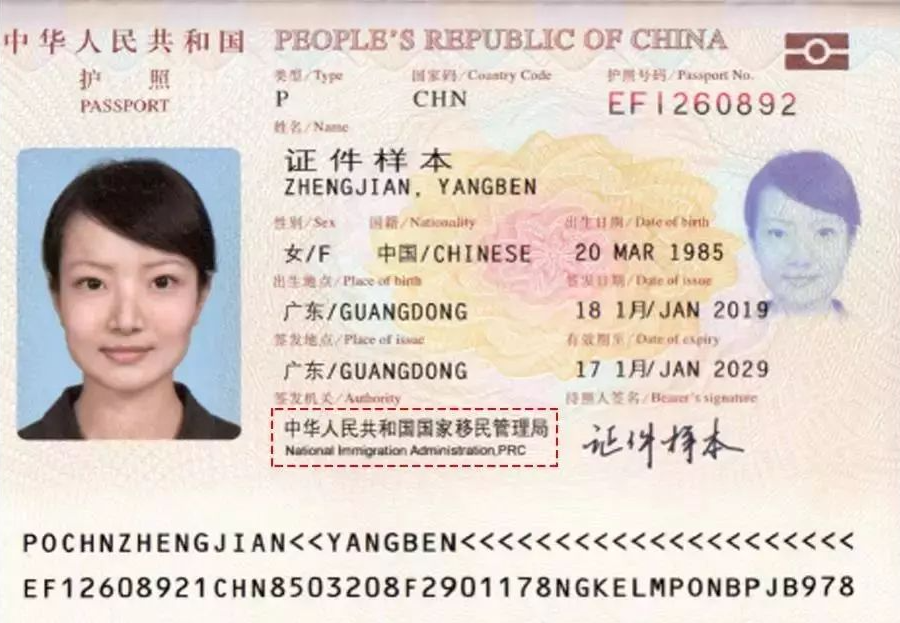
All four assume you have a Chinese ID card, a mainland phone number, WeChat or Alipay installed for mini-programs, and the patience to book exactly seven days ahead. For foreign visitors the rules are the same — you just have fewer of the prerequisites. If you do have a Chinese SIM, WeChat or Alipay, and you book seven days out, there's effectively no difference.
What varies wildly is which document each site accepts. Below is the official wording from each attraction's own page:
Emperor Qinshihuang's Mausoleum Site Museum (Terracotta Warriors) — the main sentence lists the passport alongside the ID card: "purchasers must present a valid original identity document (ID card, Mainland Travel Permit for Hong Kong and Macao Residents, Taiwan Compatriot Permit, Home Return Permit, passport)." This is the only one of the six that puts passports in the headline sentence. Official site
Palace Museum (Forbidden City) — "Mainland Chinese visitors may only use their ID card; all other visitors should use… their passport to book and enter." Usable, but filed under "non-mainland visitors." English site
Jiuzhaigou — the main sentence mentions only "your valid original ID card for ticket check and entry." Official site
Potala Palace — the WeChat mini-program is the only way to buy; the official website stopped selling tickets on 2 June 2020. Official site
Mogao Caves — the discount policy is addressed to "Chinese citizens," and there's no ticket office at the caves themselves. Official site
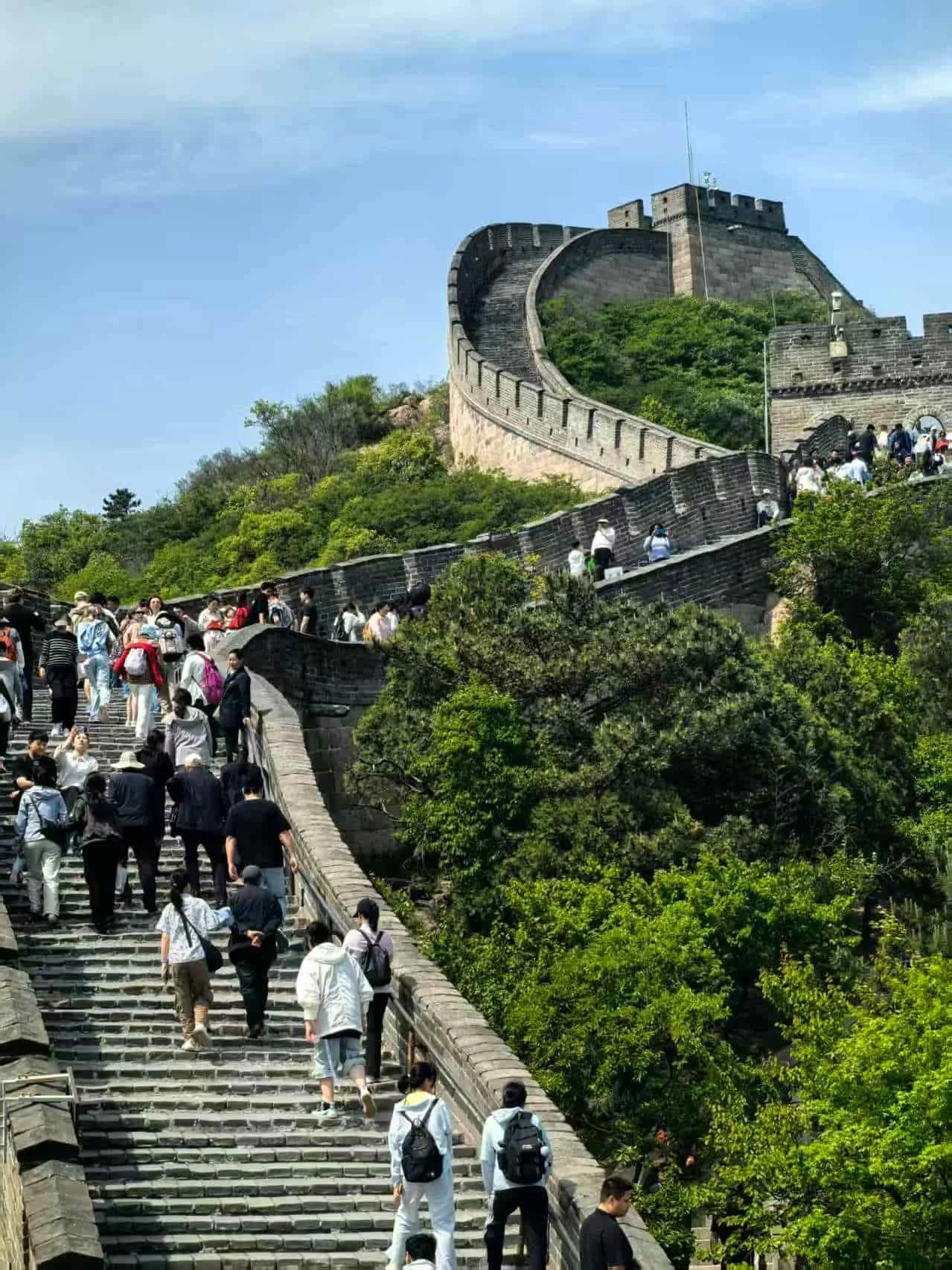
Badaling Great Wall — keeps both advance booking and on-site purchase, and runs a separate entrance for foreign visitors. Relatively friendly. Official site
So the accurate word is fragmented, not banned. One site puts your passport in the main sentence; another buries it in a bracket; a third only mentions it at the ticket gate; a fourth has narrowed everything down to one mini-program. You cannot use one app for all of them. You do homework, site by site. Anyone who tells you there's a single workaround hasn't booked these tickets lately.
Why "just install WeChat" isn't a small favour to ask
A British traveller writing on surlytheywontmakeit.com in February 2026 recorded what that looks like on the ground:
"Without WeChat, we couldn't use the booking system at all."
"The queues were only foreigners. The passport is the ticket… We had to sign a form confirming we weren't part of any tour group, plus some nonsense about not having a smartphone."
Here's the mechanical reason. Mainland WeChat triggers a security filter when you register from outside mainland China, showing a "non-standard network environment" warning — and one of the listed triggers is being connected to a VPN, especially when an overseas IP is detected. Even if you switch to international WeChat, some regions don't get the Wallet feature at all, so payment and mini-programs stay locked.
On payment, a French-speaking Canadian user in a travel community put it plainly:
"Without a Chinese phone number and a bank card issued in China, it's simply impossible — with Alipay or WeChat. I have both, but I never activated payment. I tried to buy a juice in a small shop with cash, and the owner…"
A Canadian French speaker and a British blogger, completely independent of each other, describing the same structural fact. If this is the part worrying you, we've written a step-by-step explainer on how payment actually works for foreign travellers in China.
4. Chinese Visitors Hit the Same Wall
This booking machinery creates a very specific group of casualties inside China too:
Reporting from Beijing attractions, in the original wording: "The digital divide shuts older visitors out. Online booking requires fluent smartphone operation — following a public account, identity verification, choosing a date and ticket type. Many older people simply can't complete it."
The same report: "They can't buy online, so they just walk away from the gate, and the enthusiasm for the trip evaporates."
After free admission was introduced at Lingyin-Feilaifeng in Hangzhou, 380,000 bookings were no-shows within 56 days. The site responded by introducing a rule from 1 February 2026: one no-show means a 30-day booking suspension.
The Chinese travellers who can't manage a smartphone, don't use WeChat Pay and aren't fluent in mini-programs are already locked out by this system. What foreign visitors run into — no ID card, no mainland number, registration barriers, real-name verification — is the same narrow gate. Just a different trigger.
Which is why the position of this article is not "Chinese attractions are unfriendly to foreigners." It's that the default user profile is narrow — narrow enough that a lot of Chinese people don't fit inside it either.
5. Crowds Are About Timing, Not the Site
The most common warning about China online is "it's packed." That's true, but it's a calendar problem, not a permanent condition.
A Swiss traveller at the Terracotta Warriors in April 2026:
"Even I started to feel a little claustrophobic, and I usually don't mind crowds at all."
A British visitor at Shanghai's Yu Garden, at closing time:
"At the end of the day, exhausted, we headed for Yuyuan station — where we were herded around like sheep."
"Everyone was posing at the railing, pretending there was nobody else around."
Then thisisalake.travel.blog, arriving at a Great Wall ticket gate at 13:00 on a Monday in September 2026, recorded this:
"Not a single person."
So why the whiplash? Not because attractions are permanently overrun, but because Chinese public holidays and peak-season timing overlap with exactly the places everyone wants. Sidestep the holidays and the seasonal peaks and the pressure drops enormously. This isn't luck. It's a scheduling decision you fully control.
Here's the clearest evidence in this whole article. Jiuzhaigou's officially certified peak-season capacity for 2026 is 41,000 visitors per day. Its actual daily admissions in one single week were 30,372 / 22,695 / 13,840 / 13,448.
A cap of 41,000 against an actual 13,448 — inside the same seven days, a three-fold difference. Capacity limit is not daily attendance. Jiuzhaigou even publishes its daily entry numbers page by page, which makes it the single most useful planning tool you can use for timing. Very few Chinese attractions offer that granularity.
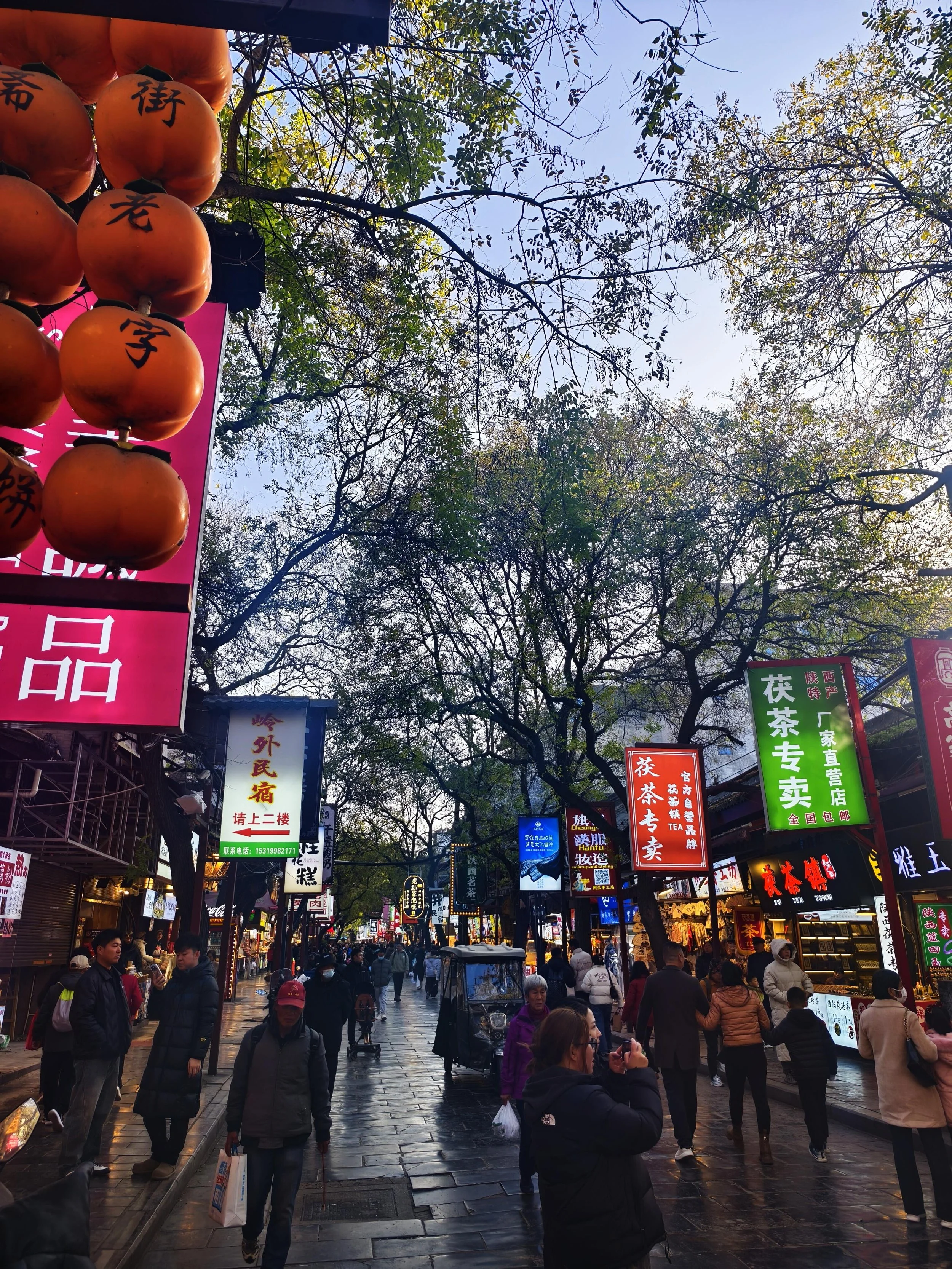
6. Where the Culture Gets Lost — and Why It Isn't Your Fault
A 2015 doctoral thesis at the University of Amsterdam by M. Koerts — Tourism in China: representing the nation to English speaking tourists, 355 pages — studied the English-language interpretation at heritage sites in Beijing. Her conclusion:
"Perhaps the greatest problem with this kind of interpretation is that it doesn't do justice to China's 'five thousand years of civilisation' and its heritage. Because it only tells you what something is, never why or how it came to be, this interpretation leaves these unique things…"
She isn't saying "foreigners can't understand China." She's saying China's own on-site interpretation undersells China. That distinction matters, because it moves "I didn't get it" out of the box marked your problem and into the box marked a supply problem.
The thesis contains one more very practical finding: at the same building, the English on the plaque and the English in the audio guide are not the same name. The main halls use one system of translation; the inner courts and gardens drift into another. And you can't control the audio guide — you don't know where it will start, you can't interrupt it, and you can't replay a section.
So even if you know every single word, you still may not know whether you're looking at the same place the sign is describing. That's not a language failure on your part. It's the built-in multi-translatability of Chinese culture — the same term legitimately carries several English renderings.
Professional guiding changes this, and not in the way people assume. A good guide isn't a translation machine. They connect the history to the version of it you can actually picture.
Two British authors at the Forbidden City, February 2026:
"Honestly, we were a bit disappointed. The halls and the walls are wonderful, but we couldn't help feeling that a lot has been locked away. There are over 1,000 clocks in the collection, and maybe 50 are on display — and that's inside the extra-ticket clock gallery…"
You paid for the Forbidden City as a cultural symbol; what you see is a fraction of the collection. That isn't discrimination against foreigners — many of these pieces are one of a kind and simply can't be on permanent display.
The same Swiss traveller, at the Terracotta Warriors:
"Even though I'm genuinely interested in the history behind this site, I couldn't get through a single information board on the railing."
"The experience quickly became a tick on a checklist, rather than actually understanding what happened at this monument. I suspect most visitors that day felt the same."
Notice what she says and what she doesn't. She's not uninterested, and she's not illiterate in English — the boards were right there on the railing. She was squeezed out of the opportunity to read: the crowd, the pushing, the need to keep moving if you want a photo.
So it isn't a choice between "cultural gap" and "the way you visited." It's both at once, layered on top of timing. And it isn't only foreign visitors who run into it — plenty of Chinese travellers do too. Travel in China has long meant group tours and guides, and still does, because Chinese history textbooks tell one story without the detail underneath. That's exactly why you'll see more guides at Chinese attractions than almost anywhere else in the world.

7. What You Get When You Can't Book the Famous Name
A Chinese travel agency general manager gave this example in an interview with Economic Daily:
"Guests arrive in Beijing, can't get Forbidden City tickets, so they get Guozijian instead. They go to Shaanxi, can't get Terracotta Warriors tickets, so they get the Stele Forest instead."
The Forbidden City and the Terracotta Warriors are visually self-evident. You need zero background knowledge to be knocked sideways by the scale and the craftsmanship. Guozijian and the Stele Forest are the opposite: without someone to read them to you, one is a courtyard and the other is a yard full of stones.
Which is how a pure logistics problem — I couldn't get a ticket — turns into a decoding problem.
8. A High Barrier Doesn't Mean a Low Rating
If cultural barrier really decided the experience, the hardest places to decode would score the lowest. The data runs the other way. The cleanest counter-example is one American high schooler's rating sheet: the Great Wall — the highest-barrier site on his list — got 10/10, while the nearly barrier-free Shanghai Bund got 6/10 ("I found this landmark quite boring").
More real reviews from foreign visitors:
A British author at the Terracotta Warriors: "I don't remember what I expected, but facing the sheer scale of the excavation pit, I genuinely let out an involuntary gasp."
A British author at Datang Everbright City in Xi'an: "We had absolutely no idea what it was about, but the whole thing was completely bonkers and enormous fun."
Same author at a Xi'an performance: "We were utterly won over. Even though we couldn't follow the narration at all."
A French traveller eating skewers (chuanchuan) in Xi'an: "We had no idea what we were doing, the server didn't speak English, and at some point five people gathered around to teach us — including a neighbour who was out walking his dog. We were clearly doing something wrong."
For these travellers, "not getting it" isn't a regret. It's the joke, the doorway into a conversation, the precondition for being won over.
So the barrier is real; it just isn't the entry ticket. Scale and craftsmanship are a language that doesn't need translating.
Now the honest caveat. The evidence supports "foreigners can be deeply moved without understanding." It does not support "foreigners can also read China." Those two sentences sound similar, and only the first one is true. If you feel you've only bought the right to look, don't be disappointed — that alone is worth a great deal. Reading takes other resources, and those are genuinely scarce right now. Plenty of Chinese travellers only get the right to look as well.
9. Ticket Prices: The One Thing China Gets More Right Than Europe
China's flagship attractions basically don't price-discriminate against foreigners. Be precise about that, because it's the opposite of what most people assume.
The famous cases of resident-versus-visitor pricing are in Europe and North America, not here. The Louvre charges European Economic Area residents €22 and everyone else €32. US national parks charge non-residents more for annual passes and add a per-person surcharge for non-residents over 16.
On admission price, China's top attractions are more equal than Europe or America. What you actually need to budget for is gate ticket + transport inside the site. And here's the thing worth knowing before you fly: at none of the sites below is the cable car or the lift included in the ticket.
Forbidden City — ticket ¥60, no paid transport inside. Total ¥60 (1.0×)
Terracotta Warriors — ticket ¥120, the shuttle between the two pits is free. Total ¥120 (1.0×)
Jiuzhaigou — ticket ¥190 + sightseeing bus ¥90 = ¥280 (1.47×)
Zhangjiajie Wulingyuan — ticket ¥165 + Bailong Elevator return ¥130 + Tianzi Mountain cable car return ¥144 = ¥439 (2.66×)
Mount Hua — ticket ¥160 + shuttle return ¥60 + cable car return ¥220 ≈ ¥440 (2.75×)
Mount Tai — ticket ¥115 + shuttle return ¥80 + cable car return ¥200 ≈ ¥395 (3.4×)
A French traveller's advice to another visitor in a forum, May 2026:
"What's genuinely expensive in China is attraction tickets. Apart from accommodation, food and transport are cheap."
In other words: your budget pressure is concentrated at the gate, not on the road. High-speed rail, city transport and street food are generally better value in China than in Western Europe or North America at a comparable level of development.
One real example of stacking, from 101reasons.blog, on Gubei Water Town and the Simatai Great Wall:
"Getting up to Simatai requires a separate ticket, stacked on top of the Gubei Water Town ticket. Make sure you remember this, or you'll get stuck at the gate."
That's Gubei Water Town + Simatai + internal shuttle + cable car (¥200 return normally) — four layers. It's not typical of Chinese attractions as a whole, but it's the shape of thing to keep an eye out for. If you're heading to Zhangjiajie, our 19 pre-trip notes list every separately charged item before you commit.
10. A Note on China's "Reconstructed" Old Towns
The fact that plenty of Chinese attractions are newly built in an old style has been covered squarely in the English-language press. In July 2026, CNN Travel ran a feature on China's fanggu — "historical imitation" attractions. Its closing line:
"Ultimately, the verdict is split: some visitors enjoy the escape fanggu destinations offer, others are frustrated by the curated illusion. One thing is clear — social media loves it."
A Thai exchange student quoted in the piece, after visiting Gubei Water Town:
"I don't mind that it's rebuilt, but it's hard not to feel cheated."
And the two British authors on the Great Wall wrote the most direct passage in this entire article:
"The amount of restoration is astonishing. Every watchtower is flawless, in brand-new brick."
"It simply has no sense of history at all."
"We couldn't help feeling a little sad — we didn't see a single stretch of the 'original' wall."
That the verdict is split is itself evidence these accounts are honest. Every attraction has both positive and negative reviews. That doesn't make it not worth going. It means the answer depends on what you're looking for — and on how you look at it.
11. You've Already Been Defined
China's flagship attractions operate on a simple sequence: decide what's worth seeing, then deliver you to it. Four things follow from that:
A list defines "must-see." The American high schooler who walked three weeks and wrote up his ratings opened with: "There are an enormous number of sights worth seeing — and almost as many worth skipping." The list swaps "what you want to see" for "what you ought to see." If you want to see how these lists get built — including ours — start with our own take on China's top attractions.
A photo defines proof that you were there. Yu Garden: "Everyone was posing at the railing, pretending there was nobody else around." An Irish author in Qingdao put it more exactly: "Around seven in the evening, No. 3 Bathing Beach effectively becomes a dense photography zone. Tripods and ring lights line up along the coast, couples posed."
A script sets the route. Those two British authors on the Great Wall used a heavy phrase: "On an organised group tour, nobody can — and nobody wants to — break away."
And the real thing is often off the route — brand-new bricks, locked storerooms, the "original" wall you never get to see. We covered that above.
So which site scored highest? A British author in Chengdu People's Park wrote what I think is the best sentence in this entire article:
"It was one of the coolest experiences of my trip, because it wasn't a performance put on for tourists. We went to where people actually were, and met them there — as guests in their park."
"People here looked at us with amusement, not distrust or annoyance."
"Guests in their park" — not visiting, being hosted. The same writer, at Wenshu Monastery, casually dismantled the "temple fatigue" argument: "Famous temples are famous because there's something unique about them. I enjoy seeing that variety."
So it isn't that foreigners dislike culture. They dislike arranged culture — "a performance put on for tourists." They like culture that other people are actually using. Chengdu is the clearest case study in China for this, which is part of why people keep going back for the pandas and staying for the teahouses.
Back to the panda base and that phrase about "ordinary fur balls." Star pandas are defined — named, followed, fenced, queued for. The ordinary ones aren't defined at all, and a Swiss traveller found the payoff: "If you're happy to watch the 'ordinary' fur balls, you'll have a big area entirely to yourself, and nobody will rush you for photos." She gave up the officially designated star pandas and got the most comfortable stretch of her whole trip.
"Defined" versus "undefined" isn't a judgement about better or worse. They're two different systems for valuing a trip. Most of China's top attractions belong to the first kind: their value comes from a shared consensus — the sacred mountains, World Heritage, the must-go list. Which is the accurate reading of this article's title: their value system is designed for the default install, and you're a manual install.
But the reverse holds too, and it's worth saying clearly: the same author who gave the Bund 6/10 gave the Great Wall 10/10 — "it deserves its place among the New Seven Wonders."
And the most practical inference of all: if a place shows up in guides as "must-see" or "you haven't been to China if you skip it," and you can't articulate why you want to go — that's someone else's consensus, not your interest.
12. Three Myths That Keep Circulating
Myth 1: Chinese attractions charge foreigners more. It's backwards. The Forbidden City is ¥60, the Terracotta Warriors ¥120, Mount Tai ¥115 — one price for everyone. The variable is the document you carry, never the price. The famous cases of resident-versus-non-resident pricing are in Europe and North America, not here. For a fully worked-out cost breakdown, see our Xi'an ticket price guide.
Myth 2: Foreigners simply can't get tickets. Every major Chinese attraction can be booked with a passport. The conditions just differ. The Terracotta Warriors puts passports in the main sentence; the Forbidden City explicitly allows passport booking and entry; Badaling runs a foreign-visitor entrance. The real problem is fragmentation, and that's a solvable one.
Myth 3: Foreigners hate Chinese toilets. The first-hand English evidence says the opposite. One British author: "We were grateful for how plentiful public toilets were. Back home in the UK we've got rid of most of ours, so 'facilities always within a few hundred metres' was a breath of fresh air." Another: "China has a huge number of public toilets. An astonishing number." The only negatives: squat toilets are the norm in rural areas, and toilets at mountain sites are far apart.
And one complaint the Chinese-language guides never mention, but foreign authors raise constantly: smoking. The same British author: "Smoking in China is alarmingly common… hotels display meaningless no-smoking signs. Every room smelled." If smoke bothers you, go in prepared and book hotels that visibly enforce their no-smoking policy.
13. The Attractions Foreign Visitors Rate Highest
Below is what's actually live on the TripAdvisor China attractions page, read directly on 30 September 2026. Two caveats first: the ranking is calculated from reviews, ratings, page views and user location — not from review count alone — and the list includes attractions in Hong Kong, China.
#1 Mutianyu Great Wall — 4.8, 24,555 reviews
#3 The Bund, Shanghai — 4.6, 19,670 reviews
#5 Summer Palace, Beijing — 4.5, 15,151 reviews
#9 Emperor Qinshihuang's Mausoleum Site Museum (Terracotta Warriors) — 4.7, 15,086 reviews
#10 Palace Museum (Forbidden City) — 4.4, 14,306 reviews
#11 Chengdu Research Base of Giant Panda Breeding — 4.6, 6,732 reviews
#12 Zhangjiajie National Forest Park — 4.6, 2,394 reviews
Note what else that list contains: #2 Victoria Peak and #6 Tian Tan Buddha are both in Hong Kong, China, and #8 is Hong Kong Disneyland. So a chunk of "China's best" isn't on the mainland at all — worth knowing before you build an itinerary around a list.
One same-city comparison is unusually useful. The Terracotta Warriors sits at 4.7 with 15,086 reviews. Huaqing Palace, in the same Lintong district and on the same "Xi'an must-do" circuit, sits at 4.0 with 728 reviews. A 0.7 rating gap and a twenty-fold difference in volume. Ratings and review volume are two independent signals, and reading them together tells you far more than either one alone.
What actually scores high:
Scale that needs no translation. On the Great Wall: "Watching the Wall and the original watchtowers come into view from the cable car feels like seeing the pyramids or the Taj Mahal… I was pinned down by the fact that this place is real." If you want the practical version — which section to walk, how the shuttle and the cable car actually work — we've written up the Great Wall explained, section by section.
Being treated as a guest rather than a visitor. This is the theme foreign travellers return to most often, and it rarely has anything to do with how famous the place is.
Our own backyard, sitting at #12. Zhangjiajie National Forest Park ranks twelfth in China on that same list, at 4.6 from 2,394 reviews — ahead of sites most visitors put on their first itinerary. If the sandstone pillars are the reason you're coming, start with our complete Zhangjiajie National Forest Park guide, then plan the two headline day trips around it: Tianmen Mountain and the Grand Canyon and Glass Bridge.
"Wow" and "crowded" coexist. Neither cancels the other out.
14. Four Things Worth Doing Before You Go
1. Treat advance booking as compulsory, not optional. The Forbidden City sells no same-day tickets, opens booking seven days ahead at 20:00, closes on Mondays, and the official mini-program is the only authorised channel. Jiuzhaigou's official line is "no booking, no travel" — plan 7 to 14 days ahead. Mogao Caves needs at least 30 days in peak season, and there's no ticket office at the caves, so don't just drive there. Terracotta Warriors releases tickets daily at 10:00, 15:00 and 20:00. Our 19 things to know before you go walks through the whole booking workflow.
2. Payment has improved, but don't assume it's solved. Alipay and WeChat Pay have loosened considerably for overseas users, but real-name verification remains the sticking point for foreign passports. A French user gave the clearest explanation of why: "You've arrived right in the middle of China's transition. Chinese people are abandoning cash and skipping credit cards entirely." That's the key — many countries went cash, then cards, then phones, so "foreign card plus cash" always kept a door open. China jumped straight from cash to QR codes. Bring a physical card and some cash as your fallback.
3. Split "language" into two layers. The signage layer: most major attractions have multilingual signs, and that layer is mostly fine. The process layer — booking systems, mini-programs, ticket channels — is overwhelmingly Chinese. Those are different problems with different fixes. Separately, plan for the network: plenty of the sites and apps you rely on won't load. Sort that out before you land rather than after, and pair it with the rest of your prep — our 2026 China packing list covers what's genuinely worth bringing and what isn't.
4. Avoid Chinese public holidays and weekends. This is the highest-value tip in the entire article. Same site, same week, and the difference can be "herded around like sheep" versus "not a single person." If your dates are flexible at all, this is where to spend that flexibility — and if you're moving between cities, our guide to travelling China by train covers how to sequence it.
15. What We Can Actually Do for You
Read the fourteen sections above and a pattern shows up: every single difficulty in this article is the same type of problem. They're all logistics. None of them are about you not being qualified to be here. And logistics is something someone on the ground can simply handle for you.
Booking and documents. We check each attraction's passport rules one by one — some need a mini-program, some only accept an ID card, some have a foreign-visitor entrance — and lock in your tickets at the moment they're released, so you don't get stopped at the gate by the words "fully booked."
Timing. We route your dates around Chinese public holidays and weekends, so that three-fold crowd difference works in your favour instead of against you.
Language and decoding. An English-speaking guide with you the whole way — not a headset handed over to listen to alone. Someone standing next to you telling you why and how it came to be. That is precisely the gap the doctoral thesis identified as China's biggest interpretive weakness.
Itinerary order. Built around what you want to see, not around the must-see list. If you'd rather spend an afternoon in a park where locals are still drinking tea and playing chess, we'll build the day that way.
Transparent costs. Gate tickets, cable cars, shuttle buses and lifts — the separately charged items — are all laid out before you leave, so you're never discovering an extra ticket at the barrier. Our Xi'an guide shows how that looks in practice.
All of our destination services are delivered through our network of licensed local partner agencies, with a single point of contact throughout and no middlemen. We've been operating since 2014 — fourteen years of doing this — and if you only want help with the hardest last mile (booking, transfers, translation), that's completely fine too. Our licence details and how we work are here.
Want us to build an itinerary around your dates and interests? Send us your travel dates, your group size, and the two or three places you most want to see. We'll come back with what the crowds look like on those specific days and which sites need booking how many days in advance.
Reach us any of these ways: WhatsApp +86 172 6789 8631 · LINE manmanlovetravel · email rosewuqjzh@gmail.com — or send us a message here. If you'd rather answer your own questions first, our FAQ covers the most common ones, and it's worth knowing that we don't outsource the hard parts: see how our private Zhangjiajie tours work.
Interested in other destinations on the same terms? We also run private trips in Beijing, Chongqing and across Sichuan, and our visa-free entry guide will tell you whether you even need a visa before you start planning.