
Why Is Chengdu Known for Pandas? China's Panda Capital Explained
When international travelers plan a China trip, Chengdu almost always comes to mind the moment they think of giant pandas. But why this inland Sichuan city, rather than the mountain provinces where pandas actually live in the wild? The story behind "panda = Chengdu" is a fascinating mix of geology, crisis response, and decades of conservation work — and it directly affects how you should plan your own panda visit today.
In this guide, you'll learn how Chengdu earned its panda-capital status, where wild pandas really live in China, which panda bases are worth visiting, how they differ, and how to combine a panda stop with a broader China tour.
In short: Chengdu is the panda capital not because it has the most wild pandas, but because it became the place where pandas were rescued, studied, bred — and then shown to the world.
1. The Geography Behind the Panda Capital
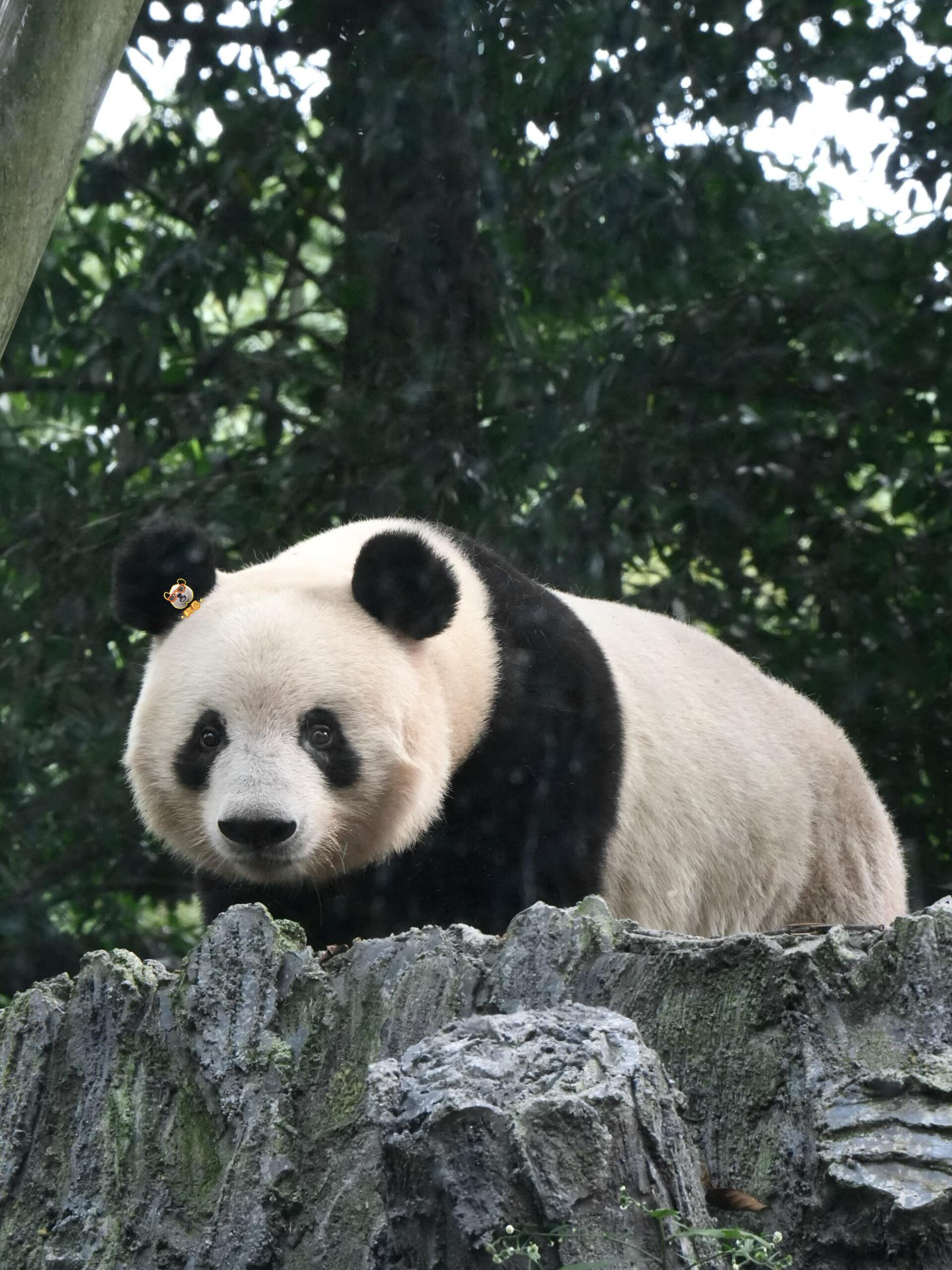
According to China's State Forestry and Grassland Administration (the most authoritative domestic source), there are now nearly 1,900 wild giant pandas in China, up from roughly 1,100 in the 1980s. The previous Fourth National Giant Panda Survey (2011–2014) — the figure still cited by Britannica and the Smithsonian's National Zoo — counted 1,864; the population has continued to edge upward since. In 2016 the IUCN downlisted the giant panda from Endangered to Vulnerable, a landmark of a decades-long Chinese habitat-protection program.
Why does this matter for the "panda capital" question? Because most of those wild pandas live in Sichuan Province — roughly 1,387 of the 1,864 counted in the Fourth Survey, according to the same data — with the rest in Shaanxi and Gansu. The reason is geography. Chengdu sits on the eastern edge of the Tibetan Plateau: directly to the west, the flat Chengdu Plain gives way to steep mountain ranges — the Qionglai Mountains (邛崃山) and the Min Mountains (岷山) to the north, running up into the Hengduan range further west. Moist air carried in from the south and east rises against that mountain wall and drops heavy rain, which grows the dense mid-elevation bamboo forests — between roughly 1,500 and 3,000 meters — that pandas depend on. During the Quaternary ice ages, when much of the northern hemisphere was locked under glaciers, this topographically varied corner of southwest China acted as a refuge where pandas and their bamboo survived.
One more piece of geography matters for a traveler: that mountainous rim is also seismically active. The Longmenshan Fault that produced the 2008 Wenchuan earthquake runs along it — and, as you'll see below, that earthquake reshaped where you can visit pandas today.
Bottom line: pandas did not choose Chengdu. Chengdu simply sits next to the safest place on Earth for them to live.
2. How Chengdu Became the "Panda City"
The cultural link between pandas and Chengdu, however, is a 20th-century story.
Wild bamboo in southwest China flowers and dies back in cycles roughly every few decades, and when it does, pandas starve. A mass bamboo flowering across the Min mountains in the mid-1970s was followed by another, better-known one across the Qionglai mountains in 1983–85. Starving pandas were found in the wild, and the central government launched a national rescue effort. The Chengdu Zoo took in many of the rescued animals — and in 1987 the city government went further, founding the Chengdu Research Base of Giant Panda Breeding around six of those rescued pandas as founders. The base opened to the public in 1993 and grew into one of the world's most successful captive-breeding and reintroduction-research centers. Today it is home to more than 200 giant pandas plus a thriving red-panda population. Its role in the species' recovery is documented by both Britannica and the Smithsonian's National Zoo, which has partnered with Chinese conservation programs for decades.
To put today's numbers in perspective: as of the State Forestry and Grassland Administration's 2024 update, more than 750 giant pandas now live in captivity worldwide (728 in China, plus 49 abroad as of late 2023). That total has grown from fewer than 100 in the 1990s — a direct outcome of the work that started in Chengdu in 1987.
One distinction is worth understanding, because it explains a common misconception. China runs two parallel panda systems:
The Chengdu Research Base — city-run, in northern Chengdu. This is the famous, crowded attraction, and a world leader in captive breeding.
The China Conservation and Research Center for the Giant Panda (CCRCGP) — the state-run system with bases at Wolong, Bifengxia (Ya'an), and Dujiangyan. This is the bigger of the two, and it is the one that supplies almost all of the pandas sent abroad on diplomatic "panda loans."
So when you hear that San Diego's Bai Yun, Edinburgh's Tian Tian and Yang Guang, or Ueno Zoo's Xiang Xiang came from China, they were all born under the Wolong/CCRCGP system — not the Chengdu Research Base. Chengdu's claim to fame is different: it is the city where a celebrated rescue-and-breeding effort happened to be headquartered, the most visitor-friendly place in the world to see pandas, and the face of panda tourism.
This is why, when foreigners picture "panda tourism in China," they picture Chengdu: it is the public gateway to a species that Sichuan as a whole saved.
3. Where Wild Pandas Actually Live in China
Chengdu is the panda capital, but wild pandas live in three provinces — confirmed by Britannica, the Smithsonian, and WWF:
Sichuan — the heart of panda conservation. Home to the Qionglai, Min, Daxiangling, Xiaoxiangling, and Liangshan mountain ranges, with the largest wild population of any province: roughly 1,387 of the 1,864 pandas counted in the Fourth National Survey (2011–2014).
Shaanxi — the Qinling Mountains. A smaller population of around 345 pandas, including the "Qinling panda," a browner-coated variant sometimes described as a distinct subspecies.
Gansu — the Min mountains, including Baishuijiang Nature Reserve. The smallest population, around 132 pandas, in remote and mountainous terrain.
Travel note for visitors: You will not see wild pandas in these reserves without specialized research permits. If your goal is a guaranteed panda sighting, head to one of the captive facilities below.
4. Top Panda Bases & Reserves You Can Visit
4.1 Chengdu Research Base of Giant Panda Breeding
The flagship facility and the most popular panda tourist site in China, in northern Chengdu (Chenghua District, 1375 Xiongmao Avenue).
Practical information (as of 2026):
Ticket price: CNY 55 for adults (CNY 27 for students; children under 6 or under 1.3 m tall enter free)
Opening hours (peak season, roughly March–October): 7:30 AM – 12:00 PM (morning session) / 12:00 PM – 5:00 PM (afternoon session); park clears at 6:00 PM
Opening hours (off-season, roughly November–February): 8:00 AM – 12:00 PM / 12:00 PM – 4:30 PM; park clears at 5:30 PM
Daily visitor cap: 85,000 people
Reservation window: Up to 14 days in advance — online real-name booking is required; there are no offline ticket windows
How to book: Official WeChat mini-program, or via Trip.com for foreign passport holders, or directly via the official English ticket page
Payment methods for foreign visitors: Visa, Mastercard and PayPal are accepted on Trip.com; the official WeChat mini-program requires a mainland Chinese phone number for SMS verification
Sightseeing car inside the park: CNY 30 (unlimited same-day rides — the grounds are large)
Highlights: More than 200 pandas on-site; the celebrity panda "Huahua" (Hua Hua) lives at the Juvenile Giant Panda Villa (Villa #6); the Sunlight and Moonlight nurseries, where mothers raise newborns from July onward; red panda enclosures; educational conservation exhibits.
Insider tips for 2026:
Which gate? The base has two entrances about 10 km apart. The South Gate is where you want to be for Huahua (her villa is close by) but it is the most crowded. The West Gate has far shorter queues and parking nearby (the Panda Tower is at this end) — a good option if you care more about pandas in general than about Huahua specifically.
See Huahua: Arrive for the first entry (7:30 AM in summer) and head straight to Villa #6. She is most active between 7:30 and 10:00 AM and is brought indoors once temperatures pass about 26°C. Viewing is capped at roughly 3 minutes per person, and queues can stretch over an hour later in the day; her villa also takes periodic rest days, so don't make her the only reason you go.
See newborn cubs: Mothers give birth mainly from July to September, and each season's cubs begin appearing in the nurseries from about mid-August. For the best chance at babies, visit August–October and check the Sunlight/Moonlight nurseries in the morning.
Foreign passport holders: The WeChat mini-program needs a mainland Chinese phone number for SMS verification, so book through Trip.com or have your hotel concierge help. Passport holders enter through the manual "no-ID-card" lane at the gate.
See our full Chengdu planning guide in our Sichuan Deep Dive →
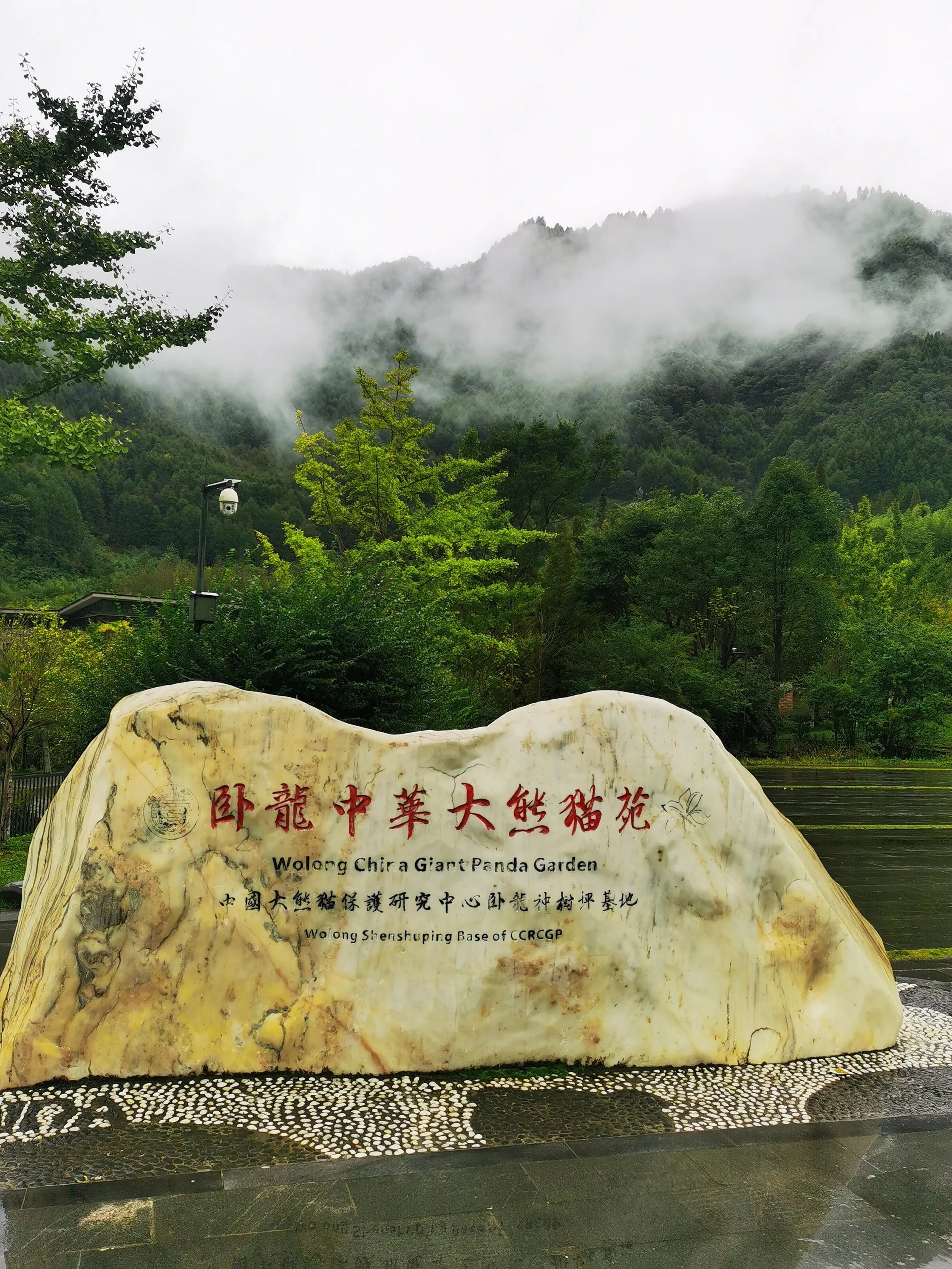
4.2 Wolong National Nature Reserve — Shenshuping Base (卧龙中华大熊猫苑·神树坪基地)
The place to see pandas in a genuinely wild mountain setting. The visitor facility is the Shenshuping Base in Gengda Town, Wenchuan County — roughly 130 km (about a 2.5-hour drive) west of Chengdu on the expressway toward the Tibetan Plateau. Book via the CCRCGP WeChat channel (mini-program "中国大熊猫保护研究中心"); tickets are about CNY 85–90 for adults (students about CNY 45, children under 1.3 m free).
History that explains what you'll see: This is the historic heart of panda conservation. In 1980 the Wolong reserve joined the UNESCO Man and the Biosphere Programme and partnered with the World Wildlife Fund, and in 1983 the China Conservation and Research Center for the Giant Panda (CCRCGP) was established here — the ancestor of today's state panda system. When the 2008 Wenchuan earthquake destroyed the original Hetaoping base, most of the roughly 60-plus captive pandas there had to be evacuated — about 40 went to Bifengxia, others to Beijing and Fuzhou, and only seven cubs stayed behind. Wolong's pandas only returned in stages after the new Shenshuping base opened to visitors in May 2016. Many of the enclosures you'll see are built on that rebuilt site.
What you'll see: About 50 pandas in large, natural mountain enclosures — a far more relaxed scene than the city base — including repatriated superstars Fu Bao (returned from South Korea on April 3, 2024, first met the public at Wolong on June 12, 2024) and Xiao Qi Ji (born at the Smithsonian's National Zoo in 2020, returned to China in November 2023), plus the previous year's cubs. Feedings happen mid-morning and mid-afternoon.
Hours & access: Open roughly 9:00 AM – 5:00 PM (last entry about 4:00–4:30 PM). Direct buses leave central Chengdu (Chunxi Road area or Xinnanmen Bus Station) around 7:00 AM and return in the late afternoon; self-driving takes about 2.5 hours each way. A day trip from Chengdu is doable but tight — a 2-day visit that pairs the base with the mountain scenery is the more relaxing option.
4.3 Bifengxia Panda Base (碧峰峡), Ya'an
About 150 km southwest of Chengdu (a 2.5–3 hour drive, or a fast route by high-speed rail from Chengdu to Ya'an plus a short taxi), inside the national 5A-rated Bifeng Gorge scenic area. The base, run by CCRCGP, was established in 2003 and today is home to around 80 giant pandas — one of the largest single-site herds in the world.
This is where you can see Xiang Xiang (香香), the Japan-born giant panda who became a global internet star. Born at Tokyo's Ueno Zoo on June 12, 2017, Xiang Xiang returned to China on February 21, 2023, and made her public debut at Bifengxia on October 8, 2023. She was still on public display here in 2026, and remains a major draw for Japanese and international visitors.
Practical notes: Entry to the Bifeng Gorge scenic area (about CNY 100) includes the panda base, and online pre-booking usually discounts combo tickets. The base opens around 9:00 AM; pandas are most active before about 11:00 AM and the viewing areas close for a midday rest (roughly 11:30 AM – 1:30 PM), so go early. Like all Chinese bases, direct panda feeding or holding is no longer offered.
Highlights: Lush mountain setting; smaller crowds than the city base; combines naturally with the Bifeng Gorge waterfall and wildlife park.
Best for: Travelers mixing Sichuan's natural scenery with panda viewing, and anyone hoping to see Xiang Xiang.
How to get there: Direct buses run from Chengdu Xinnanmen Bus Station; high-speed rail Chengdu → Ya'an then a short taxi is the faster option.
4.4 Dujiangyan Panda Valley (熊猫谷)
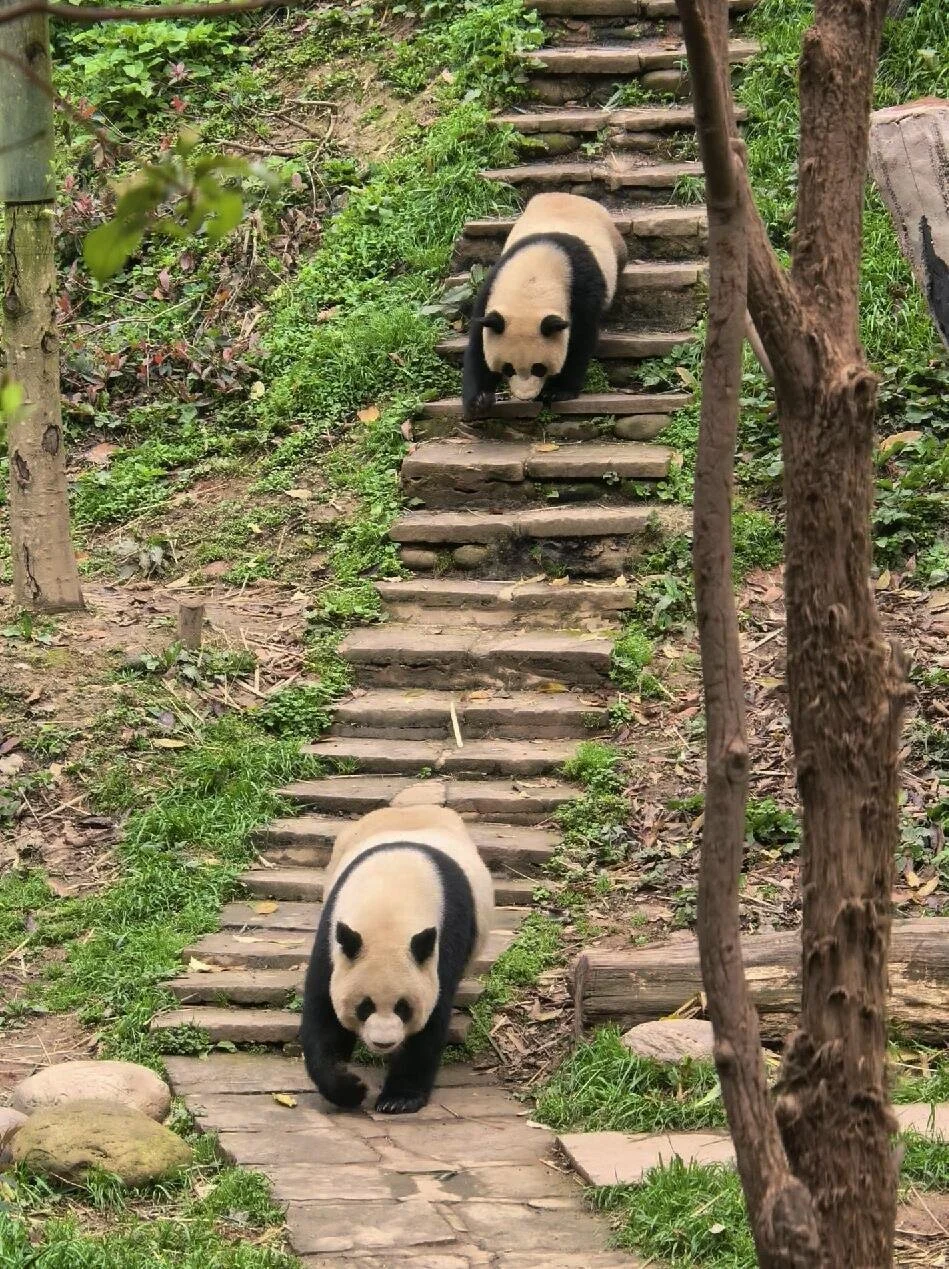
About 50–60 km northwest of Chengdu, near the Dujiangyan Irrigation System, a UNESCO World Heritage Site. This is the Dujiangyan outpost of the Chengdu Research Base (its wild-release training center), so it is separate from the CCRCGP "Dujiangyan Panda Base" described below — the two are easily confused.
What to expect: A quiet, forested valley with a smaller number of pandas plus free-roaming red pandas that sometimes appear right beside the walkway. Entry is about CNY 55, on a timed online slot. There are no newborn cubs here (it is not a breeding center).
Best for: A half-day panda experience with light crowds, combined with a Dujiangyan visit.
One important caveat for 2026: The other site — the CCRCGP Dujiangyan Panda Base (中华大熊猫苑, near Qingcheng Mountain), which normally quarantines returned overseas pandas and runs the popular volunteer/keeper programs — was officially closed for renovation starting April 23, 2026, with no reopening date announced as of this writing. If your trip centers on a panda volunteer program, check official CCRCGP channels before booking.
4.5 Which panda base should you choose?
A quick read based on what matters most to you:
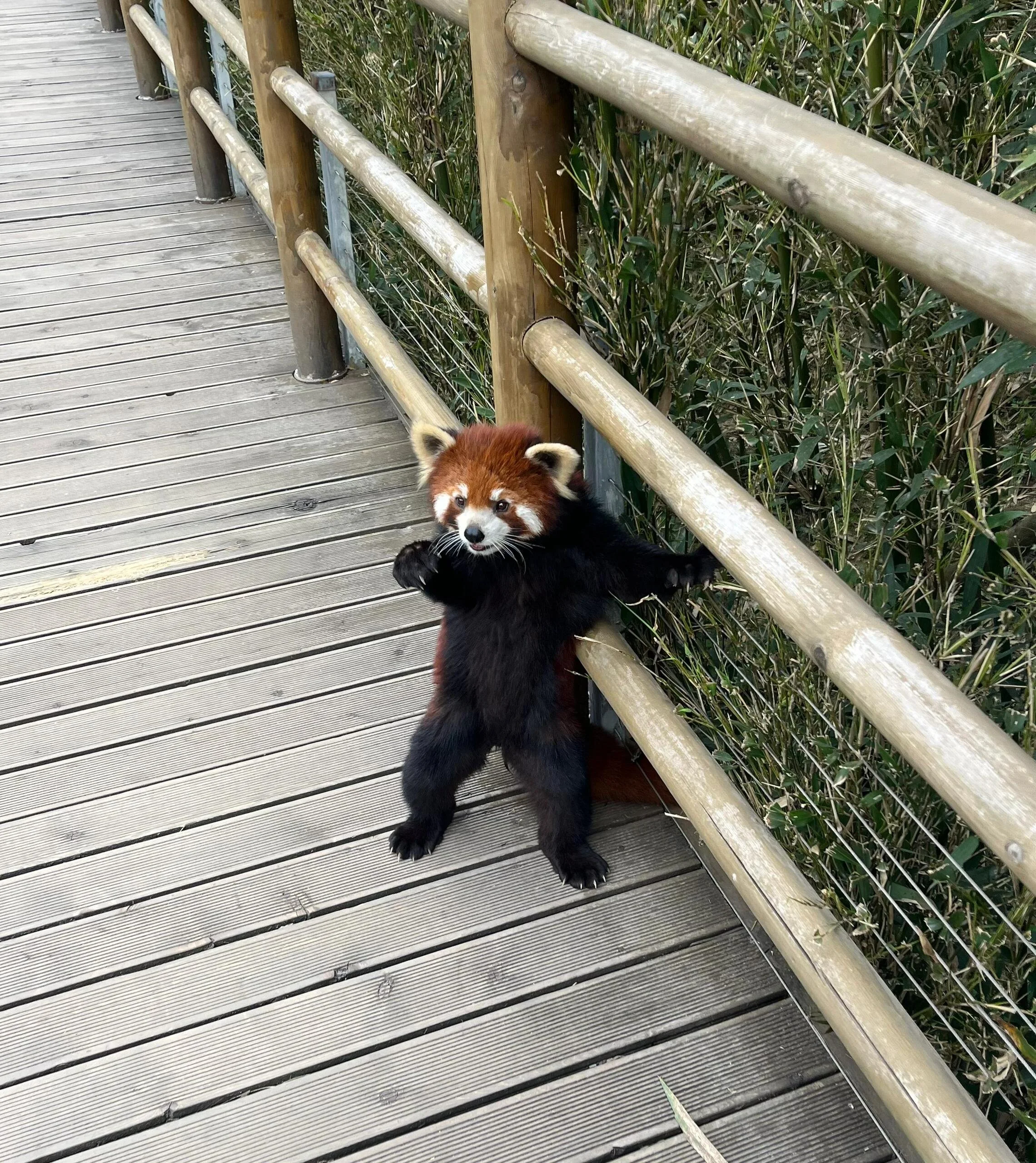
Chengdu Research Base — 40–60 minutes from downtown by taxi or metro. Very busy. About CNY 55 per ticket. Best for first-timers; Huahua; newborn cubs (August–October); and the easiest logistics of any option.
Wolong Shenshuping — roughly a 2.5-hour drive west of Chengdu. Light crowds, much more relaxed. About CNY 85–90 per ticket. Best for natural mountain scenery; Fu Bao and Xiao Qi Ji; a 1–2 day escape from the city.
Bifengxia, Ya'an — 2.5–3 hours southwest of Chengdu. Moderate crowds. About CNY 100 (includes the surrounding 5A Bifeng Gorge scenic area). Best for seeing Xiang Xiang; combining pandas with gorge scenery.
Dujiangyan Panda Valley — about 1–1.5 hours northwest of Chengdu. Light crowds. About CNY 55 per ticket. Best for a quiet half-day experience and free-roaming red pandas.
5. Practical Planning Tips
Best season: October to April — cooler weather, pandas more active. For newborn cubs, aim for August–October instead. Avoid July–August if you can: Chengdu regularly hits 35°C, and pandas retreat indoors by about 11 AM.
Avoid Chinese national holidays — especially Golden Week (early October) and Spring Festival; weekends are noticeably busier too.
Get in early. Book the first entry slot and be at the gate at opening — pandas feed and play in the morning and nap from late morning on.
Booking. Reserve tickets in advance (Chengdu base: up to 14 days) on the official site or via Trip.com for foreign passports.
Payment. Trip.com accepts Visa, Mastercard and PayPal; the official WeChat mini-program requires a mainland Chinese phone number for SMS verification.
Photography. No flash anywhere near pandas; drone use is prohibited.
Pair with: Old-town teahouses, the Wuhou Temple, the Jinli Ancient Street, and the Jinsha Site Museum — all covered in our Sichuan Deep Dive travel guide.
6. Combine Your Panda Trip with a Broader China Tour
Most international visitors don't fly 12 hours just to see pandas. If you're already planning a multi-city route, here is how a Chengdu panda stop fits in naturally:
Chengdu + Zhangjiajie (7–9 days): Pandas in the city, then the Avatar Mountains in Hunan. Our most popular combination for first-time China visitors. Start with our signature Zhangjiajie private tours.
Chengdu + Xi'an (6–8 days): Pandas plus the Terracotta Warriors — a deep dive into China's two most iconic cultural capitals. See our Xi'an private tours and Xi'an 3-day survival guide.
Chengdu + Beijing (7–10 days): Pandas, then the Great Wall and the Forbidden City. Start with our Beijing private tours.
Chengdu + Tibet (10+ days): Pandas, then overland into Lhasa via Sichuan's Tibetan areas — the Wolong/Shenshuping base sits right on this route. See our Tibet travel guide and Tibet tours.
Not sure which combination fits? Browse all our China private tours or get a custom itinerary from our planners.
7. Frequently Asked Questions
Can you see pandas in the wild as a tourist? Practically, no. Wild pandas live in remote reserves that require research permits to enter. For tourists, the captive bases above are the realistic option.
Is the Chengdu Panda Base worth the hype? Yes — if you go early and pick the right gate. After about 11 AM the pandas sleep, Huahua's villa develops a multi-hour queue, and the heat builds. Aim to be at the gate for the first entry slot, and consider entering at the West Gate if you don't specifically need Huahua.
How much time do I need at the Chengdu Panda Base? 3–4 hours for the main enclosures; plan half a day if you also want the nurseries, the museum, and the red panda area. Walking South Gate to West Gate (or vice versa) with the sightseeing car is the classic route.
When is the best time of year to see baby pandas? Pandas give birth mainly July–September, and cubs start appearing in the Sunlight/Moonlight nurseries from about mid-August. For newborns, visit between August and October — at any other time of year the nurseries hold only juveniles.
Are there ethical concerns about visiting panda bases? The major facilities (Chengdu, Wolong, Bifengxia, Dujiangyan) follow international standards and participate in global conservation programs — the Smithsonian's National Zoo has long partnered with Chinese facilities for cooperative breeding and research. Direct panda holding and feeding have been banned at Chinese bases since 2019; ignore anyone online offering a "panda hug" experience, and avoid unaccredited roadside "panda cafes."
How do I get from downtown Chengdu to the panda base? For the South Gate: Metro Line 3 to Panda Avenue Station, then the ¥2 shuttle (route 408) or a short taxi — about 45 minutes from downtown. For the West Gate (quieter): Metro Line 3 to Military General Hospital Station (Exit B), then shuttle route 409.
Can I use a foreign credit card to book panda tickets? Yes — via Trip.com, which accepts Visa, Mastercard and PayPal. The official WeChat mini-program requires a mainland Chinese phone number for SMS verification, so most international visitors book through Trip.com or have their hotel concierge assist.
8. Conclusion
Strip away the marketing and the real story is one of the 20th century's great conservation turnarounds: bamboo die-offs nearly pushed a species to the brink, Sichuan's cities and state centers rebuilt its numbers from a handful of rescued founders, and today that work is on public display across a handful of bases that are easy to reach from Chengdu. Where you go depends on what you want — a guaranteed morning of pandas a taxi ride from downtown, a mountain valley hours from the crowds, or the chance to see a Japan-born star or a cub born last summer.
Ready to add Chengdu to your China route?Talk to a Zhangjiajie Travel China planner →
Note on accuracy: Prices, opening hours, visitor caps, and base statuses change frequently. All information above was verified in early September 2026 against official sources (panda.org.cn, the State Forestry and Grassland Administration, and the bases' own booking channels); always reconfirm the official page before you travel.
About Zhangjiajie Travel China (Lynx Travel)
Zhangjiajie Travel China is a private tour operatoroperating since 2014, with on-the-ground teams in Chengdu, Beijing, Xi'an, Chongqing, Kunming, Ürümqi, Lhasa, and Guilin. We design private and small-group China itineraries for international travelers. Fully licensed as a China travel agency, every tour is covered by commercial travel insurance and supported by a 24/7 trip coordinator on WhatsApp.