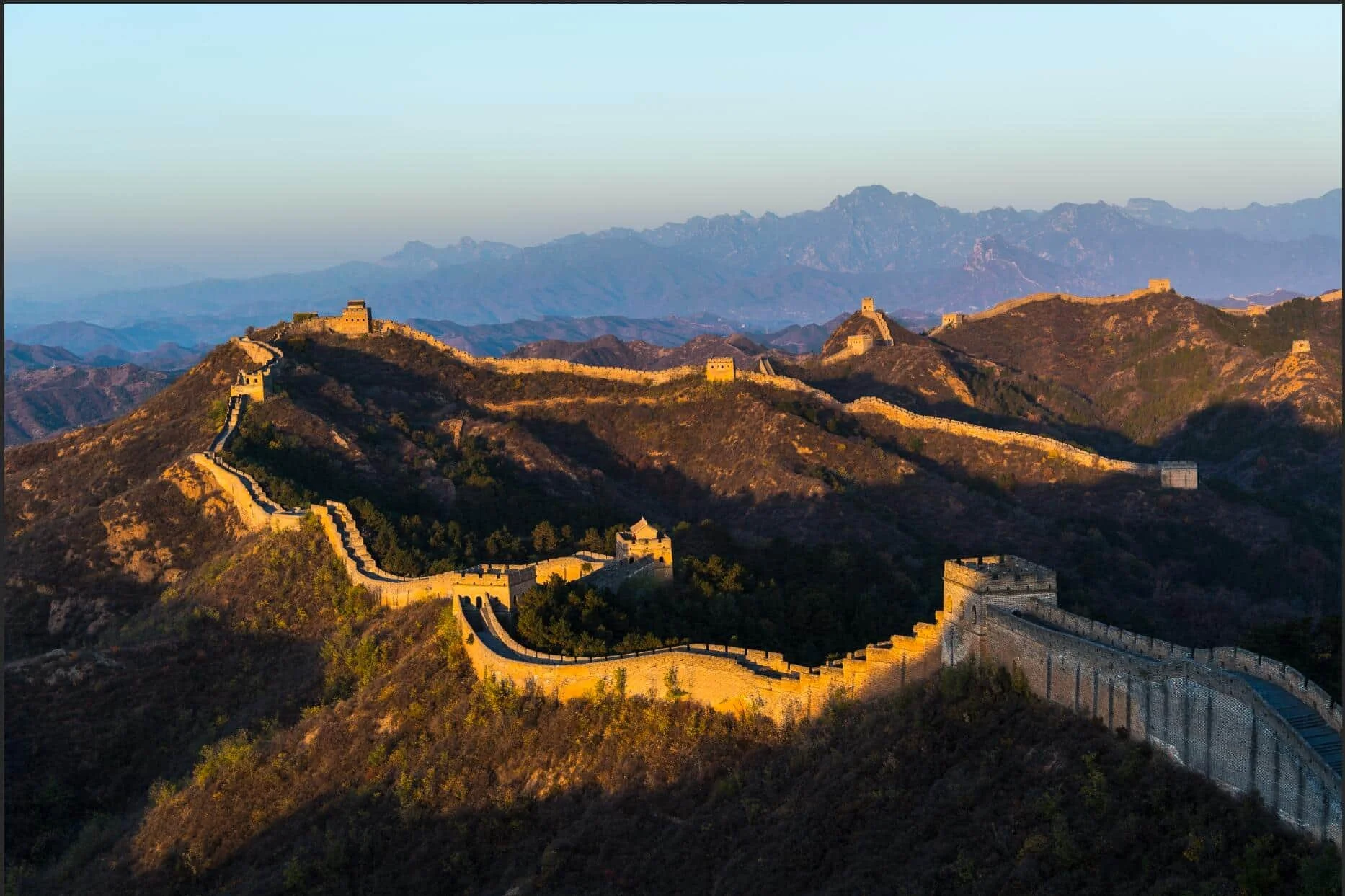
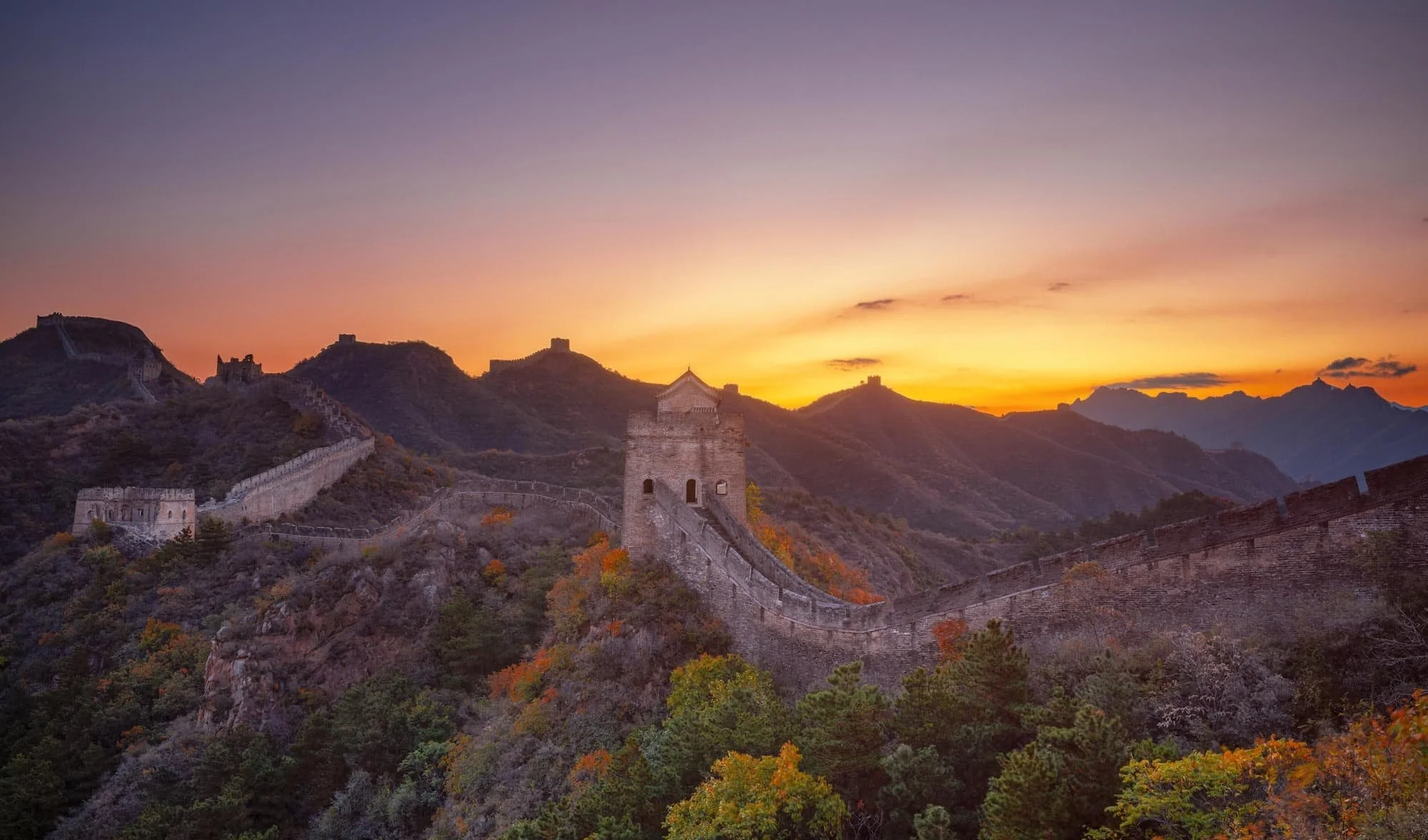
Beijing Private Tours — Great Wall & Ancient Capital Discovery
Private Beijing Tours
Filters
Filters

All China Cities Private Charter & Private Day Tour Service (Unified General Template)
We provide nationwide private car charter, airport & train station transfers, and customized private day toursacross major tourist cities in China. All services include a professional local driver and clean private vehicle. No shared strangers, no forced shopping, flexible travel pace. We offer personalized quotation according to your travel date, group size, vehicle type and travel itinerary before your order.
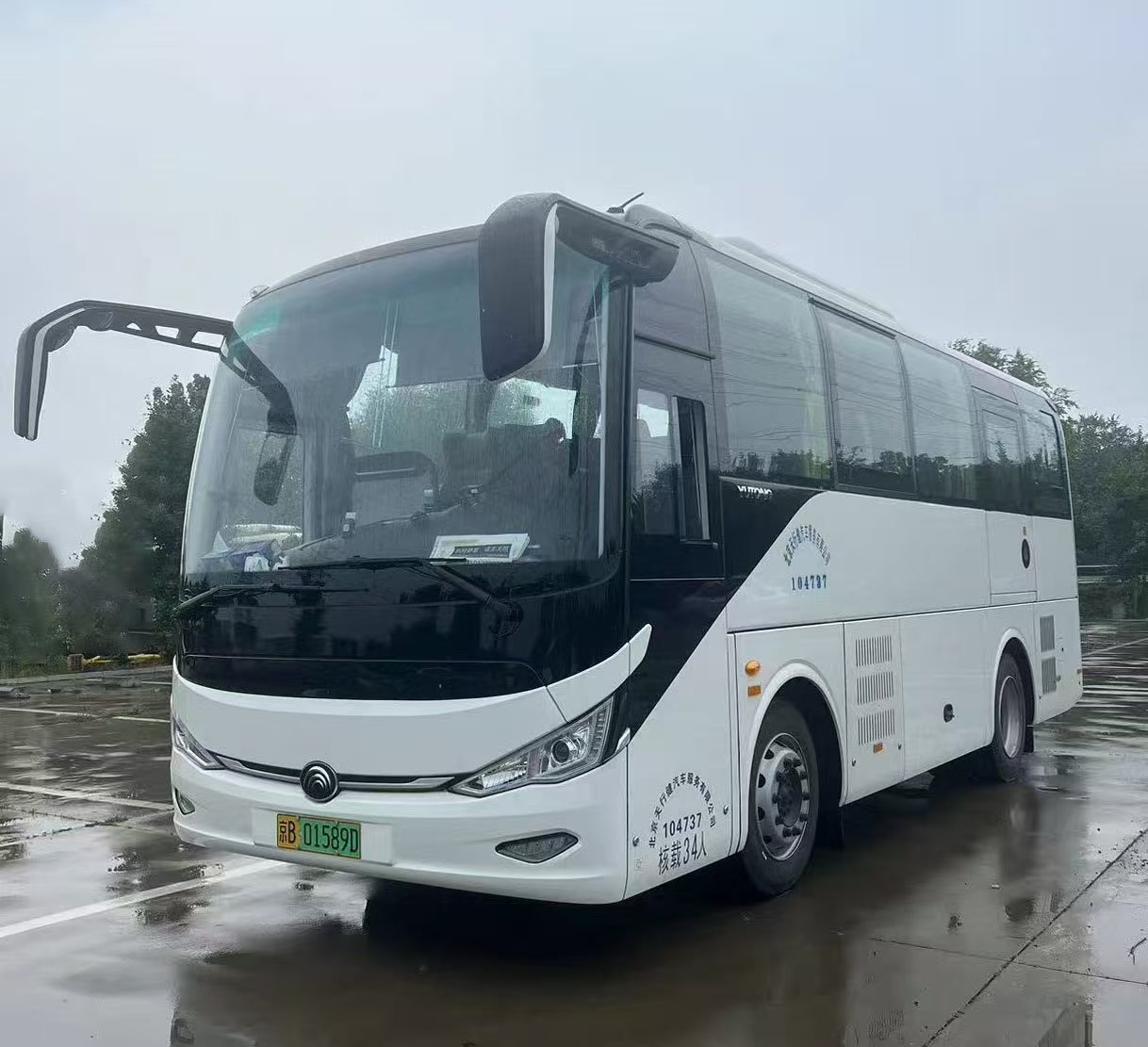
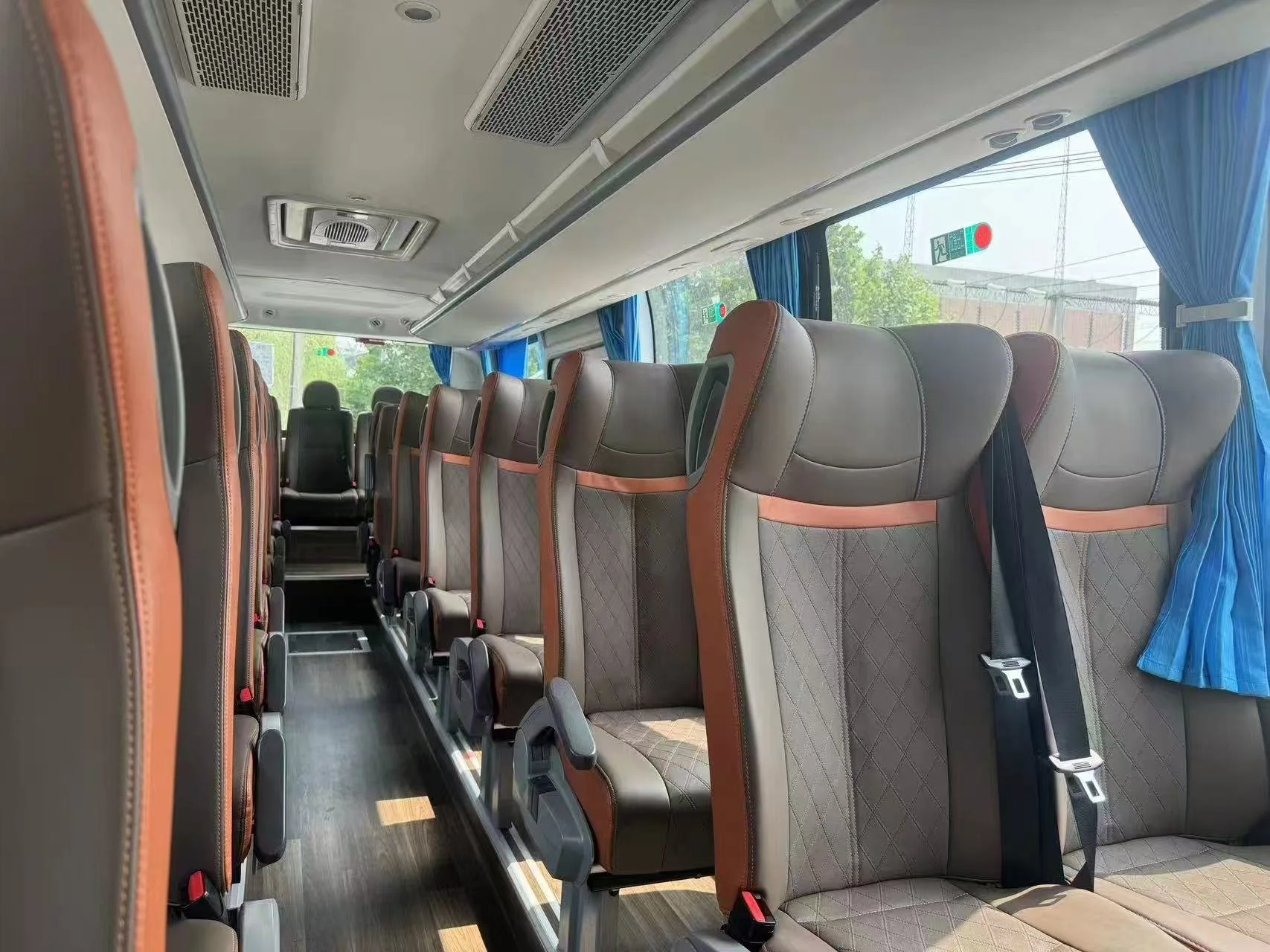
Our Universal Vehicle Fleet (All Cities Available)
We have multiple vehicle models to suit different group sizes and luggage capacity:
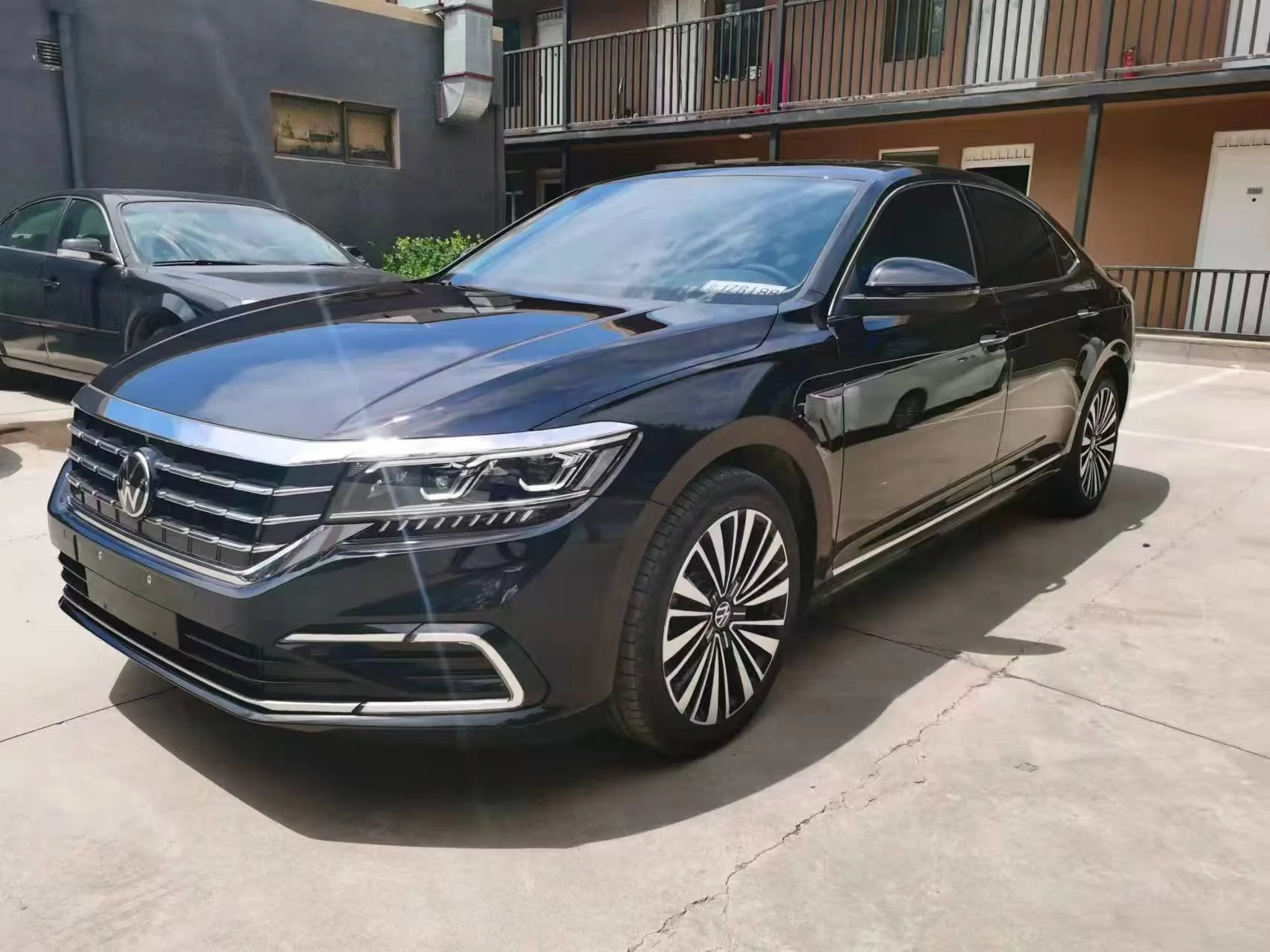
5-seater Sedan — Perfect for 1–3 guests (solo travelers, couples, small families)
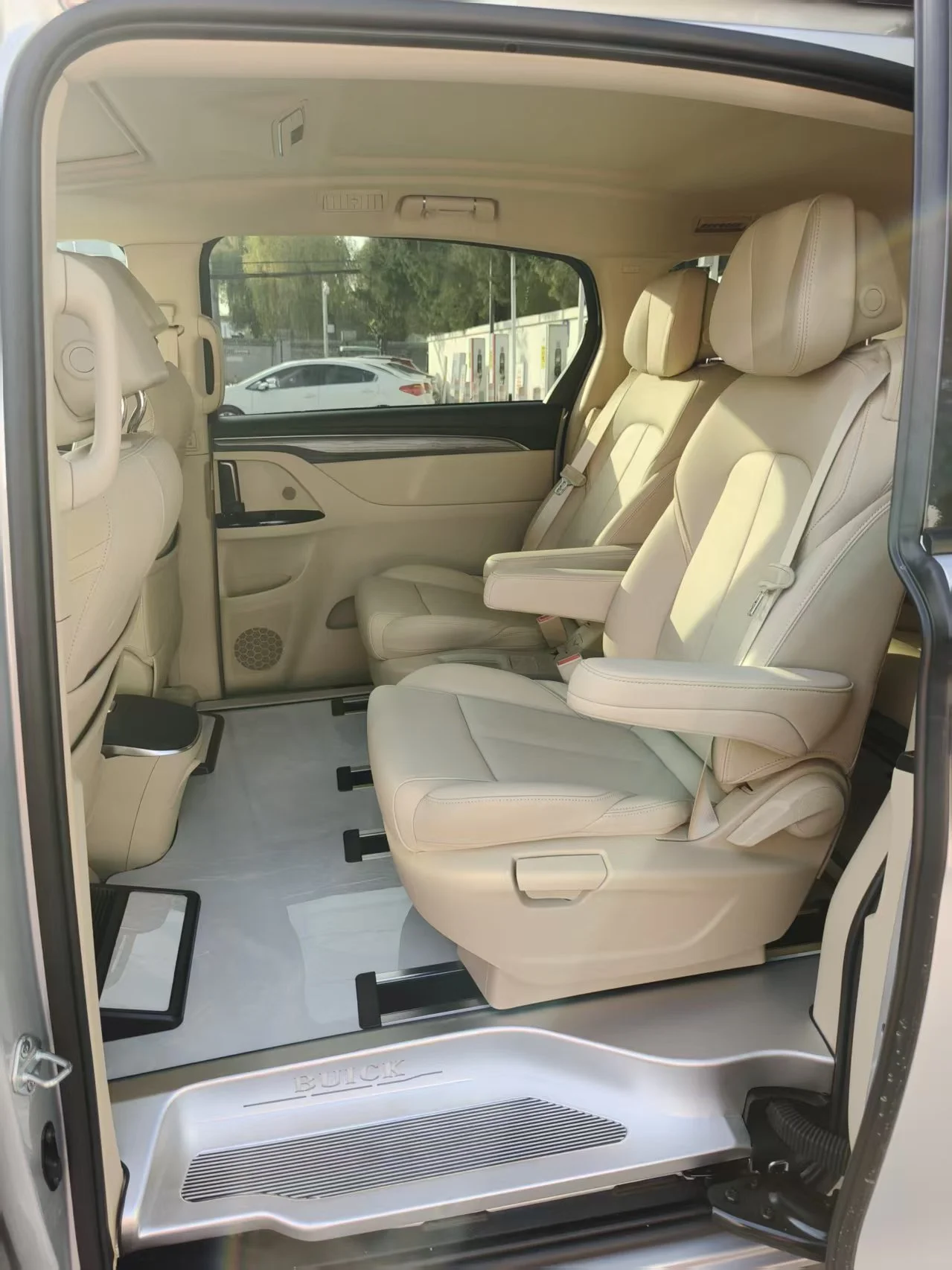
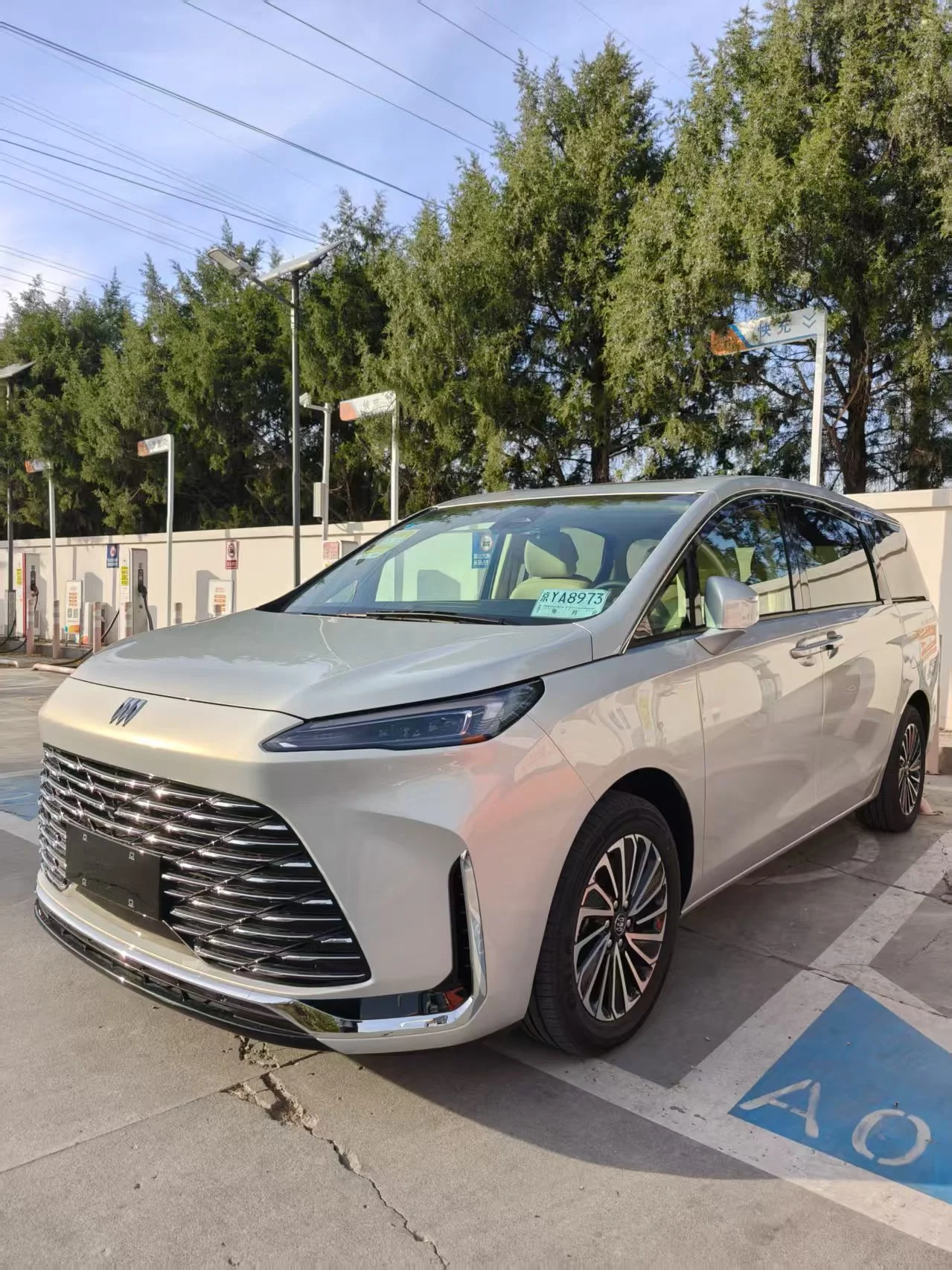
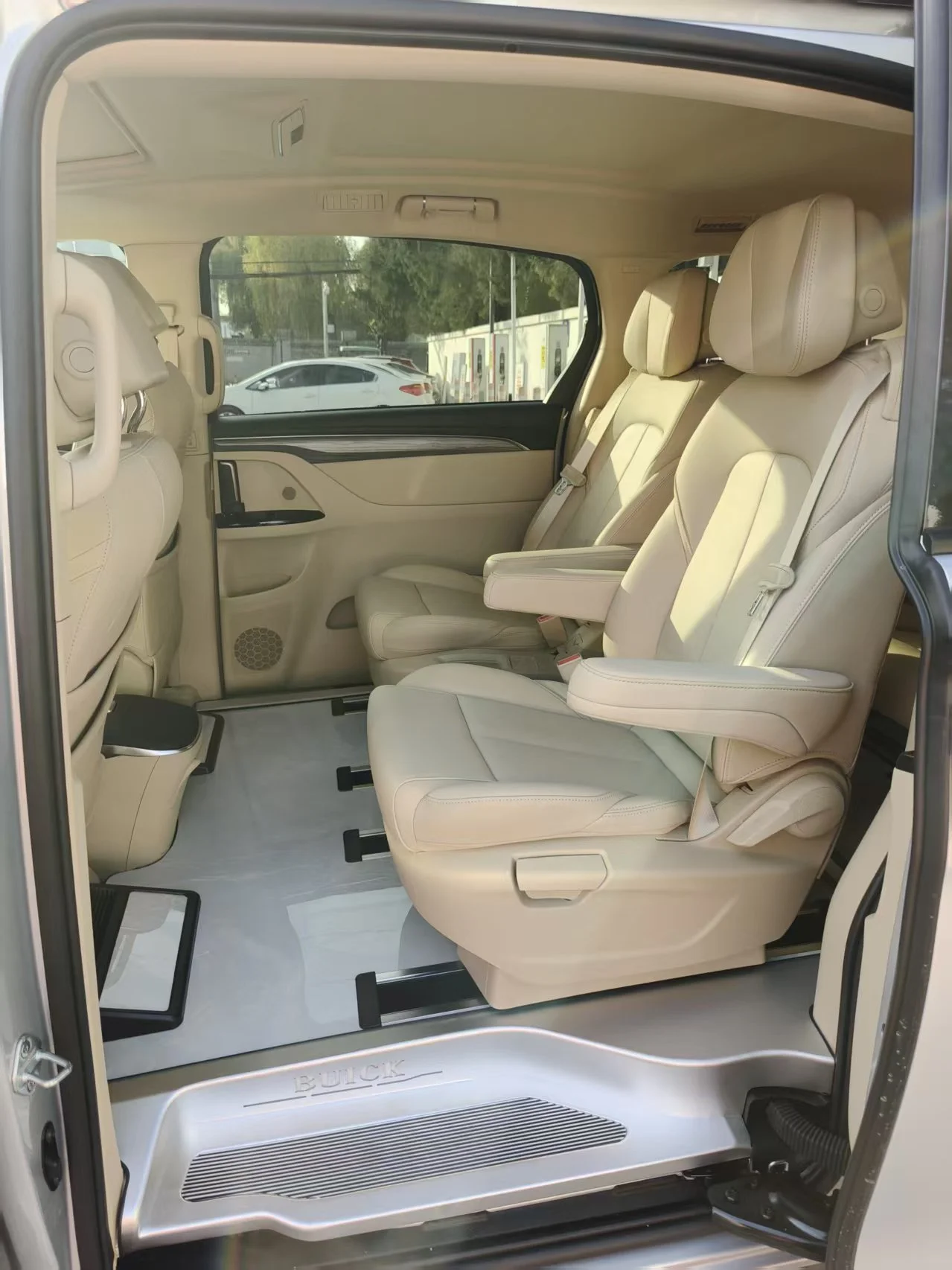
7-seater MPV — Ideal for 4–6 guests (spacious and comfortable for family travel)
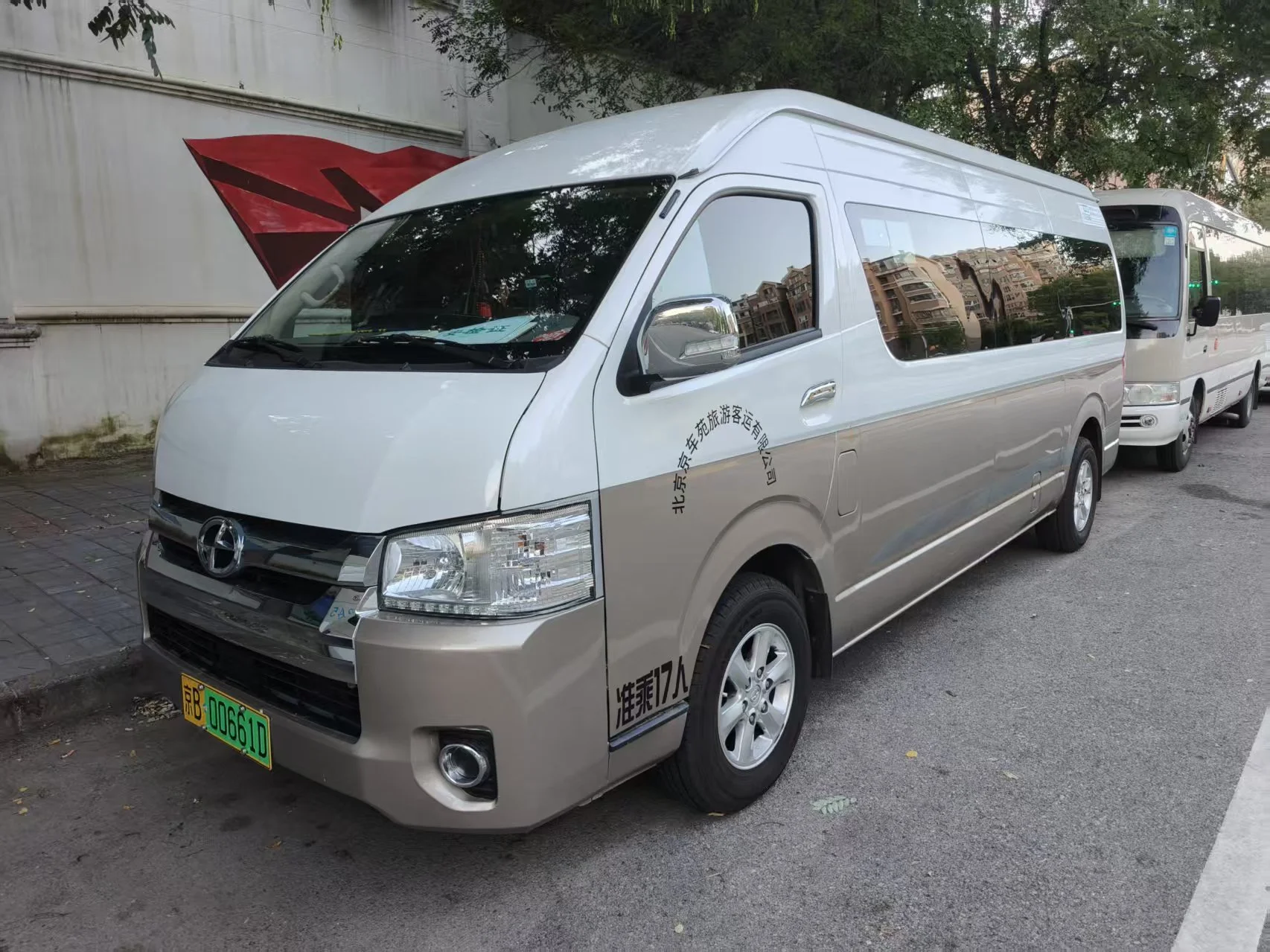
9-seater Van — Suitable for 7–8 guests (extra space for passengers and luggage)
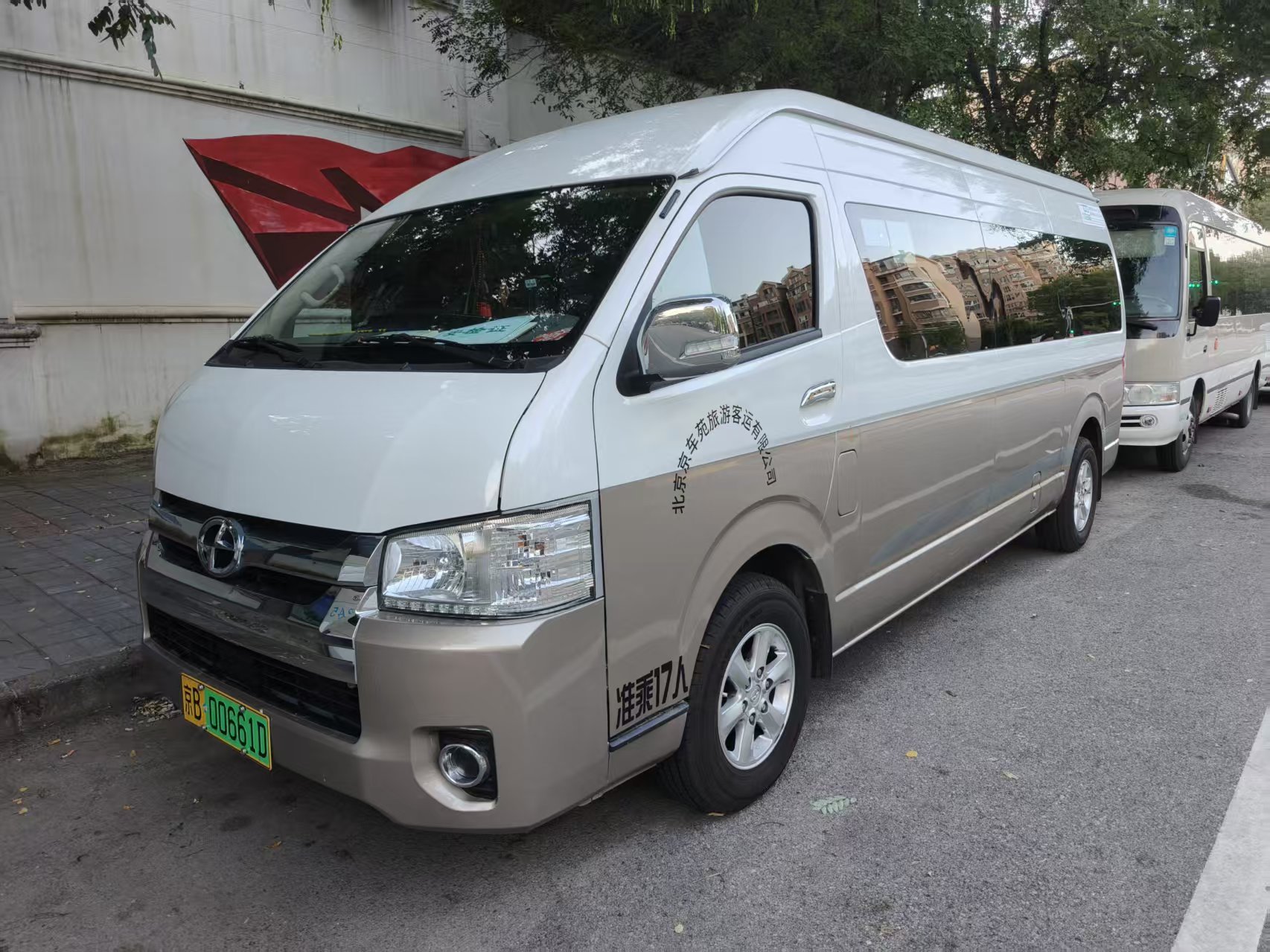
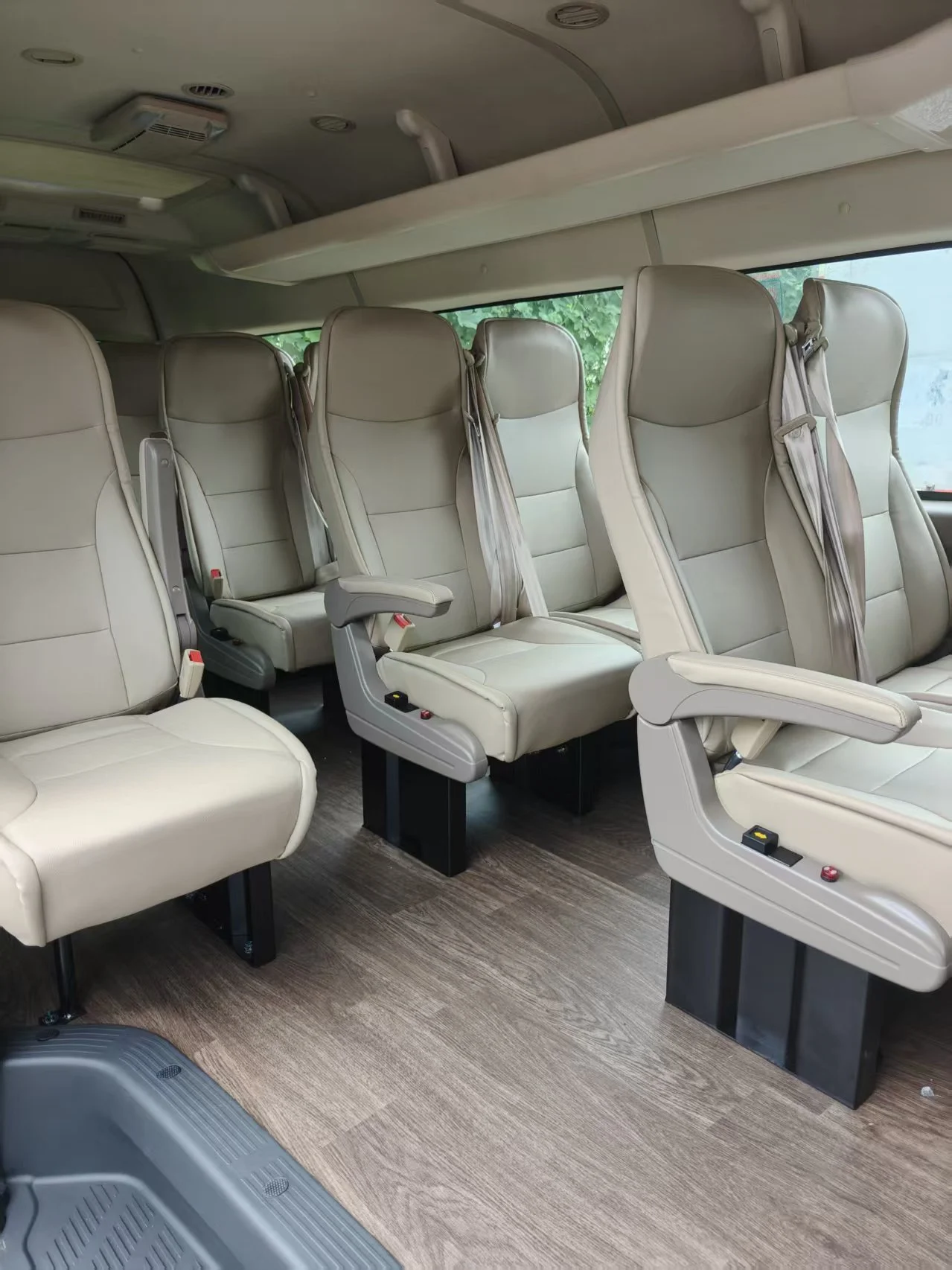
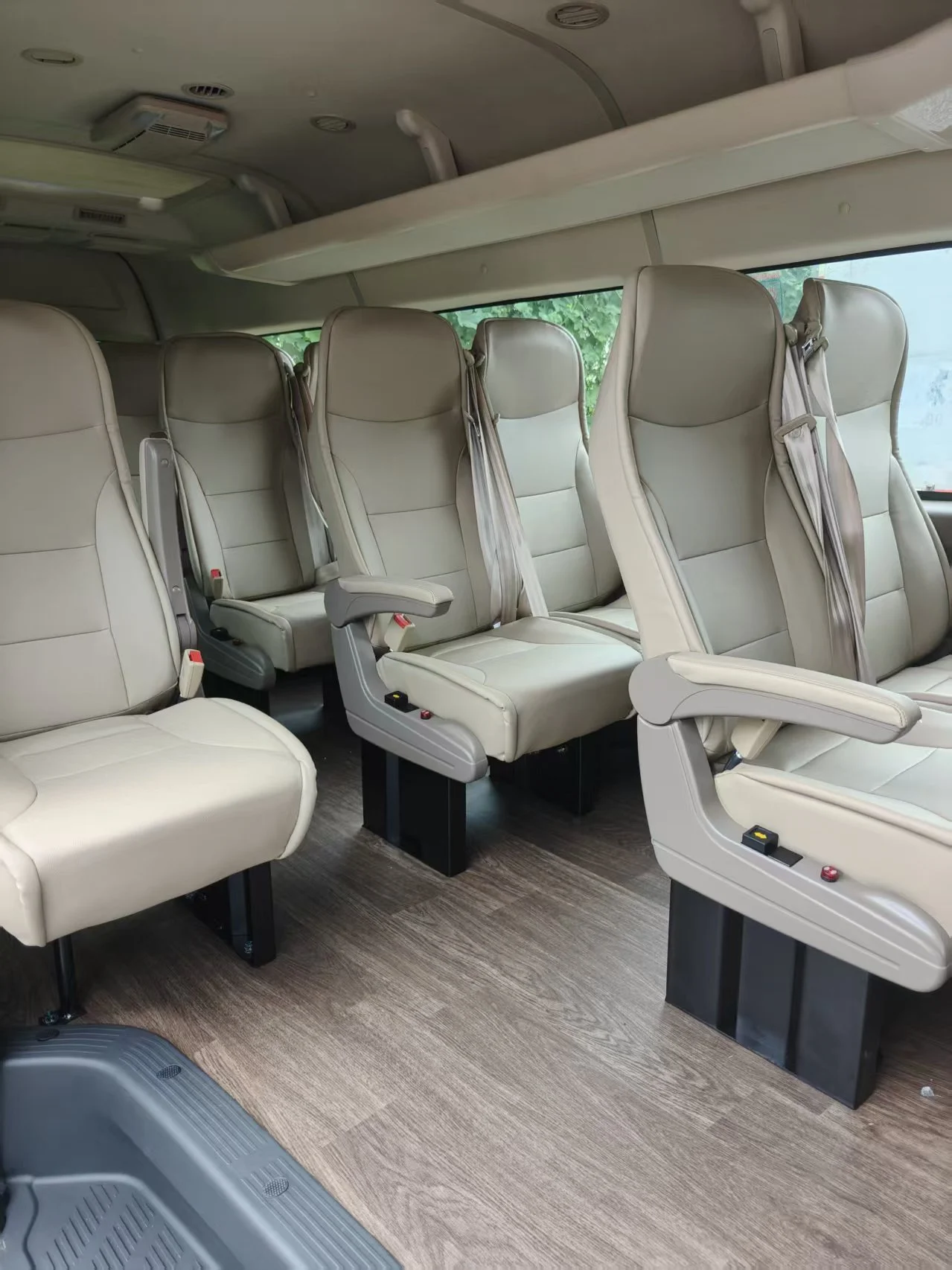
14-seater Minibus — Best for 9–13 guests (small group travel)
General Service Coverage (All Destinations)
Airport pick-up & drop-off service
Train station pick-up & drop-off service
Full-day & half-day private scenic spot charter
Custom multi-day private road trip charter
Optional licensed English-speaking guide / dual-certified guide-driver service
City-by-City Tour Highlights & Classic Routes
1. Beijing
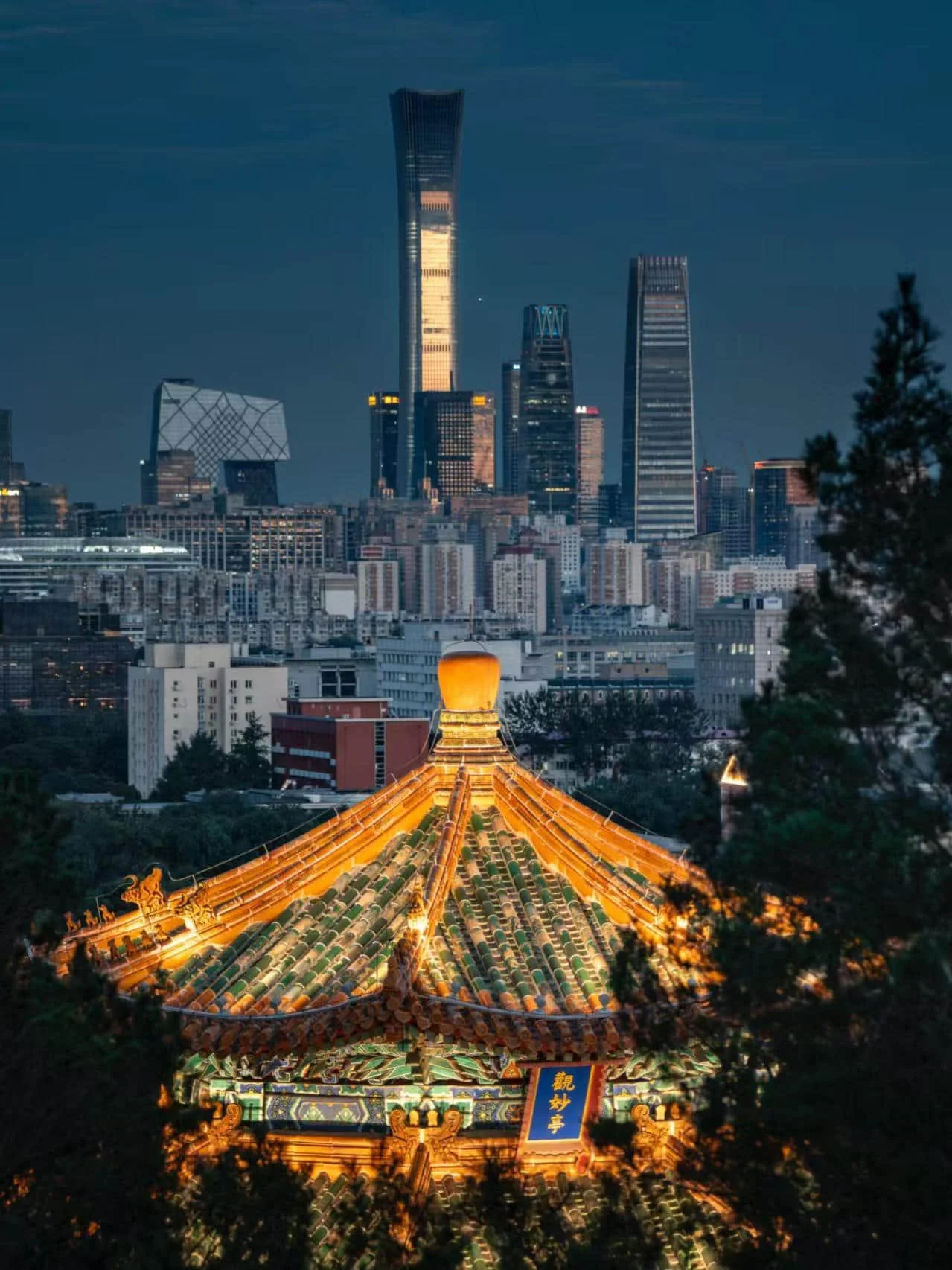
Available private day tours: Forbidden City & Great Wall combination tour, pure Great Wall one-day tour, city landmark sightseeing tour. Dual-certified English guide-driver service is available for all private tours.
2. Xi’an
Classic private day tour: Terracotta Army + Ancient City Wall + Datang Everbright City. Flexible scenic order and tour duration.
3. Zhangjiajie
Available private tours: Tianmen Mountain, Zhangjiajie Grand Canyon & Glass Bridge (most popular), National Forest Park, Furong Town full-day charter.
4. Shanghai
Classic private tours: Shanghai city highlights sightseeing, Zhujiajiao Water Town, one-day Suzhou & Hangzhou surrounding city trips.
5. Guangzhou
Classic private tours: Guangzhou city tour, Canton Tower, Shamian Island, and surrounding Foshan & Zhaoqing day excursions.
6. Chongqing
Classic private tours: Chongqing urban landmark tour, Hongyadong, Wulong Karst National Geology Park, Dazu Rock Carvings.
7. Chengdu
Classic private tours: Chengdu Panda Base & city sightseeing, Dujiangyan & Qingcheng Mountain, Leshan Giant Buddha day tour.
8. Guilin
Classic private tours: Guilin city scenery, Li River cruise, Yangshuo countryside karst landscape private day tour.
9. Guizhou
Classic private tours: Huangguoshu Waterfall, Fanjing Mountain, Xiaoqikong Scenic Area, Miao and Dong ethnic village sightseeing.
10. Yunnan
Classic private tours: Kunming city tour, Dali Erhai Lake cycling & ancient town tour, Lijiang Jade Dragon Snow Mountain, Shangri-La highland scenery tour.
11. Xinjiang
Classic private tours: Urumqi city & Heavenly Lake, Turpan flame mountain & grape valley, Kashgar ancient city, Yili grassland seasonal road trips.
Core Service Advantages (Unified for All Cities)
Local Ground Operator Since 2014 with rich local travel experience
In-house team, no middleman markup, cost-effective direct pricing
100% private & customizable — no shared guests, no forced shopping
Professional local drivers familiar with all scenic routes
Seasonal dynamic pricing (peak & off-peak season)
Optional dual-certified guide-driver service to save at least 1/3 travel cost

All China Cities Private Charter & Private Day Tour Service (Unified General Template)
We provide nationwide private car charter, airport & train station transfers, and customized private day toursacross major tourist cities in China. All services include a professional local driver and clean private vehicle. No shared strangers, no forced shopping, flexible travel pace. We offer personalized quotation according to your travel date, group size, vehicle type and travel itinerary before your order.
Our Universal Vehicle Fleet (All Cities Available)
We have multiple vehicle models to suit different group sizes and luggage capacity:
5-seater Sedan — Perfect for 1–3 guests (solo travelers, couples, small families)
7-seater MPV — Ideal for 4–6 guests (spacious and comfortable for family travel)
9-seater Van — Suitable for 7–8 guests (extra space for passengers and luggage)
14-seater Minibus — Best for 9–13 guests (small group travel)
General Service Coverage (All Destinations)
Airport pick-up & drop-off service
Train station pick-up & drop-off service
Full-day & half-day private scenic spot charter
Custom multi-day private road trip charter
Optional licensed English-speaking guide / dual-certified guide-driver service
City-by-City Tour Highlights & Classic Routes
1. Beijing
Available private day tours: Forbidden City & Great Wall combination tour, pure Great Wall one-day tour, city landmark sightseeing tour. Dual-certified English guide-driver service is available for all private tours.
2. Xi’an
Classic private day tour: Terracotta Army + Ancient City Wall + Datang Everbright City. Flexible scenic order and tour duration.
3. Zhangjiajie
Available private tours: Tianmen Mountain, Zhangjiajie Grand Canyon & Glass Bridge (most popular), National Forest Park, Furong Town full-day charter.
4. Shanghai
Classic private tours: Shanghai city highlights sightseeing, Zhujiajiao Water Town, one-day Suzhou & Hangzhou surrounding city trips.
5. Guangzhou
Classic private tours: Guangzhou city tour, Canton Tower, Shamian Island, and surrounding Foshan & Zhaoqing day excursions.
6. Chongqing
Classic private tours: Chongqing urban landmark tour, Hongyadong, Wulong Karst National Geology Park, Dazu Rock Carvings.
7. Chengdu
Classic private tours: Chengdu Panda Base & city sightseeing, Dujiangyan & Qingcheng Mountain, Leshan Giant Buddha day tour.
8. Guilin
Classic private tours: Guilin city scenery, Li River cruise, Yangshuo countryside karst landscape private day tour.
9. Guizhou
Classic private tours: Huangguoshu Waterfall, Fanjing Mountain, Xiaoqikong Scenic Area, Miao and Dong ethnic village sightseeing.
10. Yunnan
Classic private tours: Kunming city tour, Dali Erhai Lake cycling & ancient town tour, Lijiang Jade Dragon Snow Mountain, Shangri-La highland scenery tour.
11. Xinjiang
Classic private tours: Urumqi city & Heavenly Lake, Turpan flame mountain & grape valley, Kashgar ancient city, Yili grassland seasonal road trips.
Core Service Advantages (Unified for All Cities)
Local Ground Operator Since 2014 with rich local travel experience
In-house team, no middleman markup, cost-effective direct pricing
100% private & customizable — no shared guests, no forced shopping
Professional local drivers familiar with all scenic routes
Seasonal dynamic pricing (peak & off-peak season)
Optional dual-certified guide-driver service to save at least 1/3 travel cost
Let Me Plan Your China Trip – From $10/City
Planning a trip to China shouldn't feel like a full-time job.
You have 15 days. Maybe 20. Maybe even longer.
But between researching destinations, figuring out transport, comparing hotels, and calculating budgets… you're spending hours—maybe days—just trying to figure out where to start.
I get it. I've been there.
That's why I'm here to do the heavy lifting for you.
What I Offer
I create custom, ready-to-use travel itineraries tailored to exactly what you want—your destinations, your travel style, your budget, your pace.
This is NOT a tour package. I don't book flights or hotels for you. Instead, I give you a complete, expert-crafted plan so you can travel independently—without the stress of figuring it all out on your own.
Think of me as your personal China travel planner.
How It Works
Tell me your travel details – Destinations, number of days, group size, budget range, must-sees, and any special interests.
I build your custom itinerary – I design a day-by-day plan that includes:
Suggested routes and must-see attractions
Hotel recommendations (budget to luxury)
Transportation guidance (trains, flights, local transit)
Estimated costs for each part of your trip
Local tips and insider advice
You get a complete, ready-to-go plan – delivered as a clear, easy-to-follow document.
Pricing
ServicePrice1 City (e.g., Zhangjiajie, Beijing, Shanghai)$10 USD2 Cities$20 USD3 Cities$30 USD4 Cities$40 USD5 Cities$50 USD
Each additional city = $10 USD
Sample: What a $10 Zhangjiajie Itinerary Includes
Here's an example of what you get for a 4-day Zhangjiajie itinerary:
Day-by-day schedule – covering Zhangjiajie National Forest Park, Tianmen Mountain, and the Glass Bridge
Accommodation picks – from budget hostels to 4-star hotels
Transport details – how to get between attractions, estimated costs
Budget breakdown – ticket prices, meal estimates, transport costs
Pro tips – best times to visit, what to pack, how to avoid crowds
And the same level of detail applies to Beijing, Shanghai, Xi'an, Guilin, Chengdu—any city you want to visit.
Why Let Me Plan for You?
✔ Save 10–20 hours of research – I've already done the work.
✔ Get a plan that fits YOU – not a one-size-fits-all tour.
✔ Avoid costly mistakes – wrong hotels, bad routes, hidden fees.
✔ Travel with confidence – knowing exactly where to go, how to get there, and what it costs.
✔ Affordable expertise – professional trip planning for less than the price of a meal out.
What Travelers Say
"I had no idea where to start with a 3-week China trip. The itinerary saved me so much time and stress. Everything was practical and spot-on."
— Sarah, UK (15-day trip: Beijing → Xi'an → Zhangjiajie → Shanghai)
"The hotel recommendations alone were worth the money. I stayed in places I never would have found on my own."
— Michael, Australia (10-day trip: Chengdu → Zhangjiajie)
Ready to Start?
Tell me where you want to go and how long you have. I'll send back a complete custom plan within 48 hours.
👉 [Click here to get started] – Just fill out a quick form with your travel preferences, and I'll take it from there.
100% satisfaction guaranteed. If you're not happy with your itinerary, I'll revise it until it's right.
Questions? Feel free to [contact me] before you book.
Hire a Licensed English-Speaking Guide in Beijing
Beijing is a city of layers — 3,000 years of history hidden in plain sight, secret courtyards behind unmarked doors, a language that turns simple menu items into puzzles. While guidebooks and apps are helpful, nothing compares to having a local expert by your side — someone who can explain the difference between a Qin Dynasty tile and a Ming Dynasty one, negotiate prices at the Silk Market, translate dishes you'd never order otherwise, and share stories that bring the city's past and present to life.
Our English-speaking tour guides aren't just translators — they're cultural ambassadors, trained historians, and passionate storytellers who will transform your Beijing experience from "sightseeing" to "deep understanding."
What sets our guides apart:
→ Licensed professionals — All guides hold official Beijing tourism licenses
→ Fluent English — Natural, conversational fluency (many have lived or studied abroad)
→ Specialized knowledge — Imperial history, architecture, Buddhism, cuisine, or contemporary China
→ No forced shopping — We don't take commissions from shops; our only incentive is your satisfaction
→ 24/7 support — Need to change plans? Have an emergency? We're always reachable
Our Guide Services
1. Full-Day Guided Tours (8-10 hours)
Our most popular service. Your guide meets you at your hotel and accompanies you for a full day of exploration. Popular itineraries:
Classic Beijing: Forbidden City + Great Wall (Mutianyu)
Cultural Deep Dive: Temple of Heaven + Summer Palace + Lama Temple
Local Life: Hutong bicycle tour + dumpling-making class + street food
Custom itinerary: Tell us your interests, and we'll design the perfect day
2. Half-Day Guided Tours (4-5 hours)
Perfect if you're short on time or want to focus on one area:
Forbidden City Focus: In-depth exploration of the Palace Museum (3-4 hours)
Great Wall Half-Day: Morning or afternoon trip to Mutianyu (4-5 hours)
Hutong & Local Markets: Explore old Beijing neighborhoods and food markets (3-4 hours)
3. Airport/Railway Station Pickup & Transfer
Arriving in Beijing can be overwhelming — the airport is huge, signs are mostly in Chinese, and taxi scams are common. Our guide will:
Meet you at the arrival gate with a sign bearing your name
Help with luggage and SIM card purchase (if needed)
Arrange reliable transportation to your hotel (no scam taxis!)
Provide a brief orientation to your neighborhood
💡 Pro tip: Combine airport pickup with a guided tour! Many clients book our airport-to-hotel-with-sightseeing package — turn travel time into tour time.
4. Specialized & Themed Tours
Photography tours — Best spots for sunrise/sunset, hidden photo ops
Food tours — From street food to Michelin-starred restaurants
Architecture focus — Ming vs. Qing Dynasty building styles, feng shui symbolism
Religious sites — Buddhism, Taoism, Islam, and Christianity in Beijing
Contemporary Beijing — 798 Art Zone, CBD skyscrapers, tech hubs
Family-friendly tours — Interactive activities for kids (dumpling-making, kite-making)
5. Business & Conference Services
Visiting Beijing for business? Our guides can provide airport pickup, accompany you to meetings as an interpreter, arrange client entertainment (Peking duck dinner, kung fu show), and help with logistics (SIM cards, WeChat Pay setup, navigation).
Meet Our Guides
🧑🏫 Guide Li — History Specialist
Background: Born and raised in Beijing. Studied Chinese history at Peking University. Licensed guide for 12 years. Can recite the genealogy of every Ming and Qing emperor from memory.
Specialty: Forbidden City, Summer Palace, and anywhere that involves stories about emperors, concubines, and palace intrigue.
Fun fact: Li's grandfather was a calligraphy teacher in the Forbidden City before it became a museum. Li grew up hearing stories about the palace that aren't in any guidebook.
"Li brought the Forbidden City to life. He didn't just tell us dates — he told us about the emperor who loved clocks, the concubine who wrote poetry, the eunuch who had too much power. It was like reading a novel, except it was all true." — Mark T., USA
👩🍳 Guide Zhang — Food & Culture Specialist
Background: Grew up in a hutong, learned to cook from her grandmother, leading food tours for 8 years. Knows every noodle shop, dumpling stall, and Peking duck restaurant in the city.
Specialty: Food tours, hutong walks, market visits, and anything involving authentic local experiences.
Fun fact: Zhang once ate 47 different types of street food in one day (for research, she claims). She can tell you exactly which stall at Wangfujing is worth your money and which is a tourist trap.
"Zhang took us to a dumpling place that doesn't even have a sign — just a red door in a hutong. Best dumplings of my life. She also taught us how to bargain at the Silk Market. Zhang = legend." — Sarah M., Australia
🏛️ Guide Wang — Architecture & Buddhism Specialist
Background: Studied architecture at Tsinghua University with a side passion for Buddhist art. Can explain why Forbidden City roofs are yellow (only emperors could use yellow) and how feng shui influenced every imperial building.
Specialty: Temple of Heaven, Lama Temple, Summer Palace, and any site with intricate architecture or Buddhist symbolism.
Fun fact: Wang is an amateur calligrapher and knows the best spots in Beijing to buy high-quality calligraphy supplies (no tourist markup!).
"Wang's explanations of the Temple of Heaven's architecture were mind-blowing. I never knew buildings could be so symbolic." — James L., UK
💡 These are sample profiles. When you book, we'll match you with a guide based on your interests, language preferences, and availability.
Sample Itineraries
Itinerary 1: Classic Beijing (Forbidden City + Great Wall)
TimeActivity7:30 AMHotel pickup9:00 AM – 12:00 PMGreat Wall (Mutianyu) — hike, photos, optional cable car12:30 PM – 1:30 PMLunch at a local farmhouse restaurant3:00 PM – 5:30 PMForbidden City — guided tour of main halls and gardens6:00 PMDrop-off at hotel or Wangfujing Street
Itinerary 2: Cultural Deep Dive (Temples & Gardens)
TimeActivity8:30 AMHotel pickup9:00 AM – 11:00 AMTemple of Heaven — explore park, join tai chi, visit the Hall of Prayer11:30 AM – 12:30 PMLunch near the Summer Palace1:30 PM – 4:30 PMSummer Palace — Long Corridor, Longevity Hill, Kunming Lake5:00 PM – 6:00 PMLama Temple — Tibetan Buddhist temple6:30 PMDrop-off at hotel or Houhai Lake
Itinerary 3: Local Life (Hutongs, Food & Markets)
TimeActivity9:00 AMHotel pickup9:30 AM – 12:00 PMHutong bicycle tour — Shichahai, Nanluoguxiang12:30 PM – 2:00 PMDumpling-making class with a local family (including lunch)2:30 PM – 4:00 PMSilk Market shopping — bargaining lesson4:30 PM – 6:00 PMTemple of Heaven park — watch locals dance, sing, play cards6:30 PMDinner recommendation and drop-off
What's Included
Professional English-speaking guide (licensed, experienced)
Customized itinerary based on your interests and pace
Pre-tour consultation (via email/WeChat) to understand your preferences
Recommendations for restaurants, shopping, and additional activities
Translation assistance (menus, signs, conversations with locals)
Photo assistance (your guide will take great photos of you!)
24/7 emergency support during your tour
What's Not Included
Transportation (your guide can help arrange a car/van, or you can use public transport/Didi)
Entrance fees to attractions (your guide will advise on costs and help purchase tickets)
Meals (your guide will recommend restaurants and help with ordering)
Travel insurance (highly recommended)
Gratuities for your guide (optional but appreciated)
Pricing
ServicePrice (RMB)Price (USD approx.)Full-day guide (8-10 hours)¥1,200~$165Half-day guide (4-5 hours)¥700~$95Airport pickup (within 4th Ring Road)¥400~$55Airport drop-off (within 4th Ring Road)¥400~$55Airport round-trip¥700~$95Additional hour (beyond 10 hours)¥150/hour~$20/hour
💡 Discount: Book 3+ days of guiding and get 10% off total cost! Prices are for up to 10 people per guide.
Frequently Asked Questions
Q: How far in advance should I book?
A: We recommend booking at least 1 week in advance, especially during peak seasons (April-May, September-October). For last-minute bookings (within 48 hours), we'll do our best but availability may be limited.
Q: Can I request a specific guide?
A: Absolutely! If you have a preference based on our guide profiles or a previous experience, let us know when booking. Popular guides book up quickly, so earlier booking = better chance of getting your first choice.
Q: What if I want to customize the itinerary?
A: That's what we're here for! Share your interests, must-see attractions, and special requests. We'll design a custom itinerary just for you. Want to add a kung fu show or calligraphy class? We can arrange that.
Q: Do your guides provide transportation?
A: Our guides do not drive, but we can help arrange: Private car/van with driver (¥600-1000/day), Didi (Chinese Uber), or public transportation (subway is cheap and efficient).
Q: Can you accommodate dietary restrictions?
A: Yes! Let us know about any dietary needs (vegetarian, vegan, gluten-free, halal, food allergies). Your guide will choose appropriate restaurants and help with ordering.
Q: Is tipping expected?
A: Tipping is not mandatory in China, but it's appreciated. A typical tip is ¥100-200 per day (or equivalent), but any amount is welcome.
Q: Do your guides speak other languages?
A: Our primary service is English-speaking guides, but we also have guides who speak French, German, Japanese, and Spanish (subject to availability).
Don't leave your Beijing experience to chance. With a knowledgeable, English-speaking guide by your side, you'll see more, learn more, and enjoy more. Book your Beijing guide today!
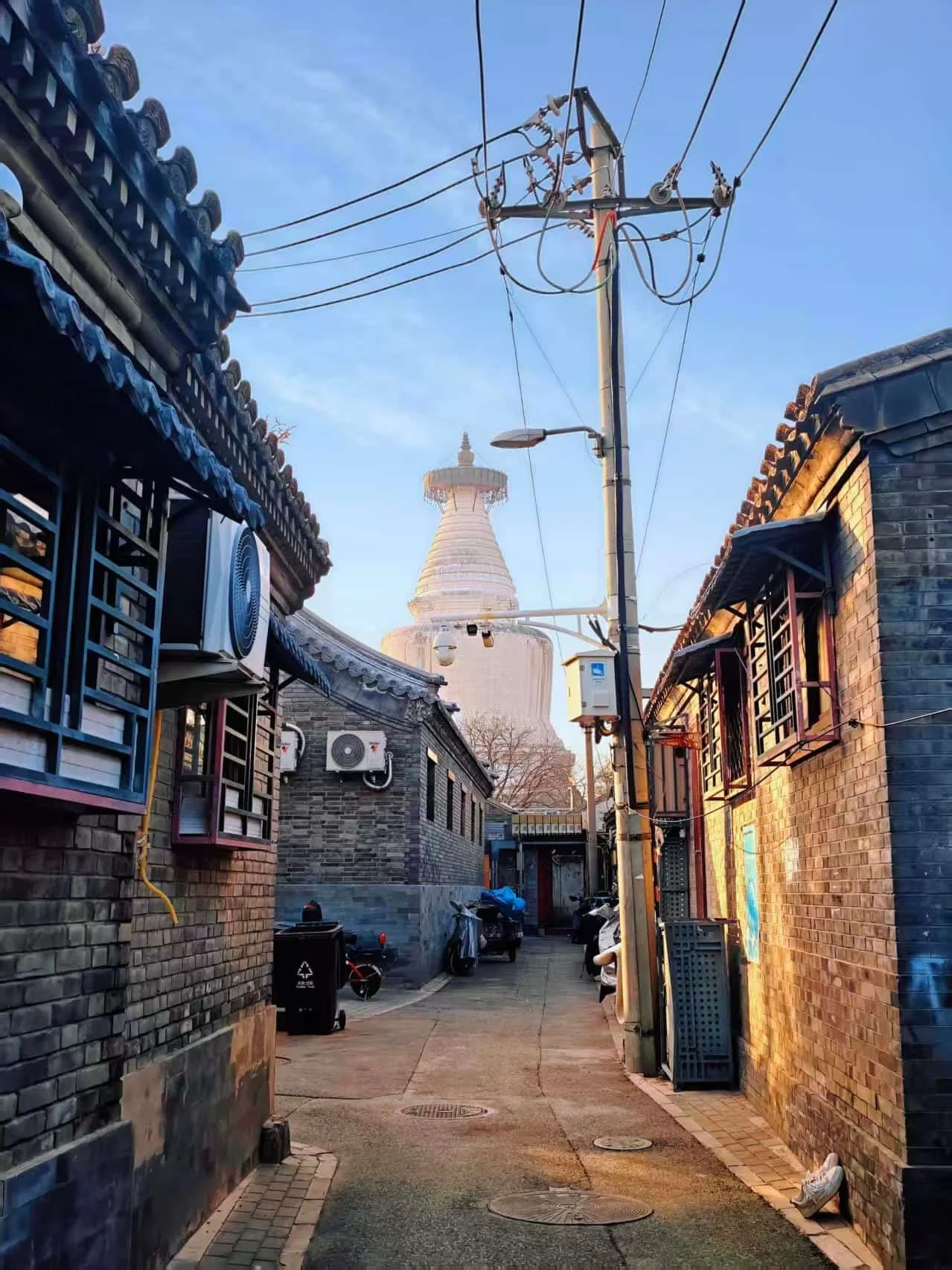
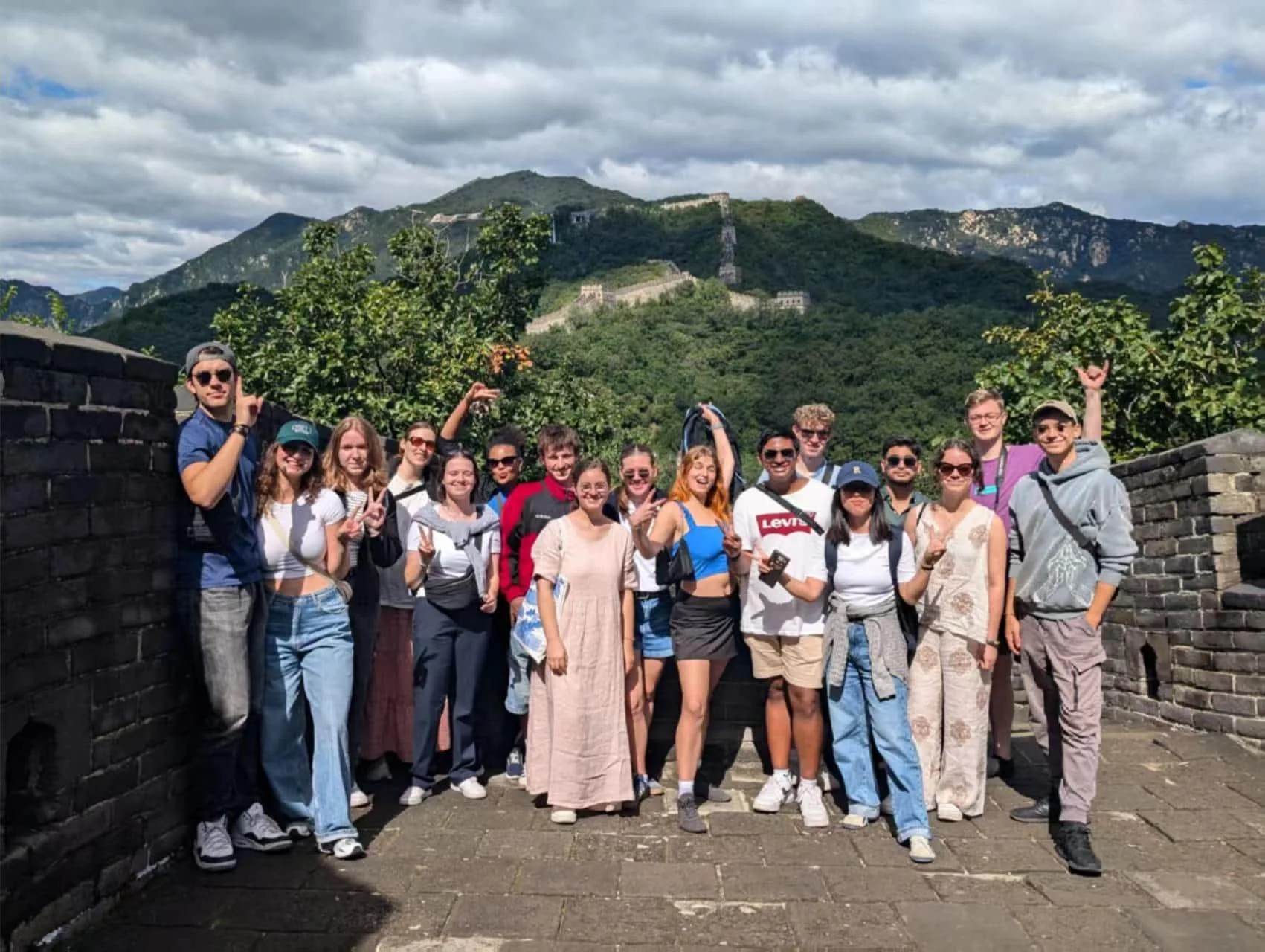
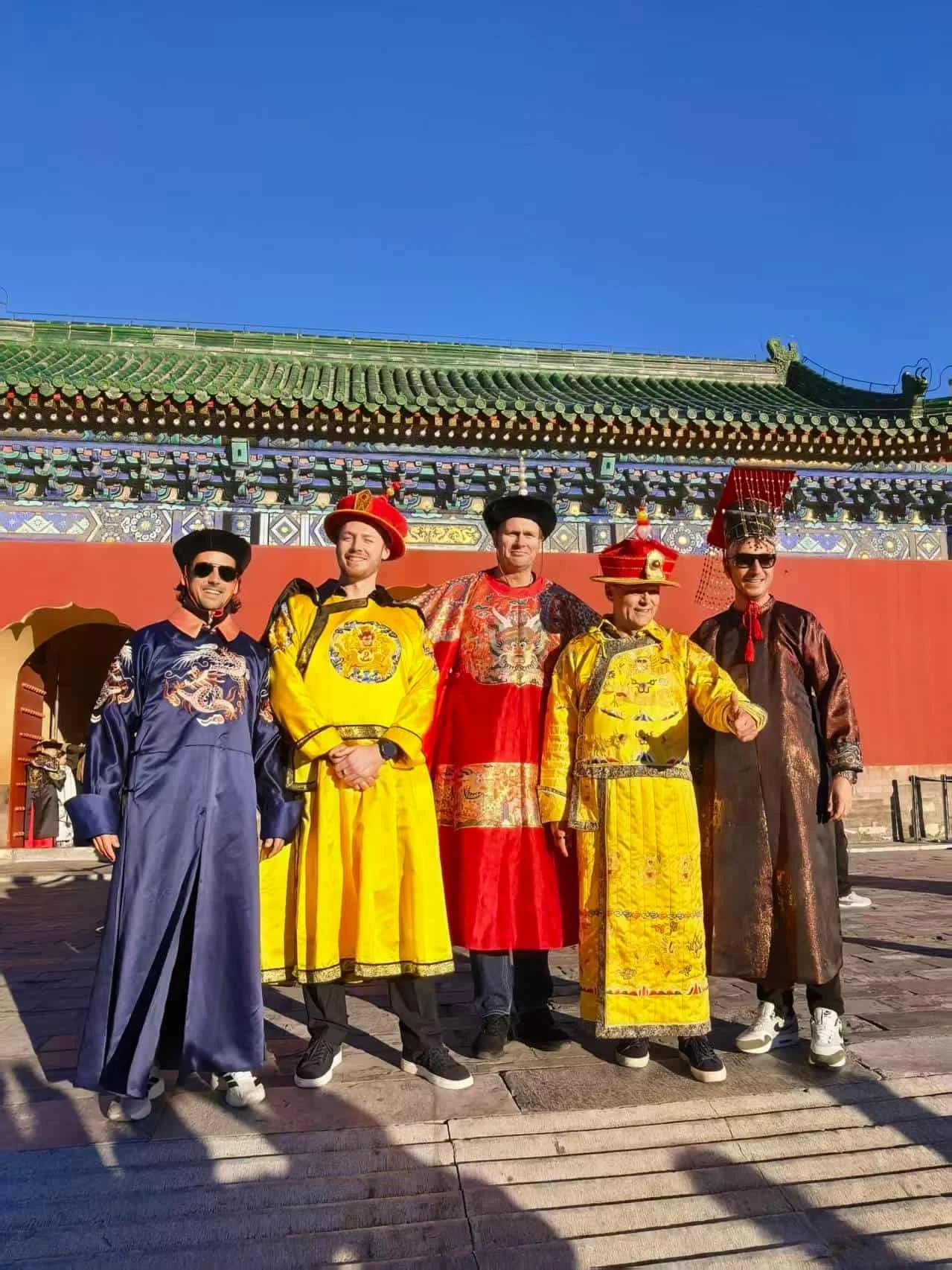
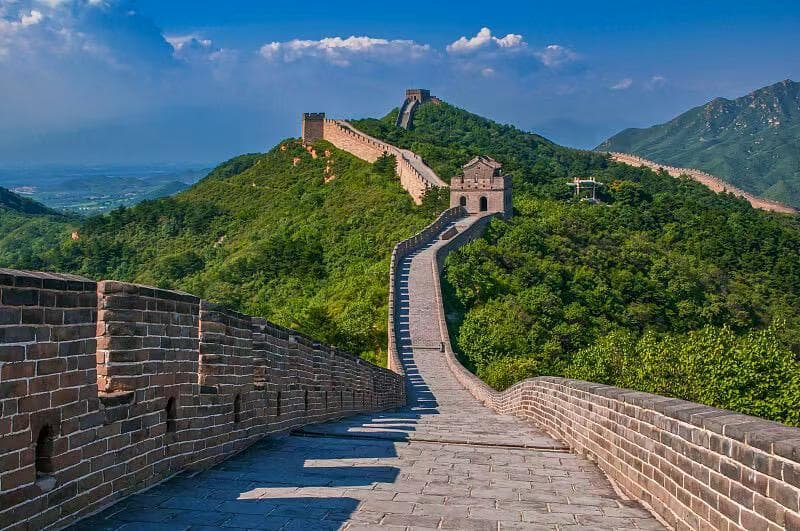
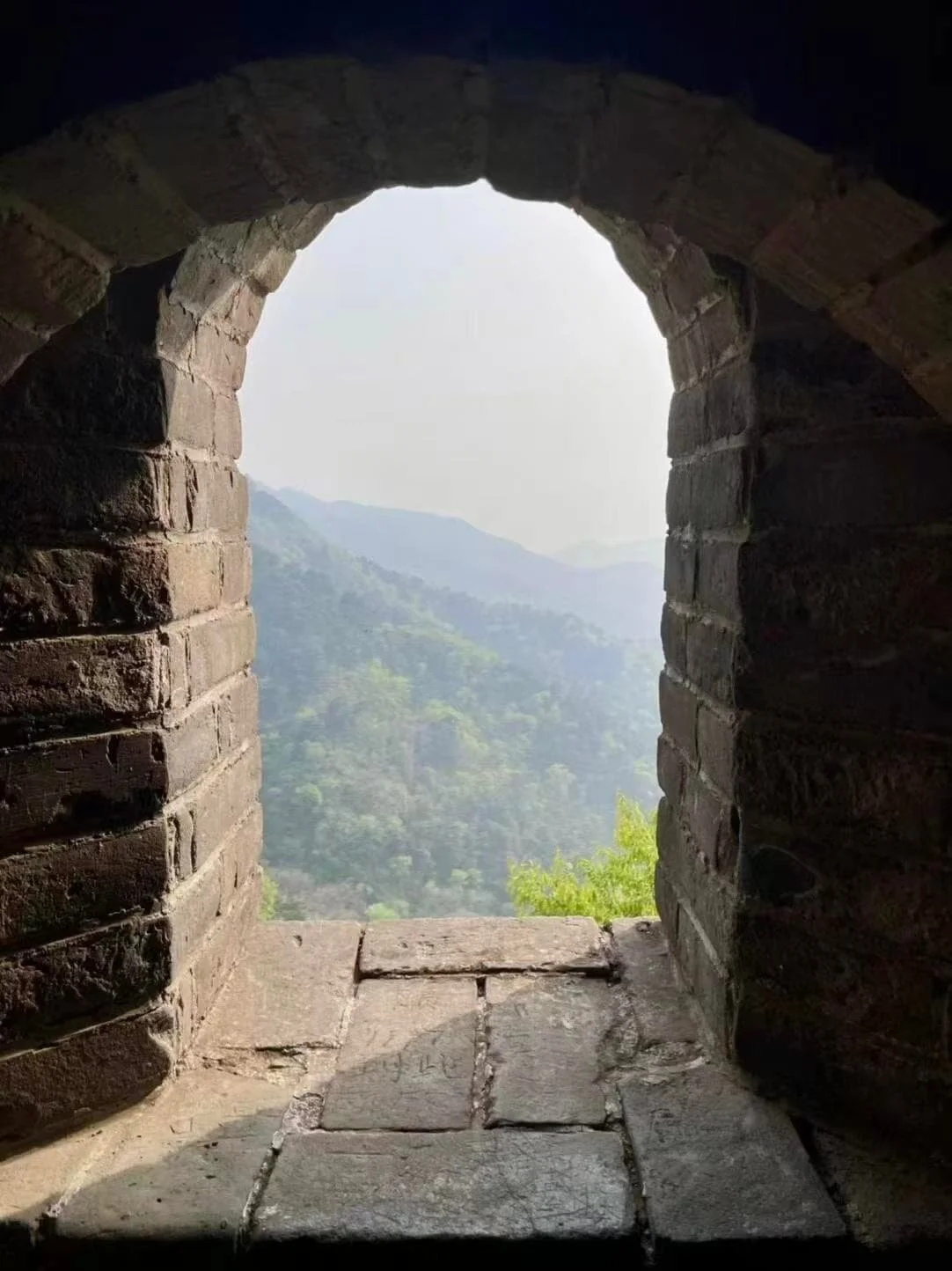
Beijing One-Day Private Tour: 4 Routes, Forbidden City & Great Wall
Only have one day in Beijing? We offer four tailored private day tours to suit all travelers — history lovers, photography enthusiasts, family travelers and casual visitors. All tours include a professional English‑speaking guide, reliable service, zero forced shopping and customizable travel combinations. Send us your travel date and group size, and we will send you a quotation within 12 hours.
Why Choose Us & Our Core Advantages
Local Ground Operator Since 2014:We are a licensed travel agency for Beijing — a local inbound operator since2014, offering crowd‑avoiding tips, and scenic spot details that only local insiders master, ensuring a smooth, hassle‑free and high‑quality travel experience for every guest.
In‑House Team & Zero Middleman Markup:All our tour staff and vehicles belong to our own local team. We operate directly without any third‑party agents or middlemen. Cost‑based operation lets us deliver great value while keeping service quality high.
Unique Dual‑Certified One‑Person Service (Our Biggest Highlight):Our tour host holds both an official national tour guide certificate and a driver’s license. Many platforms only list an “English‑speaking driver”, who is merely a driver without official guiding qualification. Our specialist does both jobs: safe private transportation + fully‑licensed on‑site English commentary throughout the whole day. Since one person performs two roles, guests can save at least 1/3 of the total cost, compared with booking a separate driver plus a separate guide.
No Surcharge for 2‑person Groups:Our private tours run for just two guests with no extra surcharge. No need to wait for more strangers to join your group.
Season‑Based Pricing:Prices vary between peak and off‑peak seasons. Your travel date and holiday period will affect the final quotation, we will offer you the exact rate matching your travel time.
Quality‑Focused Fair Pricing:We stick to quality‑first pricing principle. With the same private‑tour standard, English guiding and private‑car service, our rates stand out in the market.
Complimentary Pick‑up within 4th Ring Road:Free hotel pick‑up & drop‑off within Beijing’s 4th Ring Road. Many competitors charge extra for transfers outside central zones.
100% Private & Flexible Service for All Group Sizes:No sharing with strangers. Exclusive private tour for your group only. We provide high‑standard private travel service for solo travelers, couples, families and small groups, with flexible full‑inclusive or semi‑inclusive customizable plans. Flexible departure start‑times to fit your sleep schedule.
Star Recommended Tour: Route B2 (Strongly Recommended | Our BEST SELLER)
Perfect for families with seniors & kids — our most popular worry‑free all‑inclusive package. Everything is covered: hotel pick‑up & drop‑off, entrance tickets, round‑trip Great Wall cable car, buffet lunch inside Great Wall scenic area, full‑day dual‑certified English guide service. No extra out‑of‑pocket spending during your whole day trip. The round‑trip cable car spares you exhausting steep climbing. Lunch is pre‑arranged so you do not waste time hunting for restaurants. Compared with equivalent all‑inclusive private tours on major overseas platforms, we deliver identical or better service at a significantly lower price.
Why Book With Us
Flexible daily departure time
100% no forced shopping
Private travel at your own pace
Customizable itinerary by mixing different tour features
No supplement charge for 2‑person travel
Free transfer within Beijing 4th Ring Road
Important Forbidden City Booking Policy (Must Read)
The Palace Museum (Forbidden City) does not sell same‑day tickets. Official tickets are released online at 20:00 Beijing time, 7 days in advance and sell out extremely fast from April to October. Please book our tour at least 10 days ahead. We will purchase tickets immediately upon release using your passport information. Full refund will be offered if tickets are unavailable. We do not make false guarantees on ticket availability.
Detailed Daily Itineraries
Route A1: Tiananmen + Forbidden City + Jingshan Park + Old Hutong Rickshaw Tour | English Guide (No Hotel Transfer)
Pure cultural sightseeing | Self‑meet service | Authentic local hutong rickshaw experience
Includes Jingshan Park for panoramic Forbidden City overlook, authentic old‑hutong rickshaw ride. Note: Most cheap group‑tour options online are Chinese‑language large group tours that exclude hutong & rickshaw experience.
08:30 Meet your professional English guide at the designated meeting point.
08:40 – 09:20 Visit Tiananmen Square, enjoy the iconic city landmark and listen to professional historical & cultural commentary.
09:30 – 12:00 In‑depth tour of the Forbidden City, exploring imperial palaces, ancient architecture and royal stories.
12:00 – 13:00 Free lunch time (lunch not included).
13:10 – 14:30 Visit Jingshan Park, the best viewpoint for a panoramic bird’s‑eye view of the entire Forbidden City and Beijing central axis.
14:40 – 16:30 Authentic old Beijing hutong experience. Take a classic rickshaw ride wandering through narrow ancient alleys, immerse yourself in local folk culture and traditional Beijing street scenery.
16:30 End of the full‑day tour.
Route A2: Tiananmen + Forbidden City + Jingshan Park + Old Hutong Rickshaw Tour | English Guide + Round Hotel Transfer
Dual‑certified guide & driver | Full private door‑to‑door service
08:00 Private pick‑up from your hotel by our dual‑certified tour guide & driver.
08:40 – 09:20 Guided sightseeing at Tiananmen Square with professional English explanation.
09:30 – 12:00 Comprehensive Forbidden City tour with detailed historical introduction.
12:00 – 13:00 Independent lunch break (lunch not included).
13:10 – 14:30 Explore Jingshan Park and enjoy the stunning panoramic view of downtown Beijing and the Forbidden City.
14:40 – 16:30 Wander old Beijing hutongs and experience a local rickshaw ride through traditional residential alleys.
16:30 – 17:10 Private car transfer back to your hotel.
17:10 Tour ends.
Route B1: Tiananmen + Forbidden City + Great Wall | English Guide + Hotel Round Transfer
Classic Beijing essence tour | One‑stop private service
07:30 Early private hotel pick‑up by our dual‑certified professional staff.
08:10 – 08:50 Visit Tiananmen Square and learn about Chinese landmark culture and modern history.
09:00 – 11:00 Tour the Forbidden City, appreciate ancient imperial architecture and precious cultural relics.
11:00 – 12:00 Lunch break (lunch not included).
12:00 – 13:30 Private car drive to the Great Wall scenic area.
13:30 – 16:00 Hike and explore the Great Wall, with English guiding on its military history and architectural features.
16:00 Return transfer to downtown Beijing.
17:30 Hotel drop‑off, tour ends.
Route B2: Tiananmen + Forbidden City + Great Wall | Round‑Trip Cable Car + Scenic Area Buffet Lunch + English Guide + Hotel Transfer
All‑inclusive premium tour | Relaxable & fatigue‑free itinerary | Our BEST SELLER | Ideal for seniors & families with kids
07:30 Private hotel pick‑up with our dual‑certified tour service.
08:10 – 08:50 Guided tour of Tiananmen Square with professional English commentary.
09:00 – 11:00 In‑depth Forbidden City sightseeing covering core scenic spots and historical stories.
11:00 – 12:30 Private car transfer to the Great Wall scenic area.
12:30 – 13:30 Enjoy a rich international buffet lunch inside the Great Wall scenic area (lunch fully included).
13:30 – 16:30 Leisure Great Wall tour with round‑trip cable car tickets included. Avoid tiring steep climbing, enjoy comfortable sightseeing and professional English introduction.
16:30 Private car return to city center.
17:30 Hotel drop‑off, end of the premium all‑inclusive tour.
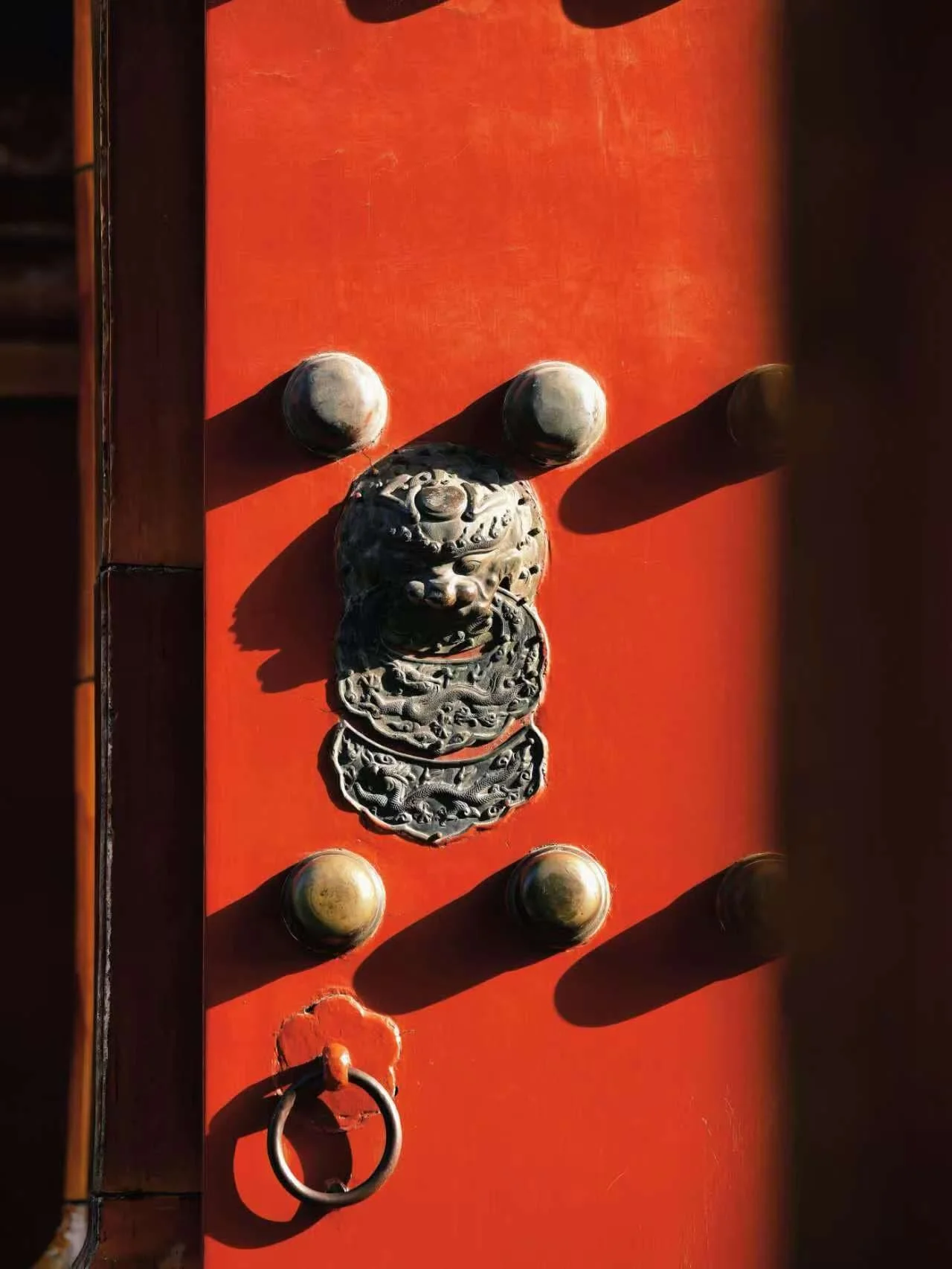
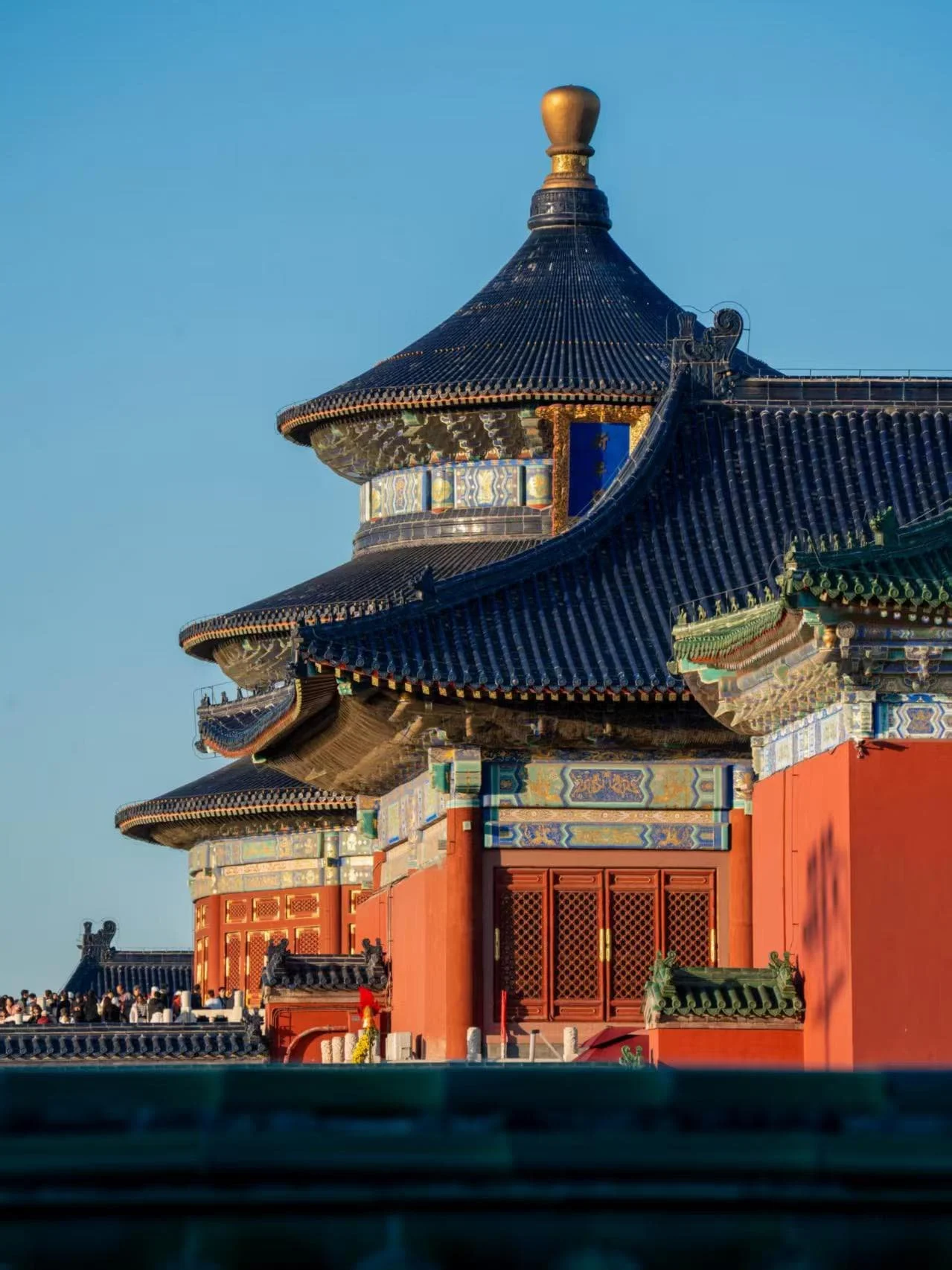
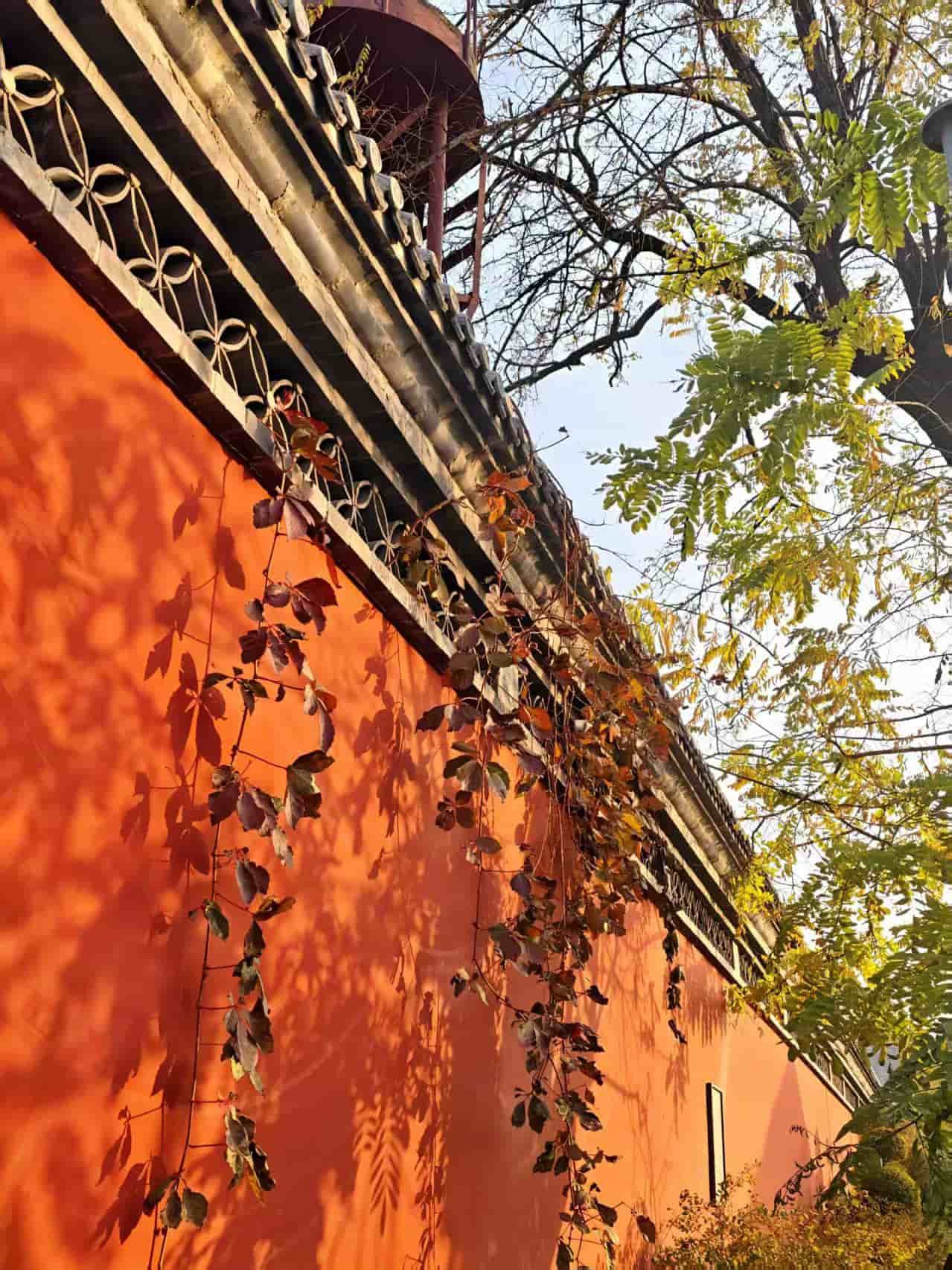
Two Days in Beijing — The Essentials, Done Right
Two days in Beijing is enough to see its two most iconic landmarks — the Forbidden City and the Great Wall — but only if you plan wisely. This compact itinerary is designed for travelers with limited time who refuse to settle for a rushed, surface-level experience. We skip the tourist traps, time each visit to avoid the worst crowds, and pair every landmark with the stories and context that make it unforgettable.
Day 1 takes you deep into 500 years of imperial history inside the world's largest palace complex. Day 2 gets you out of the city and onto the Great Wall at Mutianyu — a less-crowded, more photogenic section where you can actually enjoy the experience instead of fighting through tour-bus crowds. Both days end with authentic local food experiences that most visitors never find.
Why this 2-day tour works:
→ Strategic timing — We visit the Forbidden City in the afternoon when morning crowds thin out
→ Mutianyu, not Badaling — Fewer tourists, better views, same magnificent wall
→ No forced shopping stops — Zero jade factories, tea ceremonies, or silk showrooms
→ Expert storytelling — Your guide brings 600-year-old walls to life, not just recites dates
→ Authentic meals included — From imperial-style dishes to village farmhouse cooking
→ Door-to-door service — Hotel pickup and drop-off every day
Day 1: The Forbidden City — Walk Where Emperors Ruled
🌅 Morning — Tiananmen Square & Meridian Gate
Your guide meets you at your hotel at 9:00 AM (or 1:00 PM for the afternoon departure option) and drives you to the heart of Beijing. We begin at Tiananmen Square, the world's largest public plaza — 440,000 square meters that can hold over one million people. Your guide will point out the key monuments: the Monument to the People's Heroes, the Great Hall of the People, and the National Museum of China. But more importantly, they'll explain why this square has been the stage for so many pivotal moments in Chinese history — from the May Fourth Movement of 1919 to the founding of the People's Republic in 1949.
From the square, we cross through the Meridian Gate (午门, Wumen) — the massive U-shaped gate that served as the main entrance to the imperial palace. This is where emperors reviewed their troops, announced the calendar, and held grand ceremonies. Look up at the five phoenix towers atop the gate — only the emperor was permitted to walk through the central archway.
🏛️ Mid-Day — Inside the Forbidden City (3 Hours)
The Forbidden City (故宫博物院) is not just one building — it's 980 buildings, 9,999 rooms, and 720,000 square meters of palaces, halls, courtyards, and gardens, surrounded by a 52-meter-wide moat and 10-meter-high walls. For nearly 500 years (1420–1912), ordinary Chinese were forbidden to enter on pain of death. Today, you can walk where 24 emperors of the Ming and Qing dynasties lived, ruled, and died.
Your guide will lead you along the central axis — the imperial processional route — stopping at the three great halls of the Outer Court:
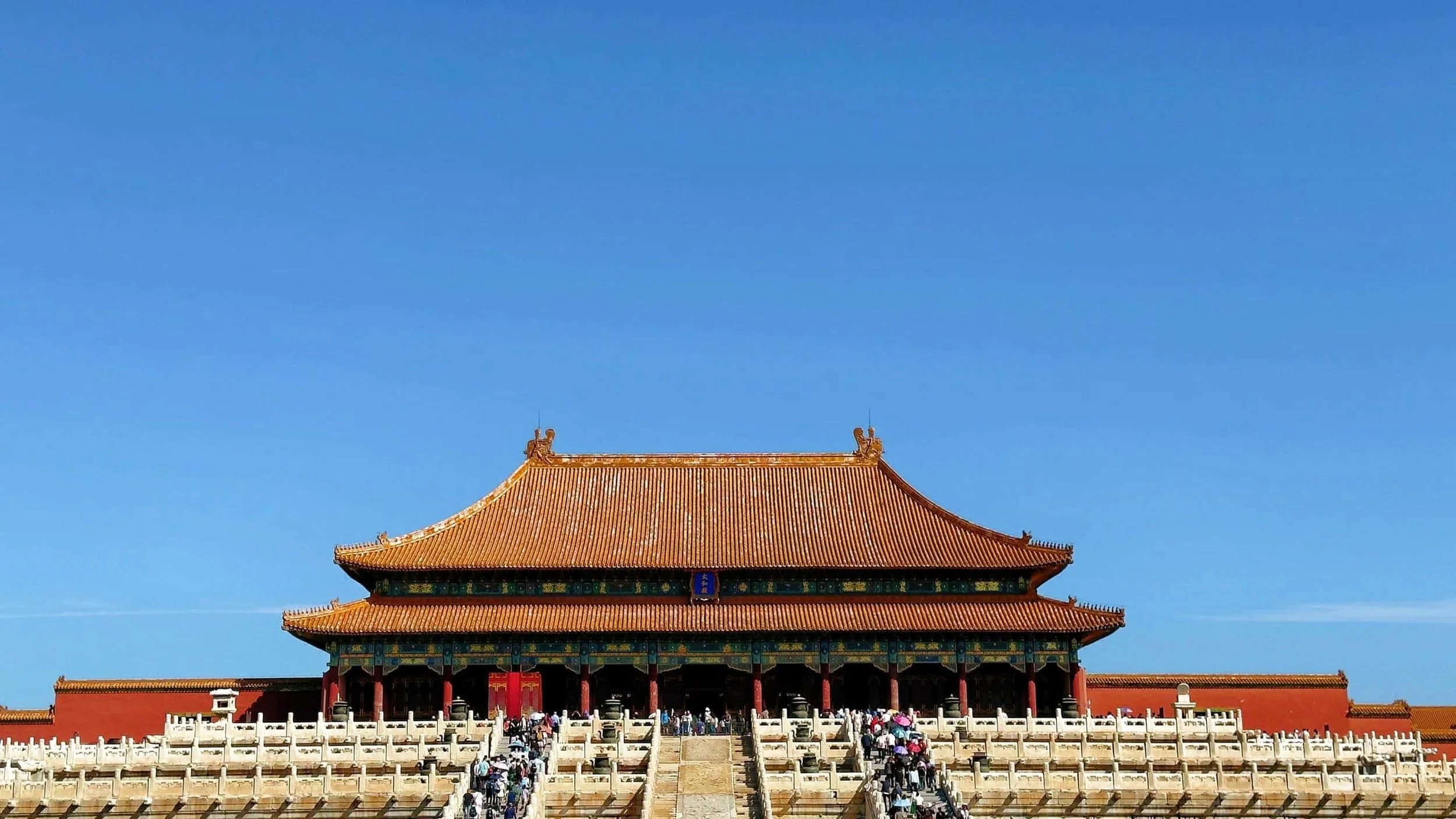
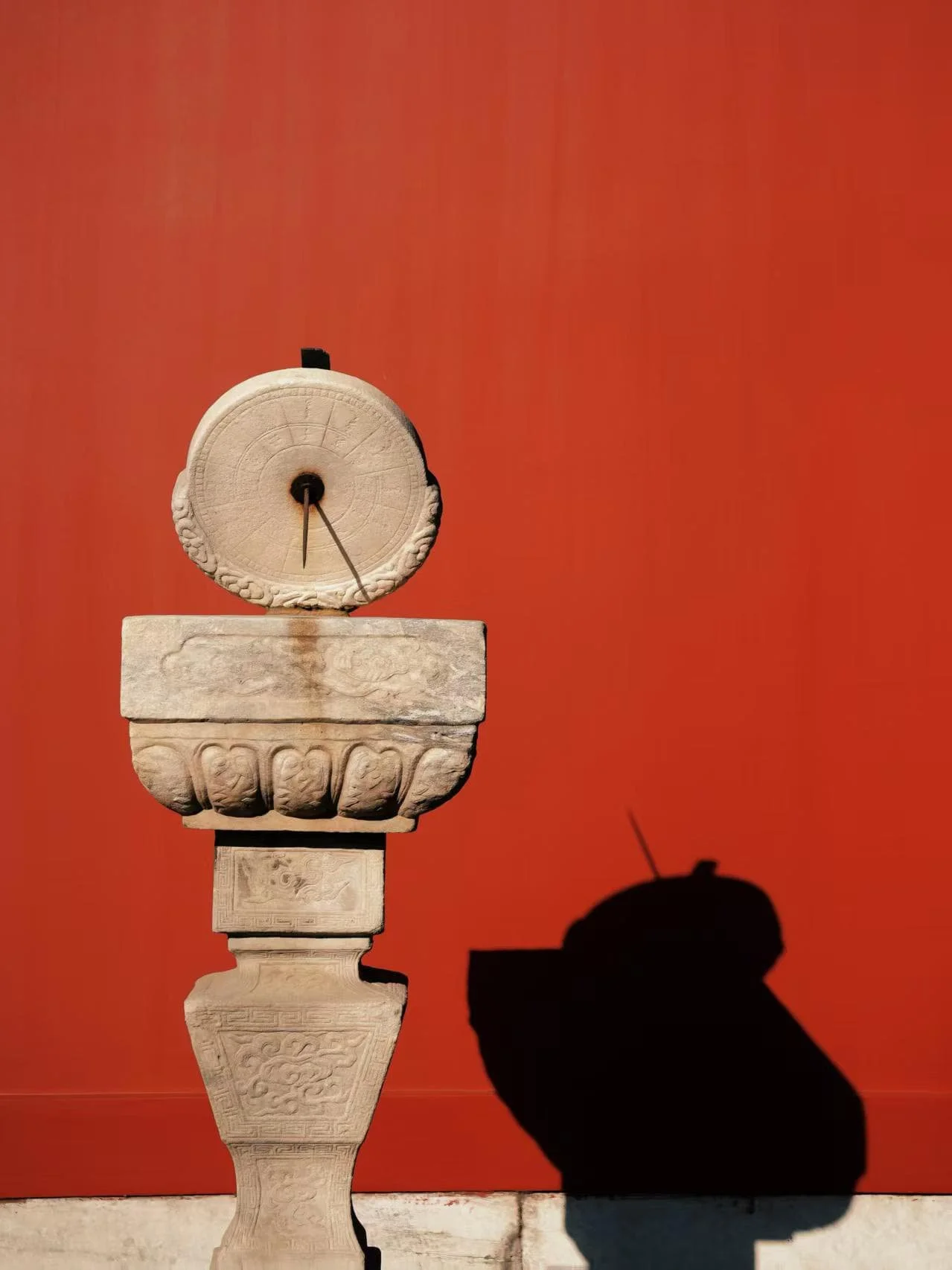
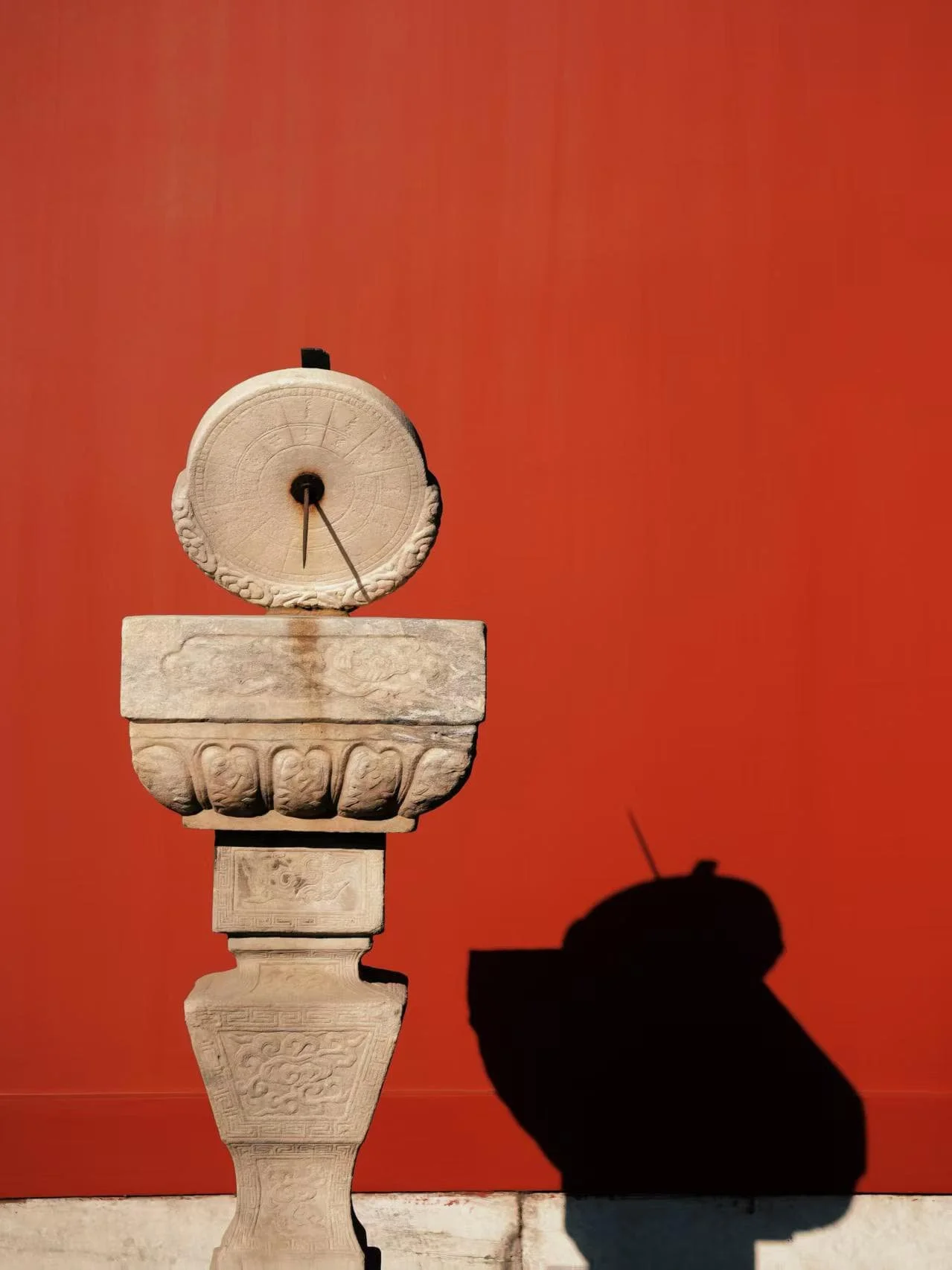
The Hall of Supreme Harmony (太和殿) is the largest wooden structure in China and the most important building in the entire complex. This is where emperors held coronations, celebrated the Lunar New Year, and received tribute from foreign envoys. The golden dragon throne inside sits beneath a coffered ceiling with a coiling golden dragon holding a pearl — the "Mirror of the Emperor," which was said to fall and strike down anyone who usurped the throne. Your guide will point out the sundial and grain measure flanking the hall — symbols of the emperor's power to measure both time and justice.
The Hall of Central Harmony (中和殿) is smaller and more intimate — this was the emperor's "backstage" where he rehearsed speeches and rested before grand ceremonies. The square layout and lack of a throne give it a contemplative feel, and on quiet days you can almost imagine the emperor composing himself before facing thousands of officials.
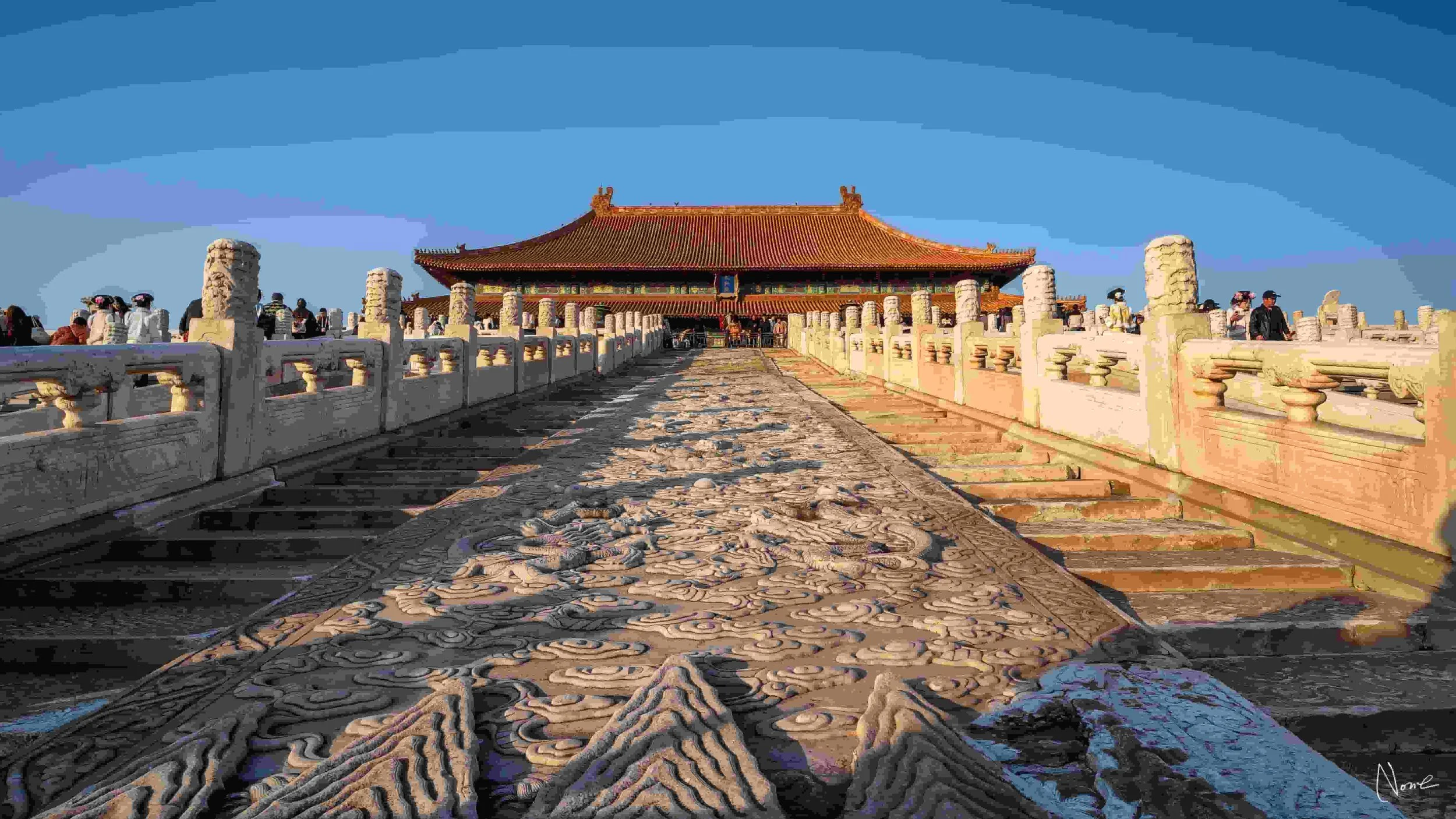
The Hall of Preserving Harmony (保和殿) hosted the final round of the imperial examination — the most grueling academic test in human history. Scholars who passed would become the most powerful officials in the empire; those who failed might spend their entire lives trying again. Behind this hall, don't miss the immense marble ramp carved with clouds and dragons — the largest stone carving in the Forbidden City, weighing over 200 tons. It was dragged here on ice roads during winter, a feat of engineering that took 20,000 laborers.
Continuing north into the Inner Court, you'll enter the private world of the imperial family. The Palace of Heavenly Purity (乾清宫) was the emperor's residence and the site of secret royal succession — the name of the crown prince was hidden in a box behind a plaque reading "Openly Just and Fair," revealed only after the emperor's death. The Palace of Earthly Tranquility (坤宁宫) was the empress's domain, later converted into a shamanic shrine for Manchu rituals after the Qing conquest.
💡 Insider moment: Most tour groups rush through the central axis and miss the eastern and western palaces. If time allows, your guide will take you to the Clock Gallery (钟表馆) — a stunning collection of 18th-century European and Chinese timepieces gifted to the Qianlong Emperor, including a mechanical robot that writes Chinese calligraphy. The Treasure Gallery (珍宝馆) displays imperial crowns, jade carvings, and gold ritual vessels that will take your breath away.
🌇 Afternoon — Exit via Jingshan Park
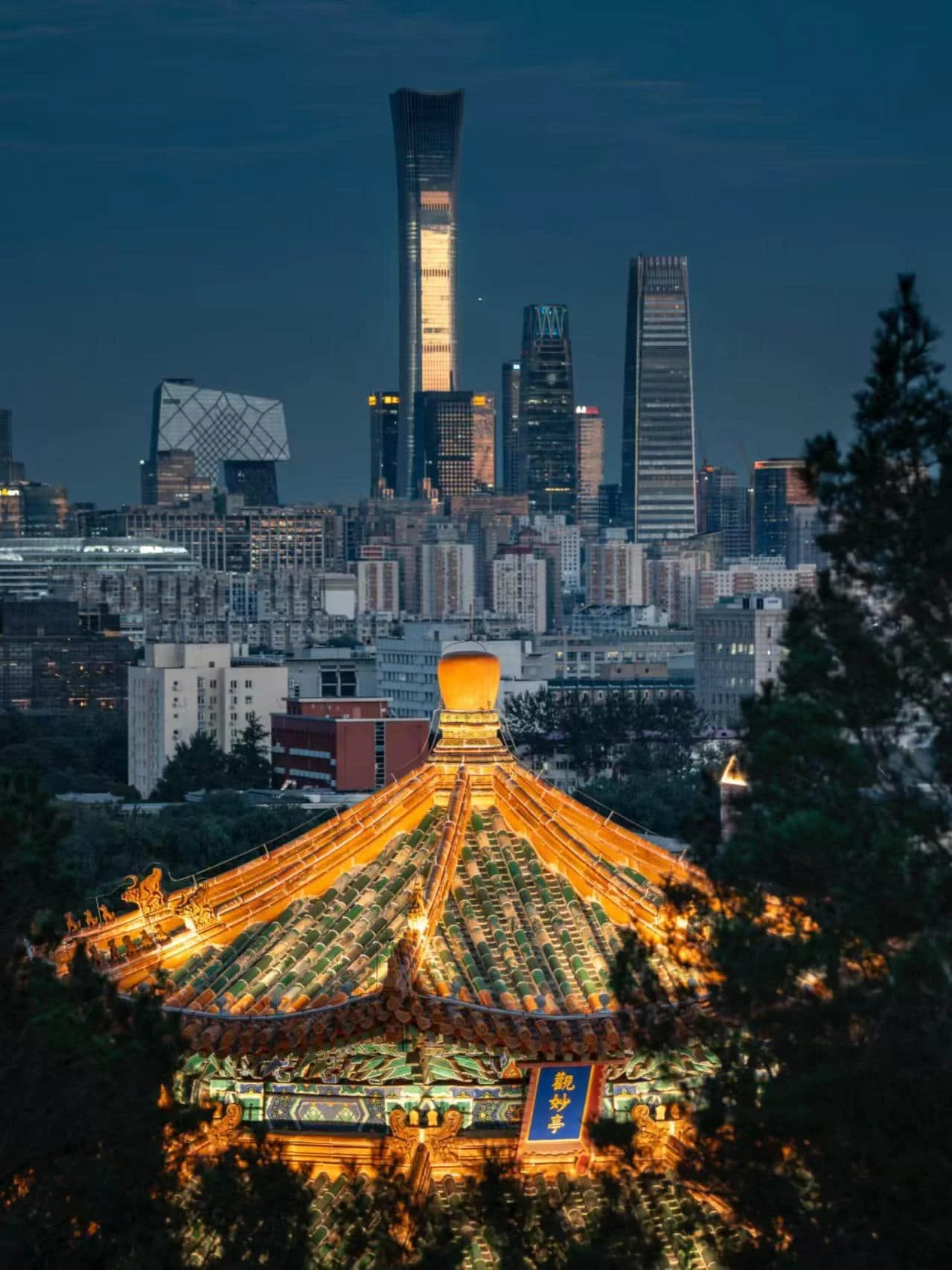
We exit the Forbidden City through the Gate of Divine Prowess (神武门) and climb the steps to Jingshan Park directly across the street. This small hill — artificial, built from the soil excavated to create the Forbidden City's moat — offers the single best view of the entire palace complex. From the pavilion at the top, you can see all 980 buildings laid out in perfect symmetry along the north-south axis, stretching south to Tiananmen Square and north to the Drum and Bell Towers. On a clear day, you can even spot the Olympic Tower in the distance. This is the photo you came to Beijing for.
Your guide will also share the park's darker history — this is where the last Ming emperor, Chongzhen, hanged himself from a locust tree in 1644 as rebel forces breached the city walls, ending the 276-year dynasty. A marker still stands near the spot.
🍜 Evening — Peking Duck Dinner
After a full day of walking, you've earned a proper Beijing dinner. Your guide will take you to a renowned Peking duck restaurant — not the one in every guidebook, but one where locals actually eat. Watch as the chef carves the whole roast duck tableside, separating the crispy skin from the tender meat with precise, practiced strokes. The traditional way to eat it: spread sweet bean sauce on a paper-thin pancake, add a slice of duck skin, cucumber, scallion, and a drizzle of hoisin — then roll it up and bite in. The contrast of textures (shatteringly crisp skin, soft meat, fresh crunch) and flavors (rich, sweet, savory) is one of China's great culinary experiences.
Day 2: The Great Wall — 600 Years of Stone and Sky
🌅 Early Morning — Drive to Mutianyu (7:30 AM)
We leave your hotel early to beat the crowds and the midday heat. The drive to the Mutianyu section (慕田峪长城) takes about 90 minutes through Beijing's northern suburbs and into the forested Yan Mountains. Your guide will use the drive time to share the Great Wall's dramatic history — how it was built, rebuilt, and abandoned over 2,000 years; how it was never actually a single wall but a network of walls, trenches, and signal towers; and how the section you'll visit today was built during the Ming Dynasty (1368–1644) to protect the capital from Mongol and Manchu invasions.
Why Mutianyu instead of the famous Badaling? Mutianyu receives 60% fewer visitors than Badaling, the wall is in better condition, the surrounding forest is stunning (especially in autumn when the leaves turn gold and crimson), and — crucially — there are no tour-bus parking lots jammed with flag-waving groups. You'll actually be able to hear yourself think.
🧱 Mid-Day — Hiking the Wall (3–4 Hours)
You'll have 3 to 4 hours on the wall — enough time to truly absorb the experience rather than snapping a quick photo and leaving. Options for ascending:
Cable car — A comfortable 3-minute ride to Platform 14, ideal for those who want to save energy for the wall itself
Chairlift — An open-air ride with panoramic views of the mountains, arriving near Platform 6
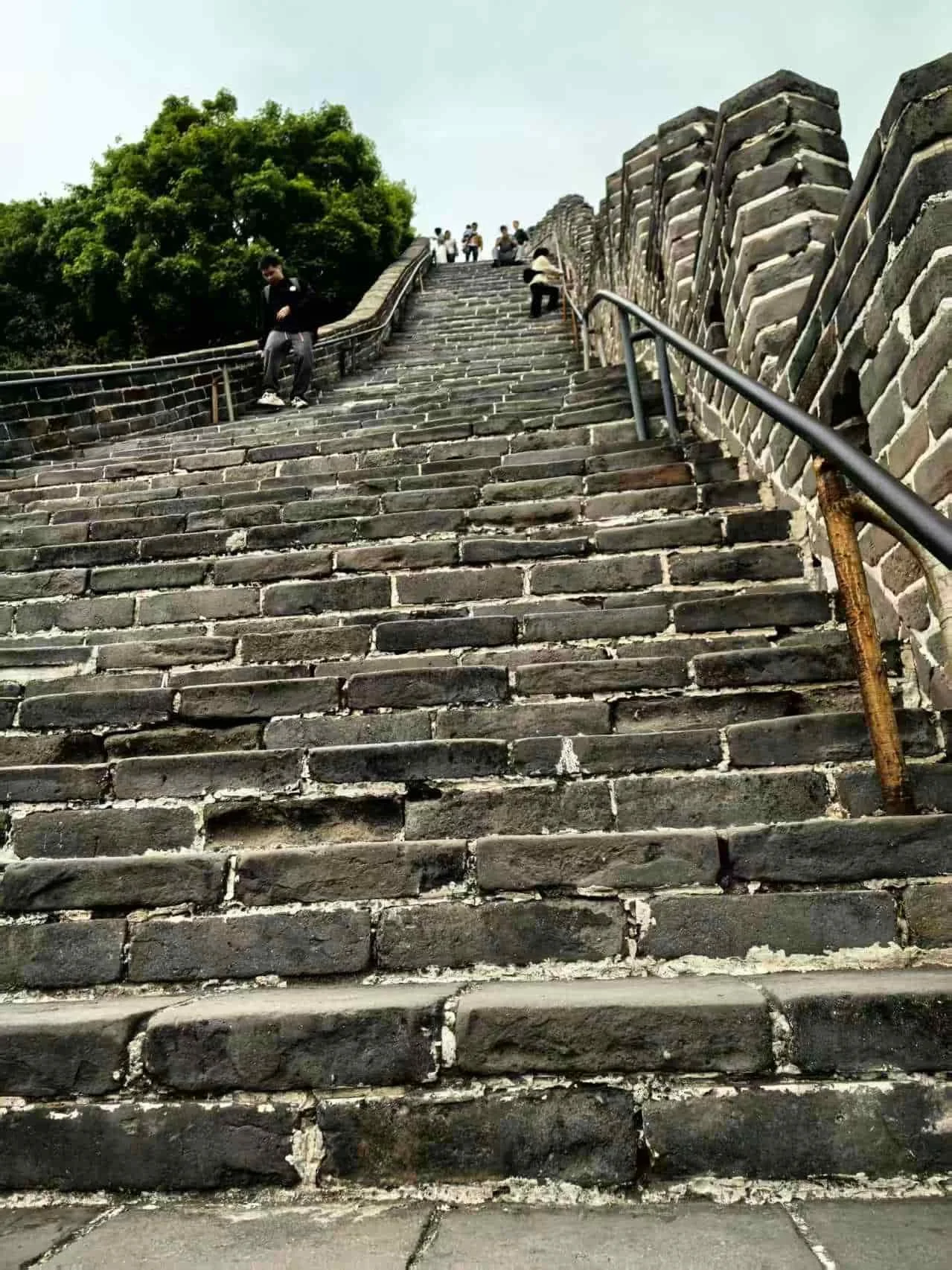
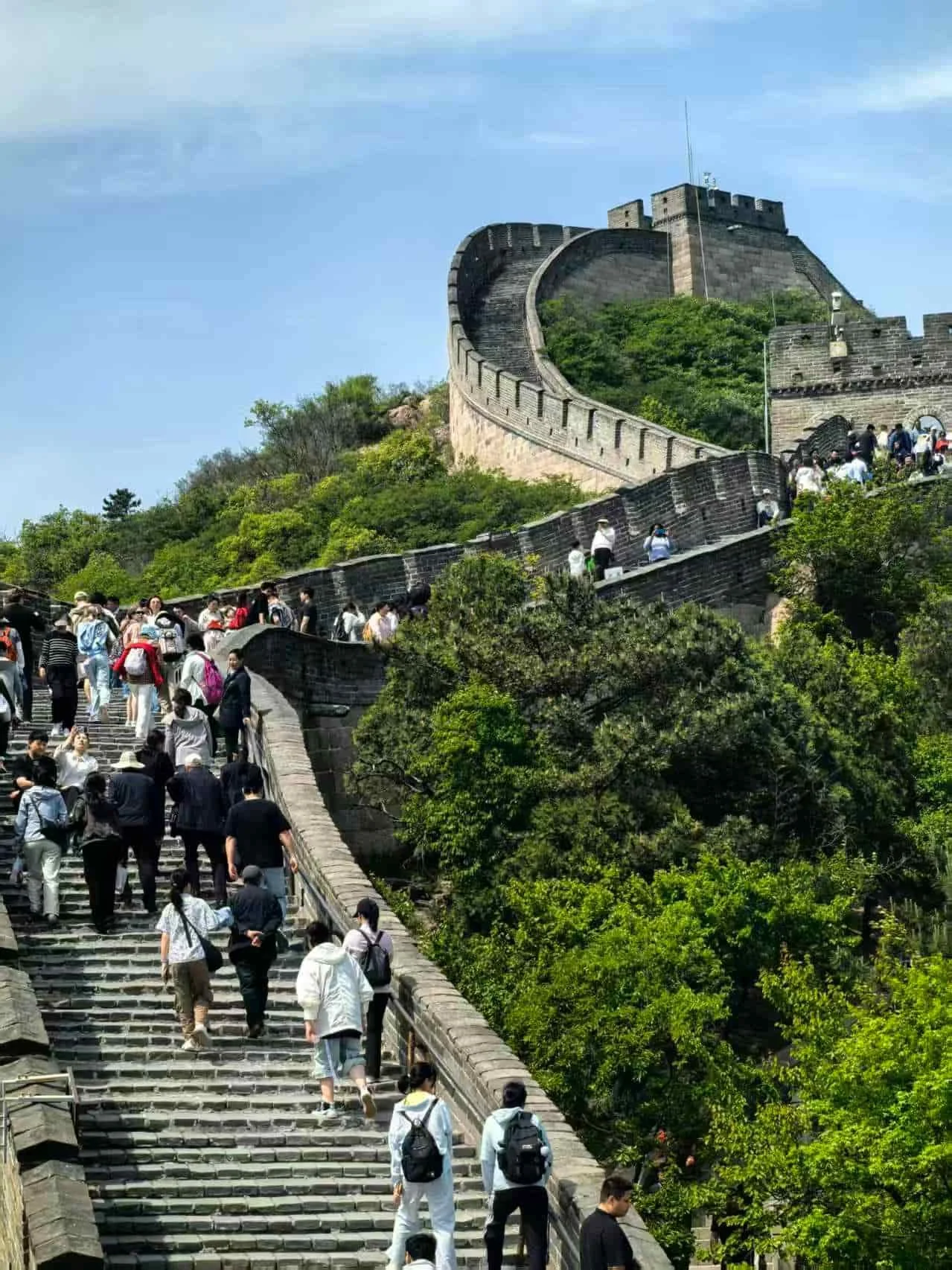
Walk up — About 30–40 minutes of stone steps through the forest; challenging but rewarding
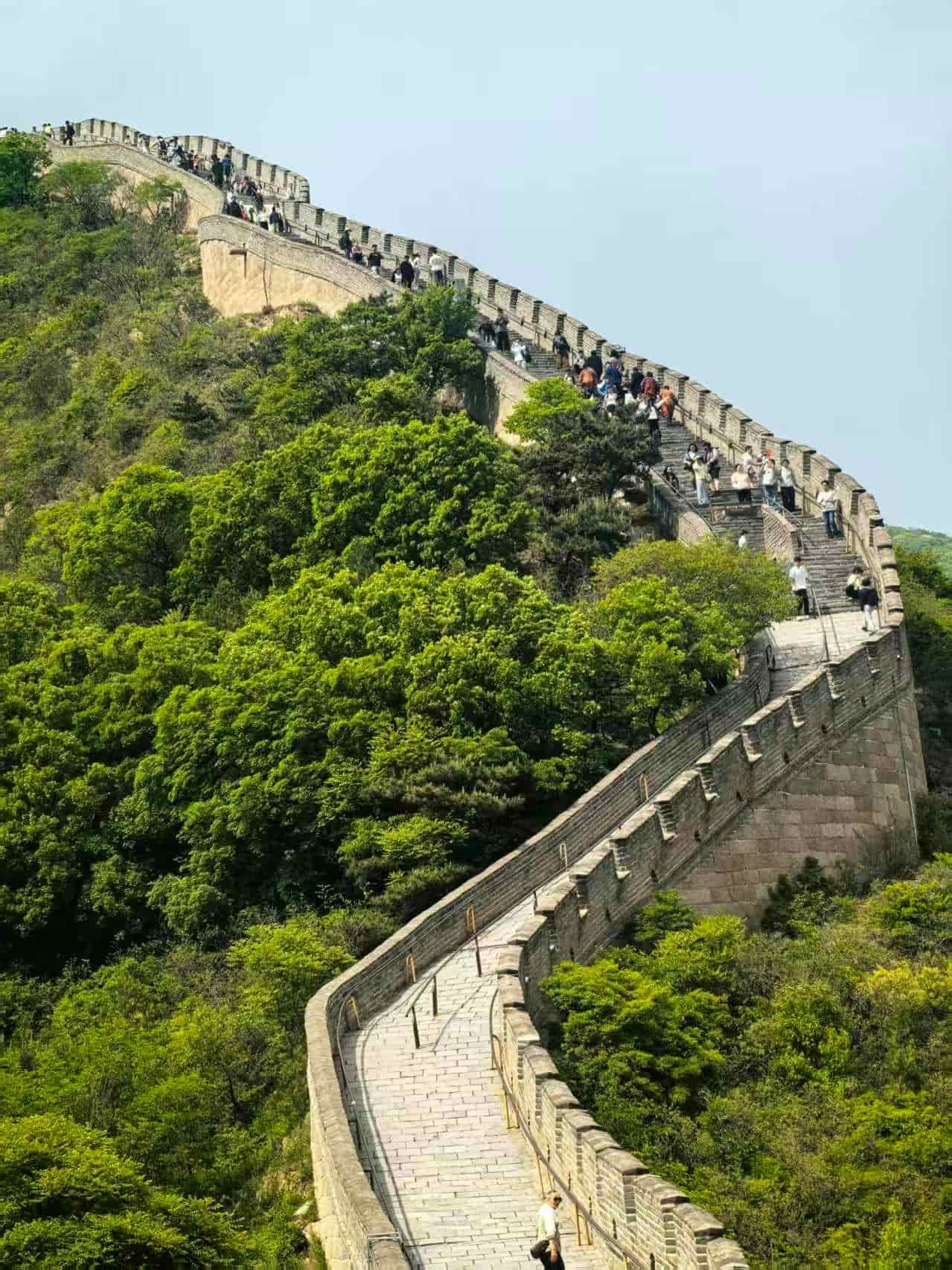
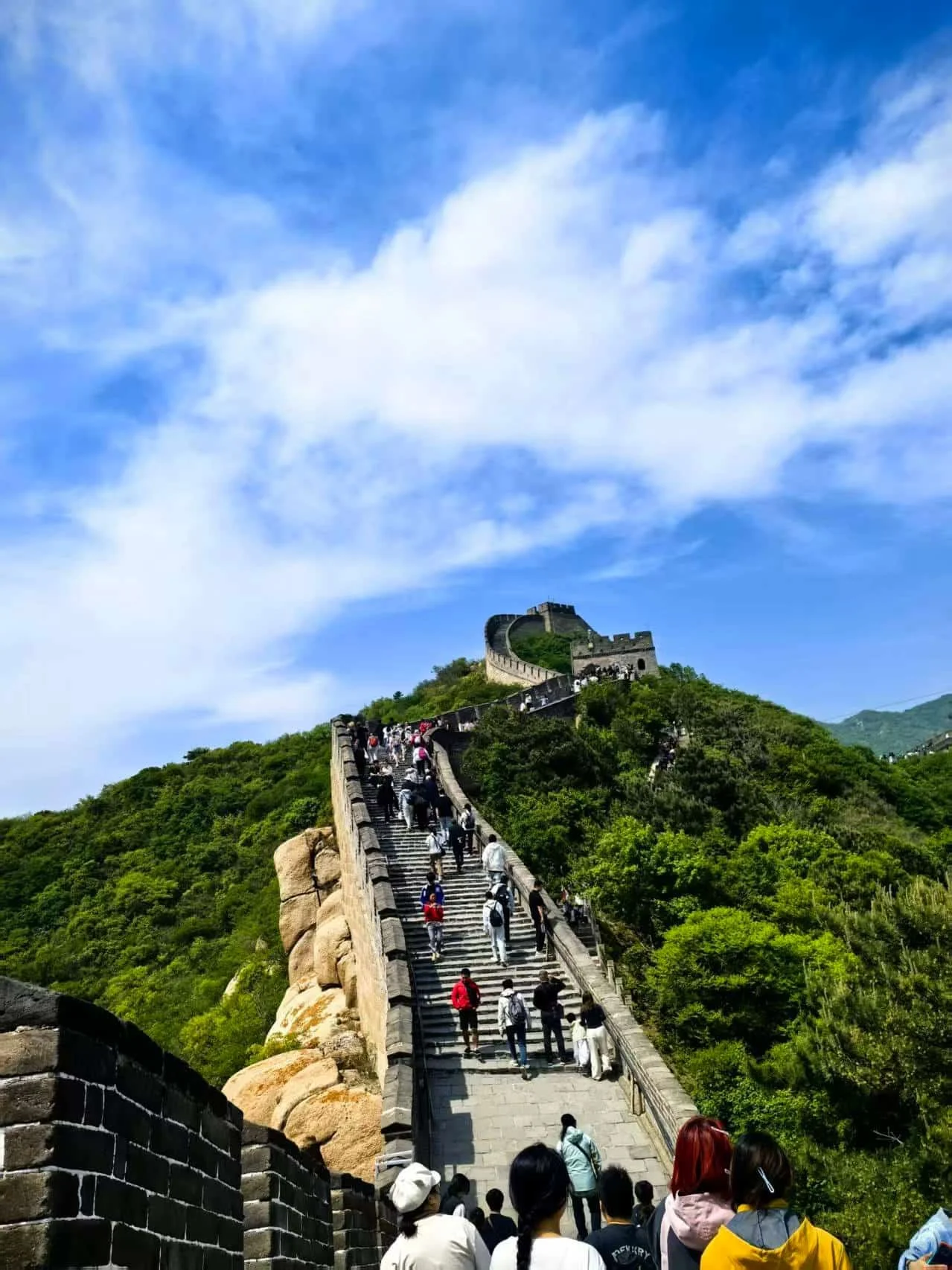
Once on top, the wall stretches in both directions along the mountain ridgeline like a stone dragon. Your guide will lead you toward the less-visited eastern sections, where the wall narrows and the crowds disappear entirely. Along the way, they'll point out the watchtowers — each one a self-contained fortification where soldiers slept, stored weapons, and lit signal fires to warn of approaching enemies. A message could travel from the Great Wall to Beijing in just a few hours using this system of fire and smoke signals — faster than a man on horseback.
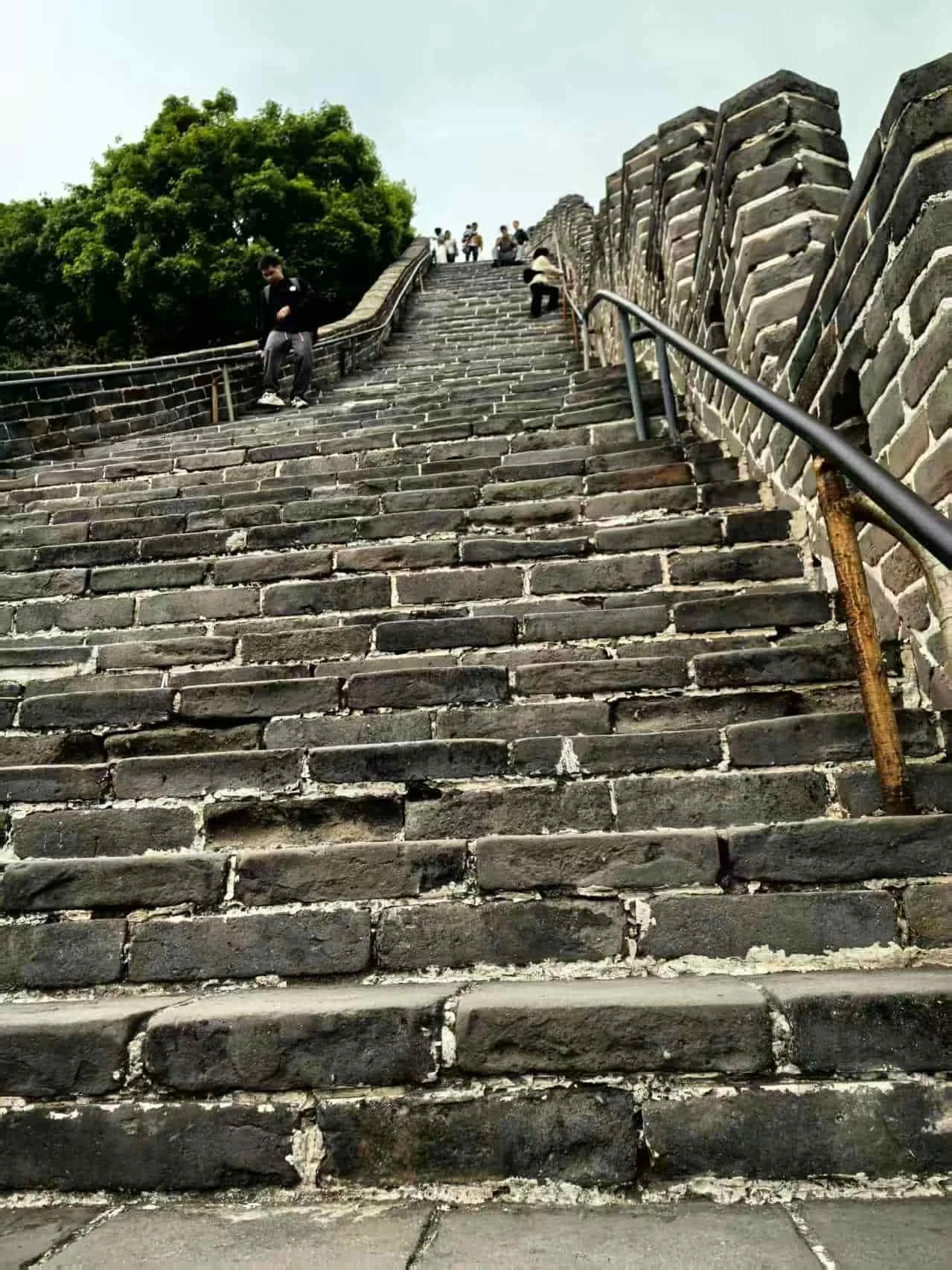
For the adventurous, push on toward Tower 20 — the highest point on the Mutianyu section. The climb is steep and the wall here is unrestored (you're walking on stones that Ming Dynasty soldiers placed 600 years ago), but the view from the top is breathtaking: the wall snaking over endless green mountains, with not another tourist in sight.
💡 Insider moment: Before leaving, we'll find a quiet watchtower and take a moment of silence. Close your eyes and listen — the wind through the crenellations sounds almost exactly as it did 600 years ago, when a lone sentry stood in this same spot, watching the northern horizon for the dust clouds of approaching cavalry.
Descending is half the fun: the toboggan slide (旱地雪橇) is a stainless-steel track that winds down the mountainside. You control your own speed with a brake lever — slow and scenic, or fast and thrilling. It's wildly popular with both kids and adults, and genuinely one of the most entertaining ways to descend from any monument in the world.
🍜 Afternoon — Farmhouse Lunch
After the hike, we'll stop at a local village restaurant at the foot of the mountains. This isn't a tourist restaurant — it's where the farmers and wall maintenance workers eat. Expect home-style dishes made with vegetables from the owner's garden: stir-fried eggs with wild mountain garlic, braised eggplant in garlic sauce, hand-pulled noodles with fresh tomato sauce, and if you're lucky, the owner's homemade baijiu (Chinese rice liquor) — a clear, potent spirit that warms you from the inside out. Simple, hearty, and absolutely authentic.
🌇 Return to Beijing (3:00–4:30 PM)
On the drive back, most guests nap — the Great Wall has a way of exhausting you in the best possible way. We'll drop you at your hotel, or if you still have energy, at Qianmen Street (前门大街) — a restored pedestrian shopping street lined with century-old shops selling everything from handmade silk shoes to traditional Chinese medicine. It's also home to some of Beijing's oldest restaurants, including the original Quanjude Peking duck shop (founded 1864) and Duyichu (founded 1742), famous for its steamed dumplings (shaomai, 烧麦) that supposedly impressed the Qianlong Emperor himself.
What's Included
Professional English-speaking guide — Licensed, experienced, and passionate about sharing Beijing's stories
Hotel pickup and drop-off — Both days, within Beijing's central districts
All entrance fees — Forbidden City, Jingshan Park, Mutianyu Great Wall
Transportation — Air-conditioned vehicle with driver for all transfers
Peking duck dinner (Day 1) — At a renowned local restaurant
Farmhouse lunch (Day 2) — Authentic village cooking near the Great Wall
Mutianyu cable car or chairlift — One-way ascent ticket included
Bottled water — Provided throughout both days
What's Not Included
Accommodation — This is a 2-day tour without overnight arrangements; we can recommend hotels if needed
International/domestic flights to/from Beijing
Breakfast — Not included (your hotel breakfast is recommended)
Mutianyu toboggan slide — Descending option available for a small fee (approx. ¥60)
Personal expenses — Souvenirs, additional snacks, drinks beyond provided water
Tips/gratuities — For guide and driver (optional but appreciated; 10-15% of tour price is customary)
Travel insurance — Highly recommended
Practical Information
Walking Intensity: Moderate to High
Day 1 involves approximately 5–7 km of walking inside the Forbidden City (mostly flat stone surfaces, some steps). Day 2 requires 3–5 km on the Great Wall (uneven stone steps, steep sections). The wall hike can be adjusted based on your fitness level — cable car and shorter routes are available.
What to Wear & Bring
ItemWhyComfortable walking shoesEssential for both the Forbidden City and Great Wall — sneakers or light hiking shoesLayers of clothingBeijing's temperature can swing 10–15°C between morning and afternoonSun protectionSunscreen, hat, and sunglasses — the Great Wall has virtually no shadeSmall daypackFor water, snacks, camera, and an extra layerPassportRequired for Forbidden City entry — no exceptionsCash (small bills)For toboggan, snacks, and tips — ¥200–300 is usually sufficient
Best Time to Visit Beijing
Spring (April–May): Mild temperatures (15–25°C), blossoming flowers, occasional dust storms
Autumn (September–October): Best time! Cool, crisp air (10–20°C), clear skies, golden foliage on the mountains around the Great Wall
Summer (June–August): Hot and humid (28–35°C) — start early and bring plenty of water
Winter (December–February): Cold (below 0°C) but stunning — the wall dusted with snow is a photographer's dream, and crowds are minimal
Family-Friendly Notes
Suitable for children aged 6+. The Forbidden City's vast courtyards give kids room to explore, and the Great Wall's toboggan slide is a highlight for young travelers. We can adjust the pace and add child-friendly meal options on request.
Important Notes
⚠️ Forbidden City tickets are released 7 days in advance and sell out quickly, especially on weekends and holidays. We strongly recommend booking this tour at least 10 days ahead to secure your entry time slot. During Chinese national holidays (Golden Week in October, Chinese New Year), the Forbidden City can reach its 80,000 daily visitor cap — book early!
📱 WeChat Pay and Alipay are accepted almost everywhere in Beijing. Cash is still useful for small vendors and the Great Wall toboggan. Credit cards are accepted at larger restaurants and shops.
Frequently Asked Questions
Q: Is two days really enough for Beijing?
A: Two days covers the two absolute must-sees — the Forbidden City and the Great Wall — with depth and context. If you have more time, consider our 3-day, 4-day, or 5-day itineraries which add the Temple of Heaven, Summer Palace, hutong neighborhoods, and more.
Q: Why Mutianyu instead of Badaling?
A: Badaling is closer to Beijing but receives 10 million visitors per year and is often packed wall-to-wall with tour groups. Mutianyu is equally magnificent, better preserved, surrounded by beautiful forest, and receives far fewer visitors. The experience is simply better.
Q: How fit do I need to be for the Great Wall?
A: You need to be comfortable walking on uneven stone steps for 2–3 hours. The cable car eliminates the steep climb up, and you can turn back at any point. If you have mobility concerns, let us know and we'll customize the route.
Q: What if it rains?
A: The Forbidden City is mostly outdoor — we'll provide umbrellas. The Great Wall can be visited in light rain (the misty mountains are actually quite beautiful), but in heavy rain we may offer an alternative such as the Summer Palace or the National Museum.
Q: Can I do this tour if I arrive in Beijing on Day 1 morning?
A: Yes, if your flight lands before 8:00 AM, we can pick you up at the airport and start the tour directly. Just let us know your flight details when booking.
Two days is just the beginning of Beijing — but it's a beginning you'll never forget. Book your 2-day Forbidden City & Great Wall tour today.
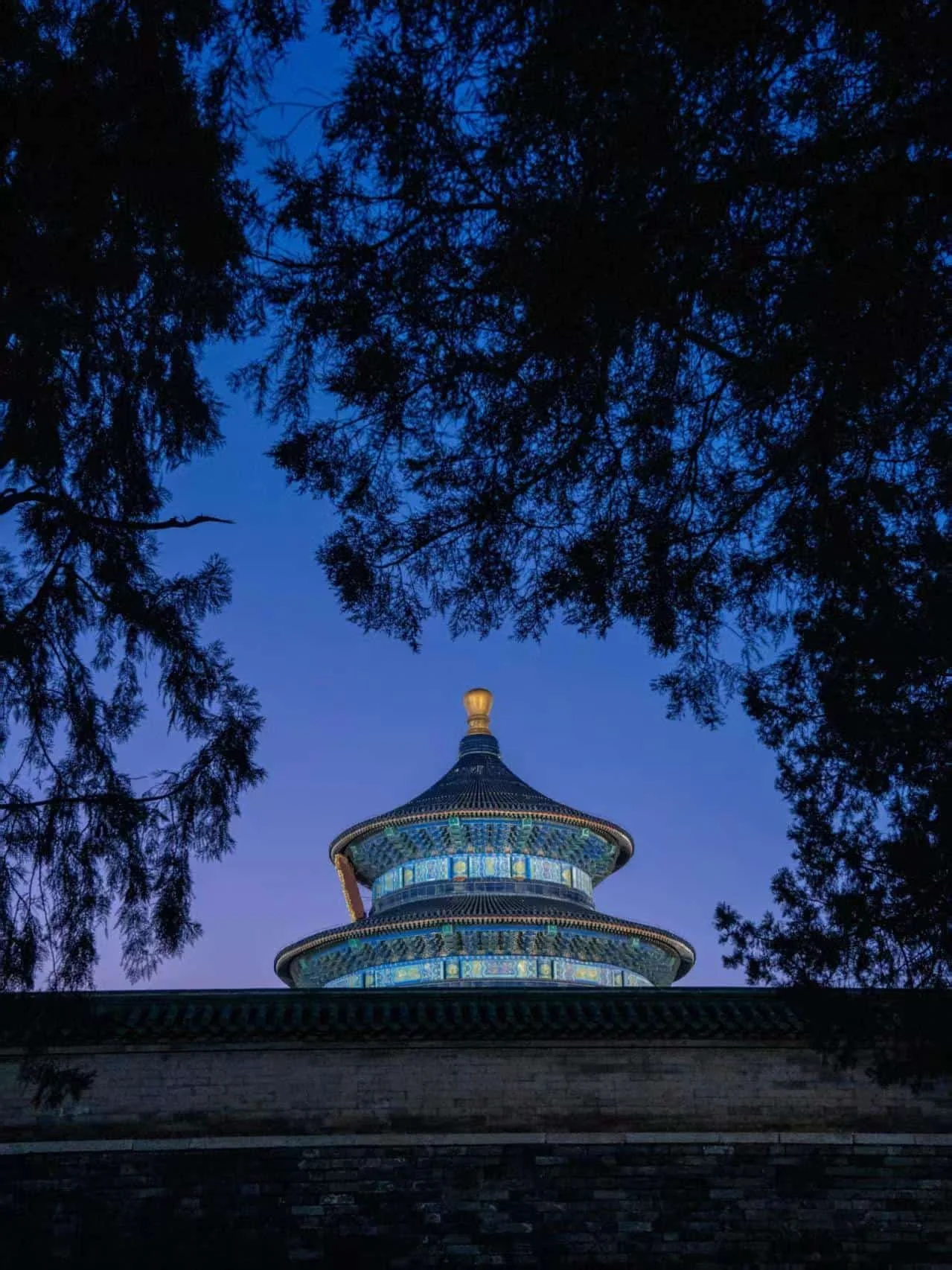
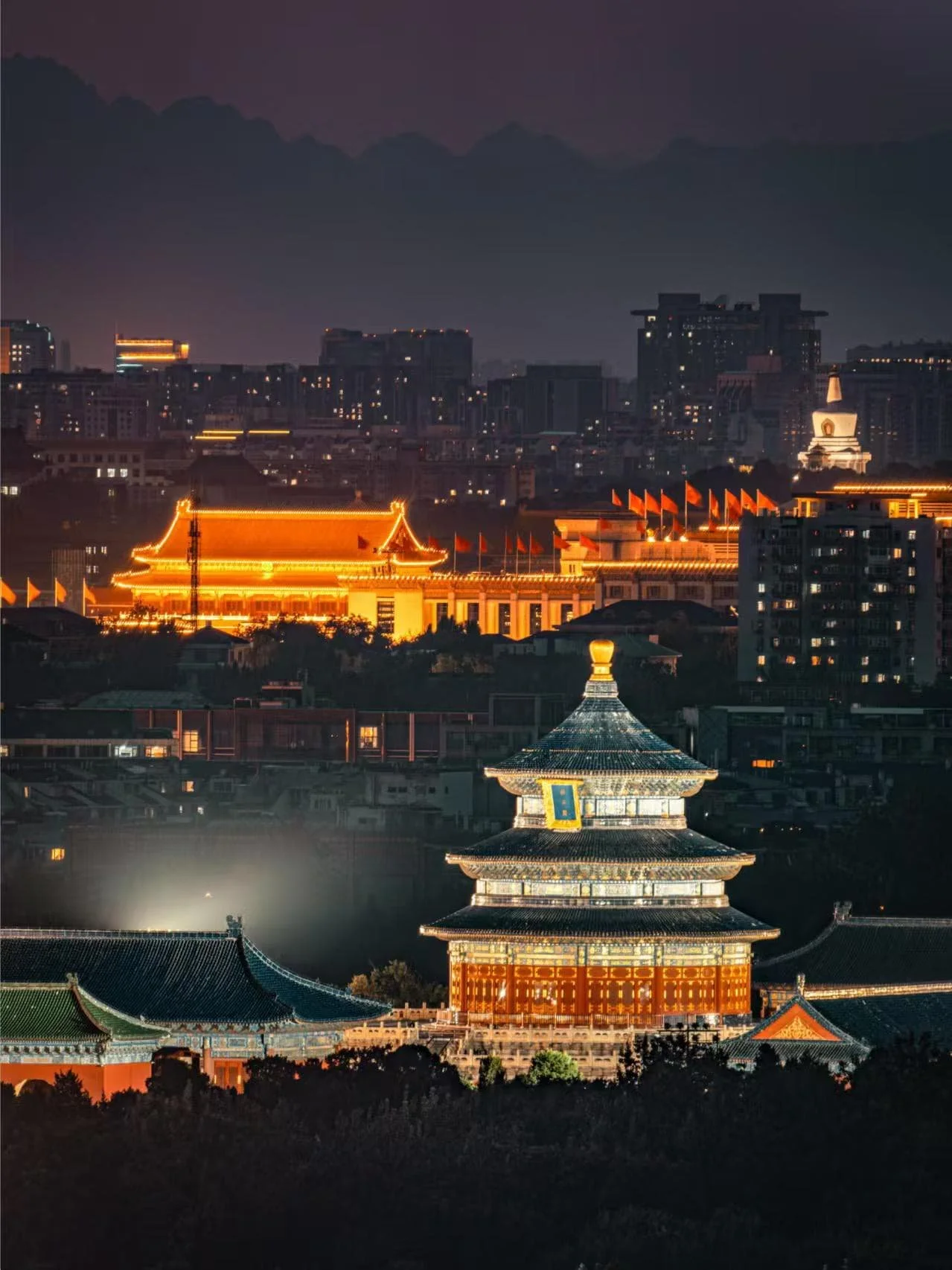
Three Days in Beijing — Emperors, Walls & Gardens
Beijing is where imperial grandeur meets modern ambition — a city of 600-year-old palaces, a 5,500-mile wall, and gardens built for emperors who ruled half the world. This 3-day private tour gives you the complete Beijing experience: the Forbidden City and its 9,999 rooms, the Great Wall at Mutianyu (quieter and more scenic than Badaling), and the twin imperial gardens — the Summer Palace and the hauntingly beautiful Old Summer Palace.
With a private guide and driver, you'll skip the tour bus crowds, move at your own pace, and hear the stories that bring these monuments to life — the concubine intrigue, the eunuch power struggles, the empires won and lost. This isn't just sightseeing; it's time travel.
Why Choose This Tour: The most balanced 3-day Beijing itinerary — covers the Forbidden City, the Great Wall, AND both Summer Palaces. Most 3-day tours skip the Old Summer Palace; we include it because its ruins tell a story no other site can.
🏛️ Day 1: The Forbidden City — 600 Years of Imperial Power
Morning — Tiananmen Square & Forbidden City
Start at Tiananmen Square — the world's largest public square, flanked by the Great Hall of the People and the National Museum of China. Walk across the square to Tiananmen Gate (Gate of Heavenly Peace) and pass through into the Forbidden City (紫禁城).
The Forbidden City — home to 24 emperors across nearly 500 years — is the largest palatial complex on Earth. Your private guide will lead you through the most important halls along the Central Axis:
Hall of Supreme Harmony (太和殿): The largest and most important hall, where emperors held grand ceremonies. The golden throne inside is one of the most iconic images of imperial China.
Hall of Central Harmony & Hall of Preserving Harmony: The emperor's preparation rooms and imperial examination hall — where the nation's brightest minds competed for government positions.
Palace of Heavenly Purity (乾清宫): The emperor's main residence and seat of day-to-day power. Your guide will explain the secret succession system — the name of the heir was hidden in a box above the throne.
Afternoon — Inner Court & Imperial Garden
Continue into the Inner Court, where the emperor's family lived behind walls within walls:
Hall of Union: Housing the imperial seals and a magnificent mechanical clock from the 18th century.
Palace of Earthly Tranquility: The empress's residence, with its traditional heated bed platform (kang).
Six Eastern Palaces: The concubines' quarters — your guide will share stories of life (and rivalry) in the inner court. The Palace of Accumulated Elegance contains a fascinating clock collection gifted by European ambassadors.
Imperial Garden (御花园): A tranquil retreat with centuries-old cypress trees, intricately painted pavilions, and a man-made hill called the Hill of Accumulated Elegance.
Exit through the Gate of Divine Prowess, and your guide will take you to lunch at a nearby restaurant. We recommend Beijing's famous zhajiangmian (noodles with fried sauce) — a local staple since the Qing Dynasty.
Evening — Jingshan Park Sunset (Optional)
For the perfect end to the day, climb the steps of Jingshan Park (景山公园) — just north of the Forbidden City. From the summit pavilion, you'll look directly down the Central Axis over the golden rooftops of the entire palace complex. It's the single most breathtaking view in Beijing, especially at sunset when the roof tiles glow amber. (15-minute walk from the Forbidden City exit; 10-minute climb to the top.)
🏯 Day 2: The Great Wall at Mutianyu & Summer Palace
Morning — Great Wall at Mutianyu (慕田峪长城)
Escape the city early (8:00 AM pickup) for a scenic 1.5-hour drive north to Mutianyu Great Wall. Unlike the overcrowded Badaling section, Mutianyu is quieter, more beautifully restored, and surrounded by lush forest-covered mountains. It's the section George H.W. Bush, Ronald Reagan, and Hillary Clinton all visited — and for good reason.
Take the cable car up to the wall (or hike up — about 40 minutes). Once on the wall, walk at your own pace along the crenellated battlements, climbing watchtowers and soaking in views of the Great Wall snaking over mountain ridges as far as the eye can see. Your guide will share stories of the Wall's Ming Dynasty construction and its role in defending the empire from northern invaders.
Optional fun: Take the toboggan slide down — a winding alpine coaster that's thrilling but perfectly safe.
Afternoon — Summer Palace (颐和园)
Return to the city for lunch, then head to the Summer Palace — the largest and best-preserved imperial garden in China. Built as a retreat for Empress Dowager Cixi, this vast lakeside complex features:
The Long Corridor (长廊): A 728-meter painted walkway decorated with over 14,000 individual paintings — each one depicting a different scene from Chinese history, mythology, or literature.
The Marble Boat (石舫): Cixi's infamous stone "yacht" — built with funds originally allocated for the navy. A symbol of the Qing Dynasty's misplaced priorities.
Seventeen-Arch Bridge: An elegant 150-meter bridge connecting the eastern shore with Nanhu Island, lined with 544 stone lions (no two are identical).
Tower of Buddhist Incense (佛香阁): The highest point, offering panoramic views over Kunming Lake and the Western Hills.
Your guide will explain the symbolism in the garden design and the dramatic history of Cixi's 47-year rule. In autumn, the ginkgo trees along the lake turn brilliant gold — the most beautiful season to visit.
Evening — Peking Duck Dinner
No Beijing visit is complete without Peking Duck. Your guide will take you to a renowned local restaurant where the duck is roasted in a closed oven until the skin is shatteringly crisp and the meat is tender. Watch the chef carve it tableside, then wrap slices in thin pancakes with sweet bean sauce, scallions, and cucumber. A culinary ritual you won't forget.
🏞️ Day 3: Old Summer Palace & Temple of Heaven
Morning — Old Summer Palace (圆明园)
Begin the day at the Old Summer Palace (Yuanmingyuan) — once called "The Garden of Gardens" and the most magnificent imperial estate ever built. Destroyed by British and French troops in 1860 during the Second Opium War, its ruins are among the most powerful and poignant sights in China.
Your guide will lead you through the key areas:
The Western Ruins (西洋楼遗址): The most photographed area — European-style palaces designed by Jesuit missionaries in the 18th century, now reduced to ornate marble columns and archways standing alone in the landscape. The contrast between the delicate carved stonework and the surrounding Chinese gardens is unforgettable.
Great Fountain Ruins (大水法): Once a spectacular complex of fountains and water clocks, the crumbling stone archways have become a symbol of China's "century of humiliation" — and a powerful reminder of why cultural preservation matters.
Maze Garden (万花阵): A hedge maze reconstructed from the original design — fun to navigate and a hit with kids.
Fuhai Lake: The vast central lake, once the scene of imperial boat parties, now a serene spot for a peaceful walk.
This site takes about 2-3 hours. Your guide will explain the history of the 1860 destruction and its lasting impact on Chinese national consciousness — a story that helps you understand modern China in a way no textbook can.
Afternoon — Temple of Heaven (天坛)
After lunch, head to the Temple of Heaven (天坛公园). This is where emperors came to pray for good harvests, and the architecture is breathtakingly precise:
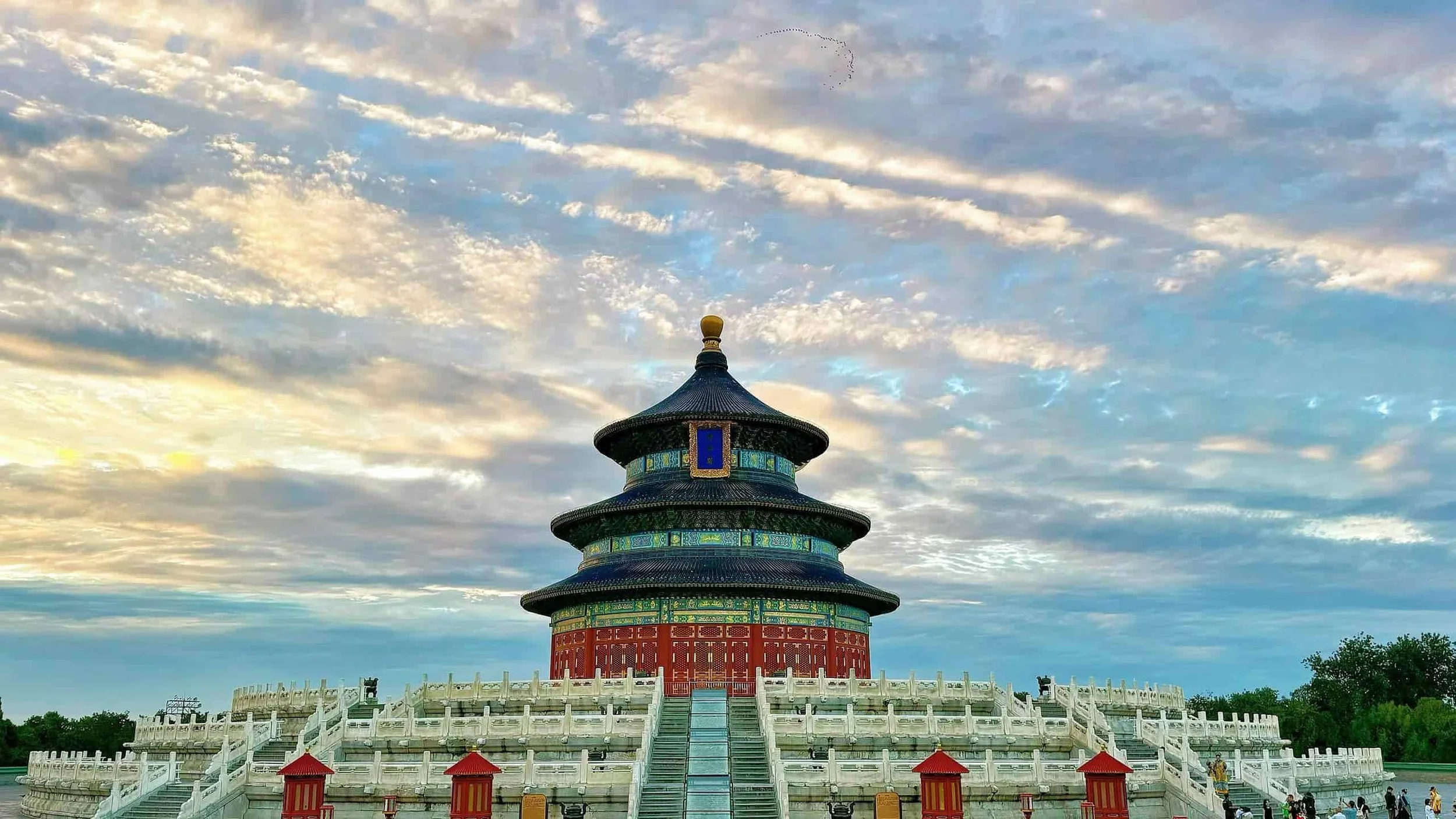
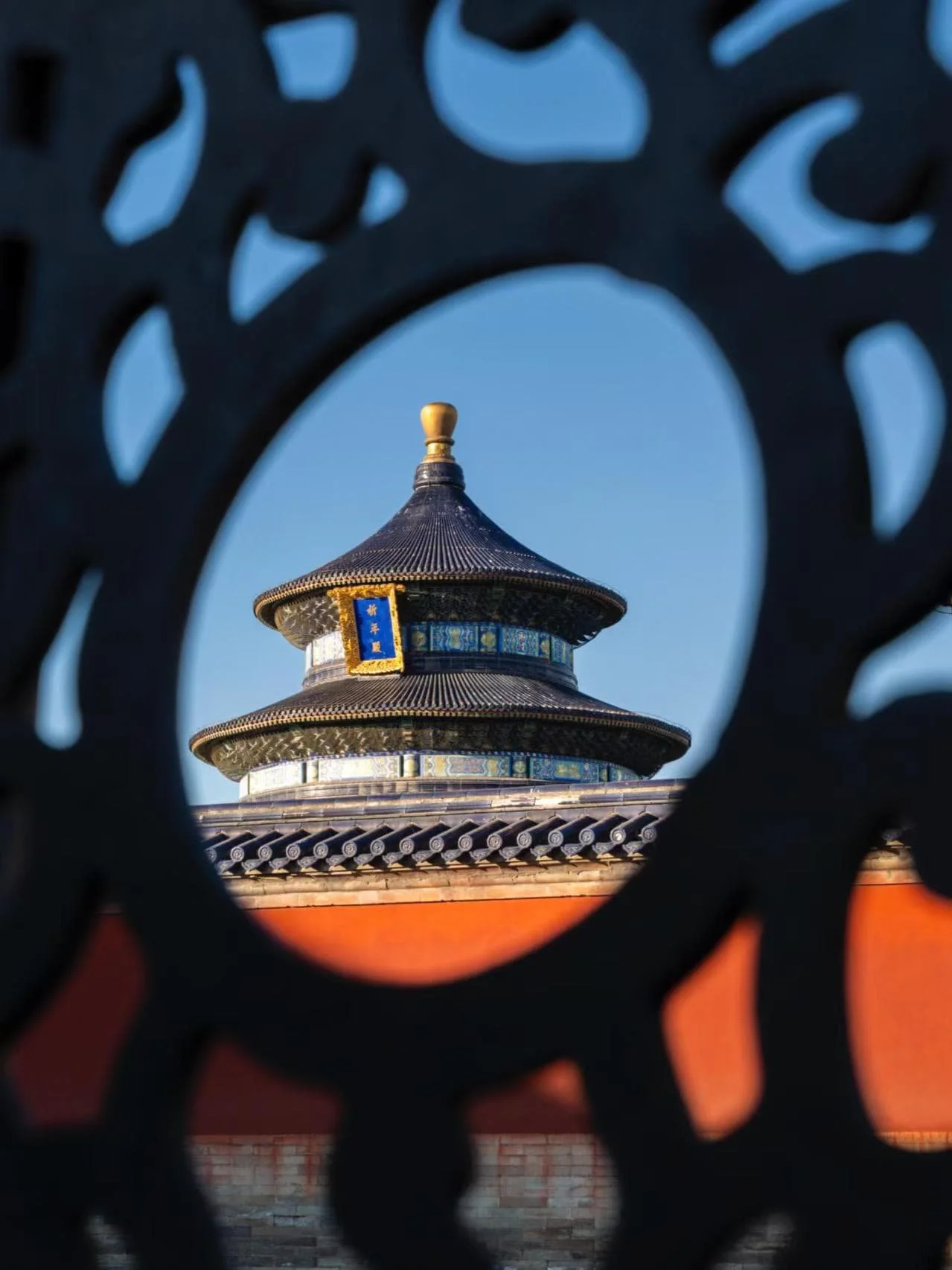
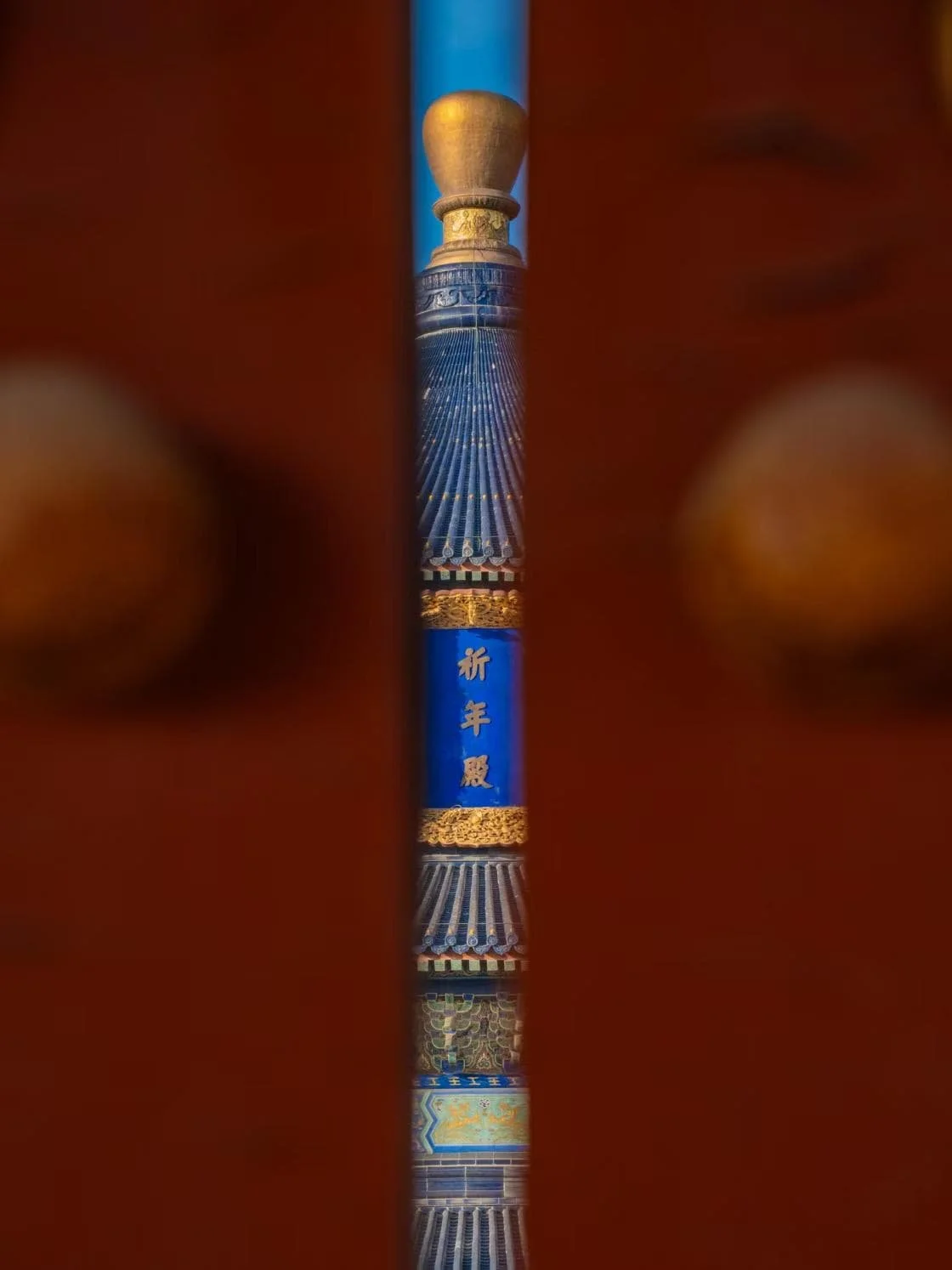
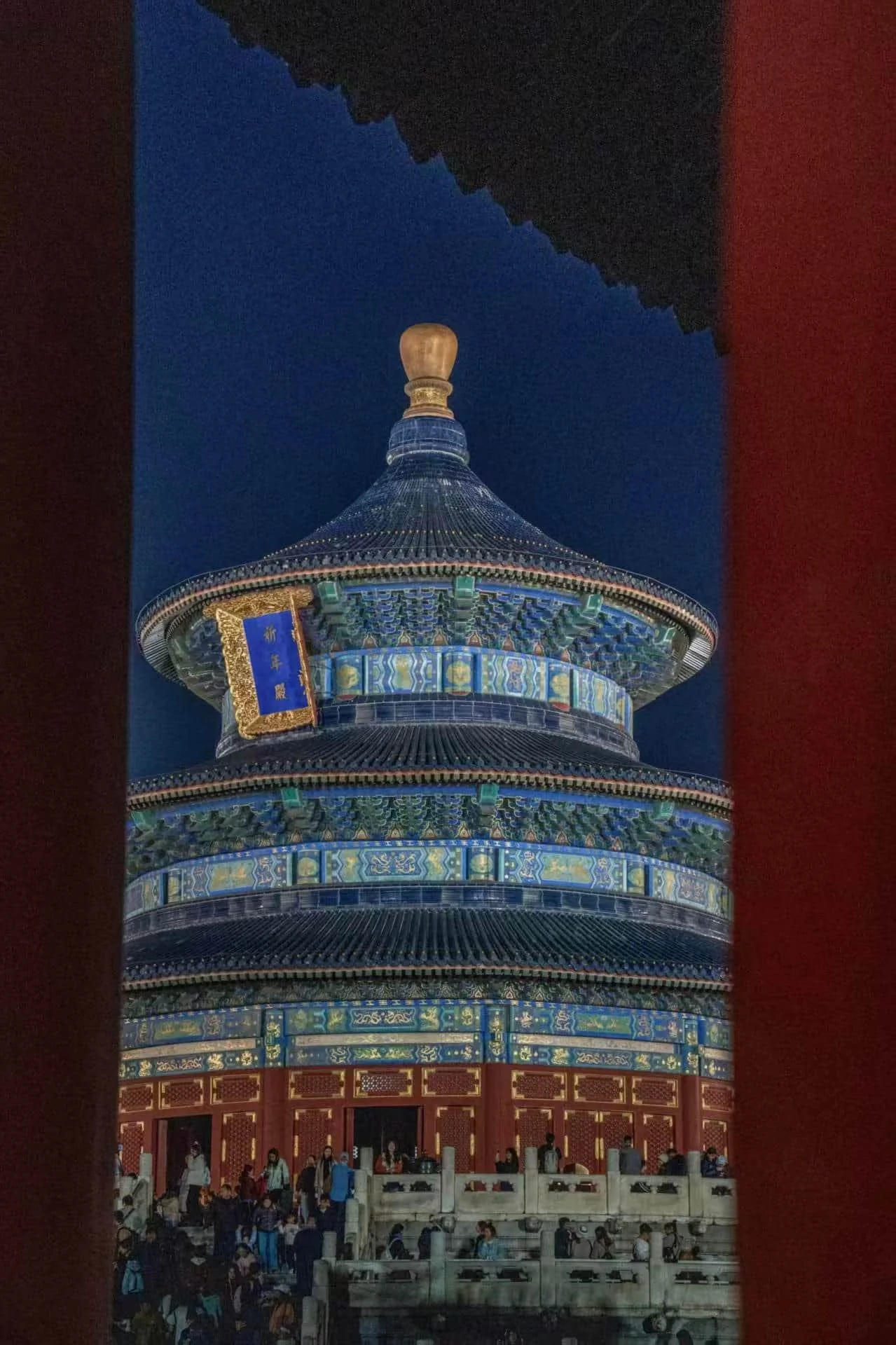
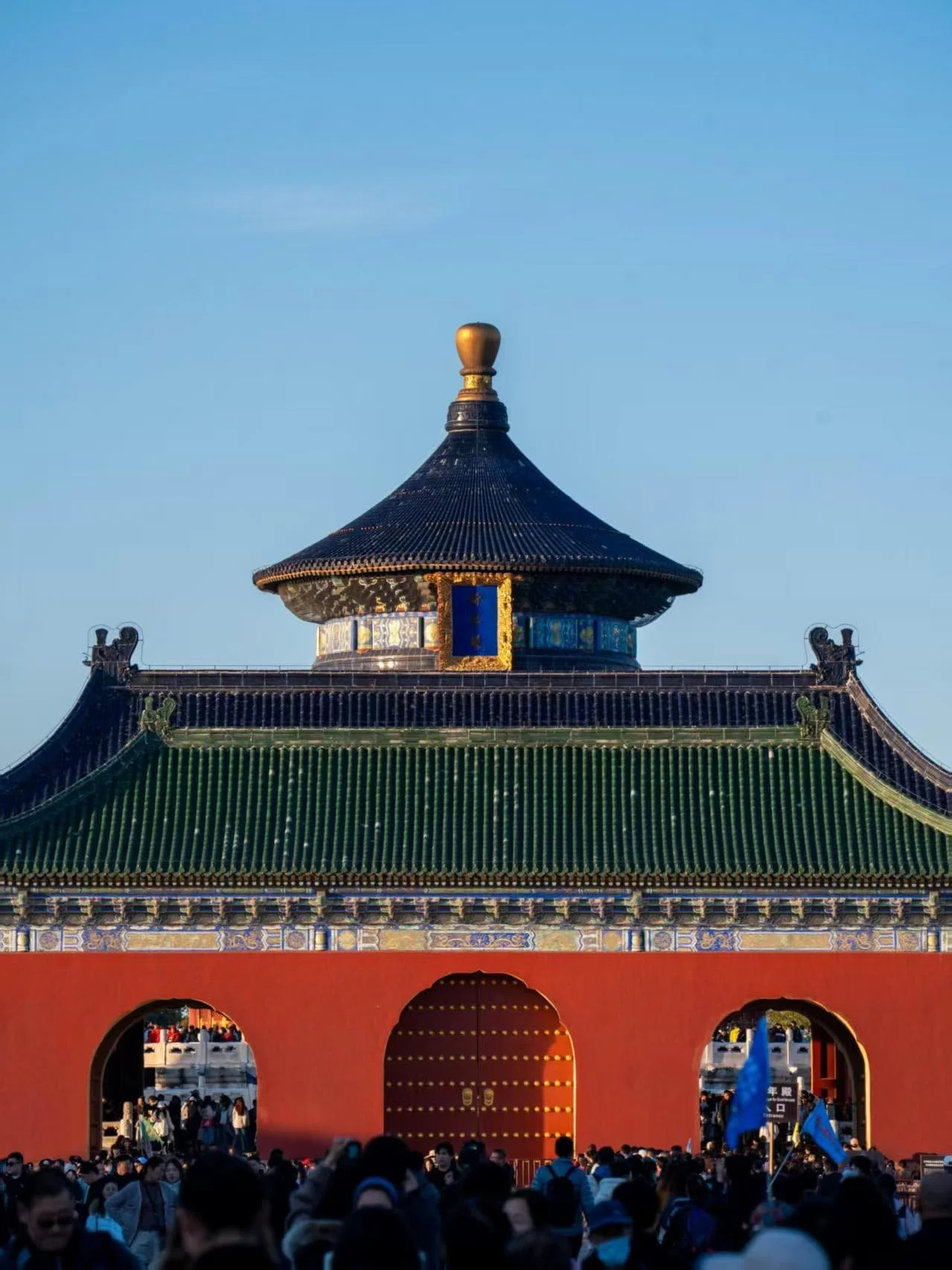
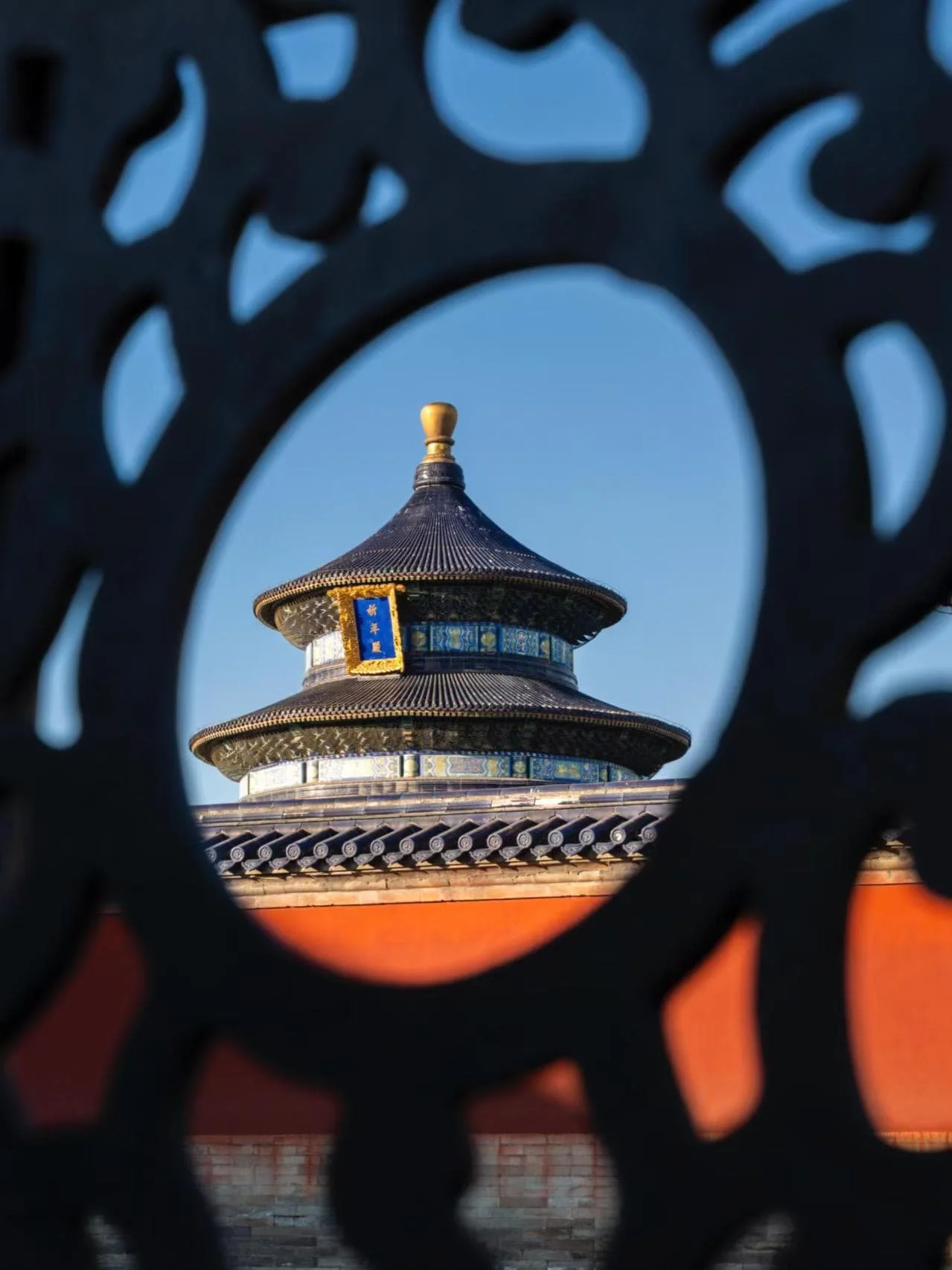
Hall of Prayer for Good Harvests (祈年殿): A triple-gabled circular wooden structure built entirely without nails — one of the most photographed buildings in China.
Echo Wall (回音壁): The acoustic design is so precise that a whisper at one point on the circular wall can be heard from the opposite side, 60 meters away.
Circular Mound Altar (圜丘坛): A three-tiered marble platform where the emperor performed the winter solstice sacrifice. Stand at the center stone and speak — your voice is amplified by the circular design.
The surrounding park is a favorite gathering spot for Beijing locals: you'll see people practicing tai chi, playing Chinese chess, singing Peking opera, and flying kites. It's a wonderful glimpse into everyday Beijing life that most tourists never experience.
Optional Add-On — Hutong Alleyway Walking Tour
If you have energy left, end the day with a walk through a traditional Hutong (胡同) neighborhood — the narrow alleyways that were the living quarters of old Beijing. Visit a restored courtyard home (Siheyuan), see a local primary school, and maybe stop for a craft beer at a microbrewery tucked into a converted courtyard. It's the authentic side of Beijing that most visitors miss.
✅ What's Included
✔️ Private English-speaking guide (licensed, expert in Chinese history)
✔️ Private vehicle with driver (all 3 days)
✔️ All entrance fees: Forbidden City, Great Wall Mutianyu (cable car + toboggan), Summer Palace, Old Summer Palace, Temple of Heaven
✔️ Pre-booked Forbidden City tickets (avoiding sell-out risk)
✔️ Bottled water throughout
❌ What's Not Included
✘ Meals (lunch & dinner; Peking Duck dinner approx. ¥180-280/person)
✘ Hotel accommodation (we can help book — recommend hotels near Wangfujing or Qianmen)
✘ Travel insurance & gratuities
📌 Practical Information
🚶 Walking Level: Moderate to High. Day 1: 3-4 hours in the Forbidden City (mostly flat but extensive). Day 2: 2-3 hours on the Great Wall (steps) + 2 hours Summer Palace. Day 3: 2-3 hours at the Old Summer Palace + 2 hours Temple of Heaven.
🎟️ Forbidden City Tickets: These sell out days in advance, especially in peak season. We pre-book all tickets for you — just bring your passport.
🌡️ Best Time to Visit: Spring (April–May) and autumn (September–October) offer the best weather. Winter is cold but magical with snow on the Great Wall; summer is hot but the Summer Palace is at its lushest.
🚄 Getting Here: Beijing has two international airports (Capital & Daxing) and multiple high-speed rail stations. We offer pickup/drop-off from any of them.
From emperors' thrones to ancient walls and imperial gardens — experience the complete Beijing story in 3 days. Book your private tour today.
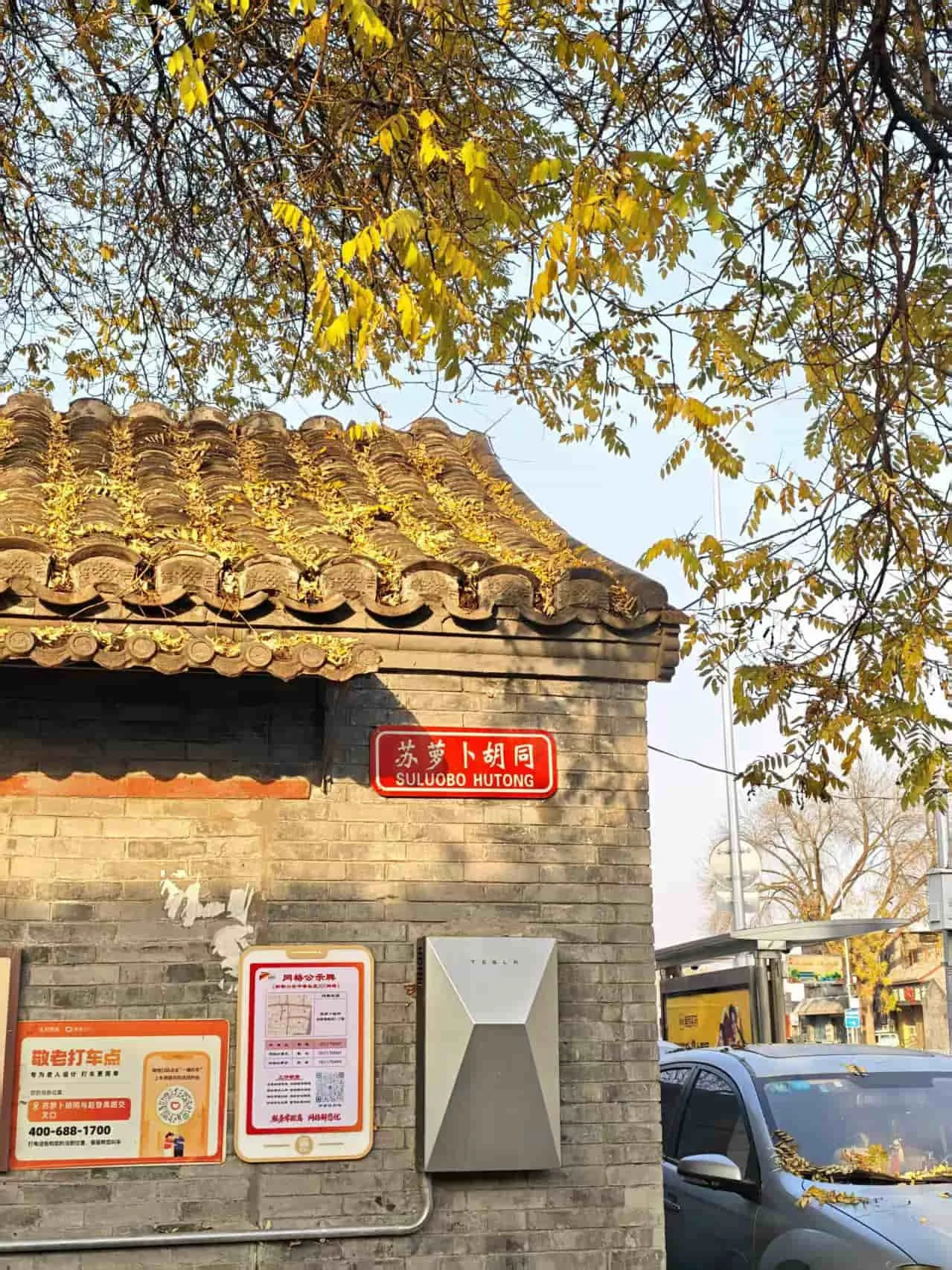
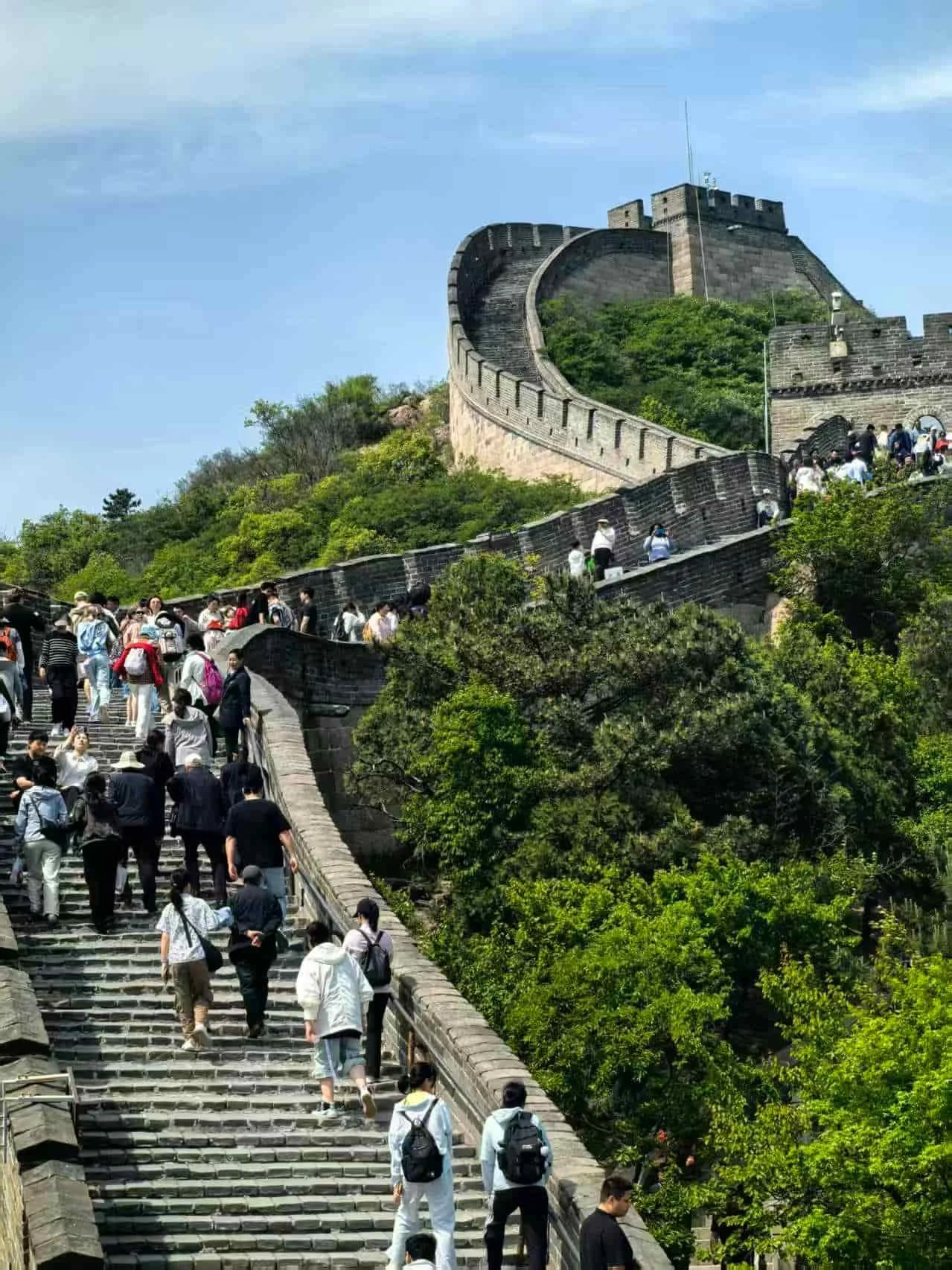
Four Days in Beijing — The Complete Imperial Experience
Four days is the "sweet spot" for Beijing. It's enough time to see the absolute must-sees (Forbidden City, Great Wall, Summer Palace) and add the deeper cultural experiences that transform a sightseeing trip into a real understanding of China's capital — the Temple of Heaven's cosmic architecture, the hauntingly beautiful Old Summer Palace, the winding hutong alleys where old Beijing still breathes, and the world-class museums that most day-trippers miss.
With a private guide and driver, you'll move through the city efficiently, skip the lines at every major site, and have the flexibility to adjust the pace when your feet need a break or your curiosity demands more time.
Why 4 Days Works: Day 1 covers the imperial heart (Forbidden City + Tiananmen). Day 2 takes you to the Great Wall + Summer Palace. Day 3 explores the Temple of Heaven + Old Summer Palace + Beijing's best museums. Day 4 dives into local life (Hutong walking + traditional crafts). Every day builds on the last — by Day 4, you're reading the city like a local.
Day 1: The Forbidden City & Tiananmen Square
🌅 Morning — Tiananmen Square & The Forbidden City
Start at 8:00 AM — your guide will pick you up from your hotel and drive to Tiananmen Square. Security checks are thorough (this is China's most sensitive political space), so your guide will handle the logistics while you take in the scale of the square — capable of holding 1 million people.
Pass through Tiananmen Gate (Gate of Heavenly Peace) with its iconic portrait of Mao Zedong. This is where modern China and imperial China collide — a powerful moment that sets the tone for the day.
Enter the Forbidden City through the Meridian Gate (Wumen). Immediately, the scale hits you: this palatial complex covers 180 acres and housed 24 emperors across nearly 500 years. Your guide will lead you along the Central Axis — the spine of imperial Beijing, lined with the three great ceremonial halls:
Hall of Supreme Harmony (Taihe Dian, 太和殿): The largest and most important hall in China. This is where emperors held their grandest ceremonies — coronations, imperial weddings, winter solstice rites. The throne inside, carved from sandalwood and inlaid with pearls, sits beneath a coffered ceiling adorned with a coiling golden dragon. Your guide will explain the ritual choreography that governed every movement within this space.
Hall of Central Harmony (Zhonghe Dian, 中和殿): A smaller, more intimate hall where the emperor rehearsed his ceremonies and received final briefings from ministers before major state events.
Hall of Preserving Harmony (Baohe Dian, 保和殿): Where the emperor hosted the final round of the imperial examination — the grueling, multi-day test that determined who would staff the entire imperial bureaucracy. The marble terrace out front, carved from a single piece of stone weighing 200+ tons, is a feat of Ming Dynasty engineering that still puzzles historians.
Continue north through the Inner Court — the emperor's private residence. The Palace of Heavenly Purity (Qianqing Gong, 乾清宫) was the emperor's main bedchamber and the site of daily governance. The Hall of Union (Jiaotai Dian, 交泰殿) housed the imperial seals. And the Palace of Earthly Tranquility (Kunning Gong, 坤宁宫) was the empress's residence and, later, the site of Manchu shamanic rituals.
Your guide will also take you through the Six Eastern Palaces (东六宫) — the residential quarters of concubines, each with its own courtyard, kitchen, and miniature garden. This is where the real palace intrigue happened — and your guide knows the stories of the concubines who rose to power, the eunuchs who manipulated emperors, and the near-misses of history that don't appear in textbooks.
Optional: The Hall of Jewels (Zhenbao Guan, 珍宝馆) and Hall of Clocks (Guibao Guan, 钟表馆) — separate ticketed exhibits housing the imperial collection of jade, gold, and extraordinarily intricate mechanical clocks gifted by (or looted from) European courts. Worth it if you love craftsmanship; skip if you're museum-ed out.
Exit from the Gate of Divine Prowess (Shenwumen, 神武门) at the northern end of the complex. You've walked approximately 3-4 hours inside the Forbidden City — not a bad pace, with frequent stops and stories.
🌆 Afternoon — The Treasure Galleries & Jingshan Park (Optional)
After a local lunch (your guide will recommend a restaurant serving authentic Beijing duck, or a quieter spot if you prefer), you have two options:
Option A — Jingshan Park (景山公园): A short walk from the Forbidden City's north gate, Jingshan is a man-made hill built from the earth excavated to create the Forbidden City's moat. Climb to the summit (about 15 minutes) for the best view in Beijing — the entire Forbidden City spread out below you in perfect symmetry, its golden roofs glowing in the afternoon sun. This is the classic Beijing photo you've seen in every travel guide.
Option B — Beihai Park (北海公园): Adjacent to the Forbidden City, this is one of the oldest imperial gardens in China, centered around a white dagoba (stupa) on an island in the lake. Quieter than the Forbidden City, with beautiful weeping willows and Tibetan-style architecture.
🌙 Evening — Optional: Wangfujing or Local Dinner
After the day's sightseeing, your guide can drop you at Wangfujing Street (王府井) — Beijing's most famous shopping street, also home to a famous (and somewhat infamous) "snack street" where you can sample scorpion on a stick, starfish, and other adventuresome bites. Or, if you prefer a proper dinner, your guide will recommend a restaurant serving Peking duck done properly — crispy skin, tender meat, thin pancakes, sweet bean sauce, scallion, cucumber. It's a ritual, not just a meal.
Day 2: The Great Wall at Mutianyu & The Summer Palace
🌅 Morning — Journey to the Great Wall (Mutianyu, 慕田峪)
An early start today — your guide will pick you up at 7:30 AM for the ~1.5-hour drive northeast out of the city to Mutianyu. Why Mutianyu and not Badaling (the section most tour buses visit)? Three reasons:
1. Fewer crowds: Badaling can have 30,000+ visitors on a holiday; Mutianyu is quieter, especially in the morning.
2. More scenic: Mutianyu is surrounded by lush forest-covered mountains; the wall snakes over ridges in a way that's genuinely dramatic.
3. Historical prestige: Mutianyu has been visited by George H.W. Bush, Ronald Reagan, and Hillary Clinton — if it's good enough for world leaders, it's a solid choice.
Take the cable car up to the wall (or hike up if you're feeling energetic — about 40 minutes of stairs). Once on the wall, the scale of the thing hits you: this isn't just a wall, it's a system — watchtowers, beacon towers, barracks, and the wall itself snaking over mountain ridges as far as the eye can see. The Ming Dynasty section you're standing on was built in the 14th-17th centuries, but walls on this general line date back to the 3rd century BC.
Your guide will explain the wall's construction (baskets of pounded earth, brick facing, and "dragon-back" drainage systems that have kept it standing for 600+ years) and its role in defending the empire from northern nomadic invasions. Then you'll have 2-3 hours to walk the wall at your own pace — climb watchtowers, take photos from the ramparts, and soak in the immensity of the landscape.
🎢 Afternoon — Toboggan Ride & Return to Beijing
Here's the fun part: after walking the wall, take the toboggan slide back down the mountain — a winding alpine coaster that's thrilling but perfectly safe (you control your speed with a hand brake). Kids love it; so do adults. It's a genuinely fun way to end your Great Wall experience.
Alternatively, take the chairlift down if you prefer a gentler descent.
After the wall, drive back to the city (1.5 hours). On the way, stop for lunch at a local restaurant near the wall — your guide will recommend one that serves authentic farm-to-table mountain cuisine, not the overpriced tourist buffets.
Arrive back in Beijing in the mid-afternoon. Depending on your energy level, your guide can offer an optional stop:
The Summer Palace (颐和园): The largest and best-preserved imperial garden in China. Built as a retreat for Empress Dowager Cixi (the "Dragon Lady" who effectively ruled China for 47 years), this vast lakeside complex is where the court retreated from the formal rigidity of the Forbidden City. The Kunming Lake (昆明湖) covers three-quarters of the park — in winter it freezes solid and becomes an enormous skating rink for Beijing locals.
Walk along the Long Corridor (长廊) — a 728-meter covered walkway decorated with more than 14,000 individual paintings depicting classical Chinese literature, landscapes, and historical scenes. Sunlight filters through the painted rafters; lake breezes cool your face. It's one of the most pleasant walks in Beijing, and your guide will point out the most interesting paintings as you stroll.
Other highlights include:
The Marble Boat (石舫): A curious lakeside pavilion built entirely of marble — a symbol of Cixi's extravagance (she diverted funds meant for the imperial navy to build this and restore the gardens). It's beautiful, but the story behind it is the real attraction.
The Seventeen-Arch Bridge (十七孔桥): Connecting the eastern shore to Nanhu Island, this elegant stone bridge is especially beautiful at sunset, when the arches reflect in the water and the lake turns gold.
The Tower of Buddhist Incense (佛香阁): A towering pavilion on Longevity Hill that offers panoramic views over the lake. A steep climb (but worth it for the view and the breeze).
🌙 Evening — Peking Duck Dinner
No Beijing visit is complete without Peking Duck. Your guide will take you to a renowned local restaurant (not a tourist trap) where the duck is roasted in a closed oven until the skin is shatteringly crisp and the meat is tender. Watch the chef carve it tableside, then wrap slices in thin pancakes with sweet bean sauce, scallions, and cucumber. It's a culinary ritual you won't forget.
Day 3: Temple of Heaven, Old Summer Palace & Museums
🌅 Morning — The Temple of Heaven (天坛)
Start the day at 8:30 AM with a visit to the Temple of Heaven (天坛公园). This is where emperors came to pray for good harvests, and the architecture is breathtakingly precise — the Hall of Prayer for Good Harvests (祈年殿) is a triple-gabled circular wooden structure built entirely without nails. The acoustic design is so precise that a whisper at the center of the surrounding wall (the Echo Wall) can be heard from the other side.
The surrounding park is a favorite gathering spot for Beijing locals: you'll see people practicing tai chi, playing cards, singing opera, and knotting intricate "Chinese jump rope" patterns. It's a wonderful glimpse into everyday Beijing life.
Your guide will explain the cosmic symbolism embedded in the design: the round roofs represent heaven; the square bases represent earth. The number of beams, pillars, and roof tiles all correspond to cosmic numerology. It's architecture as theology — and it's magnificent.
🌆 Afternoon — The Old Summer Palace (Yuanmingyuan, 圆明园)
After lunch, head to the Old Summer Palace (Yuanmingyuan, 圆明园) — the "Garden of Perfect Brightness" that was looted and burned by Anglo-French forces in 1860. What remains today is a haunting landscape of marble ruins — European-style palaces with only their stone skeletons standing, overgrown with grass and reflected in placid ponds.
It's a sobering contrast to the pristine, restored Forbidden City. The Old Summer Palace tells the story of China's "Century of Humiliation" — the period of foreign invasions and unequal treaties that still shapes China's national psyche today. Your guide will explain the historical context and why this site remains such an emotional touchstone for Chinese visitors.
Note: The Old Summer Palace is less visited than the Forbidden City and the Summer Palace, but many travelers find it the most moving of the three. It's also much larger — budget 1.5-2 hours for a relaxed visit.
🏛️ Late Afternoon — The National Museum of China (Optional)
If you have energy left (and if it's open — check with your guide, as it's sometimes closed for rotating exhibits), the National Museum of China on the east side of Tiananmen Square is one of the largest museums in the world, housing over 1 million artifacts spanning China's entire history.
Highlights include the bronze collection (Shang and Zhou Dynasty ritual vessels that are 3,000+ years old), the Terracotta Warriors exhibit (a small but exquisitely detailed selection from the Xian pits), and the road to rejuvenation exhibit (a modern history section that tells the official Chinese Communist Party narrative — interesting for understanding contemporary Chinese political culture).
If you're museum-ed out, your guide can instead take you to Beihai Park for a relaxing boat ride on the lake, or to the 798 Art Zone — a thriving contemporary art district in a former military factory complex.
Day 4: Hutong Life, Traditional Crafts & Departure
🌅 Morning — Hutong Walking Tour & Rickshaw Ride
On your final day, slow down and experience the real Beijing — the narrow alleyways (hutongs, 胡同) that were the traditional living quarters of old Beijing. These gray-tiled, courtyard-filled neighborhoods are disappearing as the city modernizes, but several well-preserved areas remain.
Your guide will take you to the Shichahai area (什刹海) — a scenic district of interconnected lakes surrounded by hutongs. From here, you can take a human-powered rickshaw ride (a bit touristy, but fun and a good way to cover ground quickly) through the winding alleys.
Stop at a traditional courtyard home (Siheyuan, 四合院) — your guide can arrange a visit to a local family's home, where you'll be served tea and shown how the courtyard layout reflects Confucian family hierarchy (north-facing main building for the patriarch; east/west wings for children and grandchildren).
You'll also visit a local primary school (if school is in session and permissions allow) — seeing bright-eyed Chinese children reciting multiplication tables in unison is oddly charming and gives you a sense of the country's future.
🎨 Midday — Traditional Craft Workshop (Optional)
Beijing is famous for several traditional crafts. Depending on your interests, your guide can arrange a hands-on workshop:
🖌️ Calligraphy & Brush Painting: Learn to hold a Chinese brush pen and write a few characters (your name in Chinese, or a auspicious phrase like "longevity" or "harmony"). The instructor will also demonstrate brush painting — bamboo, orchids, and mountain landscapes.
🏮 Cloisonné Enamel: Watch artisans apply tiny strips of copper to a metal base, then fill the compartments with colored enamel paste. It's mesmerizingly precise work, and you can buy pieces directly from the workshop.
🥟 Dumpling Making: Visit a local cooking school and learn to make (and eat!) authentic Beijing dumplings (jiaozi). A fun, delicious way to end your trip.
🛫 Afternoon — Departure or Final Shopping
After lunch, your guide will take you to the airport or high-speed rail station for your departure. If you have a few hours before your flight/train, your guide can drop you at the Silk Market (秀水街) or the Pearl Market (红桥市场) for last-minute souvenir shopping — silk scarves, jade trinkets, pearl jewelry, and cashmere sweaters are popular choices. Your guide will help you bargain (always haggle — start at 30% of the asking price).
If you're extending your stay in Beijing, your guide will be happy to recommend additional activities — day trips to the Ming Tombs (明十三陵), the Yungang Grottoes (a bit of a drive, but spectacular Buddhist cave art), or an evening acrobatic show (朝阳剧场) that will leave your jaw on the floor.
✅ What's Included
✔️ Private English-speaking guide (licensed, expert in Chinese history)
✔️ Private air-conditioned vehicle with professional driver (all 4 days)
✔️ All entrance fees: Forbidden City, Temple of Heaven, Summer Palace, Great Wall Mutianyu (cable car up, toboggan down), Old Summer Palace
✔️ Pre-booked Forbidden City tickets (these sell out days in advance — we handle the booking)
✔️ Ping-pong table? Just kidding. But we do include bottled water throughout.
✔️ Rickshaw ride in the hutongs (optional, included in full-inclusion package)
❌ What's Not Included
✘ Meals (lunch & dinner; Peking duck dinner approx. ¥180-280/person; lunches ¥50-100/meal)
✘ Hotel accommodation (we can help you book a centrally located hotel)
✘ Travel insurance (highly recommended)
✘ Gratuities (optional, at your discretion)
✘ Optional activities not specified in the itinerary (calligraphy class, acrobatic show, etc.)
📌 Practical Information
🚶 Walking Level: Moderate to High. Day 1: 3-4 hours in the Forbidden City (mostly flat flagstone, but extensive) plus 1-2 hours at Jingshan or Beihai. Day 2: 2-3 hours on the Great Wall (steps and uneven stone paths) plus 1-2 hours at the Summer Palace. Day 3: 2-3 hours at Temple of Heaven + Old Summer Palace (mostly flat). Day 4: 2-3 hours walking in hutongs (flat, leisurely pace). Comfortable walking shoes with good grip are essential.
🎟️ Forbidden City Tickets: These sell out days in advance, especially in peak season (April–May, September–October). We pre-book all tickets for you — just bring your passport on the day. Important: The Forbidden City is closed on Mondays (except national holidays). Plan accordingly.
🌡️ Best Time to Visit: Spring (April–May) and autumn (September–October) offer the best weather. Summers are hot and humid (30°C+); winters are cold but dramatic with snow on the Great Wall. The Forbidden City is stunning in snow, but dress warmly — indoor spaces are not heated in the traditional sense.
📸 Photography: Photography is allowed in most areas of the Forbidden City and the Summer Palace (no tripods without special permit). The Great Wall is incredibly photogenic — your guide will point out the best photo spots and even help you take group shots with the wall stretching into the distance behind you. In the hutongs, always ask permission before photographing locals (most are happy to pose, especially children).
👨👩👧👦 Family Friendly: This tour is suitable for children aged 6+. The Great Wall toboggan is a hit with kids; the Forbidden City can be challenging for short attention spans — your guide will keep them engaged with stories of emperors, eunuchs, and palace intrigue. The hutong rickshaw ride is also popular with families.
🍜 Food Allergies & Dietary Restrictions: Inform your guide in advance. Beijing cuisine is wheat- and soy-heavy (dumplings, noodles, soy sauce), but your guide can ensure gluten-free, vegetarian, halal, or other dietary needs are accommodated at restaurants.
Why Choose a Private Tour?
Beijing's top sites are busy — very busy. The Forbidden City alone receives 15+ million visitors per year. A private guide makes the difference between feeling like a number in a crowd and having a genuinely enriching experience:
→ No waiting: Your guide knows the optimal entry times and routes to minimize queuing.
→ No rushing: Spend 20 minutes at the Hall of Supreme Harmony, or 40 — it's your call.
→ No "script": Your guide tailors the commentary to your interests. Love architecture? They'll geek out on roof-ridge animals and bracket constructions. More into political history? They'll focus on the emperors and the power struggles.
→ Logistics handled: Tickets, transport, timing — your guide handles it all. You just show up.
Extend Your Stay — Nearby Destinations
If you have additional days, consider extending your trip to these nearby destinations (all accessible by high-speed rail):
🏯 Xi'an (西安): 4.5 hours by high-speed rail. Home to the Terracotta Warriors, the ancient City Wall, and the starting point of the Silk Road. A natural next stop after Beijing.
🏔️ Zhangjiajie (张家界): 5 hours by high-speed rail to Changsha, then a 2-hour transfer. The floating-mountain landscapes that inspired Avatar. Otherworldly.
🏙️ Shanghai (上海): 4.5 hours by high-speed rail. China's futuristic financial hub, with a stunning skyline along the Bund. A fascinating contrast to Beijing's imperial gravitas.
🏔️ Chengdu (成都): 7.5 hours by high-speed rail. Home to the Giant Panda Research Base and Sichuan cuisine that will ruin all other Chinese food for you (in a good way).
Four days is just the beginning of what Beijing has to offer. Ready to experience the imperial essence of China's capital? Book your 4-day private Beijing tour today.
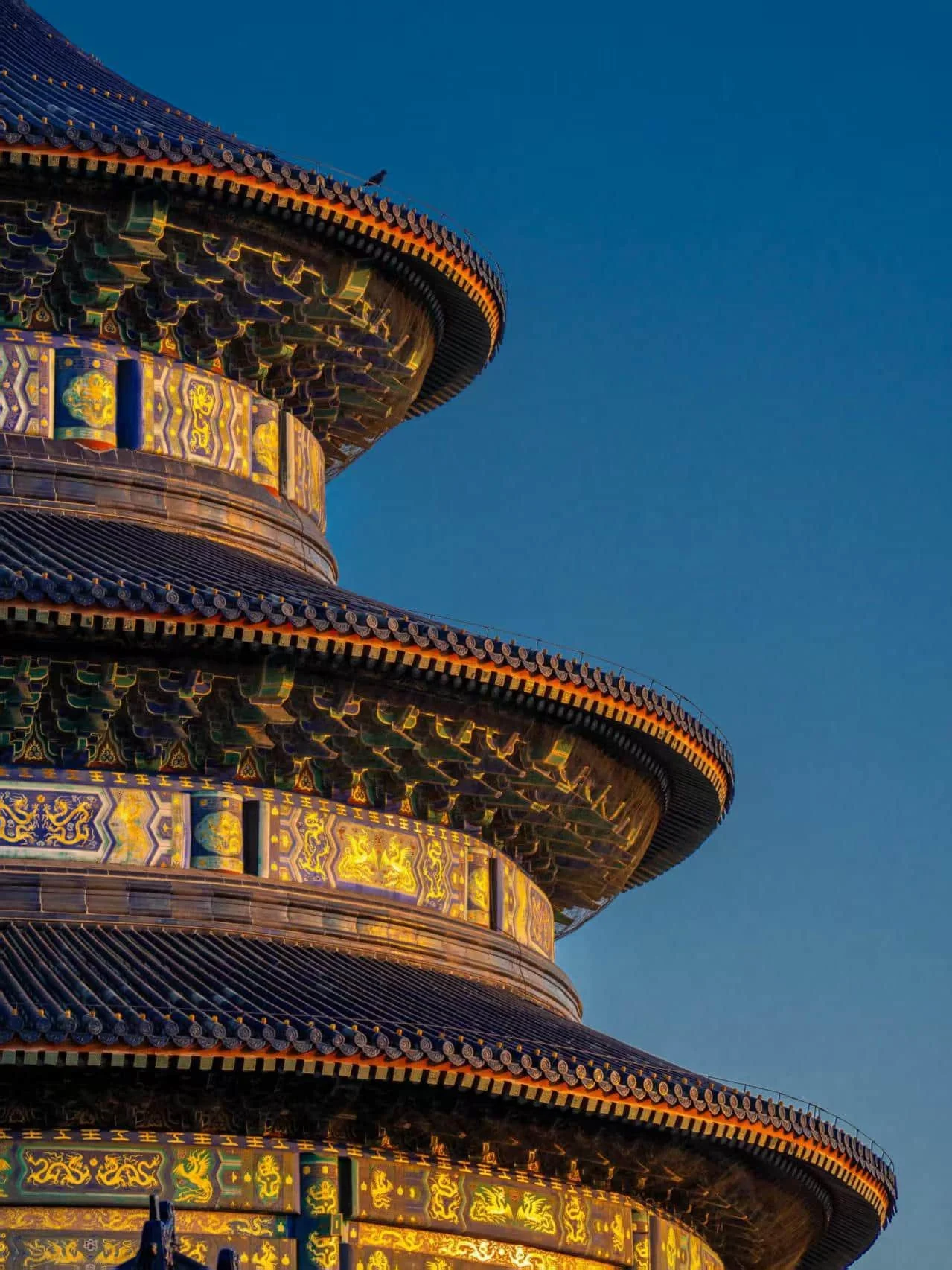
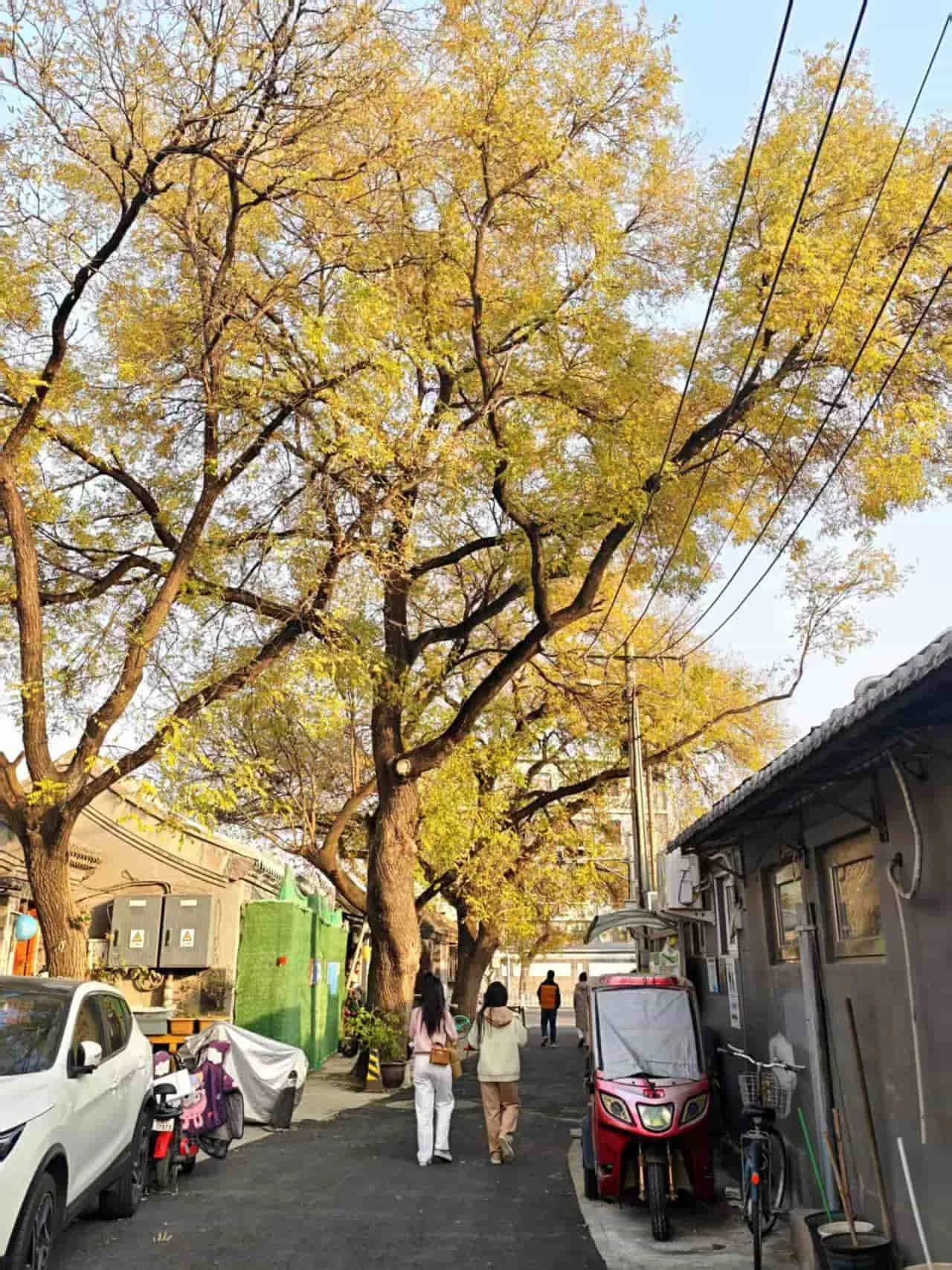
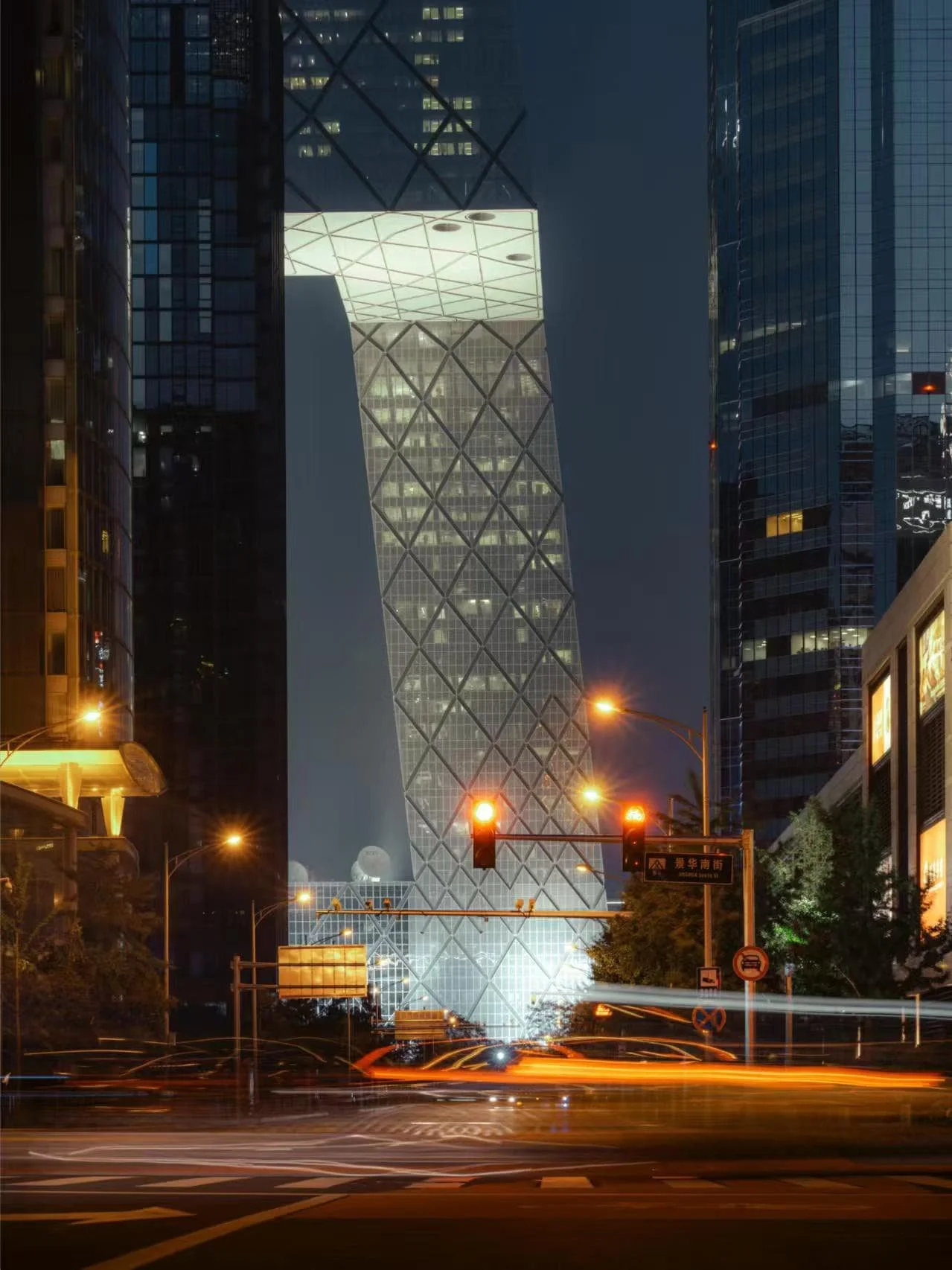
Five Days in Beijing — Beyond the Postcards
Five days in Beijing isn't just a tourist itinerary — it's a deep dive into 3,000 years of Chinese history, from the glory of the Ming and Qing empires to the vibrant energy of a modern megacity of 21 million people. This carefully crafted journey balances must-see imperial landmarks with authentic local experiences that most visitors never discover.
Unlike rushed 2-day or 3-day tours that barely scratch the surface, five days gives you time to truly understand Beijing. You'll walk the same paths as emperors in the Forbidden City, hike a less-crowded section of the Great Wall at sunset, bargain like a local at the Silk Market, taste authentic Peking duck where presidents dine, and cycle through centuries-old hutong alleys where Beijing's soul still lives. By Day 5, you won't just have seen Beijing — you'll have felt it.
What makes this 5-day tour different:
→ No tourist traps — We skip overpriced tea ceremonies and forced shopping stops
→ Small group guarantee — Maximum 12 guests for personalized attention
→ Expert local guides — Not just facts, but stories and context you won't find in guidebooks
→ Sunset Great Wall experience — Watch the wall glow golden at dusk, away from the crowds
→ Authentic food journey — From street food breakfast to Michelin-starred Peking duck
→ Hutong homestay cooking — Make dumplings with a local family in their courtyard home
Day 1: Arrival & The Heart of Imperial Beijing
🌅 Morning — Arrival & Welcome
Your journey begins with a warm welcome at Beijing Capital Airport or your hotel. After check-in and a brief rest, we'll gather for a welcoming lunch at a local restaurant famous for Zha Jiang Mian (炸酱面, fried sauce noodles) — a Beijing staple that tells the story of the city's working-class roots. The thick wheat noodles, rich fermented bean sauce with ground pork, and fresh shredded cucumbers and radishes create a dish that's both humble and unforgettable.
🏛️ Afternoon — Tiananmen Square & Forbidden City
We start at Tiananmen Square, the world's largest public square and the symbolic heart of modern China. Your guide will share the stories behind the monuments — the Monument to the People's Heroes, the Great Hall of the People, and the National Museum. Then, we cross through the Meridian Gate (午门, Wumen) into the Forbidden City (故宫博物院, Palace Museum).
This isn't just a walk through old buildings. As you pass through the Hall of Supreme Harmony (太和殿), the Hall of Central Harmony (中和殿), and the Hall of Preserving Harmony (保和殿), your guide will explain the cosmic principles that governed imperial architecture — how every roof tile, every dragon carving, every number of pillars was chosen to reflect the emperor's divine authority as the Son of Heaven.
At the Hall of Supreme Harmony, stand where emperors held coronations and imperial weddings. The throne inside, carved from sandalwood and inlaid with pearls, sits beneath a coffered ceiling adorned with a coiling golden dragon. Your guide will point out the sundial and grain measure flanking the hall — symbols of the emperor's power to measure both time and justice.
💡 Insider moment: We'll take you to the Imperial Garden at the north end of the Forbidden City, where the last emperor, Puyi, played as a child. It's quieter here, and you can imagine the lives of concubines and eunuchs who once inhabited these 9,999 rooms.
🌃 Evening — Wangfujing Street & Traditional Snacks
Dinner is on your own tonight (we'll give you our restaurant recommendations), but we'll take you to Wangfujing Street, Beijing's most famous shopping district. If you're feeling adventurous, try the Donghuamen Night Market — candied hawthorn (tanghulu, 糖葫芦), grilled squid, and for the brave, scorpions on a stick. Or stick to the safer bets: jian bing (煎饼, savory crepe) and chuanr (串儿, grilled skewers).
Day 2: The Great Wall at Sunset — A Memory for Life
🌅 Morning — Drive to Mutianyu Great Wall
We leave Beijing early (around 7:30 AM) to beat the crowds and arrive at the Mutianyu section (慕田峪长城) by mid-morning. Unlike the overcrowded Badaling section, Mutianyu offers a more authentic experience with fewer tour buses and more stunning views of the wall snaking over forested mountains.
🧱 Mid-Day — Hiking the Great Wall
You'll have 3-4 hours to explore the wall at your own pace. Options include:
Take the cable car up and hike along the wall's 22 watchtowers
Challenge yourself with a steep hike to the highest point (Tower 20)
Ride the toboggan down — a fun, winding slide that's popular with visitors of all ages
Historical context: The Mutianyu section was built during the Ming Dynasty (1368-1644) to protect the capital from Mongol invasions. The wall you're walking on is over 600 years old, and as you look out over the forested mountains, you'll understand why this was considered an impenetrable defense. Notice the signal fire platforms — soldiers once lit wolf dung fires here to warn of approaching enemies, a system that could relay a message from the Great Wall to Beijing in just a few hours.
🍜 Afternoon — Farmhouse Lunch
After the hike, we'll enjoy a farm-to-table lunch at a local village restaurant. Think fresh vegetables from the owner's garden, free-range chicken, and wo wo tou (窝窝头, cornmeal buns) — simple, hearty food that fuels the local farmers. This is Chinese country cooking at its most authentic.
🌇 Evening — Sunset at the Great Wall (Special Experience)
Here's what makes this tour special: We return to the wall for sunset. As the tour groups leave and the light turns golden, you'll have the wall almost to yourself. Watch as the setting sun turns the battlements a deep amber, and imagine the soldiers who once stood guard here centuries ago. This is a magical, crowd-free moment that most tourists never experience.
We'll have a picnic dinner on the wall (yes, really!) with local snacks, fruit, and tea. Then, we drive back to Beijing, arriving around 9:00 PM.
💡 Why sunset? The Mutianyu wall faces west, and the golden hour light transforms the ancient bricks into something almost ethereal. Photographers call it "the golden wall." You'll call it unforgettable.
Day 3: Temples, Parks & The Real Beijing
🙏 Morning — Temple of Heaven & Local Life
After yesterday's adventure, we start at a leisurely pace with a visit to the Temple of Heaven (天坛, Tiantan). This isn't just a temple — it's a masterpiece of Chinese cosmology. The Emperor came here annually to pray for good harvests, and the architecture reflects ancient Chinese beliefs about the relationship between heaven and earth. The round altar represents heaven; the square base represents earth.
But the real magic happens in the surrounding park. Every morning, thousands of Beijing residents gather here for tai chi, dancing, singing opera, and playing cards. You're encouraged to join in — try a tai chi move, learn a few steps of traditional dance, or just watch and photograph this vibrant display of community life.
Cultural insight: This is where you'll understand that Beijing isn't just about emperors and walls — it's about people. The elderly man practicing calligraphy with water on the pavement, the group of women dancing to folk music, the retired soldiers playing competitive card games — this is the real Beijing, the one that guidebooks can't capture.
🥟 Lunch — Beijing-Style Dim Sum
We'll head to a bustling restaurant famous for Beijing-style dim sum — not the Cantonese version you might know, but local specialties like douzhi (豆汁儿, fermented mung bean drink — an acquired taste!), wan dou huang (豌豆黄, sweet pea flour cake), and lu zhu huoshao (卤煮火烧, stewed intestines and tofu — surprisingly delicious).
🏯 Afternoon — Summer Palace & Kunming Lake
In the afternoon, we visit the Summer Palace (颐和园, Yiheyuan), the largest imperial garden in the world. Built as a retreat for Empress Dowager Cixi, it's a stunning combination of natural landscape and human artistry. You'll walk along the Long Corridor (长廊, the world's longest painted corridor with 14,000 paintings), climb Longevity Hill for panoramic views of Kunming Lake, and visit the Marble Boat — a symbol of the Qing Dynasty's decadence.
Storytime: Did you know Cixi diverted navy funds to rebuild the Summer Palace? The Marble Boat was her way of saying "the navy's money is now stone, and it will never sink." It's a controversial chapter in Chinese history, and your guide will share the debates among historians about whether she was a visionary builder or a corrupt spender.
🌙 Evening — Night Market & Street Food
Dinner tonight is a street food adventure. From jian bing (煎饼, savory crepe) to chuanr (串儿, grilled skewers) to bingtang hulu (冰糖葫芦, candied fruit), you'll taste the flavors that define Beijing's culinary scene. Vegetarian? No problem — there are plenty of meat-free options.
Day 4: Hutongs, History & Peking Duck
🚲 Morning — Hutong Bicycle Tour
Today, we explore Beijing's hutongs (胡同) — the narrow alleys that have been the city's residential fabric for centuries. We'll provide bicycles (or you can walk if you prefer), and pedal through areas like Shichahai (什刹海), Nanluoguxiang (南锣鼓巷), and Yandai Xie Street (烟袋斜街).
These aren't touristy hutongs — these are living neighborhoods where families have lived for generations. You'll peek into courtyard houses (四合院, siheyuan), visit a local primary school (if school is in session), and stop at a neighborhood grocery store that's been run by the same family for 40 years.
🥟 Lunch — Dumpling-Making with a Local Family
We'll arrange for you to make dumplings (饺子, jiaozi) with a local family in their courtyard home. You'll learn to roll the dough, stuff the filling, and fold the dumplings into perfect shapes — then eat your creations for lunch! This is your chance to ask questions about daily life in Beijing — housing prices, education system, what young people do for fun. It's a cultural exchange that goes far beyond sightseeing.
🛕 Afternoon — Lama Temple & Confucius Temple
In the afternoon, we visit the Lama Temple (雍和宫, Yonghegong), Beijing's most important Tibetan Buddhist temple. The scent of sandalwood incense, the spinning prayer wheels, and the massive 18-meter sandalwood Buddha statue create a spiritual atmosphere in the middle of the city.
Next door is the Confucius Temple (孔庙) and Imperial College (国子监, Guozijian), where China's brightest scholars once studied for the civil service exams. It's quieter and less visited than other sites, but offers deep insight into China's intellectual traditions that shaped the country for over 2,000 years.
🦆 Evening — Peking Duck Dinner
No trip to Beijing is complete without Peking duck (北京烤鸭), and we're taking you to one of the city's most renowned restaurants — Quanjude (全聚德) or Dadong (大董), depending on the day's availability. Watch as the chef slices the crispy-skinned duck tableside, then wrap the meat in thin pancakes with scallions, cucumber, and sweet bean sauce. It's a culinary experience that's been perfected over 600 years.
💡 How to eat Peking duck like a local: Don't overload the pancake. A few slices of duck, one strip of scallion, a dab of sauce. Roll it up, dip the edge in the sauce again, and eat it in two bites. The skin should crunch; the meat should melt.
Day 5: Silk Market, Hidden Gems & Farewell
🛍️ Morning — Silk Market Shopping & Bargaining Lesson
Beijing's Silk Market (秀水街, Xiushui Jie) is legendary — a bustling multi-story market where you can find everything from silk scarves and pearls to custom-tailored suits. But here's the thing: bargaining is an art form, and we'll teach you the techniques.
Your guide will show you how to:
Start at 30% of the asking price
Use the "walk away" technique (it works!)
Spot quality silk vs. synthetic blends (burn a thread — real silk smells like hair, synthetic melts into a hard ball)
Negotiate in a friendly, respectful way that leaves both sides happy
🔔 Mid-Day — Bell & Drum Towers + Jingshan Park
After shopping, we'll visit the Bell and Drum Towers (钟鼓楼, Zhonglou and Gulou), which once marked time for the entire city. Climb the tower for a panoramic view of the hutong rooftops — it's one of the best photo spots in Beijing. The Drum Tower still has the original Ming Dynasty drums, and your guide will explain how the night watchmen kept time for the city.
Nearby is Jingshan Park (景山公园), where we'll hike to the top of the artificial hill for a breathtaking view of the Forbidden City from above. On a clear day, you can see the entire imperial precinct laid out in perfect symmetry — a view that was reserved exclusively for the emperor.
👋 Afternoon — Farewell Lunch & Departure
We'll end with a farewell lunch at a restaurant specializing in Chaozhou (潮州) cuisine — delicate, fresh flavors that provide a nice contrast to the heartier Beijing dishes you've been eating. Then, we'll transfer you to the airport, train station, or your next hotel. Not ready to leave? We can help you extend your stay or plan your next destination in China.
What's Included
4 nights accommodation in a 4-star or 5-star hotel (your choice)
All entrance fees to attractions mentioned in the itinerary
Meals: 4 breakfasts, 5 lunches, 3 dinners (including Peking duck dinner)
Transportation: Air-conditioned vehicle for all transfers and day trips
Expert local guide (English-speaking, licensed)
Great Wall sunset experience with picnic dinner on the wall
Hutong bicycle rental and dumpling-making class
Silk Market bargaining lesson and shopping assistance
Bottled water and snacks throughout the tour
Airport/train station pickup and drop-off
What's Not Included
International/domestic flights to/from Beijing
Travel insurance (highly recommended)
Personal expenses: souvenirs, additional snacks, drinks
Tips/gratuities for guide and driver (optional but appreciated)
Visa fees (if applicable to your nationality)
Additional meals not mentioned in the itinerary
Practical Information
Difficulty Level: Moderate
This tour involves moderate walking (3-5 miles per day on average) and some stairs (especially at the Forbidden City and Great Wall). The Great Wall hike is not extremely strenuous, but you should be comfortable with uneven terrain and some steep sections. If you have mobility concerns, we can adjust the itinerary — just let us know!
What to Wear & Bring
ItemReasonComfortable walking shoesYou'll be on your feet a lot — sneakers or hiking shoes are idealLayers of clothingBeijing weather can change quickly, especially in spring and autumnSun protectionSunscreen, hat, sunglasses — the Great Wall has little shadeReusable water bottleWe'll provide refills to reduce plastic wasteSmall daypackFor carrying water, snacks, camera, and layersCamera/phoneYou'll want photos — but also take time to enjoy the momentCash (small bills)For street food, bargaining, and small purchases
Best Time to Visit Beijing
Spring (April-May): Pleasant temperatures (15-25°C), blooming flowers, occasional dust storms
Summer (June-August): Hot and humid (25-35°C), but longer daylight hours; Great Wall sunset is later
Autumn (September-October): Best time! Cool, crisp air (10-20°C), clear skies, golden ginkgo leaves, perfect for photography
Winter (November-March): Cold (below 0°C), but fewer crowds, possible snow on the Great Wall (magical!)
Family-Friendly Notes
This tour is suitable for families with children aged 8+. The Great Wall hike can be adjusted for younger kids (cable car option), and the hutong bicycle tour is fun for all ages. We can also arrange child-friendly menus and early meal times upon request.
Group Size & Customization
We keep our groups small (max 12 people) to ensure a personalized experience. But if you'd prefer a private tour for just your family or friends, we can customize the itinerary — add a kung fu show, visit a traditional Chinese medicine clinic, or spend more time at the Silk Market. Just ask!
Frequently Asked Questions
Q: Is this tour suitable for solo travelers?
A: Absolutely! Many of our guests travel solo, and our small group size makes it easy to connect with fellow travelers.
Q: Can you accommodate dietary restrictions?
A: Yes! Whether you're vegetarian, vegan, gluten-free, or have food allergies, we'll tailor the meals to your needs.
Q: How much cash should I bring?
A: Most expenses are covered, but we recommend 300-500 RMB (≈$40-70 USD) for souvenirs, additional snacks, and tips.
Q: What if it rains?
A: We'll provide rain gear if needed, and some activities are indoor. If the Great Wall hike is unsafe due to weather, we'll offer an alternative activity.
Q: Can I extend my stay in Beijing?
A: Of course! We can help you book additional nights or plan a side trip to Gubei Water Town or the Longqing Gorge (winter ice lantern festival).
Five days is just enough to fall in love with Beijing. Book your 5-day in-depth cultural tour today.
No results found
No results match your search. Try removing a few filters.
Frequently Asked Questions
-
March-May and September-November for mild weather.
-
4-5 days to cover the highlights comfortably: Great Wall, Forbidden City, Summer Palace, Temple of Heaven.
-
Yes, it sells out quickly. We handle all ticket bookings for you.
-
Absolutely —we provide airport pickup with English-speaking driver.
-
About 1.5-2 hours drive. We recommend Badaling or Mutianyu sections.
Have Questions? Let's Plan Your Beijing Trip
Tell us your travel dates, interests, and group size —we'll reply within 2 hours with a custom itinerary, completely free.
What Our Guests Say
Share Your Experience
Thank you!
Your review has been submitted and will appear after a quick check.