Sichuan Deep Dive: The Complete 2026 Travel Guide — From Chengdu's Teahouses to Daocheng's Sacred Peaks
This guide was compiled from on-the-ground travel reports, official scenic area announcements, and verified booking platforms. Ticket prices and transport info were cross-checked in August 2026. Always confirm with the official scenic area on the day of your visit.
Why Sichuan?
A lot of first-time visitors to China think of Sichuan as "the province with pandas and spicy food." That's not wrong, but it undersells the place by about 90%.
Sichuan packs in almost every landscape China has to offer: the lazy teahouse streets of the Chengdu basin, the impossibly colored alpine lakes of Jiuzhaigou, the Buddhist temples of Emei Mountain, and the string of sacred peaks on the western plateau — Four Girls Mountain, Minya Konka, and the three guardian peaks of Daocheng Yading. It's not a "go once" destination. It's a place you need two or three trips to properly see.
This guide works for three types of travelers: those visiting China for the first time who want to see the classics in one shot; those drawn specifically to the high-altitude landscapes of western Sichuan; and those who've already been once and want to go deeper and slower this time.
I've organized it by geography — Chengdu first, then north to Jiuzhaigou and Huanglong, southwest to Emei and Leshan, and finally west into the Tibetan plateau loop — and at the end, I'll help you stitch the pieces into a route.
Two Things to Sort Out First: Season and "Altitude Logic"
When to go: The most beautiful season is autumn (September to November). The forests of Jiuzhaigou and the red foliage of western Sichuan both hit peak color during this window. Summer (July–August) is the escape-from-the-heat season — the western plateau stays at 18–25°C during the day, but it's also monsoon season: afternoon showers are common, and mountain roads can have rockslides. Check scenic area announcements before you go. Winter belongs to Emei Mountain and Xiling Snow Mountain — skiing and hot springs are the main draws.
Altitude — the one rule that matters: You can go above 4,000 meters during the day to see the scenery, but always sleep at a lower elevation at night.
The western Sichuan loop is designed with this in mind. Overnight stops are placed at Danba (~1,800m), Kangding (~2,560m), and Yajiang (~2,640m) — all relatively low — to let your body acclimatize gradually. Keep daily altitude gain under 500–600 meters. For your first two days at altitude: no hair-washing, no showers, no strenuous exercise. This alone reduces acute mountain sickness by roughly 40%.
For altitude sickness prevention, international travelers should ask their doctor about Diamox (acetazolamide) — the standard prescription medication used worldwide, available in China with a prescription. If you prefer the local approach, Rhodiola rosea (红景天, hóngjǐngtiān) is a Tibetan herbal remedy sold in every pharmacy in Chengdu, but you need to start taking it one to two weeks before departure for it to be effective. Either way, carry a portable oxygen can and ibuprofen. If you experience severe headache, vomiting, or loss of coordination: descend immediately. Don't push through it.
Chengdu: Everything Starts with a Bowl of Tea
Chengdu doesn't need a rushing, checklist-style visit. The pace of the city is itself the attraction — sitting in a teahouse for an afternoon, watching locals play mahjong, is not wasting time here. It's the experience.
Chengdu Panda Base: The One Place You Need Stamina
Entrance ticket: 55 RMB (~7.50). Sightseeing cart inside the park: 30 RMB (~4).
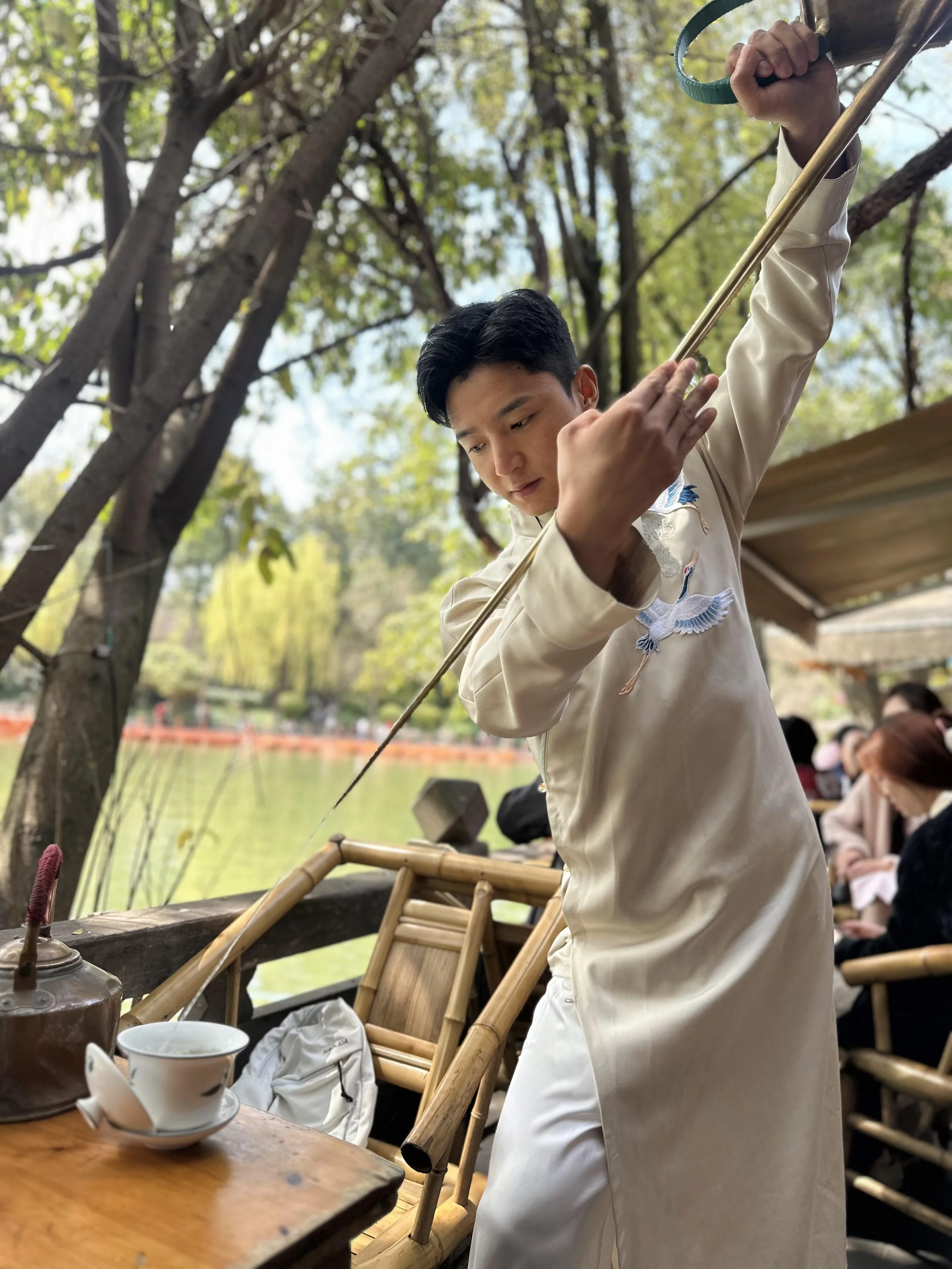
The celebrity panda here is "Huahua" — the one who looks like she doesn't have a neck and has become a global internet sensation. To actually see her, there's exactly one correct approach: enter through the South Gate (the West Gate is too far from the panda enclosures), arrive at opening time (7:30 AM in summer), and head straight to the Juvenile Giant Panda Villa (Villa #6). Huahua is most active between 7:30 and 10:00 AM. Once the temperature hits 26°C, she gets brought indoors. She also has Mondays off (except on Chinese public holidays — see the note on holidays below).
The queue to see Huahua typically takes about an hour. They let 20 people through at a time, with a 3-minute viewing window. Patience is not optional. After Huahua, head to the Sun and Moon Delivery Rooms to see the cubs — but do this in the right order, don't reverse it.
The Old City: One Walking Line
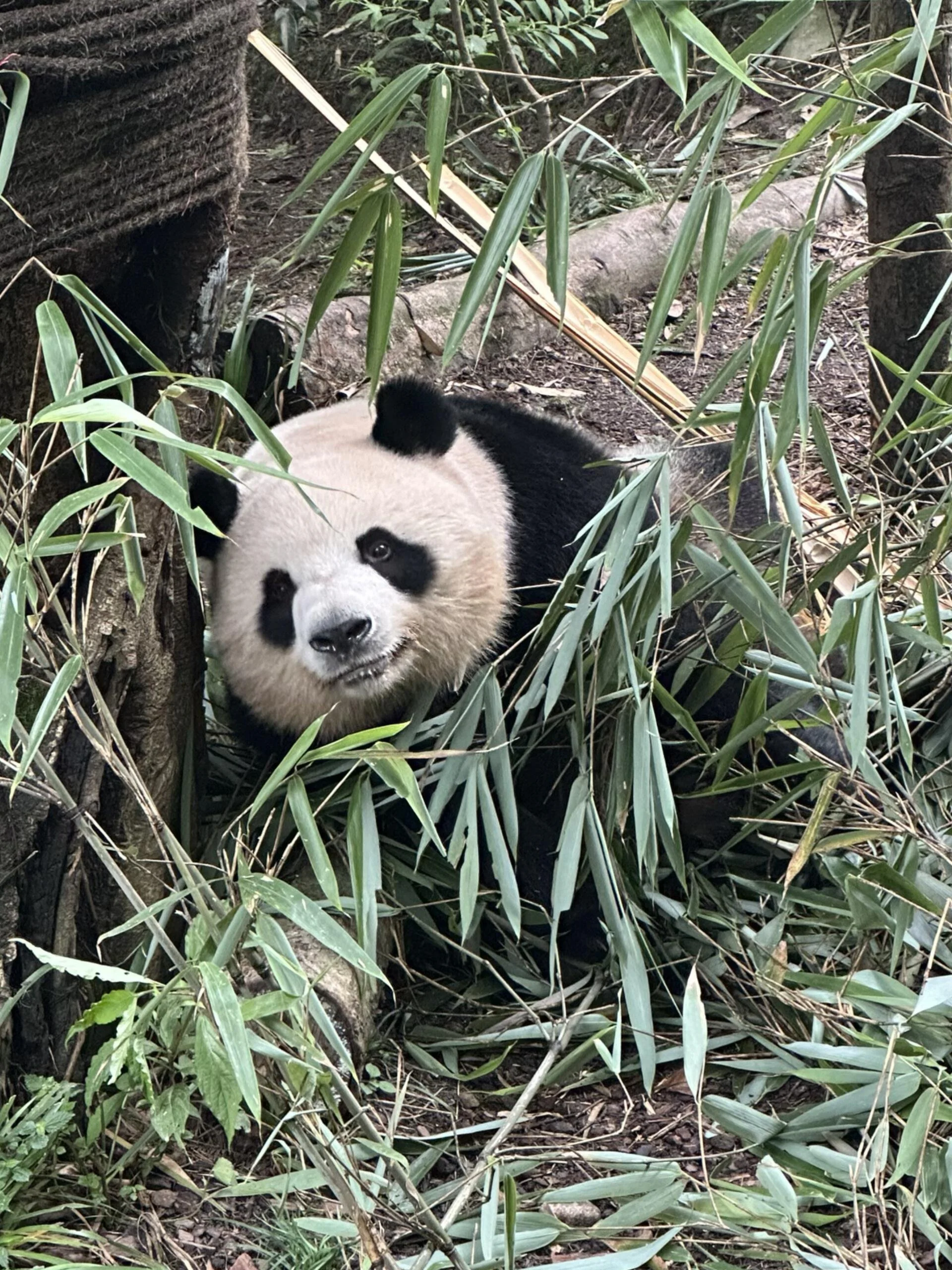
Start at Wuhou Shrine (武侯祠, entrance 50 RMB / ~$7), walk out through the red-walled corridor straight into Jinli Ancient Street. Jinli is beautiful at night with all the lanterns, but the snacks inside are overpriced — eat elsewhere. Du Fu Thatched Cottage (杜甫草堂, 50 RMB) and the adjacent Huanhuaxi Park make a good half-day combination. Kuanzhai Alley (宽窄巷子) is free and open 24 hours; the creative shops are well done. For the most authentic Chengdu experience, go to Heming Teahouse in People's Park, order a bowl of gaiwan tea (盖碗茶, covered-bowl tea — about 15–20 RMB), catch a face-changing performance (变脸, biànliàn — the Sichuan opera act where the performer switches masks in a fraction of a second), and sit there all afternoon. This is what locals actually do.
Night and Food
The bar streets along Jiuyanqiao (九眼桥) offer the best nighttime river views. For food, the action is on Kuixinglou Street, Jianshe Alley, and Fuqin Night Market.
If you can handle heat: start with huoguo (火锅, Sichuan hot pot — a bubbling cauldron of chili oil where you cook your own meat and vegetables), chuanchuan (串串, skewers boiled in spicy broth), bobo ji (钵钵鸡, cold chicken and offal skewers marinated in chili sesame oil — the name means "bowl chicken" because it's served from a ceramic bowl), and tutou (兔头, rabbit head — a Chengdu street-food classic eaten by hand; it looks intimidating but the meat is tender and seasoned with chili and numbing pepper; not for the faint-hearted, but absolutely worth trying).
If you prefer milder flavors: qiaojiao niurou (跷脚牛肉, beef brisket soup with herbs — literally "foot-propping beef" because the original customers were dock workers who propped their feet on benches while eating), tianpiya (甜皮鸭, sweet-skin duck — roasted duck with a crispy caramelized skin), laoma tihua (老妈蹄花, pork trotter soup with white beans — collagen-rich and comforting), and gongbao jiding (宫保鸡丁, Kung Pao chicken — the real Sichuan version is numbing, not sweet, and uses peanuts and dried chilies).
Two Newer Additions in 2026
The Sichuan Museum launched a nighttime immersive exhibition tour ("Guan Miao Ru Zhen," running nightly from August). And for high-end travelers, a new Banyan Tree resort near Emei Mountain has been generating buzz — but I haven't been able to independently verify the exact opening date or details, so I won't make specific claims here. Check current status before booking.
North: Jiuzhaigou and Huanglong
These two are Sichuan's "twin flagships" — one for water, one for calcite formations, both UNESCO World Heritage Sites. September to October, when the forests turn color, is the peak window.
Jiuzhaigou
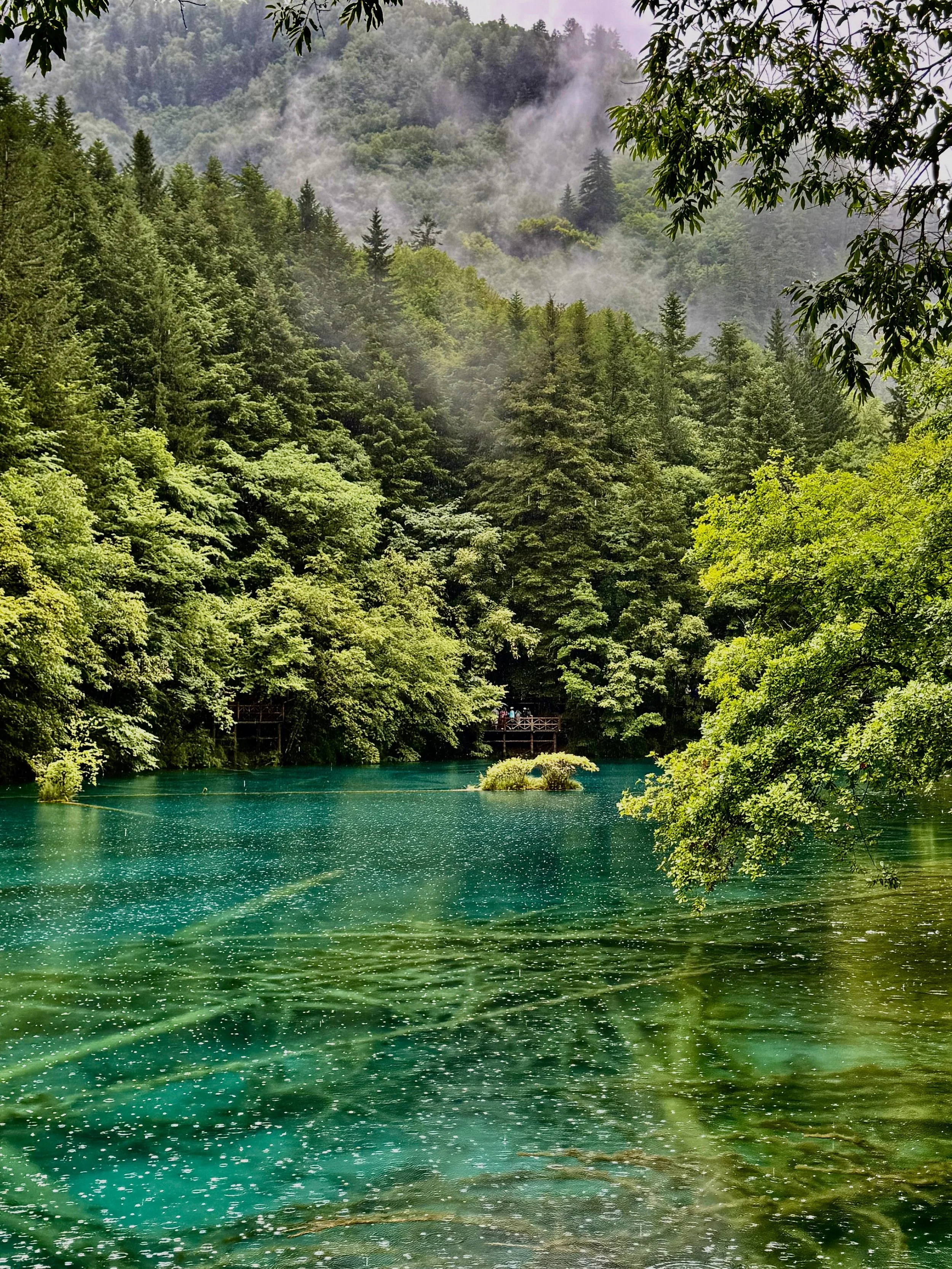
Jiuzhaigou is shaped like a "Y." Of the three valleys, Rize Valley (日则沟) is the crown jewel: Five Flower Lake, Mirror Lake, Pearl Shoal Waterfall (the filming location for the ending credits of the 1986 TV series Journey to the West), and Arrow Bamboo Lake are all here.
The strategy is simple: take the park shuttle bus straight to the top, then walk your way down. Sit on the left side going up and the right side coming down for the best views. Peak season ticket: 190 RMB (~26), shuttle bus: 90 RMB (~12, mandatory purchase — the park is massive and you can't walk between valleys efficiently). Tickets are valid for the day of purchase only, and ticket sales stop at 2:00 PM.
Getting there — the 2026 good news: The Chengdu–Huanglong Jiuzhai high-speed train is now running. The fastest train from Chengdu East Station reaches Huanglong Jiuzhai Station in about 1 hour 33 minutes (second class: 143 RMB / ~20). But here's the catch nobody mentions: Huanglong Jiuzhai Station is not at the scenic area. It's about **90 kilometers away**. You need a shuttle bus (about 2 hours, ~30 RMB / ~4) or a private transfer to get from the station to the Jiuzhaigou park entrance. Total door-to-door time from Chengdu: about 3.5–4 hours, which still beats the old 8-hour bus ride.
Foreigner booking tip: Train tickets can be purchased through the official 12306 app (available in English, accepts passport registration) or through Trip.com — both accept foreign credit cards. For the shuttle bus from the station to the park, you can pay with cash or Alipay at the station's tourist center. Don't rely on WeChat-only booking systems if you don't have WeChat Pay set up.
Where to stay: Hotels near the park entrance in Zhangzha Town mean you can walk to the gate in the morning. If you're taking the first shuttle bus into the park (recommended), staying close saves you 30 minutes.
Huanglong
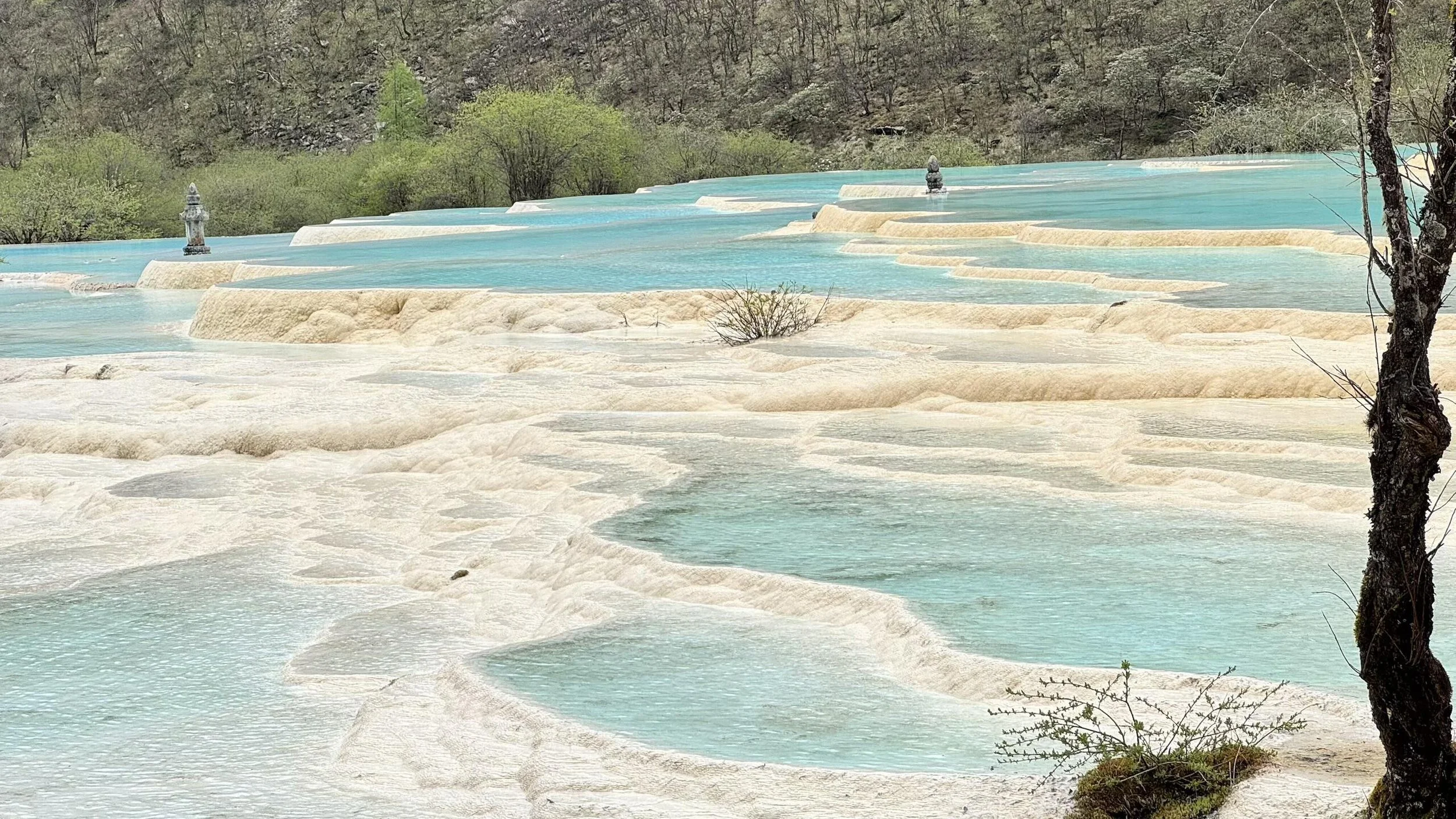
Huanglong is about a 2-hour drive from Jiuzhaigou, sitting above 3,500 meters. Do Jiuzhaigou first, then Huanglong — it gives your body time to acclimatize.
The golden route: take the cable car up, ride the shuttle bus to the top, walk 800 meters to Five Color Pool (五彩池), then walk all the way down along the wooden boardwalk. This way you see the "Heavenly Jade Pool" terraces — layers of golden calcite pools flowing down the mountain — without exhausting yourself.
Entrance ticket: 170 RMB (~23). Cable car: 80 RMB up / 40 RMB down (~11 / 5.50). Shuttle bus: 20 RMB (~3). The shuttle bus is limited daily — book in advance through the Aba Tourism Network platform (阿坝旅游网, available via WeChat public account) or through Trip.com / Ctrip.
Geographic note for international visitors: Jiuzhaigou and Huanglong are in Aba Tibetan and Qiang Autonomous Prefecture (阿坝藏族羌族自治州), about 400 kilometers north of Chengdu. You're entering the eastern edge of the Tibetan Plateau.
Southwest: Emei Mountain and Leshan Giant Buddha
A high-speed train from Chengdu gets you to Leshan in just over an hour.
Leshan Giant Buddha
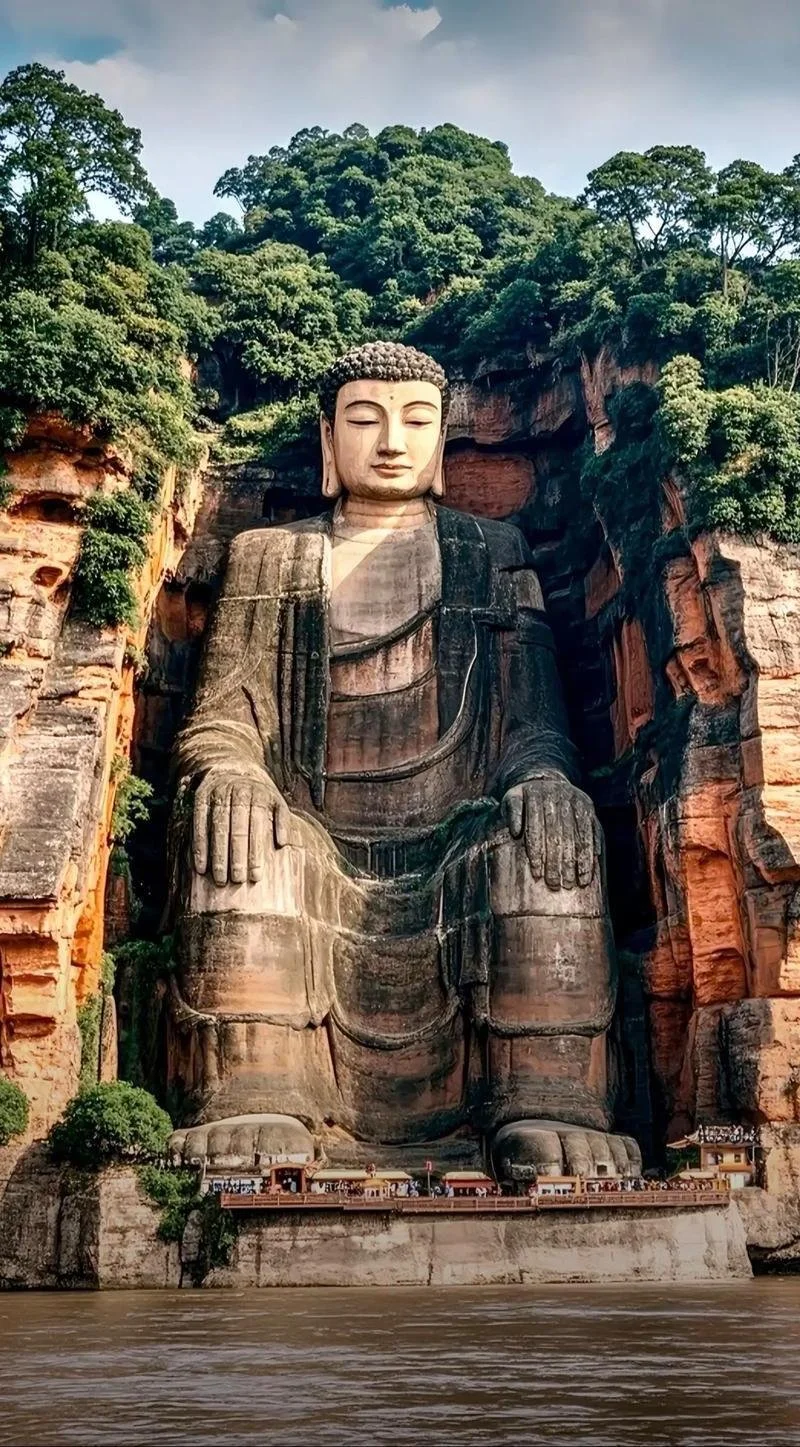
Two ways to see the 71-meter-tall cliff-carved Buddha: buy the 80 RMB (~11) climbing ticket and walk down the Nine-Bend Plank Road to the Buddha's feet for a looking-up perspective; or pay 70 RMB (~9.50) for a boat ride on the confluence of three rivers to see the full figure from the water. Both are worth it. If budget allows, do both.
Leshan food bonus: Leshan is actually one of Sichuan's greatest food cities — many dishes you associate with "Sichuan food" originated here. Don't leave without trying bobo ji (钵钵鸡, cold skewers in chili sesame oil), qiaojiao niurou (跷脚牛肉, the beef brisket herb soup), tianpiya (甜皮鸭, sweet-skin duck), and youzha chuanchuan (油炸串串, deep-fried skewers). The best food streets are around Shizhong District — ask any local for "Dongdajie" (东大街, East Great Street) and follow the crowds.
Emei Mountain
Emei is for people willing to wake up early.
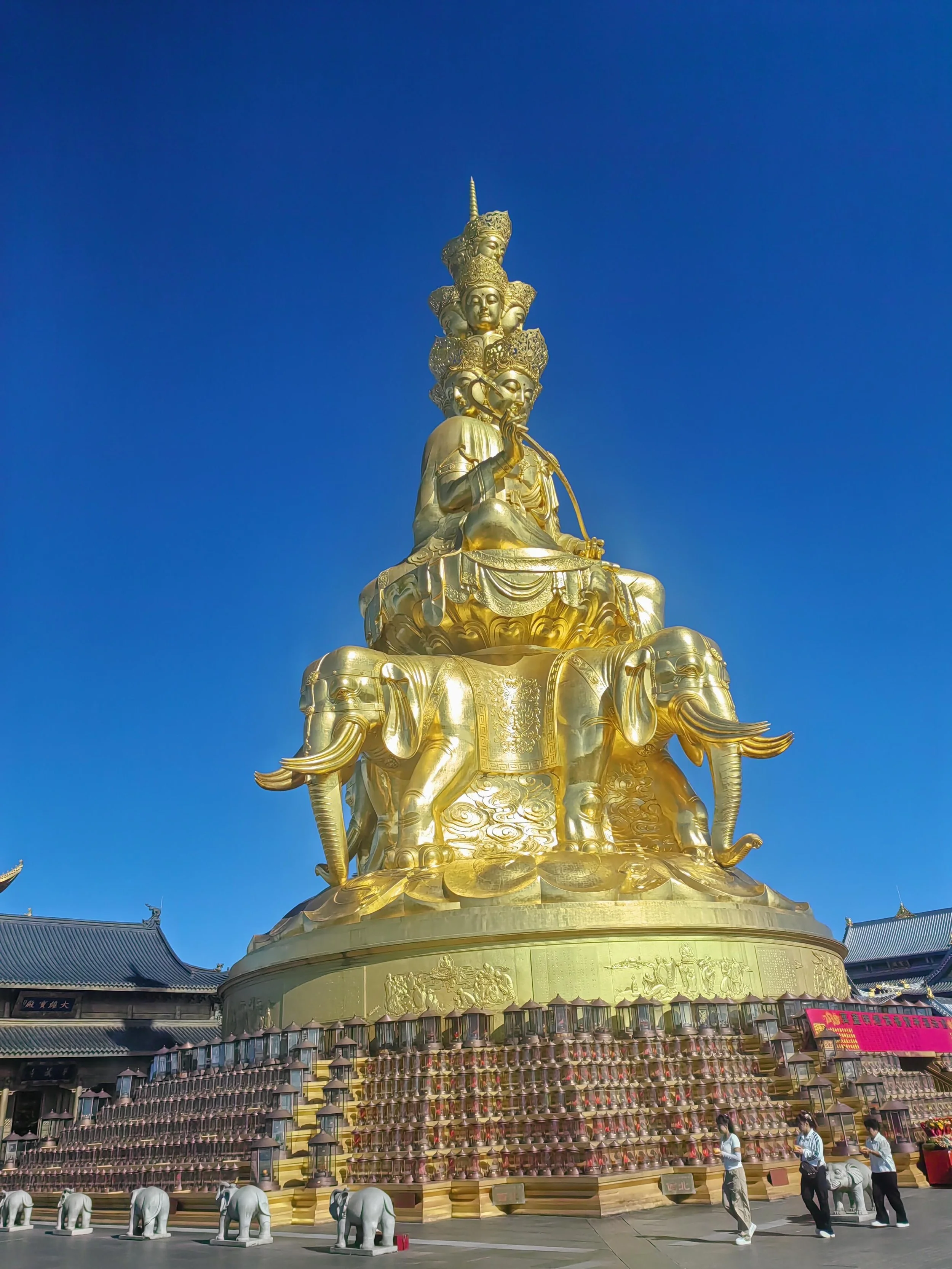
Entrance ticket: 160 RMB (22, peak season, valid for 2 days). Full-mountain sightseeing bus round trip: 90 RMB (~12). Golden Summit cable car round trip: 120 RMB ($16). The Golden Summit (金顶) sits at 3,079 meters — it's 10–15°C colder than the base. Bring a thick jacket for sunrise viewing above the sea of clouds.
The mountain's monkeys are notorious "highway robbers." Don't wave plastic bags in front of them. Don't make eye contact. Keep your snacks zipped inside your bag.
Two critical 2026 updates that most guides miss:
First, Leidongping parking lot and the Golden Summit cable car are under construction and renovation. Capacity is reduced, with completion expected in 2027. This means longer waits.
Second, the Golden Summit has a daily visitor cap of 8,000 people with time-slot reservations required since May. You must book in advance through the "Emei Mountain Scenic Area" official WeChat public account — or through Trip.com / Ctrip, which syncs the same inventory and accepts foreign credit cards. In peak season, same-day tickets are almost certainly sold out.
Where to stay: Budget: Baoguo Temple area at the mountain base. Mid-range: Leidongping area halfway up. Splurge: Golden Summit area hotels (book well ahead — capacity is tight during construction).
West: The Western Sichuan Loop
This is where Sichuan becomes "the remote place." The landscape shifts from basin to plateau, the culture shifts from Han to Tibetan, and the roads get serious.
The Classic Counterclockwise Small Loop
For most first-timers, the counterclockwise small loop is the safest choice: Chengdu → Four Girls Mountain → Danba → Tagong / Xinduqiao → Kangding → Chengdu. The entire route is paved and passable in a regular sedan.
Direction matters for altitude acclimatization. Going counterclockwise, your first overnight is at Four Girls Mountain and Danba (both below 2,000m) — this lets your body adapt before you hit higher elevations. Going clockwise, you'd have to cross Zheduo Mountain Pass (4,298m) on day one, which is a recipe for altitude sickness.
Leave Chengdu before 6:00 AM and cross Zheduo Pass before 8:30 AM to beat the worst traffic.
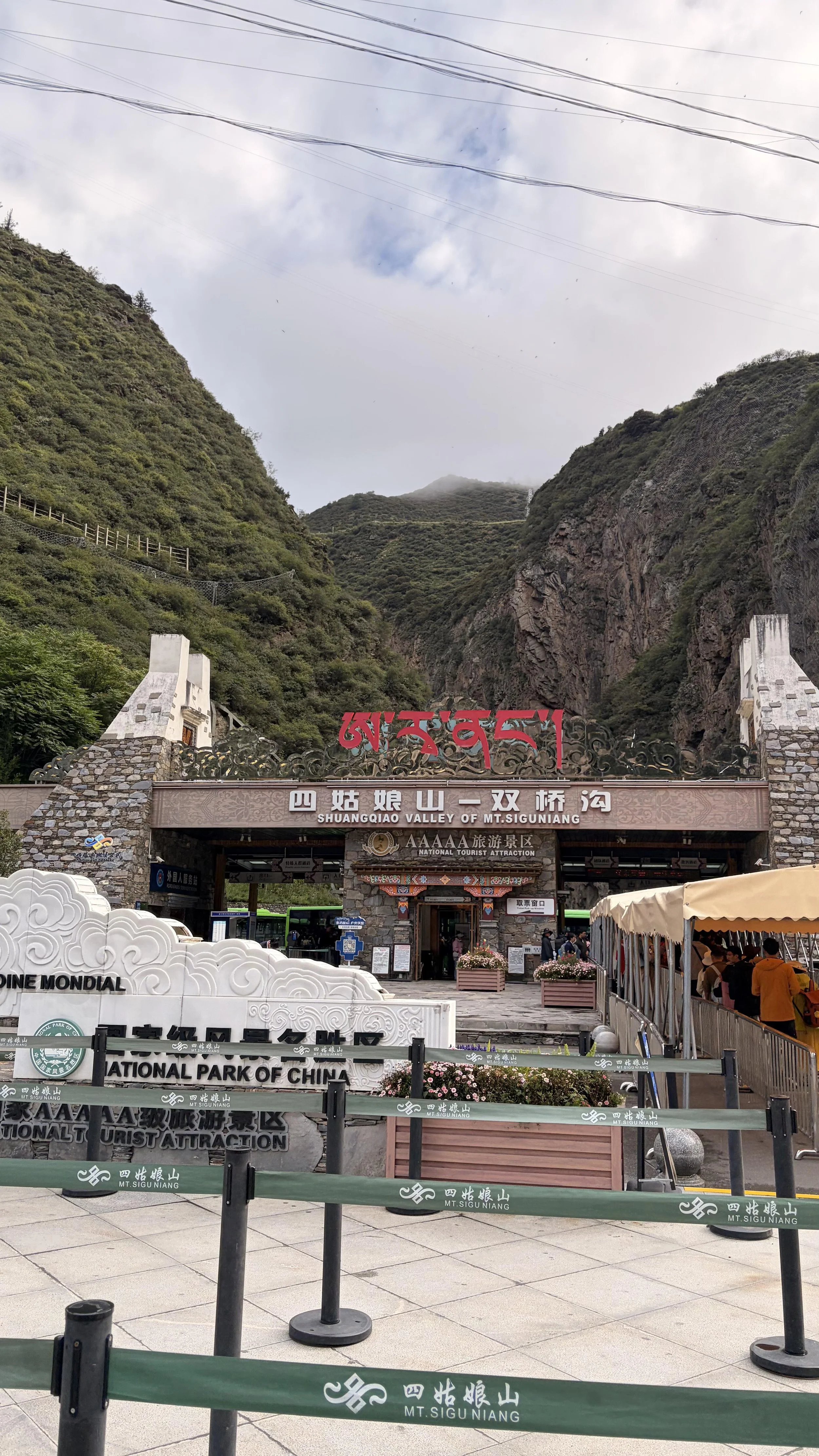
Four Girls Mountain (四姑娘山): The Shuangqiao Valley (双桥沟) is the beginner-friendly option — shuttle bus to the top, light hiking down, rafting available. Entrance: 80 RMB (~$11).
Danba (丹巴): Jiaju Tibetan Village (甲居藏寨, 50 RMB / ~$7) — Tibetan-style houses cascading down the hillside, worth an overnight. The town sits at about 1,800m, making it a good acclimatization stop. The original document I reviewed listed Danba at 2,200m, which is too high — the county town is around 1,800m, and the villages are around 2,000m.
Xinduqiao (新都桥): Photographers call this area "the photography corridor." The roadside scenery is free. Autumn colors peak in October.
Kangding (康定): At 2,560m, this is the gateway to the Tibetan plateau. Famous in China for the song "Kangding Love Song." Good place to stop overnight before heading deeper west.
Seda (色达) — The Red Kingdom
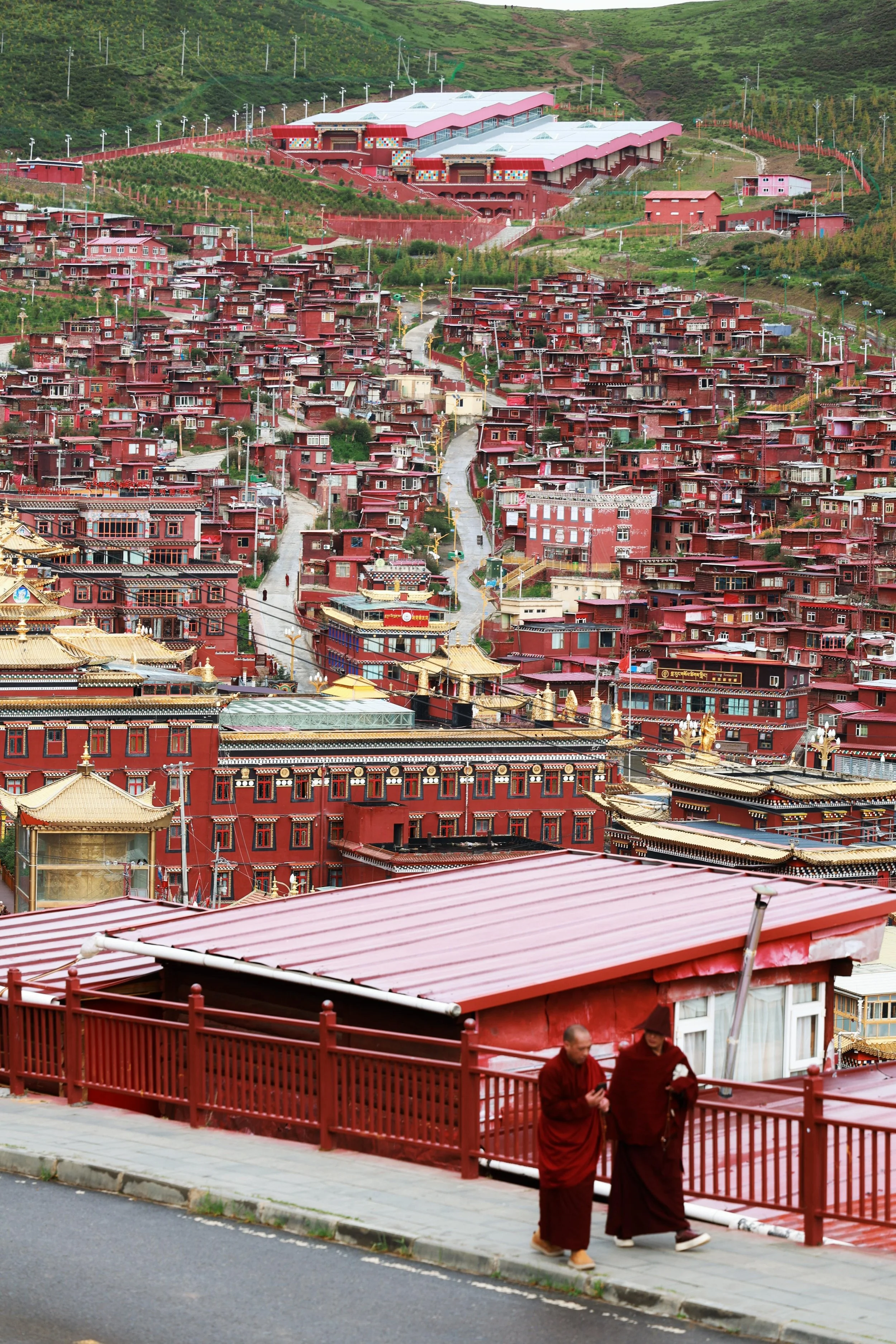
If there's one destination in western Sichuan that international travelers consistently rank as "life-changing," it's Seda. The Larung Gar Buddhist Academy (喇荣五明佛学院) — a mountainside covered in tens of thousands of tiny red wooden houses, home to the world's largest Buddhist monastic community — is one of the most visually staggering places in Asia.
Entrance is free, but access is controlled. You cannot drive into the academy yourself. Here's what you need to know:
Reservation: Required in advance. The official channel is the WeChat Mini Program "Larung Valley Entry Reservation" (喇荣沟进沟预约), but if you don't have WeChat, you can also book through Trip.com or Meituan — they sync the same system and charge a small service fee (3–5 RMB). Summer daily cap: approximately 1,500–2,000 visitors. Reservations open 7 days in advance at 10:00 AM and sell out within hours during peak season.
Transport inside: Two shuttle bus options from the visitor centers — 30 RMB (~4) from the Luoruo Town center (closer to the academy, recommended) or 48 RMB (~6.50) from the county town Jinma Grassland center. You'll pay a 200 RMB refundable deposit for a GPS tracker, returned when you leave.
Time limit: 90 minutes inside. You're only allowed in the public areas — the Mandala (坛城) and the West Mountain viewing platform. The nuns' and monks' residential quarters are off-limits. Don't cross fences.
Best photo time: After 6:30 PM when the lights come on — the valley of red houses looks like a river of stars. Early morning mist is equally stunning.
Cultural etiquette: At the Mandala, walk clockwise (never counterclockwise) when circumambulating. Keep your voice down. Do not photograph monks or nuns without their explicit permission. The sky burial site (天葬台) is about 10 minutes away by shared car (20 RMB / ~$3 round trip) — ceremonies happen daily around 13:30–15:00. Do not photograph the sky burial. This is a sacred funeral rite, not a tourist spectacle. Respect the families and the dead.
Getting there: From Chengdu, the bus from Chadianzi Bus Station takes 12–14 hours (260–280 RMB). A shared SUV charter runs 600–700 RMB per person round trip, takes 8–10 hours, and lets you stop for photos along the way. Self-driving: about 600km via Ma'erkang and Wengda, mountain roads with many curves — have two drivers take turns.
Altitude warning: Seda sits at 3,800–4,200m. This is significantly higher than Danba or Kangding. Don't attempt Seda until you've spent at least 2–3 days acclimatizing at intermediate elevations. Oxygen hotels are available in the county town (Seda Hotel and similar, 200–300 RMB / ~28–40).
Daocheng Yading — The Crown of Western Sichuan
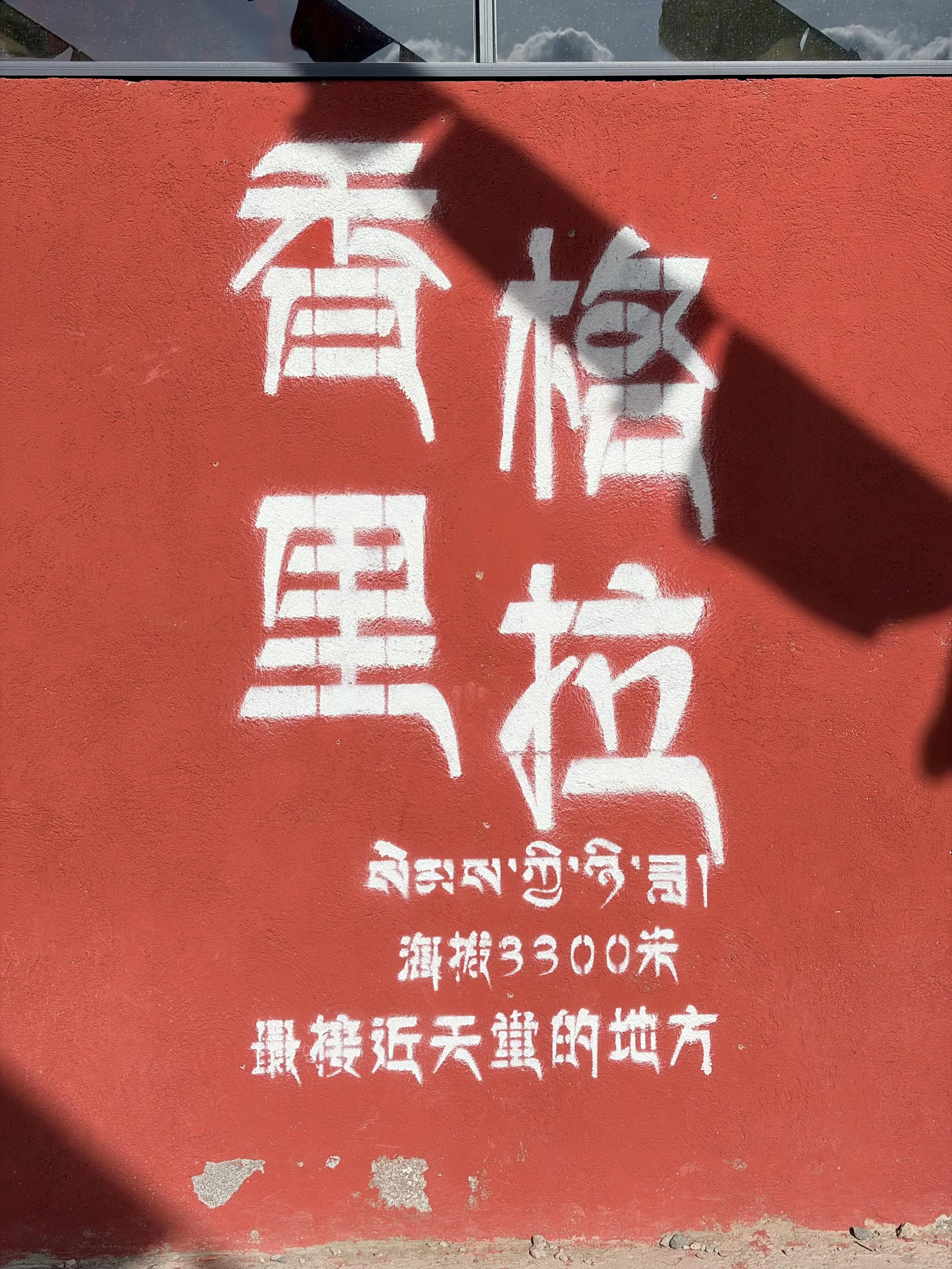
And then there's the main event. Daocheng Yading sits at 4,000–4,500 meters, with three sacred snow peaks — Xiannairi, Yangmaiyong, and Xianuoduoji — and glacial lakes so blue they don't look real. It's often called "the last Shangri-La."
The 2026 window is extraordinary: From August 1 to October 31, entrance fees are waived for all visitors — including international tourists. This covers the peak golden autumn season. The normal entrance ticket is 146 RMB (~$20), so this is a genuine saving.
Three things you need to know:
One: Free entry does not mean no reservation. You must book in advance through the "Daocheng Yading" WeChat Mini Program or through Trip.com / Ctrip / Meituan (these platforms accept foreign credit cards). Daily cap: 15,000 visitors. For August, book 3–5 days ahead. For Chinese National Day holiday (October 1–7), book at least a week ahead. There is no walk-up ticket window.
Two: Internal transport is not free. The park shuttle bus (visitor center to Chonggu Temple, 38km of switchback road) costs 120 RMB (~16) round trip — this is mandatory, you cannot walk it. The electric cart from Chonggu Temple to Luorong Pasture costs 80 RMB (~11). Add these to your shuttle bus reservation when booking.
Three: Plan two days, not one. Day one: the short trail from Chonggu Temple to Pearl Sea (珍珠海, about 3km round trip). On a windless morning, the reflection of Xiannairi Peak in the lake is the shot. This also lets your body adapt to 4,000m. Day two: the long trail. Catch the first shuttle bus, hike to Milk Sea (牛奶海, 4,600m) and Five Color Sea (五色海, 4,700m) — 10km round trip, 550m of elevation gain, 6–9 hours total. Long trail uphill access closes at 2:30 PM, with clearing at 3:30 PM. Leave yourself enough time to descend.
Where to stay: Shangri-La Town (香格里拉镇, 2,900m) is the best choice — low enough to sleep well, close to the park entrance. Yading Village (亚丁村, 3,900m+) is inside the park with spectacular views, but the altitude makes it a rough night for newcomers — you may lie awake gasping for air. August nights drop below 5°C. Waterproof hiking boots, a hardshell jacket, sunglasses, and SPF50 sunscreen are not optional at this altitude.
Mianning Torch Festival — Happening Right Now
If you're in Sichuan in early August, this is the kind of event that most foreign travelers never even know exists — and it's extraordinary.
The 2026 Mianning Torch Festival opened on August 1 at Lingshan Tourism Resort in Mianning County, Liangshan Yi Autonomous Prefecture. It runs for nine days (August 1–9).
The centerpiece: 338 hand-stacked stone fire pits, recreating the ancient caravan roasting culture of the Western Han-era Lingguan Road. It holds a Guinness World Record for "Largest Open-Air Stone Fire Pit BBQ." The menu is unapologetically local — hand-cut pork chunks, plateau yak beef, pork intestines, buckwheat flatbread, and wild mountain mushrooms, all cooked over pine wood charcoal. No sauces, no gimmicks, just fire and protein.
Opening day sold over 30,000 tickets. The festival runs on a daily theme rotation: opening ceremony, rural folk culture, aerospace and starry skies (tie-in with the nearby Xichang Satellite Launch Center), food challenge, family carnival, intangible cultural heritage, mountain song competition, silver note redemption day, and closing fire-blessing ceremony.
There's also a "silver note" system — a festival currency you earn through ticket purchase, completing tasks, and social sharing, redeemable for food discounts and scenic area tickets. Free parking: 1,323 spots across government lots for vehicles under 7 seats.
Geographic note: Mianning is in southern Sichuan's Liangshan Yi Autonomous Prefecture, about 5 hours by car from Chengdu. If you're doing the western Sichuan loop, you can extend it southward through Xichang to reach Mianning.
Day Trips from Chengdu: Dujiangyan, Qingcheng Mountain, and Sanxingdui
If you have extra days in Chengdu, three world-class destinations are within easy reach.
Dujiangyan and Qingcheng Mountain
Both are UNESCO World Heritage Sites, about an hour by high-speed train or 1.5 hours by car from Chengdu.
Dujiangyan (都江堰): A 2,000-year-old irrigation system that still works today, taming the Min River through a brilliant engineering design — a "fish mouth" diversion that splits the river into inner and outer channels. Entrance: 80 RMB (~11). Open 8:00–18:00. Sightseeing car inside: 10 RMB (~1.50) each way. Allow 3–4 hours.
Qingcheng Mountain (青城山): The birthplace of Chinese Taoism. The front mountain (前山, 80 RMB / ~11) has Taoist temples and cultural sites — cable car available at 35 RMB one way / 60 RMB round trip. The back mountain (后山, 20 RMB / ~3) is all about waterfalls, streams, and forest hiking — this is where locals go to escape the summer heat. Allow 5–6 hours if doing both.
Getting there: High-speed train from Chengdu to Dujiangyan Station (about 30 minutes), then local bus 101 to either site. Or book a private transfer — many Chengdu hotels can arrange this.
Sanxingdui Museum
One of the most important archaeological discoveries of the 20th century — a Bronze Age civilization that produced bronze masks with protruding eyes, a 4-meter-tall bronze "divine tree," a 2.62-meter-tall standing figure known as "Bronze Giant," and gold masks thin as butterfly wings. Nobody knows who these people were or where they went. The museum is genuinely awe-inspiring.
Entrance: 72 RMB (~$10), student 36 RMB. Open daily including Mondays. Summer hours (July 1–August 31): 8:30–20:00, last entry 18:00. Normal hours: 8:30–18:00.
Booking: Advance reservation required — book 3–5 days ahead through the official "Sanxingdui Museum" WeChat account, or through Trip.com (accepts foreign credit cards). In peak season, walk-up tickets are sold out.
Getting there: High-speed train from Chengdu East to Guanghan North Station (18 minutes!), then a 15-minute taxi. Or take the scenic area direct bus from IFS / Kuanzhai Alley / Panda Base in Chengdu.
Audio guide: Available for 20 RMB (~$3) — strongly recommended, as the exhibits need context. Recommended visit time: 4–5 hours. Start on the second floor with the "Heaven, Earth, Human, and Divine" exhibition hall — go early while it's quiet.
Putting the Routes Together
Five days to a week (first time in China): Chengdu city + Panda Base + Dujiangyan/Qingcheng day trip + north to Jiuzhaigou and Huanglong via high-speed train. Relaxed pace.
Seven to ten days (add the southwest): Add Emei Mountain and Leshan Giant Buddha, then return to Chengdu. The classic "Chengdu + north and south" combination.
Ten to fourteen days (the full version): Chengdu → Jiuzhaigou and Huanglong → rest day in Chengdu → Emei and Leshan → western Sichuan loop into Daocheng Yading. This hits all four of Sichuan's personalities — city life, mountain landscapes, Buddhist culture, and high plateau — in one trip. But the high-altitude sections must go in the second half of the itinerary to give your body time to adapt.
If you're here in early August: The Mianning Torch Festival is running (August 1–9). Extend your route south through Xichang to catch it — it's the kind of raw, living cultural event you can't manufacture.
Five Things That Changed in 2026 (Verify Before You Go)
1. Daocheng Yading free entry (August 1 – October 31). Requires advance reservation, daily cap 15,000. Internal shuttle bus (120 RMB) and electric cart (80 RMB) still cost money. Book through Trip.com or the official WeChat Mini Program.
2. Emei Mountain Golden Summit daily cap of 8,000 + construction at Leidongping. Capacity reduced, time-slot reservations required. Book through the official WeChat account or Trip.com.
3. Chengdu–Jiuzhaigou high-speed train. Fastest 1 hour 33 minutes to Huanglong Jiuzhai Station, but add 2 hours for the shuttle bus to the park entrance. Book through 12306 (English app, accepts passports) or Trip.com.
4. Sanxingdui Museum summer extended hours (until August 31). Open until 20:00, last entry 18:00. Book 3–5 days ahead.
5. Rainy season closures. Mountain scenic areas in Sichuan may temporarily close during heavy rain in July–August. Check the official scenic area announcements before departure. If a road or park is closed, have a backup plan.
Practical Info for International Travelers
Payments: China is nearly cashless. Alipay and WeChat Pay both now allow foreign visitors to link international credit cards (Visa, Mastercard) via their respective apps. Download both apps before arrival, set up payment with your card, and you'll be able to pay at virtually every restaurant, shop, and scenic area. Carry some cash (RMB) as backup — smaller vendors and rural areas may still need it.
Train tickets: The official 12306 app has an English interface and accepts passport-based registration and foreign credit cards. Trip.com is the best alternative for foreigners — same inventory, English interface, accepts foreign cards. Book high-speed trains 15 days in advance for peak season.
SIM card and internet: Buy a SIM card at Chengdu airport (both Shuangliu and Tianfeng airports have China Mobile/Unicom/Telecom counters) or order one in advance via Trip.com. A data-only tourist SIM costs about 100–200 RMB for 7–30 days. Note on VPN: Many Western websites (Google, Instagram, WhatsApp, etc.) are not accessible in mainland China. Install a VPN before arrival if you need these services.
Flights to Chengdu: Chengdu has two airports. Shuangliui Airport (CTU) is closer to the city center (30–40 minutes by taxi). Tianfu International Airport (TFU) is farther — allow at least 2 hours from landing to city center. Many international carriers fly direct to Chengdu.
Visa-free entry: China offers 144-hour transit visa-free entry to citizens of 53 countries (including all EU members, USA, UK, Australia, Canada, Japan, etc.) if you have an onward ticket to a third country. Chengdu Shuangliu Airport is an eligible port of entry. Check the full China Visa-Free Guide to see if your country qualifies.
Chinese public holidays to be aware of: Chinese National Day (October 1–7) is the busiest travel week of the year — scenic areas are packed, ticket prices peak, and everything books out. Avoid this window if possible. Spring Festival (January/February, dates vary) is similarly crowded. The May Day holiday (May 1–5) is also heavy. Museums and some attractions close on Mondays — but most major scenic areas stay open year-round including Mondays.
Emergency numbers: Ambulance: 120. Police: 110. Fire: 119. The 120 number works nationwide but operators may speak limited English. Have your hotel write your address in Chinese on a card to show taxi drivers and emergency responders.
Travel insurance: For high-altitude travel in western Sichuan (Seda, Daocheng Yading, Four Girls Mountain), travel insurance that covers altitude sickness and emergency evacuation is strongly recommended. Standard travel insurance may exclude "extreme altitude" activities — check your policy wording.
Cultural Etiquette in Tibetan and Yi Areas
When you enter the Tibetan areas of western Sichuan (Danba, Kangding, Seda, Daocheng), you're entering a deeply religious culture. A few rules:
At temples and monasteries: Remove hats. Some temples require removing shoes. Walk clockwise around stupas, prayer wheels, and the main hall — never counterclockwise. Keep quiet. Don't touch religious objects unless invited. Don't point at anything with your finger — use an open hand.
Photographing people: Always ask before photographing monks, nuns, or local Tibetans. A simple gesture — pointing to your camera and smiling — usually works. If they decline, respect it. Never pay for photos — it creates a transactional culture.
Sky burial sites: If you visit the sky burial site at Seda, do not photograph the ceremony. This is a sacred funeral rite. Stay at the designated viewing distance. If you can't handle it, don't go.
Tibetan head: The head is considered sacred in Tibetan culture. Don't touch anyone's head, including children.
Planning a Sichuan Trip? Start Here
Whether you want to chase the free-entry window at Daocheng Yading, experience the Torch Festival in Mianning, walk through the Bronze Age mysteries at Sanxingdui, or build a multi-region China itinerary that includes Zhangjiajie, Tibet, Xi'an, and Xinjiang — we've been running private China tours since 2014. Every itinerary is custom-built, every guide speaks English, and every transfer is in a private vehicle with a professional driver.
Browse all China private tours →
Plan a custom itinerary — per-city pricing from $10 →
Check if your country qualifies for China visa-free entry →
Information compiled from official scenic area announcements, verified booking platforms, and on-the-ground travel reports current as of August 2026. Always confirm ticket prices, opening hours, and reservation requirements with the official scenic area on the day of your visit.