Zhangjiajie Travel Tips — 19 Things Every Foreign Traveler Should Know (2026)
Zhangjiajie — the real-world "Avatar Mountains" — is one of the most rewarding places you can visit in China. But it's also a mountain region where a little local knowledge goes a very long way. We've been guiding foreign travelers here since 2014, and this guide collects the 19 things we find ourselves explaining most often — payments, internet access, what to pack, the monkeys, the scams, and how to never get lost.
These 19 tips are the fine print — the big picture (how many days, which route, what it costs) lives in the Zhangjiajie travel guide.
Save this page before your trip. Everything below comes from years on the ground with international guests.
1. Before You Go: The Essential Checklist
Several apps in China require a Chinese phone number or SMS verification. Set everything up before you fly — it's much harder after you land.
Payments: Install Alipay (international version) and TenPayGo — Tencent's new payment app for international visitors (launched September 2026). Register and link your card in advance. Without them, you'll struggle to buy anything (see section 4).
Communication: Download WhatsApp — it's how you'll reach us 24/7 — and agree on a contact plan with your family.
Maps: Install Amap (Gaode Maps) or Baidu Maps, or download offline maps. Honest note: their English interfaces work but are imperfect, and searching English place names often fails. Save the Chinese names of your hotel, stations and attractions as screenshots or favorites.
Getting around & booking: Didi (ride-hailing), Trip.com, and the official China Railway 12306 English site for trains.
Daily life: Dianping (restaurant reviews, China's "Yelp"), Meituan (food delivery & deals) and Xiaohongshu (travel inspiration, China's Instagram) are Chinese-only; a translation app covers most situations — but for fast decisions (ordering food, taxis), saved Chinese names beat live translation.
Documents: Photograph your passport photo page and store it in your phone and cloud (see section 3).
Reservations: Zhangjiajie's top sights require real-name booking 3–7 days ahead in peak season (see section 3).
Backups: Screenshot your itinerary, your hotel's Chinese name and address, and your guide's phone number.
Traveling with seniors or kids? Pay extra attention to sections 10, 15 and 16.

2. Internet Access: Roaming, eSIM, Local SIM or VPN
Google (Gmail, Google Maps), WhatsApp, Instagram, Facebook, YouTube and X do not work by default in mainland China — including on hotel Wi-Fi. Choose one of these before departure:
International roaming (easiest — recommended): Your home carrier's roaming data usually routes through your home country, so Google and WhatsApp work normally. Costs more, but zero setup.
Overseas eSIM (buy & install before you fly): Providers like Airalo and Nomad work well if you pick a plan routed through overseas gateways. Confirm your phone supports eSIM and is not carrier-locked. ⚠ Caution: eSIMs in mainland China may not receive Chinese SMS verification codes (e.g. bank codes). If you need lots of verification codes, prefer roaming or a local SIM.
Local SIM card: Cheapest with the best signal, but Google etc. remain blocked. Bring your passport to register, or order a SIM ahead on Taobao or Pinduoduo (both Chinese-only — search "电话卡"). If data doesn't work, set the APN manually: China Mobile cmnet | China Unicom 3gnet | China Telecom ctnet (usually automatic).
VPN: If you use one, download, register and test it before arrival — most VPN websites are unreachable inside China. Choose a provider yourself and follow Chinese internet regulations.
3. Passports & Real-Name Booking — The #1 Rule
Every attraction in Zhangjiajie uses real-name ticketing. Your passport is checked at entry, on cable cars, at security and at hotels. Children need their own documents too.
★ Photograph your passport photo page before you leave. Keep a copy in your phone album, and ideally share it with a travel companion or cloud storage. If you forget or lose your passport, this photo helps with identity checks, temporary documents, hotel registration and police reports.
Tianmen Mountain, Zhangjiajie National Forest Park, the Grand Canyon Glass Bridge and Qixing Mountain must be booked 3–7 days ahead in peak season via WeChat mini-programs or official websites. Tickets often sell out on site — especially around Chinese holidays. Official sites: Tianmen Mountain · Grand Canyon & Glass Bridge · Qixing Mountain (Forest Park tickets are sold through the "Zhangjiajie Yi Ji You" WeChat mini-program — no English site).
When booking, your name and document number must match your passport exactly. One wrong letter = no entry.
4. Money: How to Pay in Zhangjiajie
China runs on QR-code payments. Cash and cards are the exception, not the rule.
Alipay international version — register with an overseas phone number; links Visa / Mastercard / JCB and more.
TenPayGo — Tencent's standalone app for international visitors. It is not WeChat Pay and doesn't require WeChat. Free on the App Store / Google Play, register with your overseas email, supports Visa, Mastercard, American Express, JCB, Discover, UnionPay, Apple Pay and several overseas wallets.
Install both. Small shops, taxis and park stalls often accept only one of them.
No card? Alipay "Travel Wallet" is designed for visitors — top up by international transfer, no Chinese bank account needed, no domestic transaction fees.
Fee-saving tips: TenPayGo waives the ~3% international-card fee on daily spending up to ¥1,000 for 90 days after your first purchase (current promo until Dec 31, 2026), and permanently on purchases under ¥200. Alipay's Travel Wallet is fee-free up to ¥15,000 of spending. Use one, then switch. Terms change — check the app.
Why we lean toward Alipay: it bundles food delivery, metro, buses, Didi rides, pharmacy purchases and train tickets in one app.
⚠ Where mobile payment doesn't reach:
Big hotels, malls and supermarket chains accept international credit cards — but park kiosks, village restaurants and taxi drivers often take only mobile payment or cash.
Carry ¥500–1,000 in cash, and make sure some of it is in ¥10–50 small notes — small vendors and taxis often can't break ¥100.
Currency exchange in Zhangjiajie city is limited compared with Beijing, Shanghai or your arrival airport — exchange there. ATM withdrawals with foreign cards are possible at some bank branches but with low daily limits, so treat the two apps as your main payment method.
Voltage: 220V; sockets are mostly flat three-pin or two-pin. Bring an adapter.
Tour payments: we recommend Alipay or bank transfer for tour balances; the visitor wallets are perfect for personal spending en route.
Want the deep dive? Read our full guide to paying in China as a foreign traveler.
5. Getting to Zhangjiajie: Airport, Trains & the "First Mile"
Most international visitors connect through Beijing, Shanghai, Guangzhou or Chengdu. Sort out this last leg in advance and arrival day is stress-free:
By air: Zhangjiajie Hehua International Airport is 6–10 km from downtown (15–20 minutes by car).
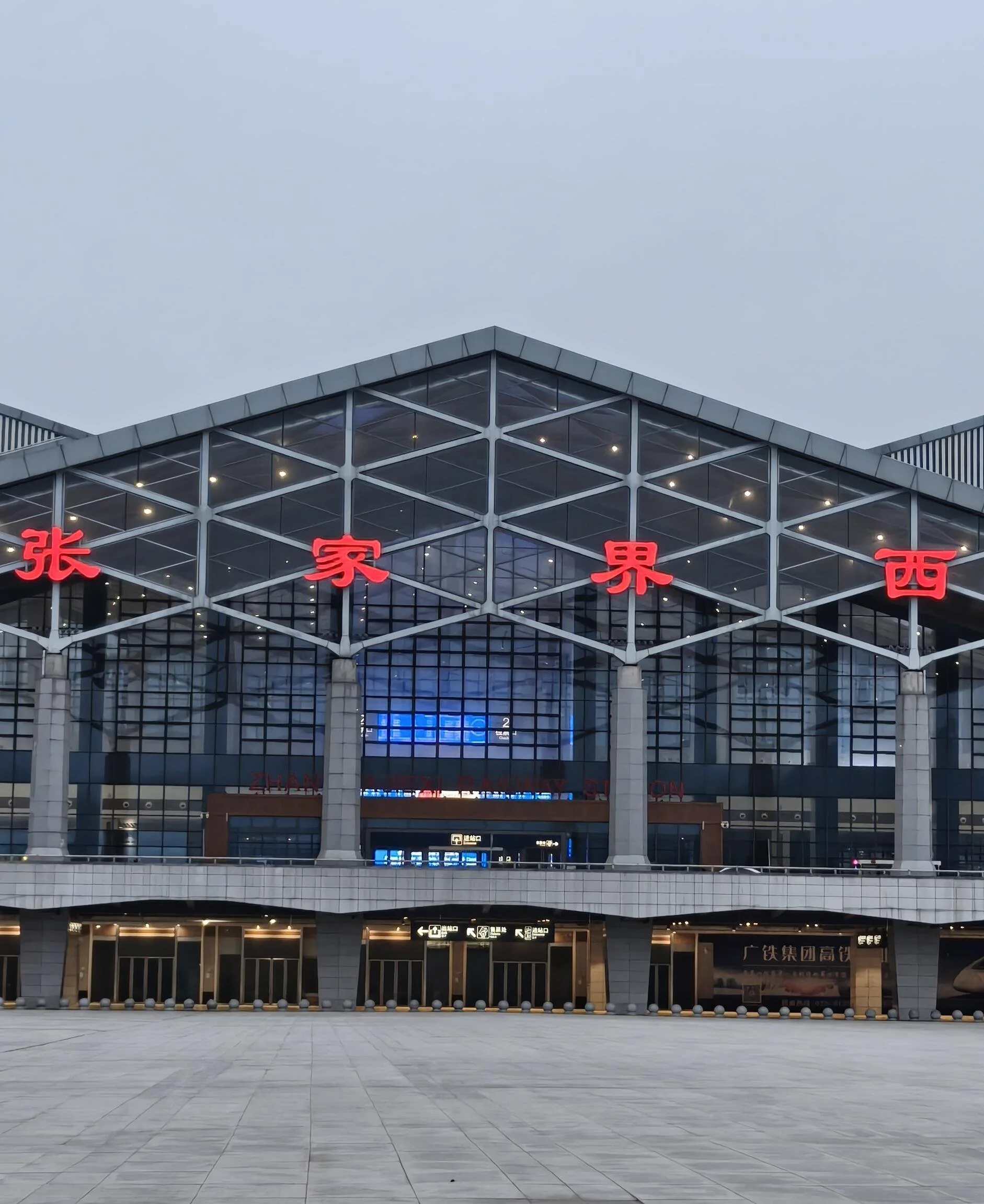
By high-speed rail: Zhangjiajie West Station has direct services to/from Changsha, Chongqing, Chengdu, Beijing and Shanghai directions. Signage is mostly Chinese — confirm your exit number before booking a ride. Our China train guide for foreign travelers covers tickets and stations in detail, and the official 12306 English site handles bookings.
Airport/station → city: use the official taxi queue (insist on the meter) or Didi; the airport also runs shuttle buses.
City → parks: there are clear bus and taxi routes to the Forest Park gates and Tianmen Mountain cableway. On our tours, all transfers are included — just look for the driver or guide holding your name sign.
⚠ Beware of "black cabs" and touts. Anyone in the arrival hall offering "cheap transfers", "bargain tours" or "discounted tickets" is almost always the start of a scam — lowball pickup, forced shopping, inflated final bills. Politely refuse: don't share your itinerary, don't follow strangers, and use only Didi or transfers we've arranged. See our breakdown of Didi vs taxi hidden costs.
6. What to Wear: Zhangjiajie's Four Seasons
The park's sandstone towers sit about 1,000 m above the city — the mountaintops run 5–10°C cooler than downtown all year. Whatever the season, bring one extra layer.
Spring (Mar–Apr): City 12–24°C (chilly mornings), mountains 5–16°C (colder in rain). Wear a long-sleeve base layer + fleece/light sweater + windproof jacket (a shell is ideal). Big day-night swings — dress in layers. Rain gear is a must; spring is misty and showery.
Summer (May–Sep): City 26–38°C (extremes near 40°C), mountains a pleasant 20–28°C. Quick-dry T-shirts + light long pants or sun-protection sleeves. Priorities: sun protection, quick-dry fabrics, rain readiness. Bring 2–3 pairs of shoes/socks. Keep a light jacket for air-conditioned trains and naps on the road.
Autumn (Oct–Nov): Same outfit as spring. City 10–24°C, mountains 3–16°C. Clear, dry and one of the best seasons to visit. Keep that jacket close for evenings.
Winter (Dec–Feb): City 3–12°C (January coldest), mountains −5–8°C with ice and rime. Thermal underwear + sweater/fleece + heavy coat (down or lined shell), plus hat, scarf, gloves. Non-slip shoes are non-negotiable — steps ice over.
★ Easy rule: spring and autumn share one packing list, summer gets its own, winter is the spring list plus thickness.
Year-round: pack a light jacket — high-speed trains and tour buses run strong air conditioning.
Photos: bright or solid-color tops pop against the grey-green sandstone peaks; avoid taupe and grey-brown that blend into the cliffs.
Check the forecast the day before — mountain weather changes fast; the temperatures above are guides only. Our China packing list covers the whole country.
7. Sun & Hiking Gear
The list below is tuned for summer (May–Sep). Spring/autumn: add a jacket. Winter: add a warm layer. Sunscreen and rain gear stay on the list all year.
Wide-brim sun hat (better than a cap — it protects your neck), sunglasses, SPF 30+ sunscreen
Sun-protection sleeves / light long sleeves + long pants — doubles as insect and scratch protection
Trail shoes with real grip — broken-in ones. Never hike in new shoes; skip sandals, flip-flops and heels entirely
2–3 pairs of sweat-wicking socks, a mini fan or folding fan
Also useful: a small daypack (see next section), power bank, trekking poles (kind on knees downhill, optional), mosquito repellent or patches
8. The Two-Bag Habit (Guide's Tip)
This is how our guides do it — one big bag, one small bag:
Backpack (big): water, rain jacket, umbrella, sunscreen, spare layer, snacks, power bank. Free hands for railings, photos and climbs.
Small crossbody or chest bag: phone, passport, some cash, room card — the things you reach for ten times a day. Digging through a backpack at every ticket gate gets old fast.
This isn't about safety — it's purely about convenience. And on that note: China is one of the safest countries on earth. Bag snatching and theft are genuinely rare thanks to dense camera coverage and fast enforcement, so you can relax with your phone out. Read why travelers call China one of the safest countries for tourists.
9. Rain Gear & Bad Weather
Rain jacket (thick, with a brim — thin disposable ponchos tear in mountain wind) + a folding umbrella
Bring 2–3 pairs of shoes: one grippy trail shoe + one water-tolerant sandal/clog to switch into when soaked
Also useful: phone/camera dry bag, backpack rain cover, quick-dry towel, spare socks
In heavy rain, layer up: rain jacket + cap (brim keeps rain off your face without blocking view) + umbrella
⚠ Important: in thunderstorms or high wind, the Tianmen Mountain cableway, Bailong Elevator and glass walkways can suspend operations temporarily. These are mandatory safety closures — we'll re-sequence your day or swap in indoor/lower-altitude sights.
10. Bring Your Own Medicine Kit ★
Medical points on the mountain are basic. Bring daily medications from home, with prescriptions or English labels.
Heat & hydration: oral rehydration salts (ORS). If you want huoxiang zhengqi (a Chinese heat-stroke remedy), buy the alcohol-free capsules — the classic liquid contains alcohol.
Stomach trouble: smectite (Smecta), probiotics, loperamide (Imodium, as directed)
Motion sickness (important): mountain roads are winding and steep. Take your pill 30 minutes before the drive (see section 12)
Minor injuries: band-aids, iodine wipes, elastic bandage
Also: antihistamine (loratadine), mosquito patches, cooling oil, and enough of your personal prescriptions
11. Tickets & Getting Around Inside the Parks
Zhangjiajie National Forest Park tickets allow multiple entries over 4 days. First entry collects your face/fingerprint; afterwards you enter with your document or face scan. Tickets are non-transferable.
Internal transport (shuttle buses, cable cars, Bailong Elevator) is ticketed separately and not included in the park entrance ticket; prices per the day's official notice.
The park is huge — shuttle buses link the sights. Queues in peak season are normal; budget patience.
12. Trails, Stamina & Those Winding Roads
Expect 15,000–20,000 steps a day with lots of stairs — Yuanjiajie, Golden Whip Stream, Ten-Mile Gallery; Tianmen Mountain has a 999-step stairway.
Travelers over 65 or with knee issues: use the cable cars/elevators up and down, and carry your medications.
Park shuttle buses climb real mountain roads — twisty and steep. Sit up front if you're prone to motion sickness, and medicate early.
Rain makes stone steps slick: slow down, use the railings, and don't walk while looking at your phone.
13. The Wild Monkeys
Yes, there are macaques. They look adorable; they will grab food and can bite or scratch.
Never take food out in front of them, and don't rummage in your bag where they can see
Avoid plastic bags — rustling plastic is a dinner bell to them
Don't tease, feed, or approach babies; don't stare one down
If bitten or scratched, tell your guide immediately — we'll take you to the park clinic or a hospital
Video: wild macaque monkeys approaching tourists on a road in Zhangjiajie National Forest Park, China. One monkey grabs a bag from a visitor — a good example of why you should never carry food or rustling plastic bags openly. See our tips in section 13 for staying safe around the monkeys.
14. Park Rules & Red Lines
The forest is a fire-protection zone: no smoking or open flames anywhere in the park
Drones need advance permits; most of the park is a no-fly zone
Stay on marked trails. No climbing over railings, no photos in restricted areas
Don't pick plants, catch animals, or carve on rocks or trees
Be on time for meeting points; if you need to split off, tell your guide first
⚠ Red lines: working or guiding on a tourist visa is illegal in China, as is entering military or restricted zones. Don't do it, don't photograph them.
15. Food & Water
In hot weather, prefer room-temperature or hot food; go easy on iced drinks and raw cold dishes. A day of stomach trouble ruins a day of mountains.
Drink bottled water; don't rinse with tap water; skip the ice in drinks.
Hunan food is hot — hotter than most visitors expect, and a different kind of heat than Sichuan. Start with “wei la” (mildly spicy) and work up; say “bu yao la” (no chili) if you'd rather skip it.
Local classic “SanxiaGuo” (Three-Pot stew) traditionally contains tripe, pork stomach, pig head meat and intestines — tell the server if offal isn't your thing.
Allergies: write your allergens on paper (or save them in your phone) and show the staff when ordering. This can genuinely save your life.
Vegetarian, halal or other religious requirements? Tell us before the trip and we'll arrange accordingly; park restaurants are limited, so bring snacks if needed.
No tipping is expected anywhere in China. If you love your guide and driver, a thank-you is enough.
16. Cultural Differences: Know Before You Go
Crowds are real. Top sights and holidays are packed — set expectations and plan around it.
Queuing: at cable cars, shuttles, toilets and buses, expect soft queues at peak times. Patience + keep valuables close.
Smoking: despite signage, people do smoke in toilets, restaurants and on the street. A cultural difference — no need to let it surprise you.
Occasional bad habits (spitting, cutting in): keep your distance and keep your mood.
Public toilets: mostly squat style; sit-down toilets only in some accessible restrooms; carry tissue paper — toilet paper is rarely provided.
Tone of voice: many locals (especially older folks) sound blunt or harsh. It's almost never personal.
Taxis: never hail cabs from the curb — use Didi. Fares are metered in-app, transparent, and you won't get "scenic-routed".
Scan-to-order: many restaurants (especially drink shops) are QR-order-only via WeChat. If you haven't set up WeChat Pay, just ask staff to order for you — don't waste time installing things at the counter.
17. How to Never Get Lost in China
Most navigation failures come down to one thing: saving a vague pin instead of a specific door.
Big transport hubs (airports, rail stations): multiple floors and exits; arrivals and departures can be far apart; ride-hailing pickup points are tied to specific exits; one "station" may span several buildings. → Note the exact station name, terminal and exit number.
Metro exits: one station can serve several streets; different exits put you on opposite sides of the road; the nearest exit isn't always the right one; transfer corridors can be long. → Check the exit letter/number and surrounding landmarks before going up.
Hotels & residential compounds: the pin isn't always the door — hotels hide inside multi-use towers, compounds have multiple gates, and drivers may drop you at the nearest junction, not the lobby. → Ask the hotel for its Chinese entrance name in advance.
Old streets & scenic areas: multiple gates, small Chinese-only signs, and pins that mark a whole hillside. Two pins close on the map may be separated by a wall or a river. → Confirm the exact gate/entrance name before setting out.
Malls & underground spaces: many street entrances, underground connections between buildings, and floor-numbering that varies. → Save "mall name + tower + floor + zone", not just the shop name.
★ The four-step habit: exit number → entrance name → building/terminal → check the map before you set off. "At the building" is not "at the lobby".
Two pieces of good news: Zhangjiajie's main scenic areas have full bilingual (Chinese-English) signage, and visitor centers offer multilingual park maps — grab one (or save an offline copy).
18. Emergencies: How to Actually Get Help
Carry your guide's phone number and your hotel's Chinese name card — showing it to a driver beats any translation app.
Emergency numbers: Police 110 | Ambulance 120 | Fire 119.
⚠ Operators may not speak English. The effective order of escalation: ① call your guide first (we're on WhatsApp 24/7 — save the number as a speed dial); ② if you can't reach us, open your translation app's live voice translation and hold the phone toward the operator; ③ in scenic areas, go to any staff member or the visitor center, or ask your hotel front desk to call for you. And don't be afraid of the police — 110 is genuinely there to help travelers.
We recommend travel medical insurance that covers China; carry your policy and emergency contacts.
19. Bring a Good Mood
The best luggage is patience. Weather shifts, queues happen, plans bend a little — travelers who roll with it have the best trips here. The mountains aren't going anywhere; enjoy them one viewpoint at a time.
Our guides are with you the whole way. If you'd rather have all of the above handled — licensed local partner agencies, private car, English-speaking guide, no shopping stops, every ticket and transfer pre-booked — that's literally our job.
Plan your Zhangjiajie trip: browse all our private China tours, or get a free quote — we'll build the itinerary around you. Prefer chat? Message us on WhatsApp.
Quick Answers (FAQ)
Do I need cash in Zhangjiajie?
Yes, some. Mobile payment covers most things, but park kiosks, small restaurants and taxis may take cash or mobile only. Bring ¥500–1,000, partly in ¥10–50 notes.
Will my VPN work in China?
Only if it's installed and tested before you arrive. Inside China, most VPN websites and app-store listings are blocked. Roaming data is the simplest way to keep Google and WhatsApp working.
Are the monkeys dangerous?
They're bold, not out to get you. Don't show food, don't carry rustling plastic bags, don't touch babies, and they'll leave you alone. Tell your guide immediately if one bites or scratches you.
Do I need to tip in China?
No. Tipping isn't expected anywhere. Thanking your guide and driver is enough.