

Zhangjiajie 3–4 Nights Accommodation Guide (Sept 2026)
Key rule for this guide: last admission at Tianmen Mountain and the Grand Canyon is 16:00, and park-to-park transfers all happen in the morning, on flat ground, between hotel districts — never on mountain stairs.
Where to Stay in Zhangjiajie: The No-Luggage 4-Day Plan (2026)
Zhangjiajie is probably a once-in-a-lifetime trip for you — and where you sleep is not a footnote to this journey. It decides whether you hike with a stuffed backpack on your back, or drop your bags at the door and walk into the mountains with just a daypack.
Pick the right district and four days of mountains feel light. Pick the wrong one and half your holiday disappears hauling luggage up and down stairs.
Those four days, hour by hour: the Zhangjiajie travel guide
And this is not a niche question. From January to August 2026, Zhangjiajie received 994,500 inbound visits, up 20.47% year on year; independent travelers in August alone grew 129.49%, and US arrivals jumped 162%.
This guide covers four things: the real rules foreign guests face when booking hotels in China, how Zhangjiajie's three scenic areas map onto four hotel districts, exactly what to do each day, and why a hotel with great reviews on a Chinese booking app can still go wrong for foreigners.
1. Do Foreigners Need a "Foreigner-Friendly Hotel" in China? (Short Answer: No)
Many first-time visitors worry: does China still split hotels into "domestic" and "foreign guest" categories?
The worry has historical roots, but the rule itself is gone. China did run a two-track system for decades — tourism authorities licensed "foreigner-approved hotels," while public security authorities required hotels to register foreign guests. Since 2003 these restrictions have been scrapped province by province: Beijing in 2003, Tianjin in 2003, Henan in 2005, and the rest followed.
One honest caveat: there was never a single national document cancelling the system — it was relaxed region by region. So a few local quirks can still linger.
What does the law actually say?
A widespread misunderstanding quotes China's Exit and Entry Administration Law as "authorizing all hotels to accept foreigners." That's not what it says. Article 39 states one thing:
● Foreigners staying in hotels must be registered by the hotel under hotel-industry security regulations, and the hotel must report the registration to the local police.
It sets a registration obligation for hotels — not an admission qualification. Since the foreigner-approval threshold was removed, no law prohibits any hotel from hosting you. Remember this, because it corrects a sentence that gets repeated backwards: registration is the hotel's duty, not a reason to refuse you.
In 2024, the government reaffirmed this twice: in May, the Ministry of Public Security, Ministry of Commerce and National Immigration Administration jointly responded to complaints from foreign netizens who were refused with excuses like "not qualified for foreign guests"; in July, seven ministries issued measures requiring local authorities and booking platforms to remove "no foreigners" restrictions from listings.
But reality still has a gap
This is the single most important thing in this section: policy and platform reality are still disconnected. Even in September 2026, you can still find guesthouses in Zhangjiajie and Fenghuang listed with "cannot receive foreign guests" notes on Chinese booking apps. It's not a one-off — in October 2023, four German tourists were refused check-in over the issue and ended up re-booked by police near Tianmen Mountain.
So: you win on paper, but you must verify in practice. That's exactly why choosing the right hotel — and booking it the right way — matters so much here.
It's not a hypothetical risk. In October 2023, four German tourists who had pre-booked a guesthouse in Zhangjiajie were told on arrival it could not host foreign guests; the local police station re-booked them into a foreigner-friendly hotel near Tianmen Mountain and even called the taxi to make sure they arrived at the right door (the official Hunan news report here — the departing German visitor's verdict: "Chinese police, very good!"). Nice ending — but you don't want your holiday saved by the police; you want it booked right the first time.
A genuinely good piece of news
From September 21, 2026, the National Immigration Administration rolled out nationwide online accommodation registration for stays outside hotels (guesthouses of friends, rentals, homestays). You — or your host — can register within 24 hours of arrival through the NIA official website, the "NIA 12367" app, or its WeChat/Alipay mini programs. The offline police-station channel remains, and online registration carries the same legal effect. Skipping registration can bring a warning and a fine under Article 76.
Flip side: if you stay in any hotel, guesthouse or B&B, registration is the operator's job, not yours — they must report your passport details to the police within 24 hours.
2. Zhangjiajie: Three Scenic Areas, Four Hotel Districts, Five Gates
The biggest misconception is treating "Zhangjiajie" as one park you can stay beside anywhere.
There are actually three separate scenic areas:
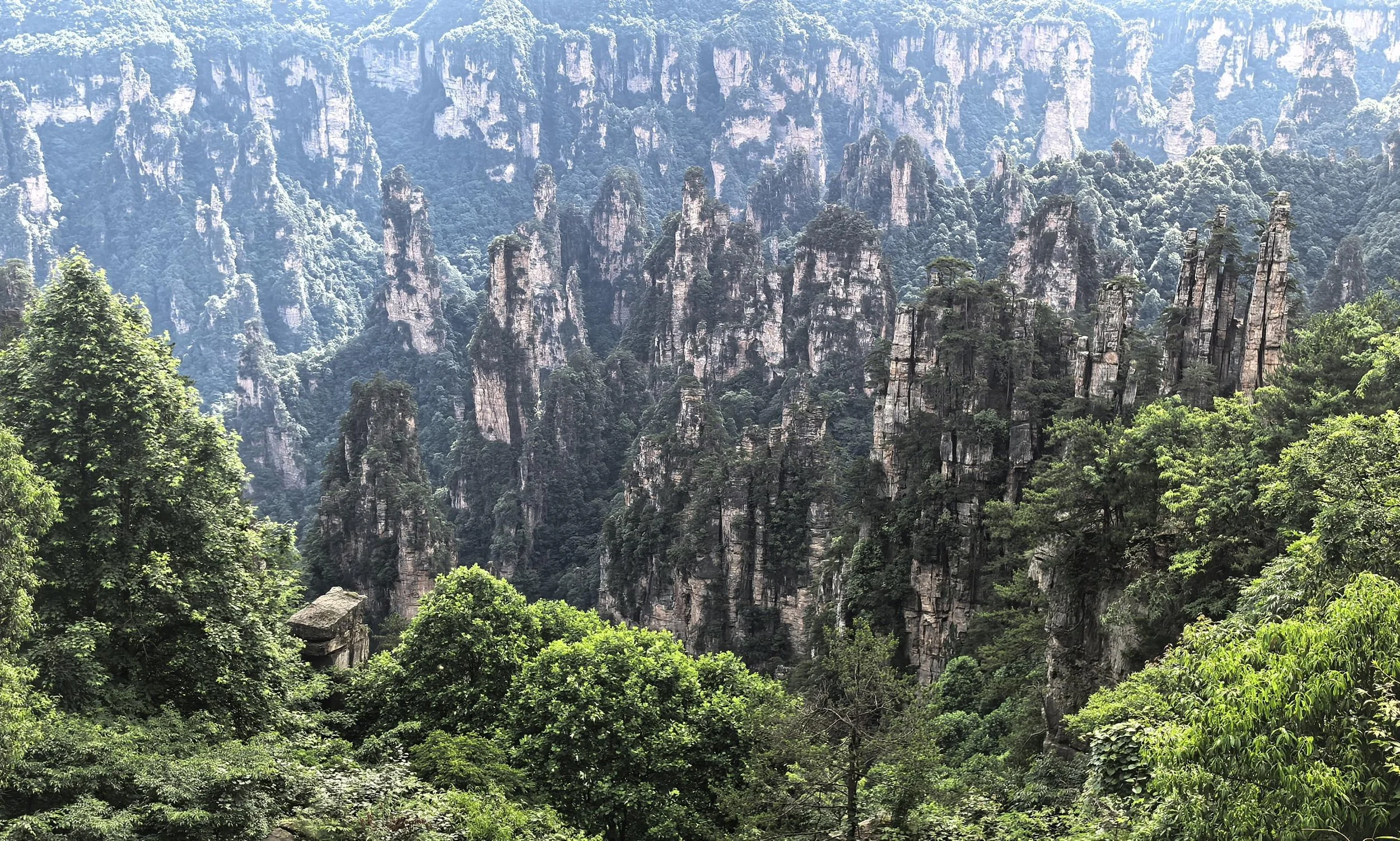
● Wulingyuan Core Scenic Area — the Zhangjiajie National Forest Park, including Tianzi Mountain, Suoxiyu and Yangjiajie on one ticket. Yuanjiajie (the "Avatar" floating mountains), Bailong Elevator and Ten-Mile Gallery are all here.
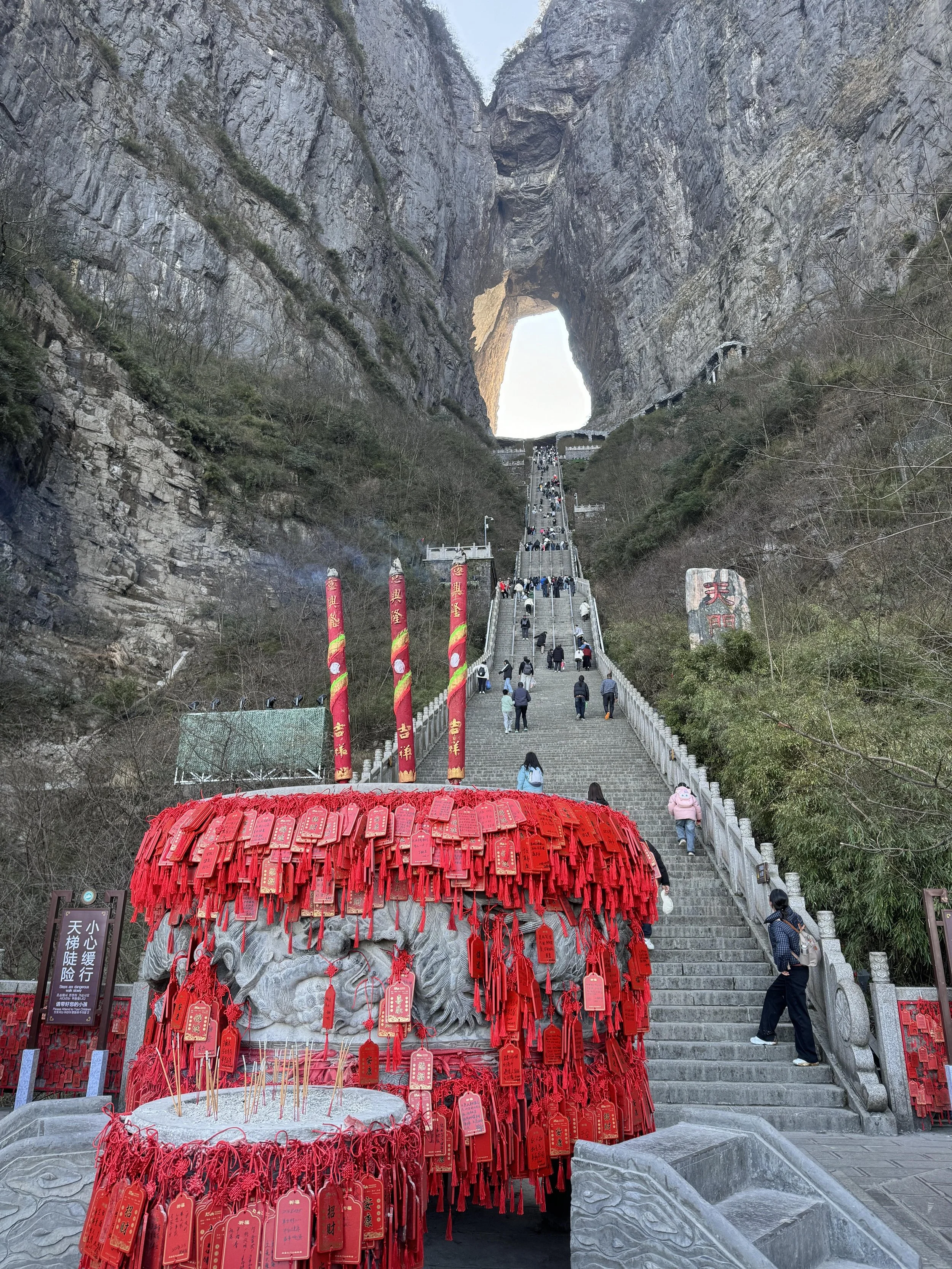
● Tianmen Mountain — right beside downtown, the giant mountain with the glass skywalk and Heaven's Gate. Separate ticket, not valid for Wulingyuan.
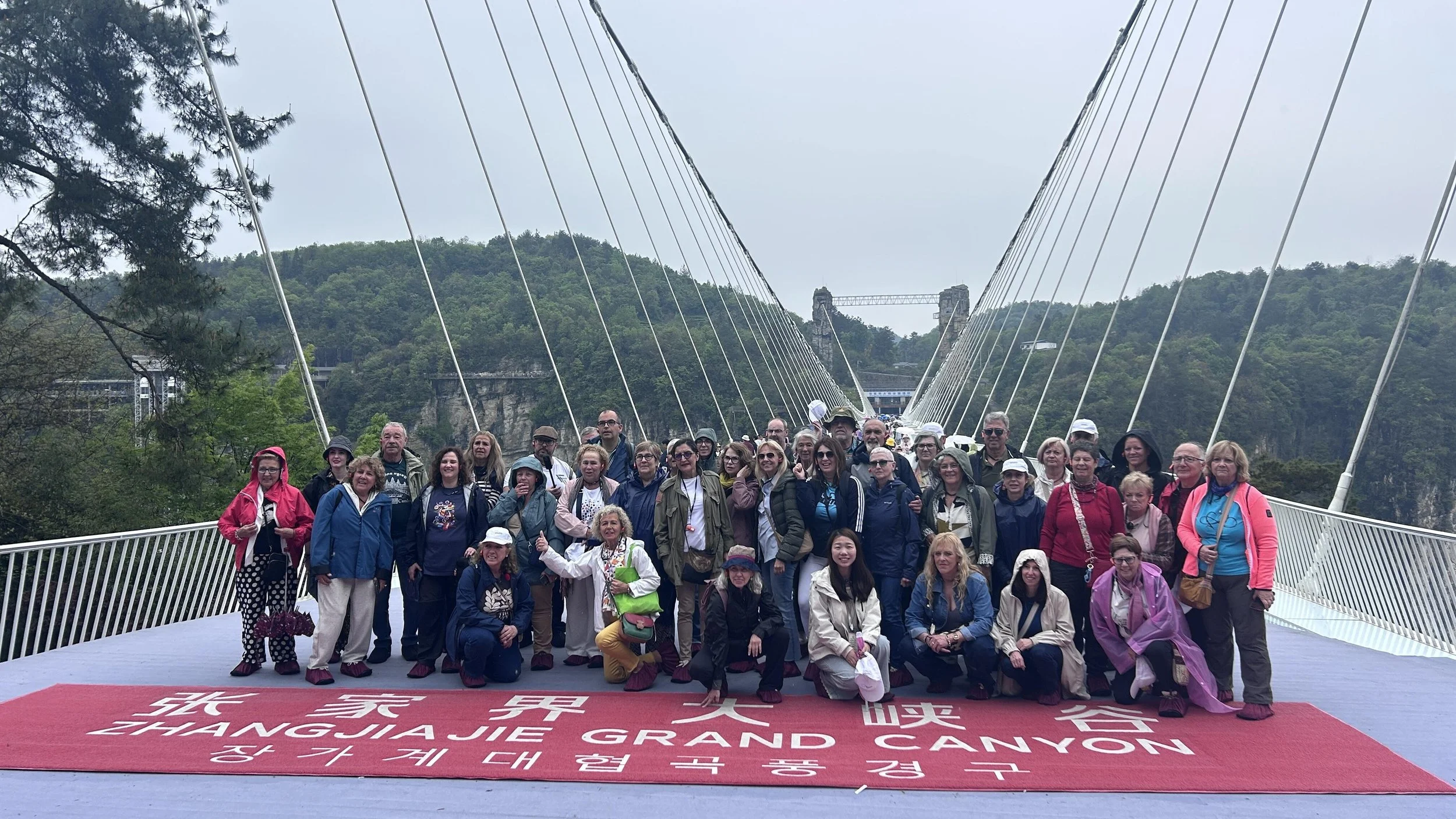
● Zhangjiajie Grand Canyon — in Cili County, home of the Glass Bridge.
No single hotel puts you within walking distance of all three. So the smart move is to let the hotel follow the day's scenery — not the other way round.
Wulingyuan itself is huge, with five ticket gates, each with its own hotel belt. Together with downtown, that makes four practical districts:
● District 1 — Downtown (Yongding District): serves Tianmen Mountain
● District 2 — South Gate (Luoguta): official gate name Zhangjiajie National Forest Park Ticket Station (South Gate) — serves the Forest Park
● District 3 — Wulingyuan East Gate (Jundiping): official gate name Wujiayu Ticket Station, aka the "Standard Gate" (标志门) — serves the Forest Park
● District 4 — Tianzi Mountain North Gate (Sinanyu): official gate name Tianzi Mountain Ticket Station — serves the Forest Park
(Two more gates — Zimugang in the southeast and Yangjiajie in the west — have thin hotel options; not covered here.)
⚠️ One trap that will leave you stranded: there is no lodging on top of the mountain. After the 2017 central environmental inspection, all guesthouses and restaurants on Tianzi Mountain, Yuanjiajie and Dingrongrong were shut and demolished (146 closures that year). "Sleep in the park for sunrise" no longer exists. "Tianzi Mountain North Gate district" below means the town of Sinanyu at the foot of the mountain — not the summit.
District 1: Downtown (Yongding) — Tianmen Mountain + City Nights
Downtown sits at only ~183 m altitude, right at the mountain's foot — and the Tianmen Mountain cable car's lower station is built into the city itself. A taxi from your hotel takes about ten minutes. Nowhere else can match that.
Staying here = Tianmen Mountain + city nights
● Price range: budget ¥80–150 off-season / ¥180–280 peak; mid-range ¥180–320 / ¥350–580; upscale ¥400–680 / ¥700–1500
● Convenience: taxi flag-fall ¥6; hotel-to-cable-car usually ¥8–10 (online guides saying "under ¥20" are conservative). To the Forest Park South Gate: 30–35 km, 40–45 min by shuttle, ¥10–13
● Food: the best nightlife of all four districts — five proper night markets (Xinmatou, around Qishiqilou, the railway-station area, Dayongqiao, Xixiping) plus the Nannengkou food street
● Night sights: Qishiqilou (~3.9 km from center, 07:30–22:45, tickets from ¥88) and Dayong Ancient Town (best after dark)
● Show: Tianmen Fox Fairy plays at the open-air theater inside Tianmen Mountain's gorge — about 15 km / 33 min from downtown, not "in the city." Starts 20:20 nightly; you need your own transfer
● For foreigners: downtown has the most reliable English service of all four districts. The Hilton Garden Inn (toward Tianmen Mountain) draws roughly 70% overseas guests with English/Korean/Thai front desk; the Huatian Hotel explicitly accepts foreign guests. But the older and cheaper the hotel, the more likely it refuses foreigners — always check the "guest eligibility" (可接待人群) field before booking
District 2: South Gate (Luoguta) — Golden Whip Stream + Huangshizhai
South Gate = the Forest Park's main ticket station = Luoguta — one place, two names (the official sign reads both). It sits at ~620 m in the valley above Golden Whip Stream, 450–600 m below Yuanjiajie and Tianzi Mountain — it's honestly not "on the mountain."
Staying here = Golden Whip Stream + Huangshizhai
● Price range: budget ~¥90–200; comfortable ~¥200–400. Almost all guesthouses and B&Bs — no full-scale high-star hotels
● Facilities: restaurants cluster along Jinbian Road, mostly within 100 m of each other; no night market, no food street. Expect limited evening options — many guests simply eat at their guesthouse
● Convenience: many guesthouses are a 10–15 minute walk to the gate; quite a few offer free gate pick-ups
● For foreigners — a district of extremes:
✅ The gate itself has the region's most real multilingual service: multilingual maps, staff guiding ticket machines one-on-one, self-service machines in Chinese/English/Japanese/Korean/Thai
❌ But the lodging is the disaster zone. Verified negative reviews cluster on "moldy, damp, wet bedding," and this is exactly where "no foreign guests" listings concentrate
● One sentence: good English at the ticket gate does not mean good lodging at the gate.
About the damp: it's real, with weather data behind it — the Forest Park averages ~79.6% relative humidity, Wulingyuan runs 77–79% year-round, peaking 79–81% in May–June, with mid-mountain spots often above 85% and heavy fog through the year. Industry consensus: ground floors are always damp, second floors noticeably better. The hard metrics that matter more than floor level: does the room have a dehumidifier (20L+/day), does it face the sun, and do recent reviews mention mold.
District 3: Wulingyuan East Gate (Jundiping) — Most Travelers' First Choice
East Gate = Wujiayu Ticket Station = the "Standard Gate" — same place, in Wulingyuan's Jundiping district, and the main entrance to nearly every famous viewpoint. ~392 m altitude.
Staying here = Bailong Elevator + Yuanjiajie + Yangjiajie + Tianzi Mountain + Ten-Mile Gallery
● Price range: budget ¥130–300; comfortable ¥300–500; upscale ¥500–750+. With 800+ guesthouses competing here, the ¥200–350 comfortable tier is the best value in the region
● Convenience (this district's killer feature): the only one of the three park districts where you can genuinely walk to the gate — ibis Styles is about a 1-minute walk, Ji Hotel ~3 minutes, several boutique guesthouses 0.4–1.3 km
● Food: Xibujie food street (stalls out after 17:00, busiest 20:00–22:00) plus the Bailu Road night market (relocated here in September 2025, runs 19:00 to ~2 am)
● Evening shows: Charming Xiangxi from ¥168; Zhangjiajie Qianguqing from ¥154
● To the Grand Canyon Glass Bridge: 15–30 km, 20–40 minutes, shuttle ¥10–15
● For foreigners — the best English-service district. Swan International Youth Hostel (Standard Gate branch) explicitly welcomes guests from all countries, rated 9.3–9.4, ~5 minutes' walk to the gate. Safest bets are international chains: ibis Styles (1 min to the gate), Days Inn by Wyndham (~0.3 km), Hilton Garden Inn, Crowne Plaza, Pullman Zhangjiajie — all routinely take foreign passports. Browsing the same properties with foreigner-written reviews on Booking.com's Wulingyuan search is a good cross-check before you commit
District 4: Tianzi Mountain North Gate (Sinanyu) — The Only Gate With No Cable-Car Fee
North Gate = Tianzi Mountain Ticket Station = Sinanyu, the park's northern gate, 55 km from downtown. Its one genuine selling point is worth underlining:
✅ It is the only entrance in the whole area where you ride to the mountaintop without paying for a cable car or elevator. After the ticket check, the free park shuttle (included in your ticket) takes you up via the Sanchakou hub to Tianzi Mountain, Yangjiajie and Yuanjiajie. Every other gate requires a paid lift — Bailong Elevator ¥65, Tianzi Mountain cable car ¥72, Yangjiajie cable car ¥72 each way. Enter and exit via the North Gate and you save ¥65–72 per person
● Price range: budget ¥88–200 (the cheapest of all four districts); several homestays offer half-board at ¥165/person/night (one night + two meals + breakfast); a few upscale suites around ¥1288, but no proper star-rated hotels
● Convenience: lodging clusters in Sinanyu, most guesthouses 8–10 minutes' walk to the gate, many with free pick-up. But the gate connects to the summit only by shuttle — you can't walk in
● Facilities: a handful of local restaurants and small shops; no night market
● Transport — the honest description is "reachable, but not convenient":
✅ Direct minibuses do run from downtown's Central Bus Station: 55 km, 1.5–2 hours, ¥15
⚠️ Only about one bus per hour (versus every 10 minutes to the South and East Gates)
⚠️ Last return bus leaves around 17:20 — earlier than any other gate
⚠️ Online advice saying "go to Wulingyuan first, then take Bus No. 1 to the North Gate" is wrong — Bus 1 only loops the Wulingyuan town area and never reaches Sinanyu
● For foreigners — the highest-risk district of the four. Several properties here explicitly state "no foreign guests" (including a guesthouse right beside the Tianzi Mountain gate). English service is weakest, buses are sparse, and the last return bus is early
● Suits: independent travelers with basic Chinese, a translation app, a local contact, or a loose schedule
● Doesn't suit: anyone staying one night with a train or flight to catch the next day
The Golden Rule
Let the hotel follow the day's scenery. Each district pairs with one gate (or one scenic area). Leave the luggage at the hotel and hike light — all transfers happen in the morning, on flat ground, between districts, never on mountain stairs.
3. Why a Highly-Rated OTA Hotel Can Still Disappoint Foreign Guests
A real, recurring pattern: you book a well-reviewed hotel on a booking platform, land in Zhangjiajie, and hit a wall — refused at the desk, a half-hour registration scramble, or nobody who speaks your language.
First, be fair about where the friction comes from. Booking platforms are genuinely good at discovering and comparing Chinese hotels — they've massively lowered the information barrier for foreign visitors. The problem is the last mile. Four specific gaps:
1. The location doesn't match the gate you'll use. Listings show "XX meters from the scenic area" — but which gate? Zhangjiajie is the worst case: the East and South Gates are 18–19 km apart, and listings label both "Wulingyuan."
2. The "guest eligibility" field says something you can't read. The most practical, least-discussed point. Chinese booking pages carry a field called 可接待人群 — many guesthouses write "only accepts guests holding a valid mainland Chinese ID card." That sentence means you.
3. Photos vs. reality, uneven maintenance. Common issues concentrate on beds and bathrooms:
● Narrow beds. Chinese hotel beds run small. Media tests have found "1.5 m double rooms" where each bed actually measures 1.08 m — genuinely too narrow for many European travelers
● Bathroom wear. Loose toilet seats, aging fixtures, slow drainage are the most common mid-tier complaints. Prefer properties opened or renovated after 2020
4. Registration friction and the language gap. Registering a foreign passport requires typing it correctly into the police system — fiddly and error-prone for staff at small hotels who rarely do it. Add inconsistent no-smoking enforcement (ashtrays in "non-smoking" rooms is a frequent European complaint); international chains are usually fine, below that, check.
None of this means avoid the platforms. It means a high Chinese-language rating does not equal foreigner-ready. Before you book anywhere — including on Booking.com or any other app — confirm two things: Can this hotel register a foreign passport? and Does its location match the gate I'll use that day?
4. What LynxTravel Handles For You
The hard part of booking independently isn't finding a hotel — it's confirming the boring-but-critical things before you pay. We do them upfront:
● We verify guest eligibility hotel by hotel, not just ratings. Before booking, we confirm the listing carries no foreigner restrictions and the property actually hosts overseas guests routinely — so you never discover a problem at the front desk
● We book the right district, not the one that looks close. Rooms go next to the gate your day's itinerary uses — never "looks near on the map, costs you two extra hours in reality"
● Registration and communication happen in advance. Passport details, arrival time, special requests all reach the hotel before you do. Check-in is expected when you walk in — not discovered on the spot
● Somebody local has your back. If anything goes sideways at check-in, an English-capable team on the ground fixes it the same hour
Steady arrival, smooth check-in, clean and quiet sleep every night — these sound like baseline expectations, but in China's non-tier-1 cities, somebody has to do the homework first. If you'd rather have that handled, see our Zhangjiajie private tours — hotels, tickets and transfers are built in.
5. Four Days, Four Nights — The Day-by-Day Plan
One logic runs through the whole itinerary: you never carry luggage up a mountain. Bags stay at the hotel; you change districts each evening, on flat ground.
Day 1 · Tianmen Mountain + Downtown Night (Stay: Downtown)
● Before noon — Arrive at Zhangjiajie West Station (high-speed rail) or Hehua International Airport. West Station is ~5 km from downtown; the airport is a 12–15 minute taxi ride
● 13:00 — Reach the Tianmen Mountain cable car lower station (it's downtown, on Dayong Road — taxi ¥5–10)
● 13:00–18:30 — Tianmen Mountain. Choose Route B — queues are about half, and you descend the 99 Bends. Combo ticket ¥285–288; ticket windows 7:30–16:00, operation from 8:00; last admission 16:00. (Full logistics in our Tianmen Mountain guide.)
● 19:30 — Dinner at Dayong Fucheng or Nannengkou food street
● 20:20–21:30 — Tianmen Fox Fairy open-air show (runs April 2 – October 17) — or swap for Qishiqilou / Dayong Ancient Town
● Sleep: downtown, ideally within 500 m of the cable car station. Downtown hotels run 30–40% cheaper than scenic-area lodging
🌙 Arriving in the evening instead? Rework the first night like this:
● Arrival night: stay downtown. Energy left? Qishiqilou (closer and better lit than Dayong Ancient Town). No energy? Sleep — you're up early tomorrow
● Next morning: do Tianmen Mountain as normal, but don't leave your bags at the downtown hotel. Before 10:00, drop them at the downtown luggage-transfer point (¥20 small / ¥25 large per item, one way) and send them directly to a South Gate guesthouse — that's tonight's bed
● That evening: after descending Tianmen Mountain, don't go back downtown — taxi straight to the South Gate (Luoguta) district, 30–35 km, 40–45 minutes. Sleep your second night at the South Gate
● Why this works: tomorrow at 7:30 opening time you're already standing at the gate, first cable car up Huangshizhai — an hour ahead of anyone commuting from downtown, having gone to bed no later. South Gate evenings are quiet anyway: no night market means early sleep, which the next morning rewards
● ⚠️ Reminder: the South Gate area is the heaviest zone for "no foreign guests" lodging (see District 2). If booking yourself, ask "Can you register a foreign passport?" before paying — or let us book a verified one
⚠️ Tianmen Mountain is a daytime sight, not an evening show. It takes 4–6 hours, and admission stops at 16:00 — many blogs list it under "city nightlife," which is simply wrong.
● Tickets must be reserved 2–3 days ahead (3–7 days in peak season) with real-name booking on the official "Zhangjiajie One-Click Tour" (张家界一机游) WeChat mini program. Same-day tickets are basically unavailable. Foreigners enter with the original passport
● ⚠️ Since November 6, 2025, the upper section of Tianmen Mountain's 7,455 m cable car (mid-station to summit) is closed for renovation and has not reopened — only the downtown-to-mid-station lower section (~70% of the line) is running. Plan your summit timing accordingly and check the latest status on the official scenic-area page before booking
Day 2 · South Gate → Huangshizhai → Golden Whip Stream → East Gate (Stay: Wulingyuan East Gate)
● 07:00 — Shuttle from downtown Central Bus Station (by the railway station) to the Forest Park South Gate: ~30 km, 40–45 min, ¥10–13, roughly every 10 minutes
● 08:00 — Enter at the South Gate; 5-minute walk to the Grand Oxygen Plaza. The park ticket is valid for 4 consecutive days
● 08:20 — Free shuttle from the plaza (3–4 min) to the Huangshizhai cable car lower station; cable car up (¥65 one-way / ¥118 return)
● 08:40–10:40 — Huangshizhai summit loop — small loop ~1 hour (Five-Finger Peaks, Star-Picking Terrace) or big loop ~2 hours. The saying goes: "If you skip Huangshizhai, you've wasted your trip to Zhangjiajie"
● 10:40 — Cable car down → back to the plaza → into the Golden Whip Stream trail
● 11:00–14:00 — Hike Golden Whip Stream: 7.5 km on flat stone paths and boardwalks, 2.5–3.5 hours, ending at Shuirao Simen (Four Streams Meeting)
● 14:15 — Free shuttle from Shuirao Simen → exit via the East Gate (Wulingyuan Standard Gate)
● 15:00 — Check in at your East Gate hotel. The entire transfer happened on flat ground
● Evening — Xibujie or Bailu Road night market
🔑 This day's ordering is the key correction in this whole guide — follow it exactly:
● Huangshizhai first, Golden Whip Stream second. Huangshizhai sits beside the South Gate, while Golden Whip Stream is a one-way trail — 7.5 km from the South Gate all the way to the park's eastern side. Hike the stream first and you'd end up 7.5 km away with the day's biggest climb still behind you, plus a separate return
● And since the stream already delivers you to the East Gate side, sleeping in Wulingyuan tonight makes the next morning seamless. The common online version — "sleep at the South Gate, go to the East Gate tomorrow" — means crossing 18–19 km the next morning with no in-park shuttle between the two gates: out of the park, wait for the external ring-road bus, back in
● Luggage? This is a "South Gate in, East Gate out" day — bags can't follow you along the stream. Two ways: ① the luggage transfer service (downtown ↔ scenic area both directions, ¥20 small / ¥25 large per item, one way) — send bags from downtown (or the South Gate) straight to your Wulingyuan hotel; ② have your private driver or guide move the bags to the Wulingyuan hotel while you hike — this is how our tours run the day
Day 3 · East Gate → Bailong Elevator → Yuanjiajie → Yangjiajie → Tianzi Mountain → Ten-Mile Gallery (Stay: Wulingyuan)
● 07:00–07:30 — Enter at the East Gate, follow the "Bailong Elevator direction" corridor. Early entry saves serious queue time
● 07:40 — Free shuttle to the Bailong Elevator lower station (via Ten-Mile Gallery and Shuirao Simen), 15–25 min
● 08:00 — Ride the Bailong Elevator up — 88 seconds to the top (~¥65 one-way)
● 08:30–11:30 — Yuanjiajie: Mihun Terrace, the Avatar Hallelujah Column, the First Bridge Under Heaven
● 11:30 — Shuttle 7–20 min → Yangjiajie: the Natural Great Wall. Drop this if time is short (sights are scattered; the Wulongzhai out-and-back adds ~1 hour)
● 13:00 — Shuttle 20–30 min → Tianzi Mountain: Helong Park, Imperial Brush Peaks, Fairy Scattering Flowers. There's a McDonald's at Tianzi Mountain; this stretch is winding mountain road — motion-sickness pills if you're prone
● 15:00 — Tianzi Mountain cable car down (¥72 one-way) — or hike down ~3,800 steps (1.5–2 hours)
● 16:00–17:30 — Ten-Mile Gallery: sightseeing train ¥38 one-way / ¥76 return, or a 20–40 minute walk each way; budget 1.5–2 hours
● 18:00–18:30 — Exit at the East Gate
Full trail-level detail, photo spots and escape hatches are in our Zhangjiajie National Forest Park guide; the official park page posts current ticket and shuttle notices if rules change mid-season.
● ⚠️ You cannot walk from the East Gate to the Bailong Elevator. After the East Gate check, take the free shuttle 15–25 minutes to the lower station. (Shuttles to the Tianzi Mountain cable car also leave from the same hub — follow signs, not crowds)
● ⚠️ This is the hardest day: done right with lifts and shuttles it still runs 9–11 hours (in 7:00–7:30, out 16:00–18:30). The pure-hiking version is ~20 km / 40,000 steps. Follow the sequence above — it exists to protect your legs
● 🔴 Shuttle "last bus"? The official posted hours are 7:00–19:00 (peak-season notices sometimes say 7:00–18:00, low season 7:30–17:30), but in practice the park's shuttles keep running as long as visitors remain inside. Don't test it at 18:45 in November, but you don't need to sprint either
● 🐒 Monkeys — Golden Whip Stream is their stronghold: they grab food and plastic bags straight from hands. Don't carry transparent plastic bags, don't unpack snacks in the open (that's the main trigger), and never feed them
Day 4 · Grand Canyon Glass Bridge → Zhangjiajie West Station → Furong Town (Stay: Furong Town)
● 07:00 — Check out, bags with you
● 07:30–08:15 — Wulingyuan Bus Station → Grand Canyon by tourist shuttle: 15–20 km, 30–40 min, ~¥15, roughly every 30 minutes
● 08:30–12:30 — Grand Canyon Glass Bridge. Reserve 3–5 days ahead with real-name booking — same-day tickets are basically unavailable. Book through the official canyon website or the WeChat mini program; large bags, cameras and selfie sticks must be stored before boarding. (Route choice, prices and the no-car logistics are all in our Grand Canyon guide.)
● 12:30–14:00 — Grand Canyon → Zhangjiajie West Station: ask staff at the exit for the canyon-to-West-Station bus; 51–53 km, taxi ~¥100–150
● Afternoon — West Station → Furong Town Station on the Zhangjihuai high-speed line: 23 minutes, second class ~¥36, roughly 10–18 trains a day
● Dusk — Furong Town Station → the ancient town: shuttle or taxi, 5–8 min, ~¥20
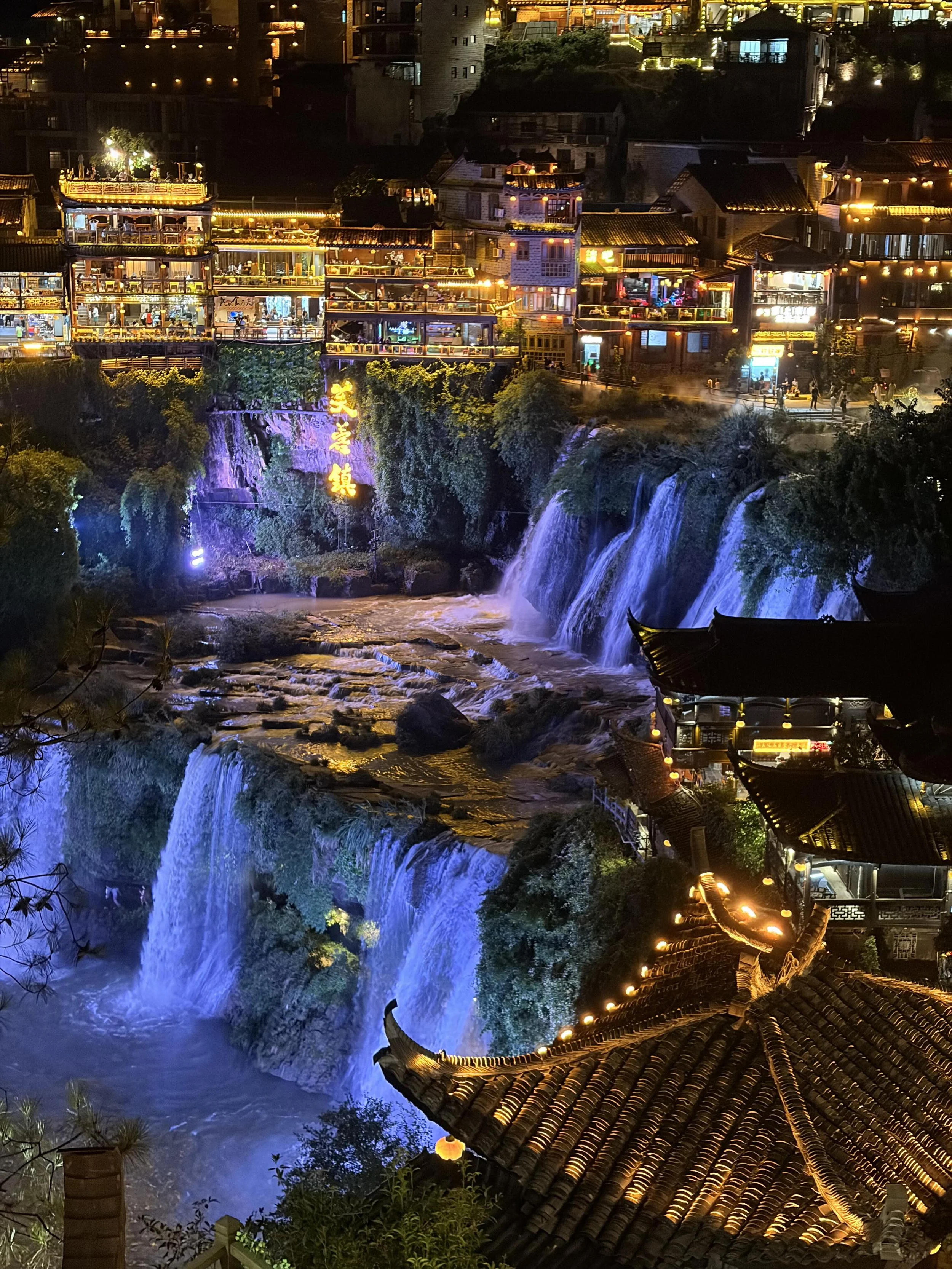
● Night — Furong Town after dark: lights on after 19:00, scenic area open 8:00–23:00, ticket ¥108 including the Blooming Furong show, valid 3 days. Hours and events are posted on the town's official site
For time-pressed overseas travelers: both legs today — Wulingyuan to the canyon, and canyon-to-train — are awkward by public transport. A point-to-point private transfer is more comfortable and buys back an hour; see our 7-seater business van if you'd rather not juggle shuttles with bags.
● ⚠️ This day has almost no slack. As listed it works, but a queue at the Glass Bridge or a slow canyon walk pushes you past the 16:40 train easily. Don't add anything else to this day, and head straight to the station after the canyon
● ⚠️ Luggage is "broken" today: you checked out in the morning, but the Glass Bridge requires storing large bags — so either store the big bag at the canyon (free storage at the security check, with a free shuttle to fetch it) and carry a daypack to Furong Town, or send the big bag ahead by transfer service and travel light
Transport Quick Reference
● Zhangjiajie West Station → downtown: taxi, 15–20 min, ¥20–40
● Hehua Airport → downtown: taxi, 12–15 min, ¥20–30
● Hehua Airport → Wulingyuan: taxi, 50–70 min, ¥100–200
● Downtown → South Gate: Central Bus Station shuttle, 40–45 min, ¥10–13, every ~10 min
● Downtown → East Gate: Central Bus Station shuttle, ~50 min, ¥12–13, every ~10 min
● Downtown → North Gate: Central Bus Station minibus, 1.5–2 h, ¥15, about hourly, last return ~17:20
● South Gate ↔ East Gate: exit the park and take the external ring-road bus, 40–60 min including waiting, ¥8–10
● Wulingyuan → Grand Canyon: tourist shuttle, 30–40 min, ~¥15
● West Station → Furong Town: high-speed rail, 23 min, ~¥36
● ⚠️ Taxi and charter prices differ day vs. night, and all public transport stops running between 17:30 and 19:30 — plan evening moves around it
Ticket & Park Transport Price List (2026)
● Wulingyuan entry ticket — ¥165: valid 4 consecutive days, eco-shuttle NOT included. (Pricing set by Hunan provincial document 977/2024: since January 1, 2025, one year-round price — no more high/low seasons)
● Wulingyuan ticket + shuttle combo — ¥236: valid 4 consecutive days, unlimited eco-shuttle rides. ✅ Buy this one
● Discounted combo — ¥119: eligible half-price groups
● Park eco-shuttle: included in the combo above, free and unlimited. Ignore anyone roadside selling "private park taxis"
● Huangshizhai cable car: ¥65 one-way / ¥118 return
● Tianzi Mountain cable car: ¥72 one-way
● Bailong Elevator: ~¥65 one-way
● Yangjiajie cable car: ¥72–76 one-way (sources differ)
● Ten-Mile Gallery train: ¥38 one-way / ¥76 return
● Tianmen Mountain — ¥288: includes cable car, one of two through-mountain escalator sections (the second costs ¥32 extra), shuttle and more
● Grand Canyon (with Glass Bridge): Route B ¥178 with insurance (recommended) — canyon + bridge + lake boat in one walk; Route A canyon-only ¥53; Route B + pick-5-of-7 activities bundle ¥298. Open 08:00–16:00, last admission 16:00. Real-name advance booking; enter with passport
● Furong Town — ¥108: includes the show, valid 3 days
● Qishiqilou — ¥88
● Tianmen Fox Fairy — by seat; nightly 20:20
● Charming Xiangxi — from ¥168; Zhangjiajie Qianguqing — from ¥154
Ticket Rules for Foreign Visitors
● Bring the original passport. Photos and copies are not accepted. Gates scan the passport directly; your face is captured on first entry, after which you can enter by face scan
● Passport holders don't qualify for discounted cable-car tickets — adult prices apply
● All core areas use timed real-name reservation — no reservation, no entry. Tianmen Mountain and the Glass Bridge: book 3–7 days ahead in peak season. Official channel: the "Zhangjiajie One-Click Tour" WeChat mini program. The South Gate has self-service machines in Chinese/English/Japanese/Korean/Thai with volunteer assistance
● ❌ "Insider tickets" and "VIP skip-the-line tickets" do not exist. Anyone selling them is a scammer
6. Luggage & Hotel Checklist
Luggage
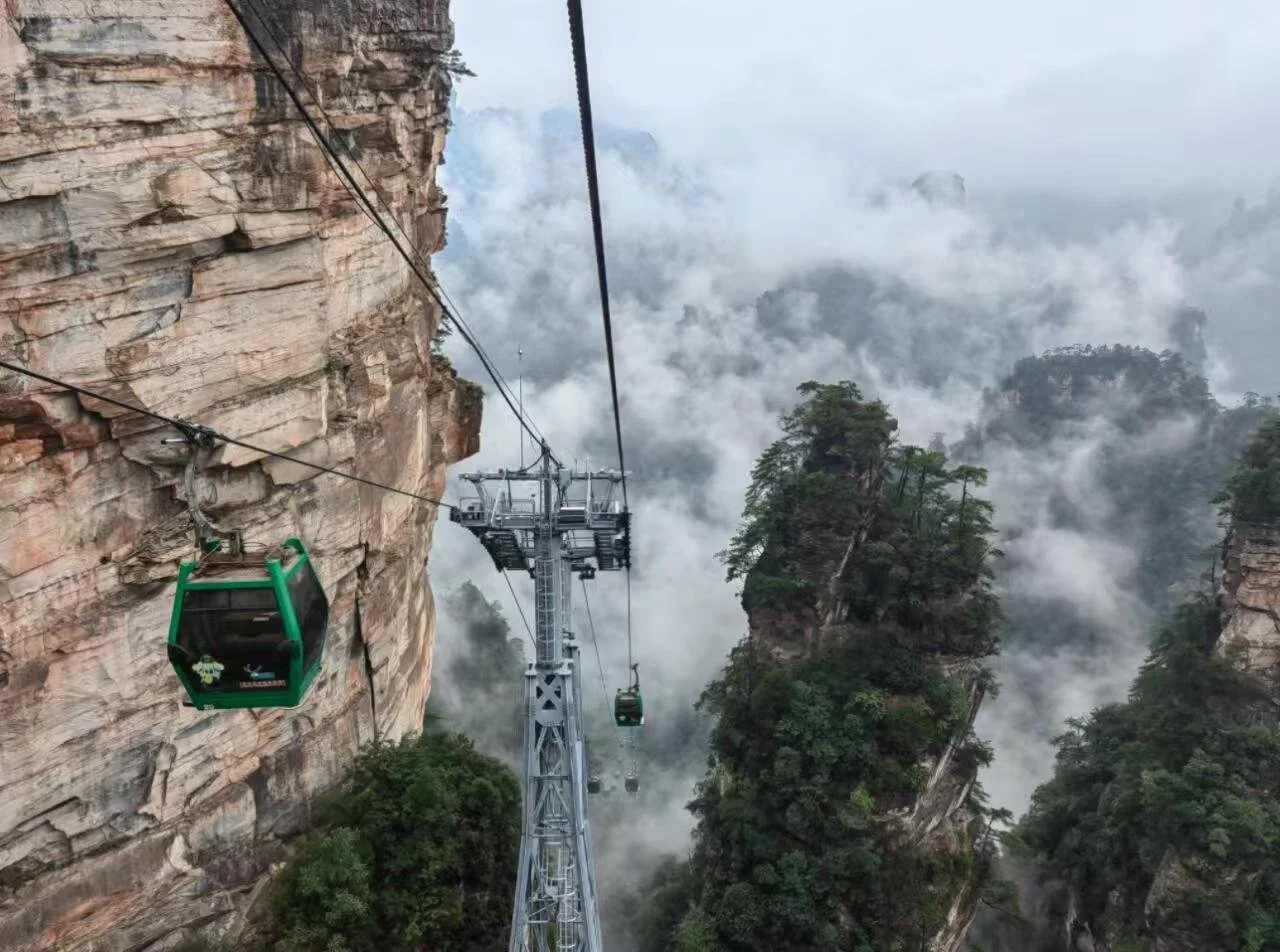
● Never take the main bag into the scenic areas. The mountains are elevators, cable cars and thousands of steps — dragging a suitcase through that is misery. Keep suitcases to 20 inches or less
● One small daypack for the day: water, rain gear, snacks, a warm layer, and a photocopy of your passport. That's everything you carry uphill
● Paid storage points: the Forest Park gate visitor centers, the Wulingyuan Standard Gate, the Tianzi Mountain gate, and the Grand Canyon security check (the canyon has separate entry and exit, so it offers paid storage plus a free shuttle between them)
● Luggage transfer service: downtown ↔ scenic area both directions, ¥20 small / ¥25 large per item one way. Drop bags at the downtown transfer point before 10:00 and collect them at your mountain guesthouse around 17:00 the same day
● Mountain weather: downtown sits at 183 m, the scenic areas average 1,000 m — a 10°C day-night swing is normal. Rain arrives fast and ridgelines get cold quickly; a light waterproof shell plus one warm layer beats any single heavy jacket
● Passport, boarding passes and payment cards stay in your personal daypack — never in transferred luggage
Choosing a hotel
● Check the "guest eligibility" field first — the number one rule. If it reads "only accepts guests holding a mainland Chinese ID," that means you. Asking works too: "Can you register a foreign passport?"
● Match the hotel to the gate you'll use that day (see the plan above). "Near the right gate" beats "near everything" every time
● Ask about shuttles: does the hotel meet you at the station or the gate? How do you get from its door to the park entrance?
● Prefer properties opened or renovated after 2020 — maintenance standards vary enormously below that line
● In damp districts (South Gate especially), look for a dehumidifier — more useful than the floor level
● Check the basics one by one: elevator (many budget places are walk-ups), working heating/cooling, power sockets (China: 220 V, type A/I — bring a universal adapter), and Wi-Fi solid enough to book your next train
● Payment: some small hotels still prefer cash or Chinese apps. Confirm international-card acceptance before arrival and keep some cash for small payments (our full China payment guide covers deposits and cards)
● Read the cancellation policy; carry your booking confirmation and a passport photo
● Staying in a homestay or private home? Register within 24 hours of arrival — from September 2026 you can do it online (see Section 1)
Frequently Asked Questions
Wulingyuan or downtown — which should I base in? Both, in sequence. Downtown for the Tianmen Mountain day (the cable car starts there, and hotels cost 30–40% less), Wulingyuan East Gate for the two Forest Park days (it's the only district you can walk into the park from). That split is exactly what the 4-day plan above does.
Can foreigners book any hotel in Zhangjiajie? Legally, yes — the old "foreigner-approved hotel" system is gone. In practice, some guesthouses still list "no foreign guests" or have staff who've never registered a passport. Check the guest-eligibility field, ask directly before paying, or book through an operator that pre-verifies.
I land late at night. Where should I sleep? Downtown, near the Tianmen Mountain cable car. Airport to downtown is 12–15 minutes; you gain nothing by pushing to Wulingyuan at night. The next morning, do Tianmen Mountain and send your bags by transfer service straight to the South Gate — our late-arrival variant in Day 1 shows the full sequence.
Can I stay inside the national forest park? No. All mountain-top lodging was closed and demolished after the 2017 environmental inspection. The "sleep in the park" era is over; the closest legal options are the gate districts above.
How do I handle luggage between hotels? Three tools: the paid luggage transfer service (¥20/25 per item, downtown ↔ scenic area), paid storage at every major gate, and — simplest — a private tour where the driver moves the bags while you hike. What you should never do is carry the big bag onto the trails.
How many days do I need in Zhangjiajie? Four days covers Tianmen Mountain, two full Forest Park days and the Grand Canyon comfortably. Short on time? Our 3-day tour compresses the essentials — Tianzi Mountain and the Glass Bridge included.
Do hotels in Zhangjiajie take international cards? International chains do. Small guesthouses often prefer cash or Chinese payment apps — confirm before arrival. Details on cards, deposits and workarounds are in our payment guide.
How far is the Grand Canyon from Wulingyuan? 15–30 km depending on which side of the park you measure from — 20–40 minutes by car, or the ¥15 tourist shuttle from Wulingyuan Bus Station roughly every half hour.
Final — Plan the Trip, Not Just the Hotels
The secret to doing Zhangjiajie well isn't more adrenaline — it's planning where you sleep more intelligently.
Four districts hug four gates. Luggage stays at the hotel. And the mountains become what they're supposed to be — a pleasure, not a marathon.
If you want the same peace of mind handled end to end — foreigner-friendly hotels verified, rooms placed beside the right gate, check-in registration sorted before you arrive — that's exactly what our Zhangjiajie private tours do. Tell us your dates and we'll build the four days around your flight times.
WhatsApp: +86 172 6789 8631 | Email: rosewuqjzh@gmail.com