A practical autumn guide for first-time visitors to Beijing | Written 21 November 2026
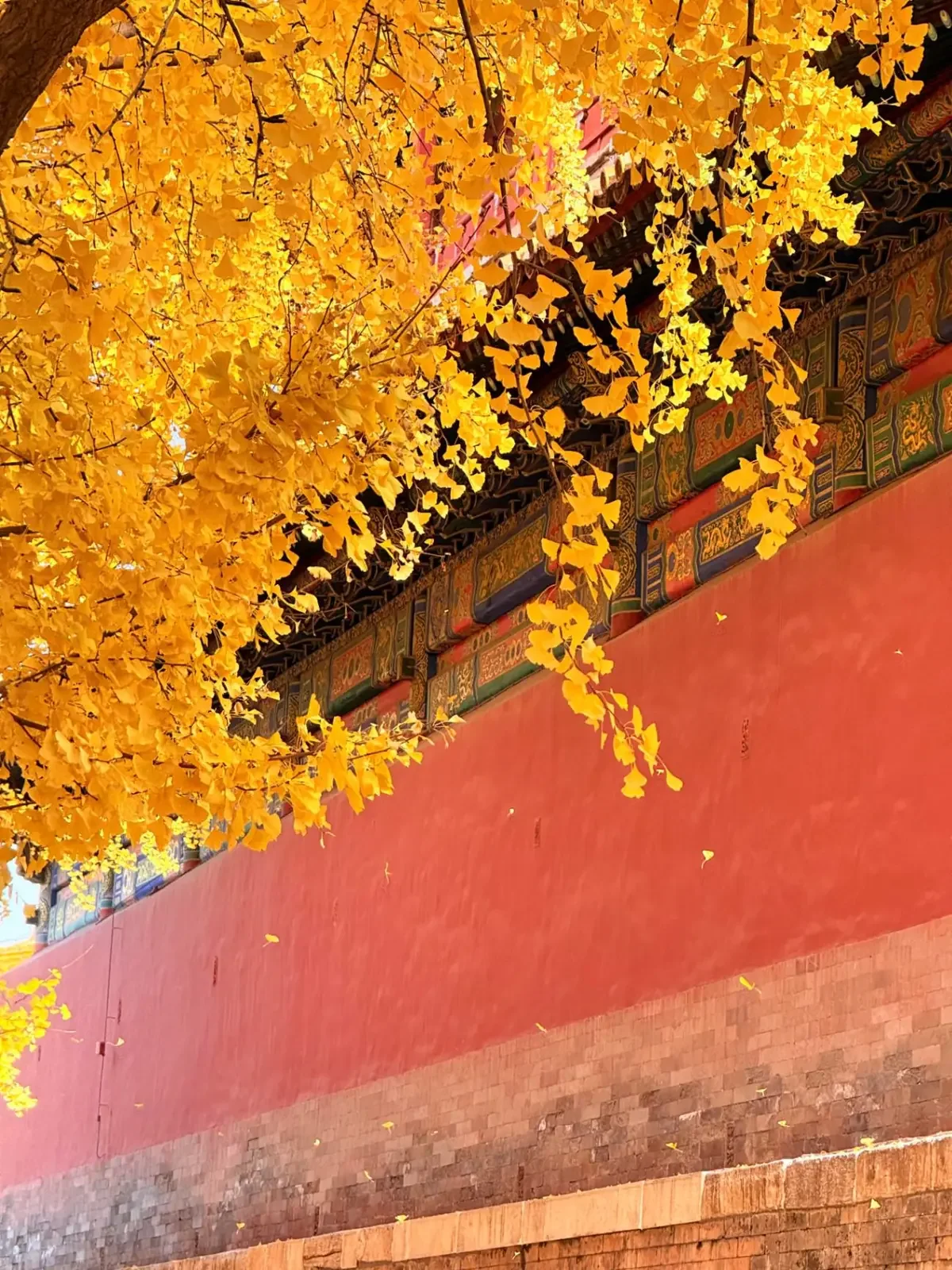
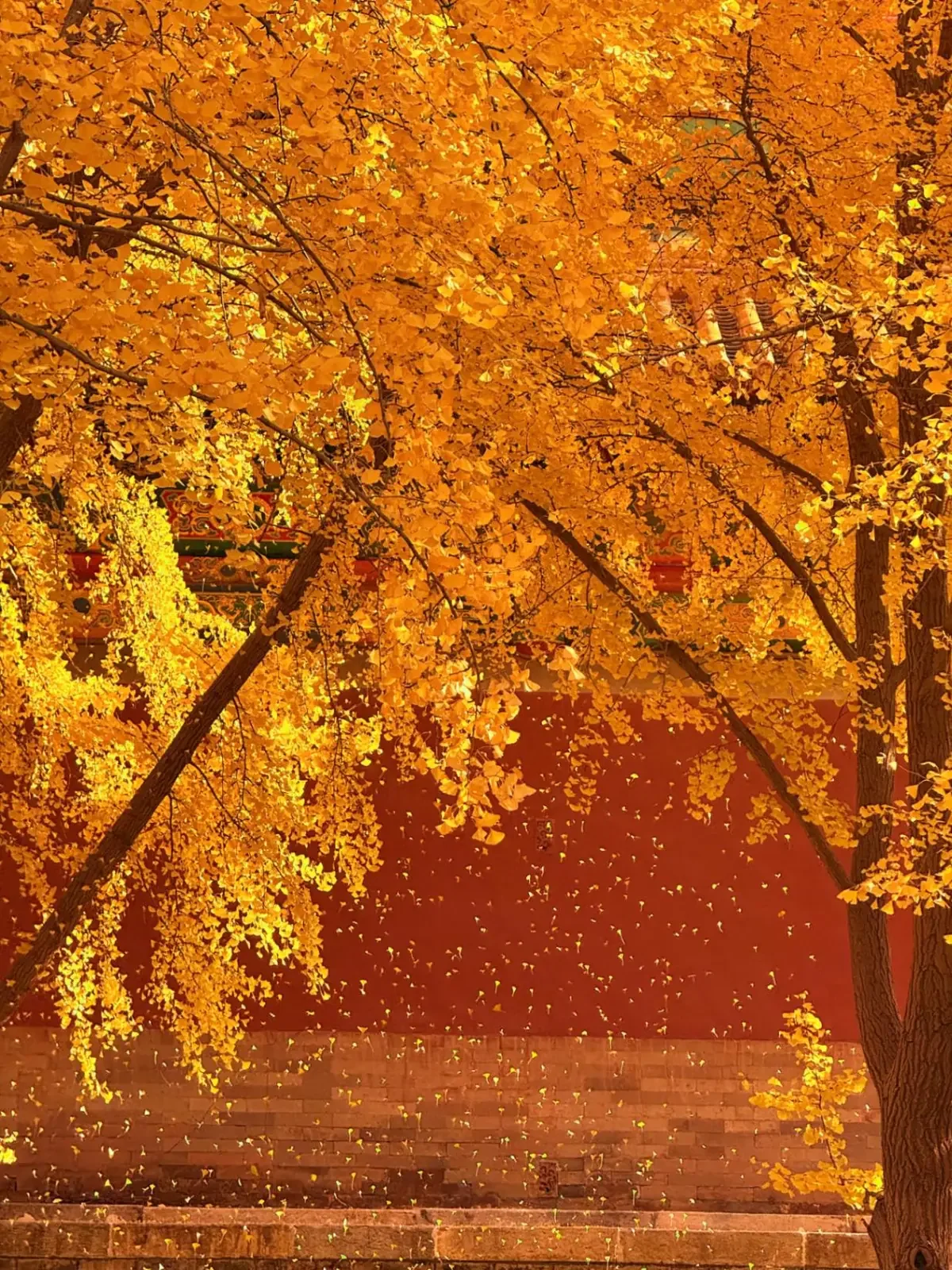
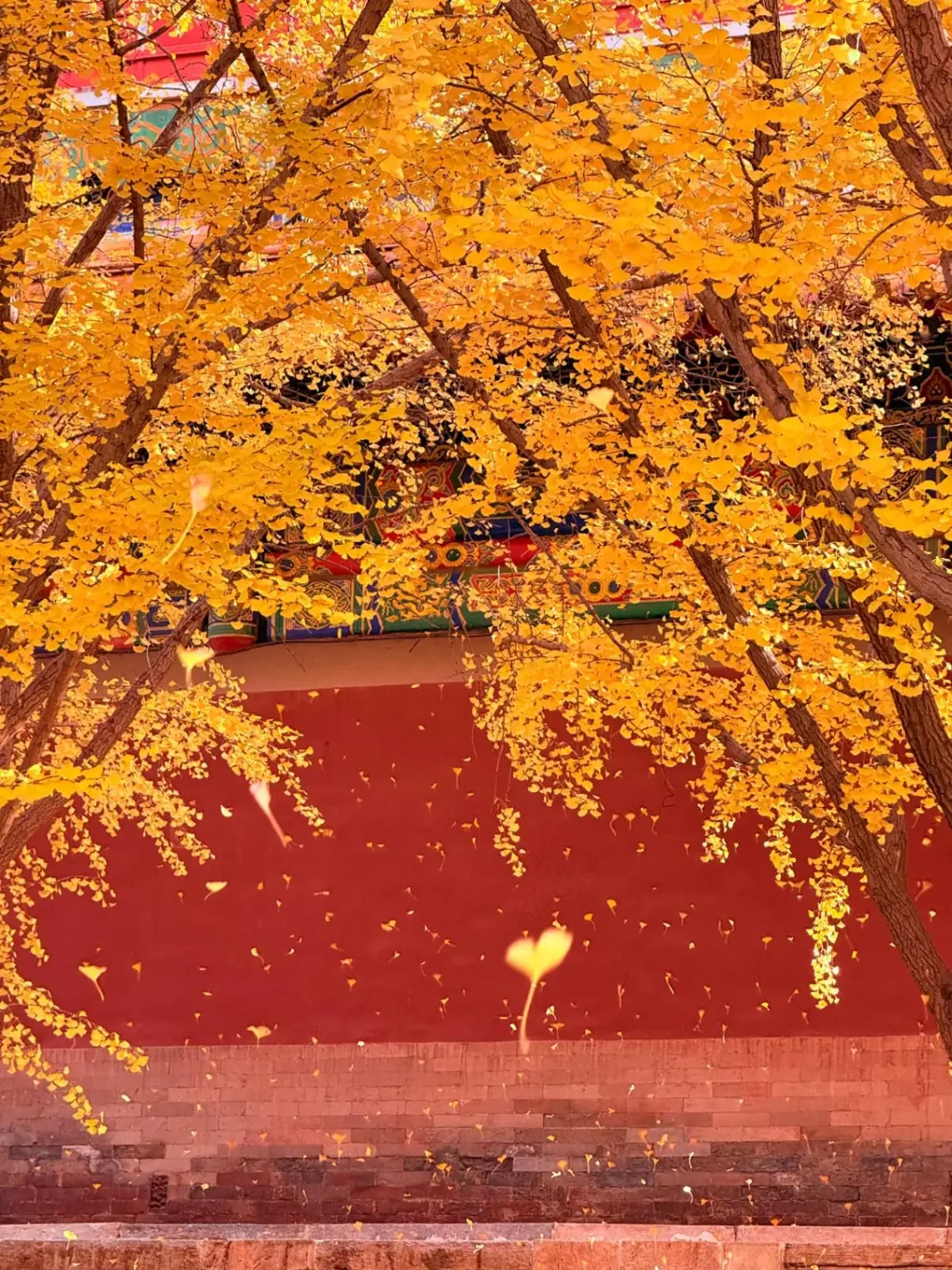
The “ginkgo rain” at the Forbidden City isn't rain at all — it's wind. Every autumn in Beijing, the ginkgo leaves turn gold, then one decent gust sends them down in sheets. Stand beneath the trees at the right moment and you'll see why people call it “raining ginkgo”. There's no forecast for it: the window lasts a few days, and once the wind arrives, the branches are bare.
First, a common mix-up worth clearing up: the “Eighteen Locust Trees” (shiba huai) aren't ginkgos. They're Chinese scholar trees planted back in the Ming and Qing dynasties — eighteen originally, seventeen still standing, with later replanting, but the name stuck. The scholar tree is one of Beijing's official city trees; the ginkgo, meanwhile, is nicknamed China's “living fossil”, and chasing golden leaves every autumn is a local ritual. The ginkgo rain itself comes from the grove beside the locust trees, on the Forbidden City's western side, east of Wuying Hall and north of the Broken Rainbow Bridge. Show a staff member the words 十八槐 and they'll point the way.
If autumn colours are the whole point of your trip, our complete guide to autumn in China, from Kanas in September to Tengchong in December puts Beijing in context with the rest of the country.
1. Five Things to Know at a Glance
Save this checklist and run through it before you set off. Official opening hours and ticket prices are on the Palace Museum's official visitor guide.
Best time — Mid-November. Full colour around 10 November; ginkgo rain around 15 November.
Opening hours — 8:30–16:30, last entry 15:30. Closed Mondays except public holidays.
Tickets — Low season (Nov–Mar) ¥40; high season (Apr–Oct) ¥60. Treasure Gallery and Clock Gallery ¥10 each.
Reservation — Official WeChat mini-program “The Palace Museum”. Released 7 days ahead at 20:00. No same-day tickets. Passport required.
Entrance / exit — Enter only through the Meridian Gate (Wumen); leave via the Gate of Divine Prowess (Shenwumen) or the East Prosperity Gate (Donghuamen).
2. Where Exactly Are the Eighteen Locust Trees?
The Eighteen Locust Trees sit east of Wuying Hall and north of the Broken Rainbow Bridge, roughly along the stretch between Wuying Hall and the Ice Cellar restaurant. Search “Duanhong Bridge” on your map; once you're standing at the north end of the bridge, a row of old scholar trees and a stand of ginkgos mean you've found the spot.
These ginkgos are nothing like the ones lining city avenues. Out on the street you get two rows of trees framing a road, with people and traffic passing underneath. Here, red walls, a stone bridge, stone lions, old scholar trees and ginkgos all share one courtyard; leaves settle on the flagstones, and a gust turns the whole scene three-dimensional. Tour groups head straight for the central axis, so the western side stays comparatively quiet — in practice, most of the first photographers through the gates make a beeline for this corner.
On 12 October 2026 the Palace Museum announced that Wuying Hall would close from 19 October. Don't build it into your itinerary. The locust trees are outdoors, so they're unaffected — just follow whatever barriers are in place. Yanxi Palace has been closed since 4 November 2026, too.
3. What the 2026 Season Actually Looked Like
Here's how this year's ginkgo rain played out:
· 3 November — most leaves around Wuying Hall still green, a few just starting to turn.
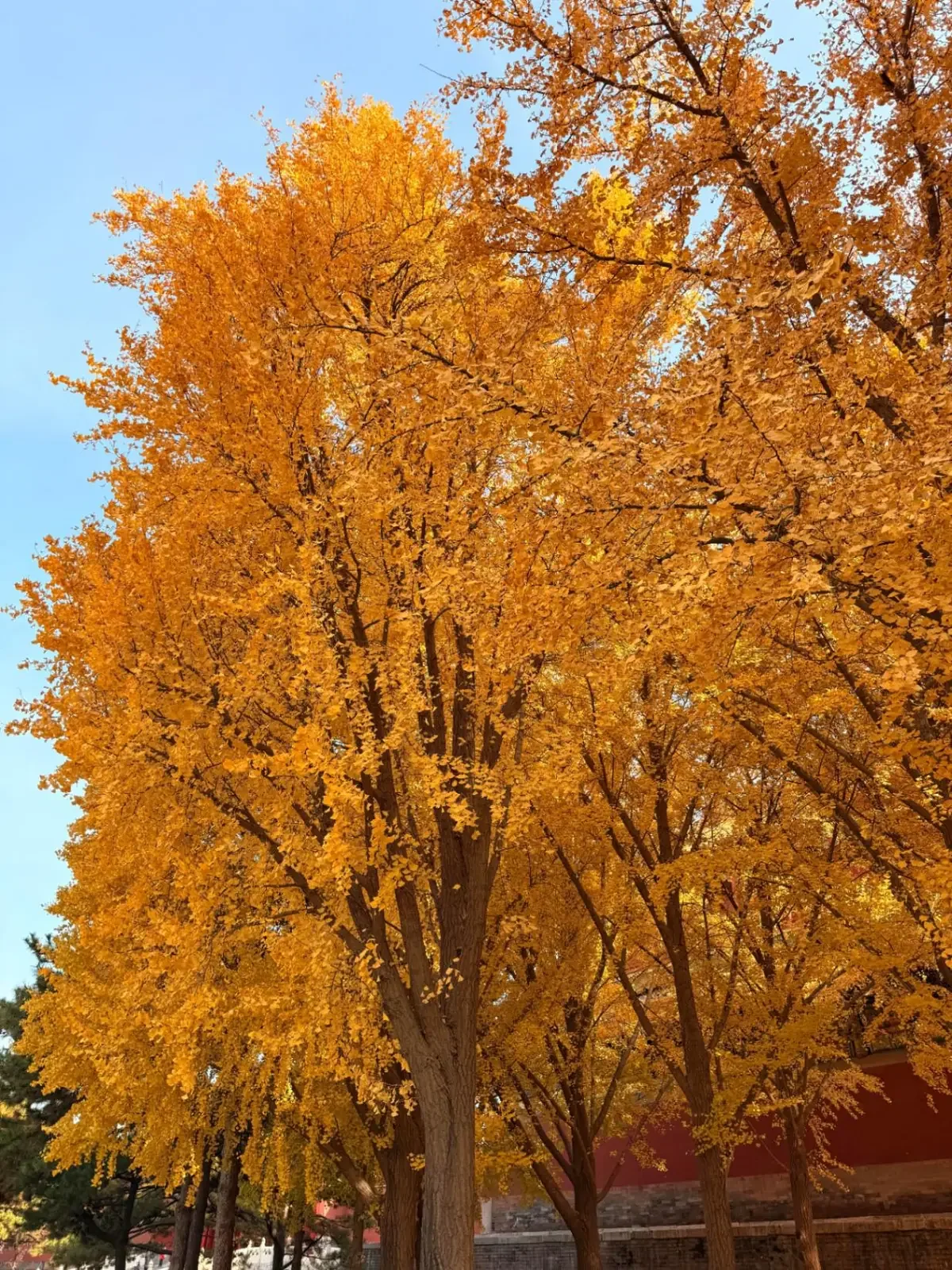
· Around 10 November — the Eighteen Locust Trees at full gold, the best few days of the year.
· 13–14 November — still excellent shooting; trees full, the carpet of leaves thickening.
· 15 November (Sunday) — a strong wind brought the peak ginkgo rain and stripped most of the leaves the same day.
· 17 November — fallen leaves still worth shooting, but the branches were nearly bare.
That was the end of the 2026 ginkgo rain.
Want full golden canopies? Get there before the wind. Want leaves coming down like rain? Go on the windy day itself, or the following morning. After the gust the trees are empty — however thick the carpet, it isn't the same as a full canopy overhead.
For 2027, don't lock your flights to a fixed date. Based on this year, plan for 10–17 November with a couple of spare days on either side, and check Beijing's wind forecast before you travel. Beijing autumn doesn't wait: one gust and the year is over.
4. Booking Your Ticket (Foreign-Visitor Edition)
There are no same-day tickets — everybody books ahead. Use the official WeChat mini-program “The Palace Museum”. Tickets go on sale seven days in advance at 20:00 and must be booked in your real name with a passport. Spell your name exactly as it appears in your passport: once submitted, it can't be changed. Bring the original document on the day, because security at the Meridian Gate checks it. The full rules are on the official ticketing site and in the Palace Museum's official visitor rules.
For the rest of the entry process — the separate Tiananmen Square reservation, security screening, banned items and luggage storage — see our companion piece, The Forbidden City & Tiananmen Square: A Practical Field Manual for First-Time Visitors to Beijing. The two articles split the job deliberately: this one is about the ginkgo rain and photography; that one covers booking and getting through the gates.
5. A Half-Day Route
First visit, morning slot? Walk this line:
8:00 Meridian Gate security → 8:30 enter → Broken Rainbow Bridge → Eighteen Locust Trees → Wuying Hall exterior → Gate of Supreme Harmony → Hall of Supreme Harmony → Hall of Central Harmony → Hall of Preserving Harmony → Palace of Heavenly Purity → Gate of Divine Prowess → corner tower of the city wall
Go west first. Morning light comes in from the east, so the ginkgos are side-lit and the leaves glow, while most tour groups make a beeline for the central axis. Shoot the locust trees, then rejoin the axis just as the first crowd wave moves past.
Allow 3–4 hours from entry to exit and expect to cover 5–6 km on foot, so wear shoes you can actually walk in. The Forbidden City measures 961 metres north–south by 753 metres east–west: it looks compact on a map, but with photo stops it's a proper workout. With a full day to spare, add the Treasure Gallery and Clock Gallery (¥10 each) and the Eastern Six Palaces. Skip Yanxi Palace while it's closed.
Once you exit the Gate of Divine Prowess, don't just leave. Walk east along the moat to the corner tower for shots of the tower, the ginkgos and their reflection — no extra ticket required. Cross the road to Jingshan Park (¥2 for an adult, confirmed on the Beijing government's official park page) and climb to Wanchun Pavilion for a panorama over the Forbidden City and, if the weather plays ball, the golden central axis.
Still working out where to base yourself? Our guide to where to stay in Beijing covers neighbourhoods that keep these early-morning starts manageable.
6. Photography
The best light on the Eighteen Locust Trees is 8:30–11:00 in the morning. Low sun makes the leaves translucent and gives the red walls depth; after 11:00 the light hardens and the crowds arrive.
Three setups worth knowing:
· 1. North side of the Broken Rainbow Bridge — frame the stone bridge, stone lions, red wall and ginkgos together. This is the classic shot.
· 2. Low angle under the trees, letting falling leaves drift through the frame. Put a person further back as a scale reference and you'll get a real sense of the height.
· 3. Against the Wuying Hall exterior wall — red wall, yellow leaves, ideal for portraits. The hall itself is closed, so don't climb the barriers; how close you can get to the wall depends on the barriers on site.
Add one more after you leave: the corner tower from the moat, at its best in soft evening light — a completely different mood from the red walls inside.
Any phone or basic camera will do: wide-angle for the canopy, 2× for portraits. Leave the tripod and gimbal at home. For portraits, wear dark or white rather than yellow, or you'll blend straight into the leaves. Weekends get busy — the 15 November peak fell on a Sunday and was especially packed. If you can, pick a day from Tuesday to Thursday.
7. Practical Tips for Foreign Visitors
Money. WeChat Pay and Alipay are the easiest options and both accept international cards; most kiosks are QR-code only, so carry a little cash as backup. Tickets have to be paid for online — there's nothing to buy at the gate.
Language. Signage is bilingual and audio guides are available near the Meridian Gate, but most interpretive panels are Chinese-only and staff may not speak English. Download a translation app and offline maps, and save these Chinese place names on your phone to show people when you ask for directions: 十八槐, 断虹桥, 午门, 神武门.
Water and snacks. Food outlets inside queue up and cost more than outside; bring a bottle of water and something to eat. Carry tissues — some restrooms don't supply them.
Weather. In November Beijing runs 5–10°C during the day and close to 0°C morning and evening, with wind. Bring a windproof jacket, hat and gloves, and wear soft soles: you'll be walking for hours. The Palace Museum's official visitor rules also spell out what you can and can't bring in.
Etiquette. Don't touch artifacts, climb over barriers, smoke, use flash indoors or shout. This is a World Heritage site, not a city park.
If this is your first time in the city, our guide to Wangfujing, Chaoyangmen and the hutongs is a good companion for the rest of your stay.
8. Five Traps to Avoid
· 1. Closed on Mondays, except public holidays.
· 2. Yanxi Palace closed from 4 November 2026 and Wuying Hall from 19 October — the Eighteen Locust Trees are outdoors and unaffected. Both closure notices are linked above.
· 3. The Eighteen Locust Trees are scholar trees, not ginkgos. Ask for shiba huai, not “eighteen ginkgo trees”.
· 4. Don't buy “skip-the-reservation” or “internal” tickets. There's no same-day ticket, and the museum authorises no third-party sellers.
· 5. Last entry is 15:30 and closing time is 16:30 — don't turn up in the afternoon. You can't catch a sunset from inside; head to the moat for the corner tower at dusk instead.
9. One Last Word
The 2026 ginkgo rain is over. If you come in 2027, remember the formula: mid-November, a weekday, through the Meridian Gate at 8:30, then straight west. You can't have both full canopies and falling rain — catch the leaves before the wind for gold, or during it for the shower. The rest is up to the weather.
A “limited-time spectacle” isn't something the palace schedules every year. It's ginkgos, red walls, a stone bridge and one gust of wind colliding. Catch it and you're waist-deep in autumn; miss it and the Forbidden City is still worth the trip. The trees will be here next year — come back when they're gold.
Hope you have a great time in Beijing. If this helped, a like would mean a lot — and if you have any questions, just message me.
PS: Written 21 November 2026. Opening hours, ticket prices and closure notices follow the Palace Museum's latest official announcements.
Chinese Addresses to Show Your Driver
To the palace: 师傅,请到东华门或南池子大街北口,我要步行去故宫午门。
On the way back: 师傅,我在神武门,请到景山前街。