China Travel News August 2026: 7 Updates That Matter for Your Trip
China moves fast, and the travel scene moves faster. This month alone brought a brand-new UNESCO World Heritage Site, a surge of foreign visitors discovering cities most guidebooks skip, a blockbuster museum exhibition sending its treasures home, and an emerging arts scene that turns "night at the theater" into something you can't see anywhere else on Earth.
We track this stuff for a living — 14 years of running private tours across China will do that. Here are the seven China travel stories from this August that actually matter to you as a visitor, translated from the Chinese press into plain English, with what-to-do-next notes for each.
1. "China Cool": Foreign Visitors Are Arriving in Record Numbers
If you've been waiting for the "right time" to visit China, consider this your signal. The hashtag "China Cool" has become the latest China travel trend on international social media — following "China Travel" and "Becoming Chinese" — and the booking data behind it is striking.
According to figures reported by Chinese travel platform Qunar, in July 2026:
Flight bookings from Sweden to China were up 330% year-on-year, with visitors from Greece and other Southern European countries up 300%
Shanghai, Beijing, Guangzhou, Chengdu, Shenzhen, and Hangzhou topped the list of most-visited inbound destinations
The fastest-growing destinations for foreign travelers were the smaller, character-rich cities: flights to Qinhuangdao (coastal Great Wall) up 400%, Erenhot (Mongolian border culture) up 300%, and Luoyang (Longmen Grottoes) up 200%
Flights to Yichang (gateway to the Yangtze gorges) rose 170%, Kashgar (old Silk Road) 120%, with Shangri-La, Tengchong and other border-culture towns all roughly doubling
What this means for you: you'll be in good company, and the "I only speak English" infrastructure — payment apps with foreign card support, translated signage, visa-free entry — has scaled up to match. Not sure if your country qualifies for visa-free entry? Check our 2026 visa-free guide covering 50 countries.
Source: China National Radio via China Youth Network (in Chinese)
2. Jingdezhen Is Now a UNESCO World Heritage Site — and Everyone Wants a Piece of It
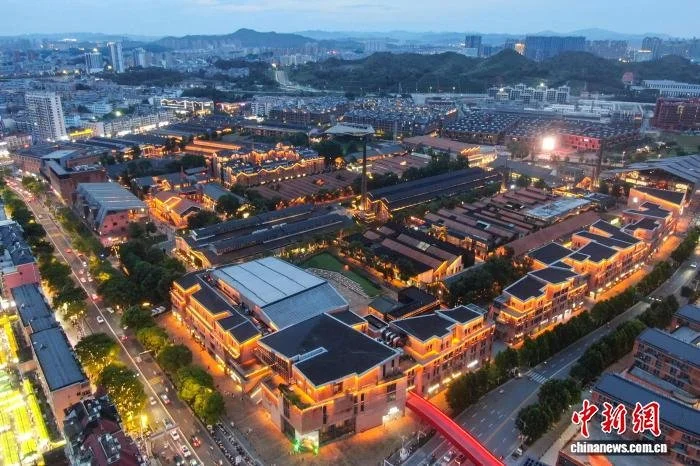
The big heritage news of the summer: on July 25, UNESCO inscribed "Jingdezhen Handmade Porcelain Industry Heritage" on the World Heritage List at the 47th session — the first porcelain-themed World Heritage Site anywhere in the world. That brings China's total to 61 World Heritage Sites, tied with Italy for the most on Earth.
For a thousand years, this river town in Jiangxi province made the porcelain that filled imperial courts and trading ships alike. Now the "Porcelain Capital" is having a very modern moment. The inscription triggered a travel boom:
July tourism bookings in Jingdezhen up 17% year-on-year
Searches for "Jingdezhen DIY pottery experience" up 31%
Searches for Jingdezhen hotels up nearly 5x
Workshop owners describe pottery wheels running nonstop from morning to night, with visitors flying in from Beijing and from overseas specifically to throw their own cup. One shop reported July business nearly doubling over June, with new customers up 75%.
What this means for you: Jingdezhen is exactly the kind of trip China's new wave of visitors is about — not ticking off a monument, but spending a day with hands in clay at a city that has done one thing, obsessively and brilliantly, for a millennium. Trains from Shanghai, Hangzhou, and Xi'an connect easily; see our 2026 China-by-train route guide for planning the leg.
Source: China News Service (in Chinese)
3. Beijing in September: An Immersive Quyi Epic You Won't Find Anywhere Else
Planning to be in Beijing in early September? Add this to your list. The 2026 Beijing Quyi Festival will debut The Long March — a 120-minute immersive stage epic marking the 90th anniversary of the Red Army's Long March, performed in traditional Beijing storytelling and drum-song styles collectively known as quyi.
What makes it genuinely unusual: there's no conventional stage. The production uses 360-degree surround staging, full-room lighting and environmental performance that puts the audience inside the story rather than in front of it. The show weaves together plum-blossom drumming, Beijing qinshu narrative song, bamboo clapper talk and other folk arts that most foreign visitors never get a chance to hear live, performed by some of the country's leading masters.
What this means for you: even if revolutionary history isn't your thing, this is a rare, high-craft window into living Chinese folk performance traditions — the kind of evening that makes a Beijing trip memorable. It premieres in early September at the Beijing Quyi Festival. We can build an evening like this into your itinerary — see our Beijing private tours.
4. China's "Tech + Culture" Shows Are Rewriting What a Night Out Means
China's tourism industry is in the middle of a quiet revolution, moving — as industry insiders put it — from a "ticket economy" to an "experience economy." The results are shows that don't exist anywhere else.
A few examples from an industry conference held in Hefei this month:
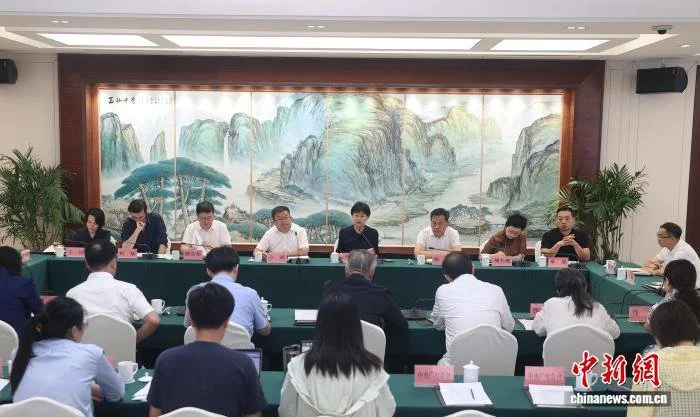
Hui Xiu, a large-scale Anhui epic production, uses LED holographic screens and computer-controlled flying rigs to blur the line between watching a show and being inside one. A custom control system cut the show's operating crew from 30 people to 3, with millisecond-precision cues
A holographic detective drama based on the Judge Bao legend opened in Hefei's Bao Gong Park — using holographic projection and glasses-free 3D, it drew over a thousand viewers in its first three days
Tang Dynasty Mysteries: The Journey West, an immersive theater production, has topped its platform's box office since opening; the "Dream of Red Mansions" theatrical city near Beijing is drawing visitors from across the country
As one director put it: "Technology is the wings, culture is the heart." The winning formula is local stories told with stagecraft you genuinely cannot see at home.
What this means for you: when we plan your evenings in China, we increasingly look beyond dinner-and-ristretto. Immersive productions like these pair beautifully with the classics — imagine sunrise over the Avatar Mountains in the morning and a holographic Tang-dynasty mystery at night. That contrast is modern China in one day.
Source: CCTV Arts / China News Service (in Chinese)
5. Chongqing's Thousand-Year Dragon Lanterns Are Going Global (and Getting Cute)
One for the culture nerds — and anyone whose China itinerary includes Chongqing. Tongliang, a district of Chongqing, has made hand-crafted dragon lanterns for over a thousand years; the craft appeared at the 2008 Beijing Olympics opening ceremony and has featured in 200-plus performances worldwide.
The problem was always size: traditional performance dragons are enormous, heavy, expensive to ship, and slow to make — nearly a hundred steps of bamboo-bending, papering, painting and beard-attaching per dragon, which is why younger artisans were drifting away.
The craft's response to survival is a delight for travelers: makers have spent the past few years "lightweighting" the tradition — flexible modern materials instead of heavy bamboo, smaller tabletop sizes, and DIY kits that let absolute beginners fold and paint their own mini dragon lantern in an afternoon. Tongliang has developed more than 120 dragon-culture products, built six demonstration workshops and an intangible-heritage studio, and is now preparing to sell the kits through cross-border e-commerce — the dream being overseas families "assembling their own Chinese dragon" at home.
What this means for you: Chongqing is already one of the most photogenic megacities on Earth — the Hongya Cave night view, the mountain-city light rail, the hotpot. Now add "watch a master bend bamboo into a dragon head, then make your own" to that list. If you're a maker at heart, tell us and we'll work a workshop visit into your Chongqing days.
Source: China News Service (in Chinese)
6. Chengdu Alert: The Jinsha Museum's Star Artifact Is Back — But the Museum Is Closed for Renovation
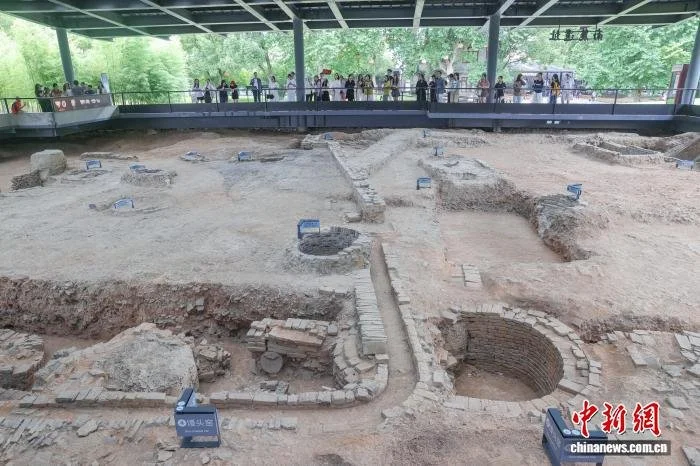
This one is a practical itinerary warning. The Sun Bird gold ornament — a 3,000-year-old disc of cut gold depicting a sun with twelve rays and four circling birds, and the official symbol of China's cultural heritage — has returned home to Chengdu after two months on show at the National Museum of China in Beijing. All 108 artifacts from the Jinsha excavation that traveled to Beijing's "Twin Stars Shine Over the World: Sanxingdui–Jinsha Ancient Shu Civilization" exhibition are back, and were formally checked back into the museum's collections this week.
The fly in the ointment: the Jinsha Site Museum itself has been closed since last December for its first major renovation since opening in 2007, and is expected to reopen in 2027. Until then, the Sun Bird and its companions will rest in climate-controlled storage — with some artifacts touring other museums across China.
What this means for you: if ancient Shu civilization is on your list (it should be — the Sanxingdui bronze masks are some of the most otherworldly artifacts in Asia), plan around it. Sanxingdui Museum near Guanghan, an hour from Chengdu, remains open and is the sister site; the National Museum in Beijing often hosts blockbuster Shu-culture exhibitions. Building a Sichuan leg into a bigger route? It pairs naturally with a Xinjiang or Tibet itinerary for the full "ancient civilizations" arc — see our Tibet tours, or just tell us what fascinates you and we'll route it.
Source: Jinsha Site Museum official site (in Chinese), via Xinhua Sichuan (in Chinese)
7. Winter Preview: Why Photographers Are Obsessed with Jilin's Rime Ice
It's 35°C across much of China right now, which makes this the perfect moment to book winter. The 5th Jilin City Ice & Snow Photography Exhibition opened this week — the first and longest-running exhibition in China dedicated purely to ice-and-snow culture, selected from 1,278 submitted works — and every frame in it advertises the same argument: the stretch of the Songhua River around Jilin City, in the northeastern province of Jilin, is one of the most magical winter landscapes on the planet.
The formula is geography's accident: the river never freezes below the city's dam, so water vapor rises into deep-freeze air and crystallizes overnight onto every branch and blade of grass — rime ice (wusong) — turning riverside forests into white coral by dawn. Add some of the driest, most powder-like snow in the world, and the region becomes winter-photography heaven between late December and February.
What this means for you: winter is China's secret season — fewer crowds, cheaper flights, and landscapes like this. Jilin and neighboring Harbin (the Ice Festival city) connect by high-speed rail via Beijing or Shenyang. A rime-ice sunrise on the Songhua River is worth the cold, we promise — the thermal coat rental is cheap.
Source: China News Service Jilin (in Chinese)
The Pattern Behind the Headlines
Read these seven stories together and one theme repeats: China's travel scene is shifting from "see the famous things" to "do the real things" — throw your own porcelain, fold your own dragon lantern, stand inside the opera, follow the locals into the night market. Foreign visitors have noticed, which is why they're arriving in record numbers and pushing beyond Shanghai and Beijing to border towns and mountain gorges.
We've spent 14 years building exactly this kind of trip: private guides, your own driver, itineraries built around what you actually care about. Start with our signature Zhangjiajie private tours — or tell us which of the seven stories above hooked you, and we'll turn it into your route.