

Where Beijingers Actually Eat: A Local's Food Guide to Beijing (2026)
Let's get the awkward part out of the way first.
If you've read anything about eating in Beijing, you've been told to try a scorpion on a stick at Wangfujing Snack Street. Here's the truth: that street exists for photos. Beijingers don't eat there. The scorpions are a performance.
And Quanjude, the famous 150-year-old roast duck house? Most locals haven't been in a decade. It's where tour buses go, and the duck costs double what it should.
This guide is the opposite of that.
We're a tour company that's been running trips across China since 2014, and our Beijing team eats out constantly — it's practically a job requirement. What follows is the actual list: 30-some restaurants across 8 neighborhoods, almost all under ¥100 (about 14) a head, most under ¥50 (7). Some are Michelin-recognized. Some are 280-year-old institutions. Some are hole-in-the-wall dumpling shops with six tables and a laminated menu.
None of them will ask you to eat a scorpion.
Before You Go: Five Things to Know
1. Pay with your phone. Every place on this list takes Alipay and WeChat Pay, and both now accept foreign credit cards. Set one up before you leave the hotel (see our separate guide, How to Pay in China, for the walkthrough). Cash still works most places, but QR codes are universal.
2. There are almost no English menus. This is not a problem. Use your phone camera's live translation, or do what locals do at a new place: look at what other tables are eating and point. A smile and a finger get you remarkably far.
3. Look for the green 清真 (halal) sign. Several places in this guide are halal, which means no pork — and it also means some of the best lamb and beef in the city. We'll flag them.
4. Bring tissue. Many small restaurants don't stock napkins. This is Beijing. Carry a pocket pack — it's on our China Packing List for good reason.
5. Two foods on this list are genuine tests of character. Douzhi (fermented mung bean milk) and luzhu (a stew whose main ingredients are pork intestines and lungs). We'll be honest about both. Nobody will judge you if you skip them. (Everyone will judge you a little.)
Qianmen & Dashilar — Old Beijing, Walking Distance from the Sights
You'll be in this area anyway — it's right south of Tiananmen Square, full of hutong alleys and 19th-century shopfronts. Eat here instead of retreating to a hotel restaurant.
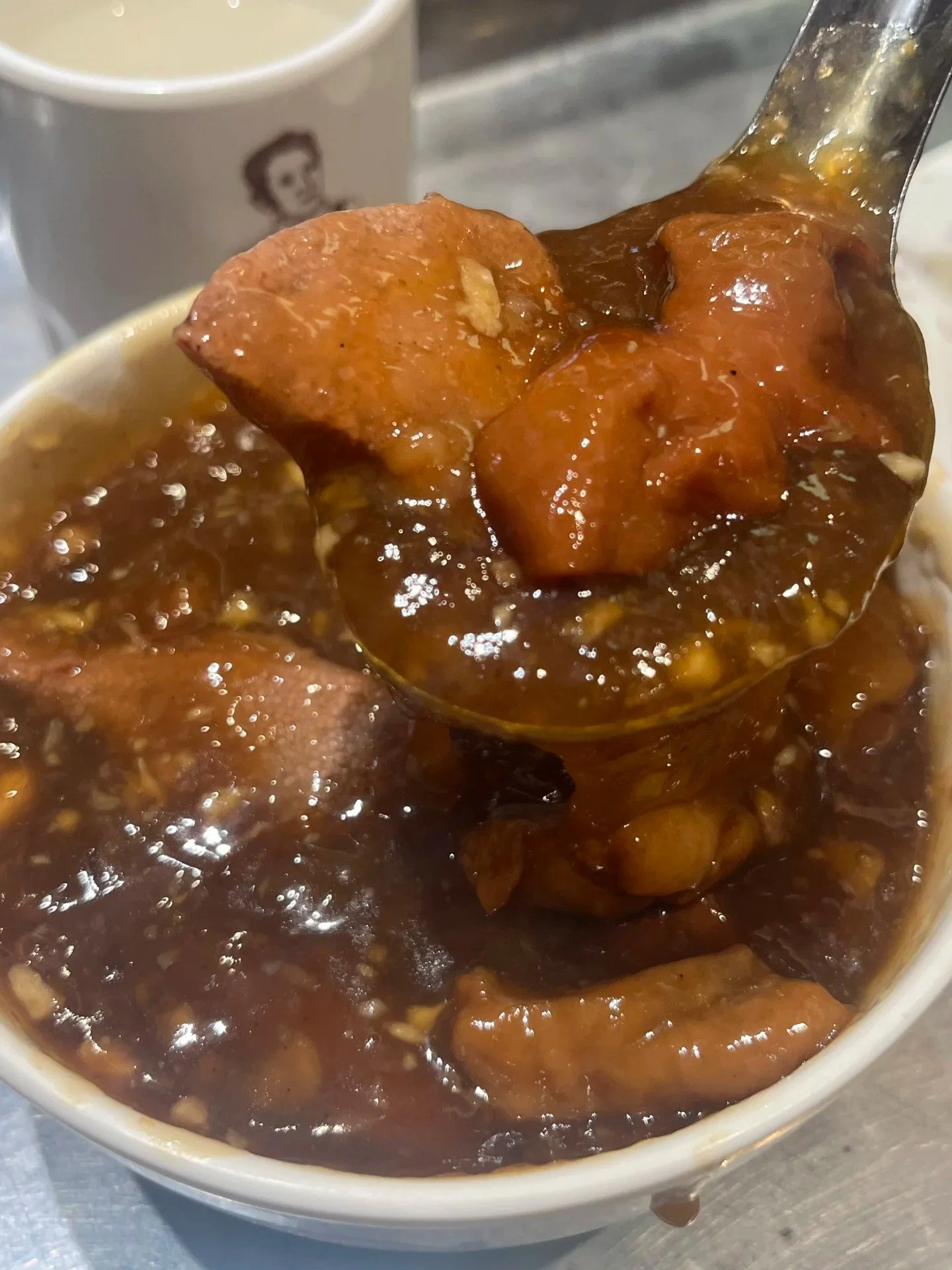
Chen Ji Luzhu (陈记卤煮小肠) — 82 Langfang Er Tiao, 420 meters from Qianmen metro exit I. This place sells exactly three things: the luzhu stew (¥33), an extra bread bun to soak in it (¥1), and drinks. That's the entire business model, and it's kept the shop packed for decades. Luzhu is old Beijing's working-class lunch — chopped pork offal, tofu, and wheat bread simmered in a dark, rich broth until everything is impossibly soft. It tastes far better than it sounds. Around ¥36 ($5) a person.
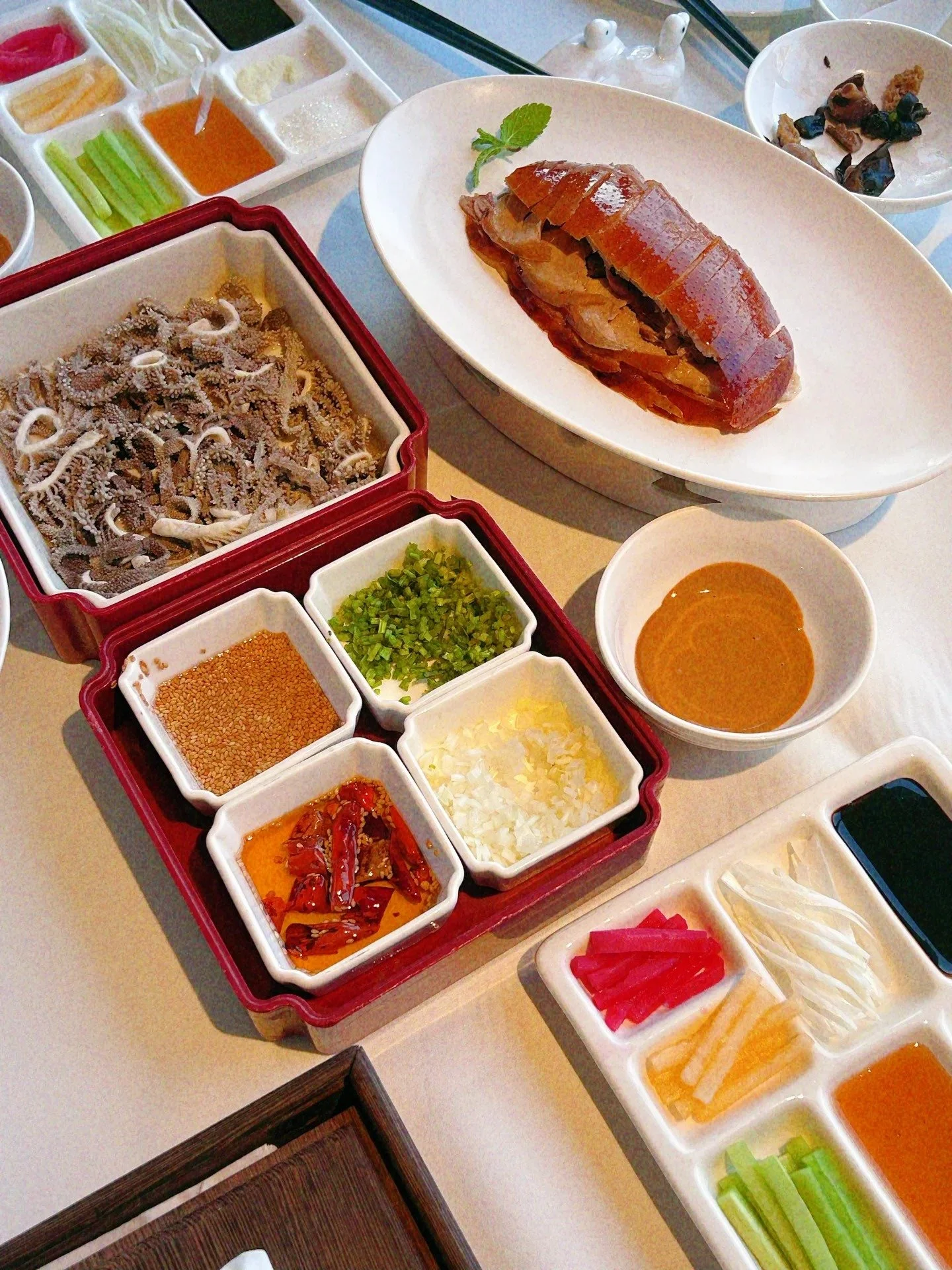
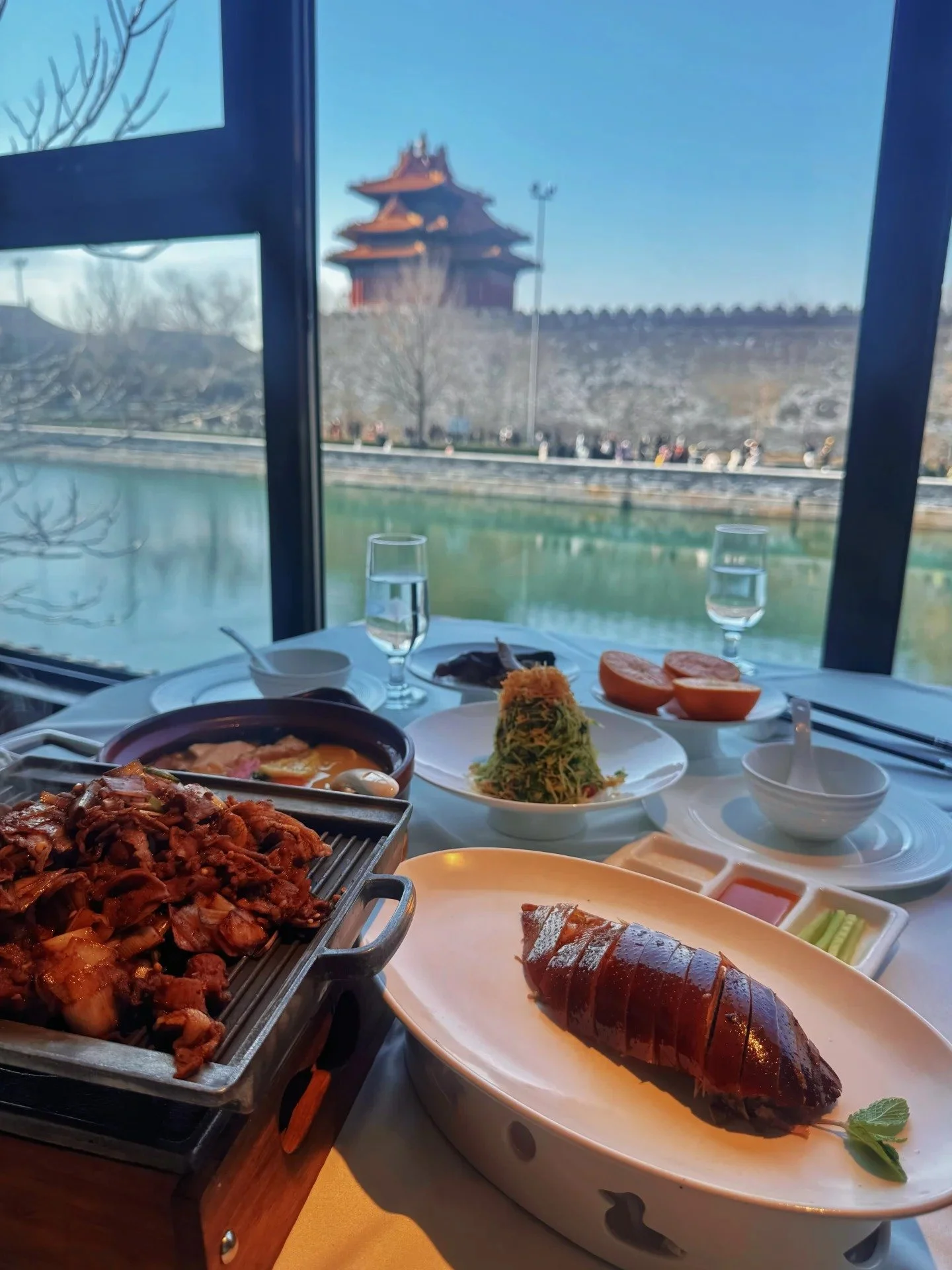
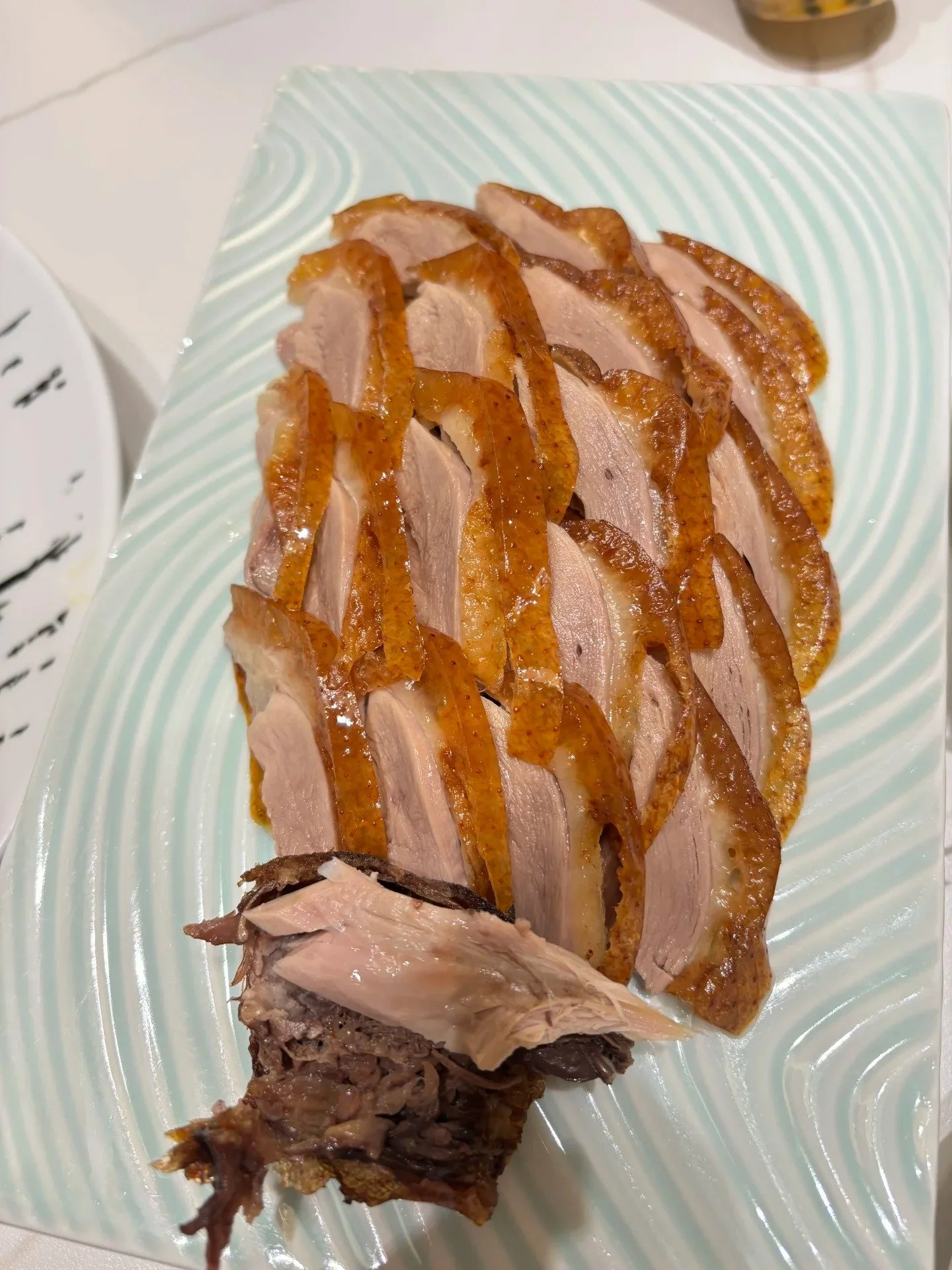
Li Qun Roast Duck (利群烤鸭) — 11 Beixiangfeng Hutong, a five-minute walk east of Qianmen. A roast duck restaurant hidden so deep in a hutong that finding it feels like a scavenger hunt — follow the ducks roasting over fruit-wood fires in the courtyard. The duck is hung-oven style, the skin shatters properly, and it runs 30%+ cheaper than Quanjude. Around ¥120–150 ($17–21) a head. This is the roast duck stop we send friends to.
En Yuan Ju (恩元居) — 2/F, 11-A Renmin Road. A quiet halal old-Beijing kitchen. Order the jiao liu gezha (焦溜饹馇) — deep-fried mung bean pancakes, crisp outside, molten inside — and the chao madoufu (炒麻豆腐), a stir-fried fermented mung bean paste that is Beijing's one-of-a-kind drinking snack. The flavors are strange in the best way. Prices are dramatically more honest than the big-name duck houses.
Guotie Tu (锅贴涂) — 21 Zongshu Xiejie. A ten-plus-year hutong treasure specializing in guotie — pan-fried dumplings with a shatteringly crisp bottom and juicy filling. The correct order is guotie plus a bowl of millet porridge, with the raw garlic dipping sauce. That's it. That's the meal. Around ¥30 ($4).
Xing Rong Ju (兴荣居) — 177 Xidamo Chang Street. A husband-and-wife shop doing rice bowls, noodles, and boiled dumplings. Nothing fancy, everything edible, around ¥22 ($3). Your "I've walked six hours and just need food" spot.
Yue Sheng Zhai (月盛斋) — A braised-meat institution that traces back to the Qianlong era (that's the 1700s). The braised beef and roast lamb are the signatures. Buy some vacuum-packed to take home if you have a suitcase with room.
Wangfujing & Dongdan — The Department Store Zone's Backstreets
Wangfujing's main drag is chain stores and that scorpion street. The side streets ten minutes away are where the office workers eat.
He Yan Roubing (河沿肉饼) — 14 Xila Hutong, a 10-minute walk from Wangfujing. The beef pancake here is the reason people brave the queue: skin thin as paper, filling so juicy it squirts when you bite. Their gongbao chicken uses thigh meat instead of breast — the old-school way, and it shows. The fried pork balls and hot-and-sour soup are also dependable. Go before 11:30 or after 13:00 to dodge the lunch rush. Around ¥60–70 ($8–10).
Dong Si Min Fang (东四民芳餐厅) — 79 Chaoyangmennei Dajie. An old-school Beijing-Shandong restaurant where the dining room is as loud as a school cafeteria and the waitresses are aunties who've worked there longer than you've been alive. Service is brisk, to put it politely. Then the fish-head soup with bread arrives and you forgive everything. The jingjiang shredded pork and crispy meatballs are also strong. ¥60–80 ($8–11).
Wonton Hou (馄饨侯) — 43 Donghuamen Street. A 60-year-old wonton chain that still does the classics right: pork wontons with thin skins and serious broth, and fried spring rolls. Open from the early morning, which matters more than you'd think when jet lag has you hungry at 6 a.m.
Gulou, Shichahai & Nanluoguxiang — The Hutong Core
This is the neighborhood most travelers end up loving: the Drum Tower, the lake, the twisty alleys. It's also the most touristy area on this list, which is exactly why knowing the right address matters.
Yao Ji Chaogan (姚记炒肝) — 311 Gulou East Street. There's a local saying: "Want to eat chaogan? Turn the corner at the Drum Tower." This is the corner. Chaogan is a thick, starchy pork liver and intestine stew — the texture is more pudding than soup, and locals eat it by raising the bowl to their lips and sliding it in without a spoon. The correct order is one chaogan plus two liang of pork-and-chive buns. Go off-peak. ¥25–30 ($4).
Xian Lao Man (馅老满) — 252 Andingmennei Dajie. Call it the carbohydrate capital of the Gulou area. The signature dumplings — pork with three delicacies, zucchini with egg — are fat, hand-pinched, and dangerous. The "golden" gongbao chicken (again with proper thigh meat) is shockingly good for a dish most places treat as an afterthought. Order the fried hawthorn dessert afterward; it cuts through everything you just ate. ¥50+ ($7).
Fu Rong Ji (福荣记) — 63 Baochao Hutong. Closed Mondays — plan around it. A Chaoshan (coastal Guangdong) tea restaurant buried in a hutong, which makes it a useful palate-reset after three days of northern food. Every table orders the curry chicken sesame balls with a molten cheese pull, and the silky beef rice noodle rolls. Around ¥106 ($15).
Jing Xiu (景秀餐厅) — 36 Dongmianhua Hutong, directly across from the Central Academy of Drama. A 25-year-old hutong kitchen with a theater-kid clientele. The star is sui liu ji — chopped crispy chicken in a sweet-sour sauce that regulars describe as "the signature of signatures." The fried oyster mushrooms and the fish-fragrant fried egg (yes, egg — trust it) are worth ordering too. ¥65 ($9).
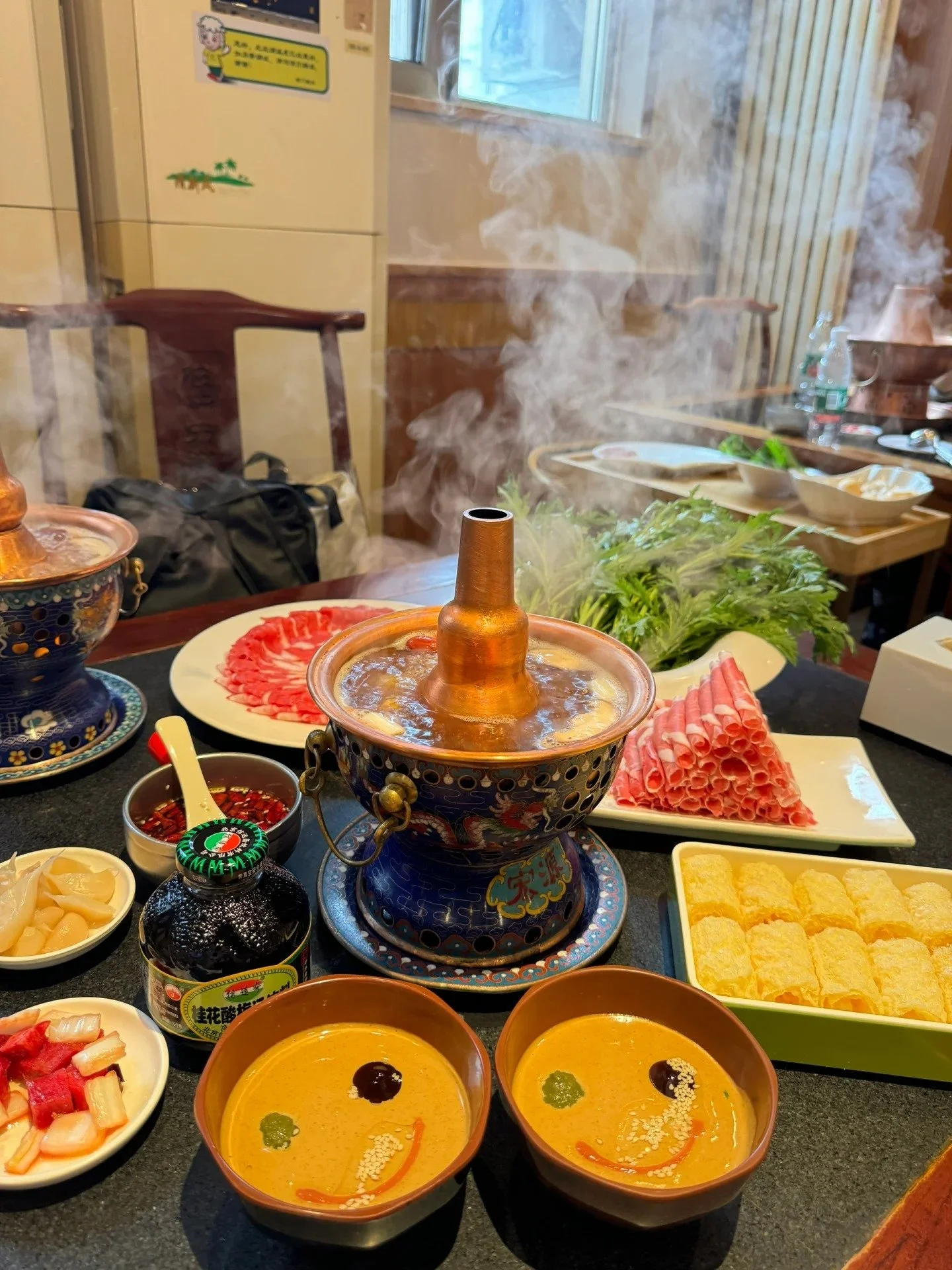
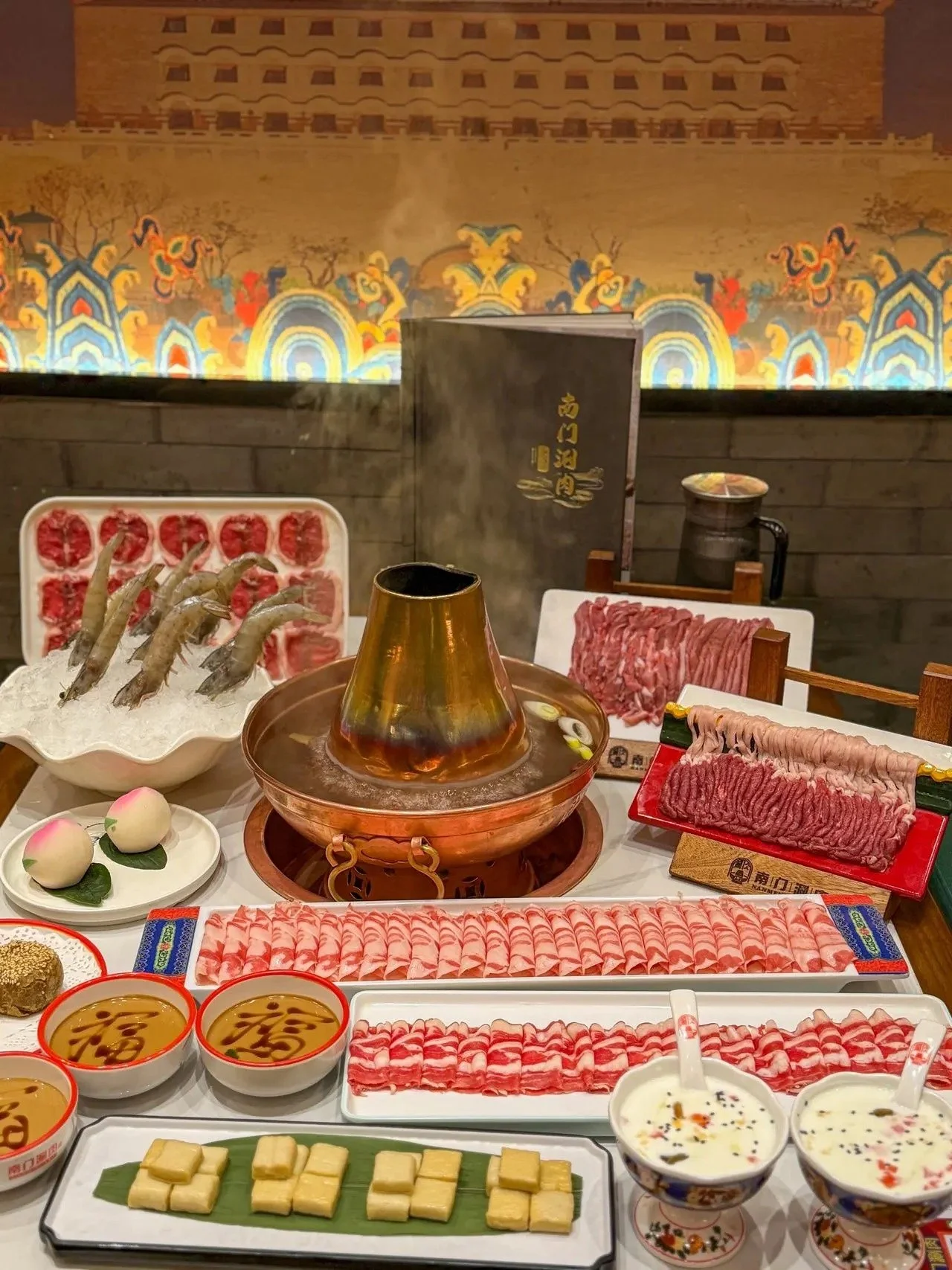
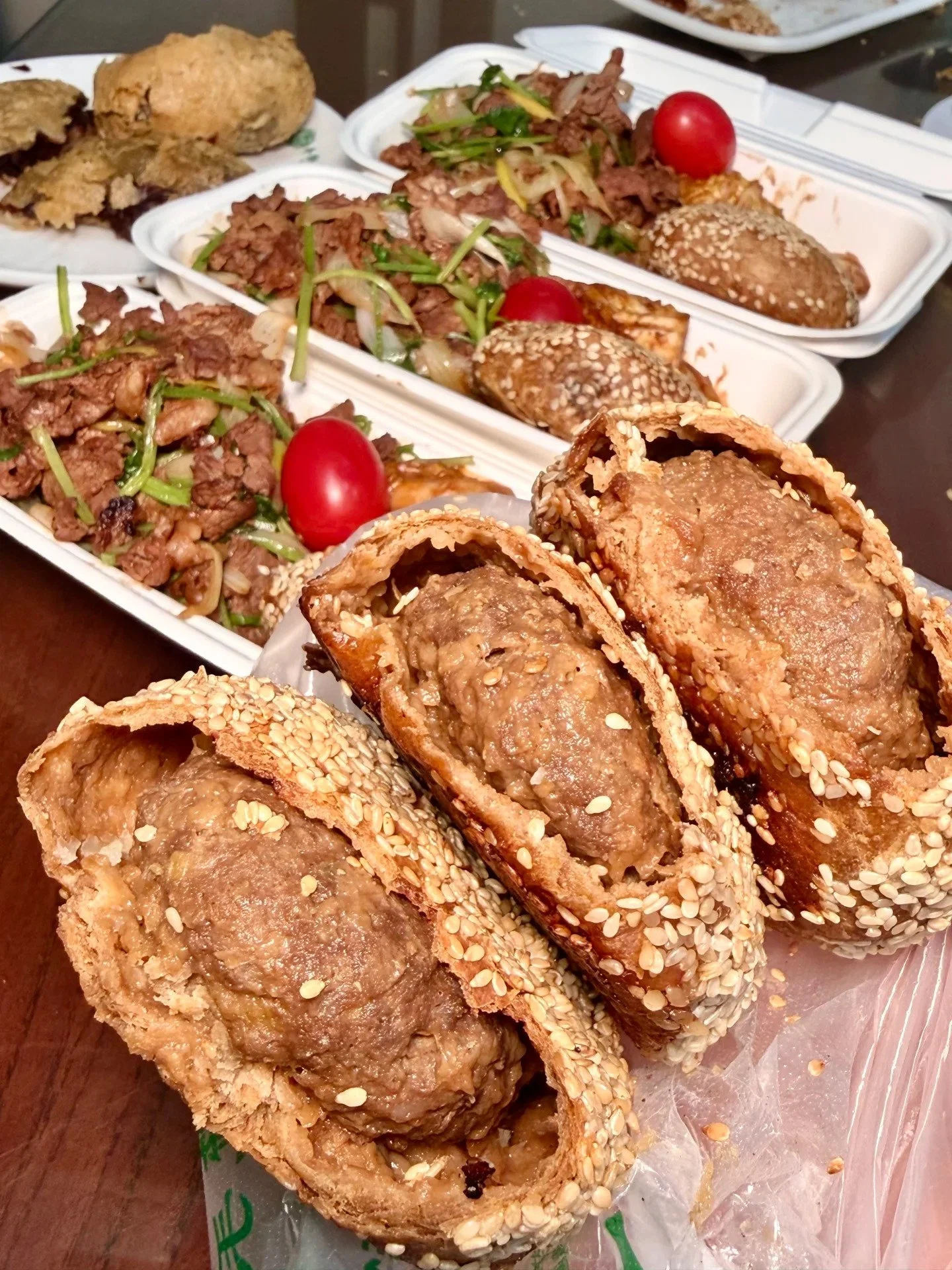
Ya'er Li Ji (鸦儿李记) — Jia 2, Ya'er Hutong, right by Shichahai lake. A proper halal joint with copper-pot lamb hotpot and — the real reason to come — sesame flatbread fresh out of the oven, split and stuffed with their braised meat. Straightforward, filling, and close enough to the lake to walk off lunch after.
Xisi & Xinjiekou — Where the Locals Live
Northwest of the Forbidden City, past the tourist radius. Almost nobody here is visiting. These are the places Beijingers ride the metro to on weekends.
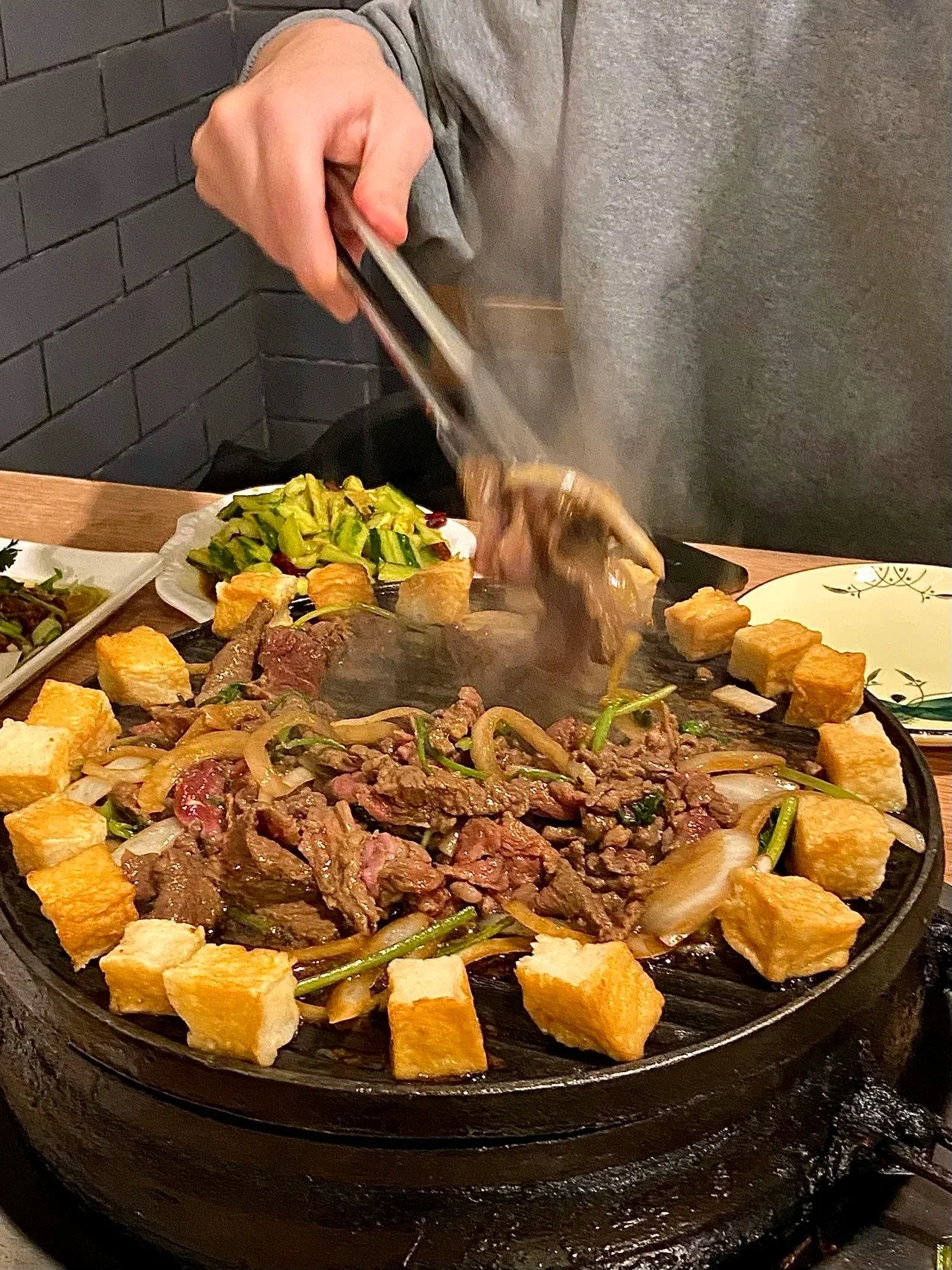
Hu Guo Si Snacks (护国寺小吃), Xinjiekou branch — 10 Xinjiekou North Street. Critical instruction: do NOT go to the main branch on Hu Guo Si Street. The original is overrun with tourists who read about it. The Xinjiekou branch, ten minutes away, has almost no tourists — just locals eating breakfast in silence. The douzhi here is thick and properly balanced; the tofu pudding comes in a lamb, egg, and wood-ear mushroom gravy that you should eat with pieces of fried dough soaked in it. Also strong: the bean-flavor meatball soup and the vegetable dumplings. ¥20–30 ($3–4) for a full breakfast.
Sha Guo Ju (砂锅居) — 60 Xisi South Street, metro Line 4, Xisi exit D. Operating since 1741. Let that sink in — this casserole house predates the United States. The signature sha guo bai rou is streaky pork in a clay pot with pickled cabbage, rich enough to make you understand why it survived six emperors' worth of menu changes. The "three delicacies" stir-fry and crispy meatballs are also above standard. ¥70–80 ($10–11).
Xin Chuan Noodle Shop (新川面馆) — 14 Xinjiekou South Street. Since 1956, doing exactly one thing: cold noodles in sesame-chili sauce. The noodles have real bite, the sauce is balanced between nutty and hot, and a bowl costs ¥20–30 ($3–4). Beijing's best cheap lunch in this whole guide, and we'll fight about it.
Fu Hua Zhai (富华斋饽饽铺) — 85 Hu Guo Si Street, ground floor. The real deal in recreated imperial-court pastries: the kidney-bean roll, the pea-flour cake, and the jujube-paste pastry are delicate, not-too-sweet, and boxed beautifully. This is the answer to "what souvenir do I bring home that isn't a fridge magnet."
Liu Quan Ju (柳泉居) — 172–178 Xinjiekou South Street. One of the oldest red-bean-bun makers in the city. The buns sell out most afternoons — if you see them, buy them. The steamed bread is the other signature.
Lao Xi'an Restaurant (老西安饭庄) — 20 Xinjiekou South Street. A northwestern branch point on a Beijing list, and nobody apologizes for it. The lamb paomo — bread torn into bits, soaked in a rich lamb broth — should be eaten with sugar-glazed garlic, the correct way. The lamb skewers are electric-grilled (not charcoal), and still taste right. ¥66 ($9).
Chongwenmen, Ciqikou & Temple of Heaven — The Douzhi Ladder
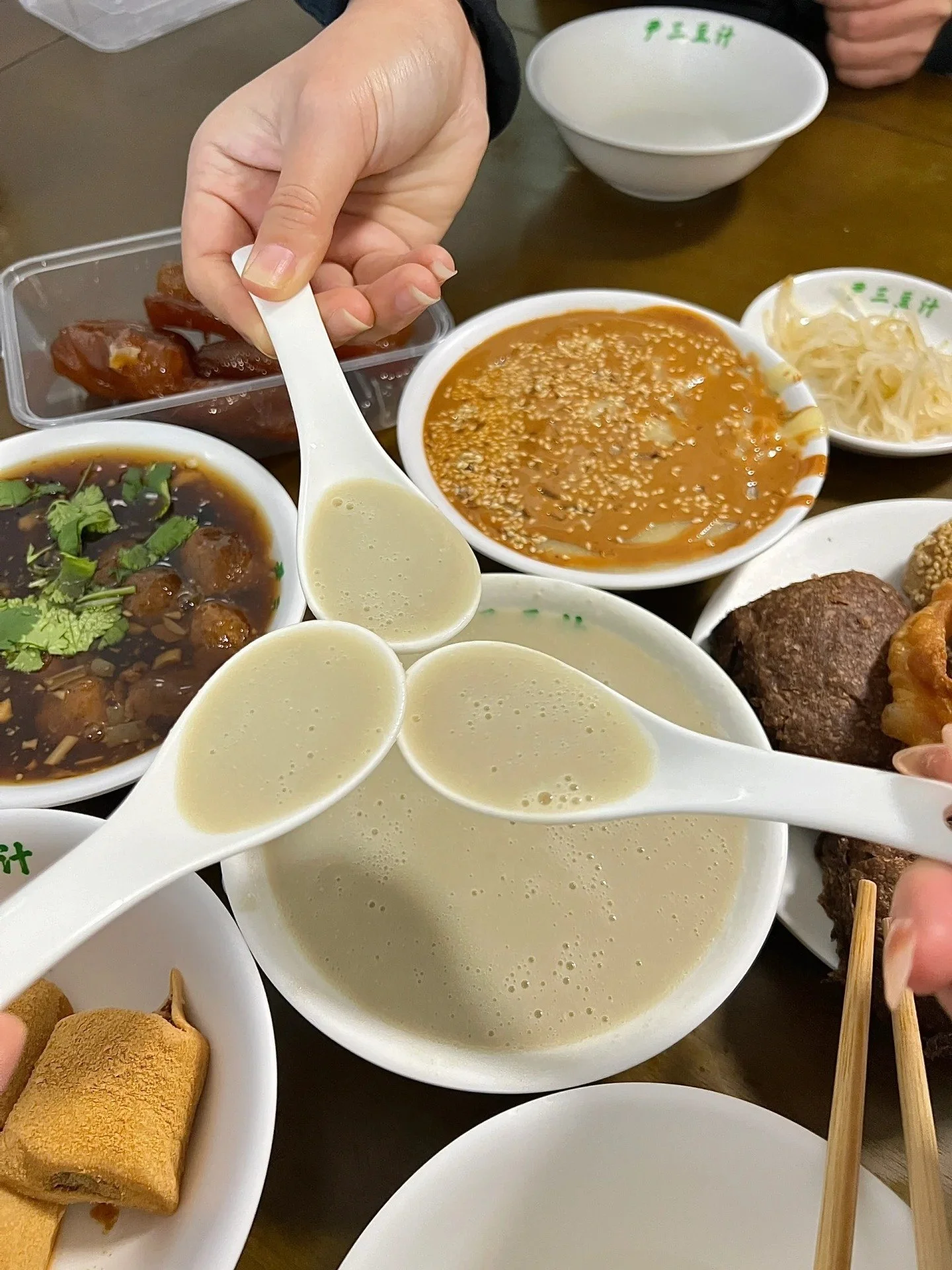
South-central Beijing, next to the Temple of Heaven park. This neighborhood is home to a specific pilgrimage: the hunt for douzhi, the fermented mung bean milk that is Beijing's most challenging traditional drink. It's sour, faintly funky, and locals are obsessed with it in a way that feels almost competitive.
Here's the thing nobody tells you: the four douzhi shops near the Temple of Heaven form a natural difficulty ladder. Do them in this order.
Step one — Jin Fang Snacks (锦芳小吃), Ciqikou main store, 2 Zhushikou East Street. A century-old brand whose douzhi is the gentlest of the four: mild acidity, smooth body. The perfect first attempt. Their rice-flour tea, fried cream cakes, glutinous rice rolls in soybean flour, and mixed glutinous rice balls are all legit old-Beijing sweets in their own right.
Step two — Lao Ciqikou Douzhi (老磁器口豆汁店), Temple of Heaven branch, 71-7 Tiantan Road. One notch up in intensity. The sourness is right in the middle of the spectrum, and the sesame bread with braised meat and the pea-flour cake give you recovery options between sips.
Step three — Yin San Douzhi (尹三豆汁), north gate of the Temple of Heaven, 176 Dongxiaoshi Street. Michelin Guide recognition, year after year, plus a permanent spot on the local must-eat lists. The douzhi here is the thickest and most serious of the standard tier — locals call it "the one real Beijingers love." Crucial logistics: it closes in the afternoon. Mornings only. The classic set is douzhi plus a crisp fried dough ring plus pickled vegetables — all three for ¥9 ($1.25).
Step four — Jin Xin Douzhi (锦馨豆汁), 87 Tiantan Road. The purist tier: sharper, funkier, closest to the historical original. If you finished Yin San and wanted more, this is your graduation exam. More seating than Yin San, too.
If you complete all four in one morning, you have earned the right to tell people you understand Beijing. Whether that's true is between you and the douzhi.
The roast duck alternative you should actually know about: Bianyifang (便宜坊), Hademen branch, 16 Chongwenmenwai Street, 4th floor. Bianyifang has been around for 600 years — it invented the closed-oven (menlu) roast duck method that its more famous competitors borrowed from. The closed oven gives you crispier skin and more tender meat than the open flame, and it costs 30%+ less than Quanjude. Ask a Beijinger where they eat roast duck and the honest answers are Bianyifang or Da Dong. Nobody says the Q-word.
Lao Beijing Zhajiangmian Dawang (老北京炸酱面大王), Chongwenmen main store, 56 East Xinglong Street. Zhajiangmian is Beijing's pasta — hand-pulled noodles under a dark fried-soybean-paste sauce with diced pork, surrounded by a moat of fresh vegetable toppings you mix in yourself. Here it's ¥18–19 a bowl ($2.60) with free noodle refills. The sauce runs salty and the pork chunks are real; the noodles come "kuo tiao" — straight from the pot, not rinsed — which is how old Beijingers insist it's done.
Gong Jing Li Zhajiangmian (恭敬李老北京炸酱面) — 3-1 East Damo Chang Street. Made the 2025 local must-eat lists. The noodles are rolled by hand and the sauce is fried to order; eight vegetable toppings arranged around the bowl. A slightly more refined version of the same religion.
Haidian & Wudaokou — Student Country
Beijing's university district, up northwest. The food here is cheap, enormous, and validated by the harshest critics on Earth: students. When a restaurant near a campus survives a decade, the food is good. There's no alternative explanation.
Shuang Ma Restaurant (双马餐厅) — Wudaokou. A Japanese tonkatsu shop that students have been returning to for 30 years. As one review puts it: "It's impossible to stay open 30 years in Beijing if the food isn't good." The pork cutlet over rice and the curry rice are huge, hot, and cost less than a coffee back home. Not an influencer restaurant — a cafeteria with a deep fryer and no interest in your camera.
Peng Jie Malatang (彭姐麻辣烫) — Wudaokou. The district's most famous malatang — pick your skewers of vegetables, noodles, and meat from a counter, and they arrive in a broth lifted by sesame paste, the Beijing touch. Roughly ¥1.5 per skewer, ¥20–30 ($3–4) for a meal that will defeat your appetite.
Jin Gu Yuan Dumplings (金谷园饺子馆) — Wudaokou. Big, generously-filled dumplings; the spicy beef guotie have a crisp bottom worth the trip. The crowd is mostly students, which is the entire endorsement.
Wudaokou Zao Gao Wang (五道口枣糕王) — the original shop. Jujube cake, warm from the oven, soft and sweet without being heavy. Buy 500 grams, get 250 free. There is frequently a line. The line moves fast.
Jin Zhang Shao Northeastern Cuisine (金掌勺东北菜) — Wudaokou. Northeastern Chinese portions — the guo bao rou (crispy sweet-sour pork) gets called "ceiling level" by regulars, and the meal comes with complimentary frozen pears for dessert, a northeastern specialty that will confuse and delight you.
Tian Chu Miao Xiang (天厨妙香素食馆) — Tsinghua Science Park. The vegetarian answer. Mock-meat Buddhist-style cooking done convincingly — the "fish" and "pork" dishes are built from tofu and mushroom and are genuinely excellent, not a consolation prize. Quiet room, reasonable prices, zero meat since day one.
Olympic Park & Asian Games Village — North of the Center
Up where the Bird's Nest and Water Cube are, this is where you'll be for the Olympic architecture photos. The eating here splits into two modes: comfort food and splurge-with-a-view.
He Jiang Yong Chun Douhua (合江永春豆花饭) — Asian Games Village. A Sichuan小馆 doing doubanjiang-territory comfort food: silken tofu pudding with rice and a fiery dipping sauce, plus tender steamed pork with rice flour. The dipping sauce alone is worth the metro ride.
San He Noodle Shop (三和面馆) — Beitou Shopping Park. Changsha-style alkaline noodles — the cucumber-skin beef noodles and cilantro beef noodles are the signatures. Chewy, spicy, and nothing like the northern wheat dishes elsewhere on this list.
Xiu'er Sijiu Cheng (秀儿四九城·新京菜) — near the Bird's Nest. Modern "new Beijing" cuisine with a terrace overlooking the Olympic Forest. This is the one upscale stop in the guide: raspberry-and-cherry glazed foie gras, Sichuan-pepper squab leg, abalone braised with pork belly. If you've eaten ¥30 dumplings for four days straight and want one evening of tablecloths, this is the local pick.
Beiping Machine (北平机器) — south of the Moon Pier by the Bird's Nest. A craft brewery with a view of the Olympic Park skyline at night. Local craft beers plus their famous fried tofu. The correct final stop on any day that ends at the Olympic Green.
8 Questions Travelers Actually Ask
1. "Is Beijing street food safe?"
The food safety ceiling in Beijing is genuinely high — inspections are strict and enforcement has teeth. The places in this guide have steady local foot traffic, which is the single best safety indicator: locals don't return to restaurants that make them sick. Busy shop, high turnover, food fresh off the fire. You'll be fine.
2. "What's the one dish I cannot leave Beijing without trying?"
Peking duck — from the right kitchen. Li Qun for the hutong courtyard experience, or Bianyifang for the 600-year-old closed-oven original at a fair price. Quanjude is the famous name; it is not the best duck, and it hasn't been for a long time.
3. "Can I survive as a vegetarian?"
Yes, with effort. Tian Chu Miao Xiang near Wudaokou is fully vegetarian and does mock meat brilliantly. Beyond that, build around vegetable dumplings (zucchini-and-egg at Xian Lao Man), tofu pudding, pea-flour cakes, and vegetable stir-fries. Say "wo chi su" (我吃素) — "I eat vegetarian" — and most kitchens will work with you. Strict vegans: watch for eggs in noodle dough and lard in pastries.
4. "How much should I budget per day?"
If you eat exclusively from this guide: ¥60–80 a day covers breakfast, lunch, and dinner with change left over. Add one roast duck dinner (¥120–150) and one nicer evening and you're still under ¥150 a day — roughly $21. Beijing eats cheaper than nearly every Western capital.
5. "Do I tip?"
No. Nobody tips in China. Attempting it will produce confusion, then refusal, then possibly someone chasing you down the street to return your money.
6. "Do any of these places have English menus?"
Almost none — and that's the filter that keeps these places local and cheap. Camera translation apps handle it fine. Worst case: point at a neighboring table and hold up one finger.
7. "What if I don't eat pork or can't handle offal?"
Both are manageable. The halal (清真) spots — En Yuan Ju, Ya'er Li Ji, Lao Xi'an Restaurant — serve no pork at all. For offal, skip the luzhu and chaogan; every one of those restaurants has offal-free options, and douzhi, for once, contains no organs. Just fermented beans. A different kind of challenge.
8. "When should I go to avoid the crowds?"
Weekday lunch before 11:30 or after 13:00. Weekend mornings at the douzhi shops are when locals themselves go. Mind the closures: Fu Rong Ji is closed Mondays, and the douzhi shops shut in the early afternoon.
Practical Tips Summary
Getting there:
Every neighborhood in this guide is on the metro; the addresses above name the nearest stop where it matters
Arriving in Beijing by high-speed train? Our China Train Guide covers booking, stations, and seat classes
Save each restaurant in a maps app (Amap/Gaode or Apple Maps) before you leave the hotel — search by the Chinese name, it's included for every listing above
For taxis, show the driver the Chinese address, not the English name
Ordering:
Look at neighboring tables before you look at the menu
The word "zhao pai" (招牌, house specialty) on a menu or wall means "order this"
One dish per person plus one extra is the Beijing rule of thumb; portions run large
At dumpling and guotie shops, the porridge is not optional — it's the other half of the meal
Timing:
Roast duck at Li Qun: go early or expect a queue — the hutong location means limited seating
Douzhir: mornings only, no exceptions
Restaurant rush hours are 12:00–13:00 and 18:30–20:00; flank them
Pacing yourself:
The neighborhoods group naturally: Qianmen pairs with the Tiananmen-area sights; Gulou with the hutong walk; Temple of Heaven mornings end with douzhi; Olympic Park evenings end with craft beer
Two neighborhoods of serious eating per day, maximum. Attempting three ends exactly how you'd expect.
One Last Thing
You can do this guide on your own — everything above works with a phone, a metro card, and an appetite. But if you'd rather have someone who speaks the language, knows which table gets the freshest batch, and can explain why the fried dough ring goes into the douzhi (it just does — ask a local, watch them smile), that's our job. We run private Beijing tours with local guides, and food is where those tours quietly become worth it.
Either way: skip the scorpion street. You know better now.
Published: August 2026 | This guide is maintained by the LynxTravel Beijing team and updated as restaurants open, close, and quietly change their prices. Prices verified as of mid-2026; expect small drift. Sources: on-the-ground visits by our Beijing guides, Michelin Guide Beijing (Yin San Douzhi listing), and the local review platforms Beijingers actually use.