
Guilin Travel Guide 2026: What Actually Matters (From Someone Who's Been 100 Times)
You step off the train in Guilin and the first thing you notice isn't the scenery. It's the air — thick, green-smelling, slightly sweet. The mountains don't loom on the horizon like normal mountains. They shoot straight up out of the ground in the middle of the city, like someone dropped them there by accident.
I've been coming to Guilin for fourteen years. I've brought seventy-year-olds who walked slower than the sightseeing buses, three-year-olds who threw up on the winding mountain roads, and a guy from Italy who booked the wrong train station and spent his first hour in China standing in a parking lot surrounded by farmland wondering where the city was. None of them regretted coming. Some of them had a rough first day. But once they got on the water — the Li River, the Yulong — everything else fell away.
This isn't a complete guide. It's the stuff that actually matters if you're visiting for the first time: the train station nobody warns you about, the bamboo raft booking system that hates foreigners, the beer fish menu trick that's been running for ten years, and the moment on the river that makes all the logistics worth it.
First, the Train Station Thing. Seriously.
Three stations serve Guilin. They are not the same.
Guilin Station is the one you want. It's in the city center, a ten-minute walk to Elephant Trunk Hill. Guilin North Station has more trains but sits half an hour north of downtown — not terrible, just plan for the extra ride. Guilin West Station is the one to avoid. It's out in the countryside, surrounded by farmland and industrial lots, and getting from there to anywhere interesting takes an hour.
The price difference between the three stations is tiny. The convenience difference is enormous. Book Guilin Station if you can. If it's sold out, Guilin North is fine. Guilin West is the last resort.
There's also Yangshuo Station, which is confusingly not in Yangshuo town. It's right next to Xingping Ancient Town, just six kilometers away. If your first stop is Xingping or Yangshuo, book Yangshuo Station instead. From the station exit, turn left for the scenic shuttle bus — five yuan, fifteen minutes to Xingping bus terminal.
From Guilin Liangjiang International Airport, it's about thirty kilometers to downtown. The airport bus runs after every flight lands, twenty to thirty yuan, forty to fifty minutes to the city center. A taxi or DiDi runs eighty to a hundred yuan — worth it if you're landing late with luggage.

Elephant Trunk Hill: Free Doesn't Mean Skip It
Elephant Trunk Hill went free a couple years ago and that changed everything. Before, it was fifty-five yuan and people debated whether it was worth the ticket. Now it costs nothing, and somehow people still skip it — maybe because "free" makes things feel less urgent. Don't make that mistake.
It's the most recognizable thing in Guilin — a karst arch that looks exactly like an elephant dipping its trunk into the Li River. Geologists say it took 360 million years to form. Let that sit for a moment. The oldest guest I've ever brought here was ninety-two. Standing next to something that took 360 million years to make, all of us looked pretty young.
You need to reserve online before going — the official WeChat mini-program handles it, one phone number covers up to three people. Over-sixties walk in with ID, no reservation needed. Gate 1 puts you closest to the elephant. Gate 3 takes you past Love Island first, which gives you a nice panoramic shot before you get up close. Open 7:00 to 21:00.
There's a little bamboo raft inside the park, thirty-five yuan, that circles the elephant once. It takes about ten minutes. Honestly, skip it. You'll get better views from the walking path.
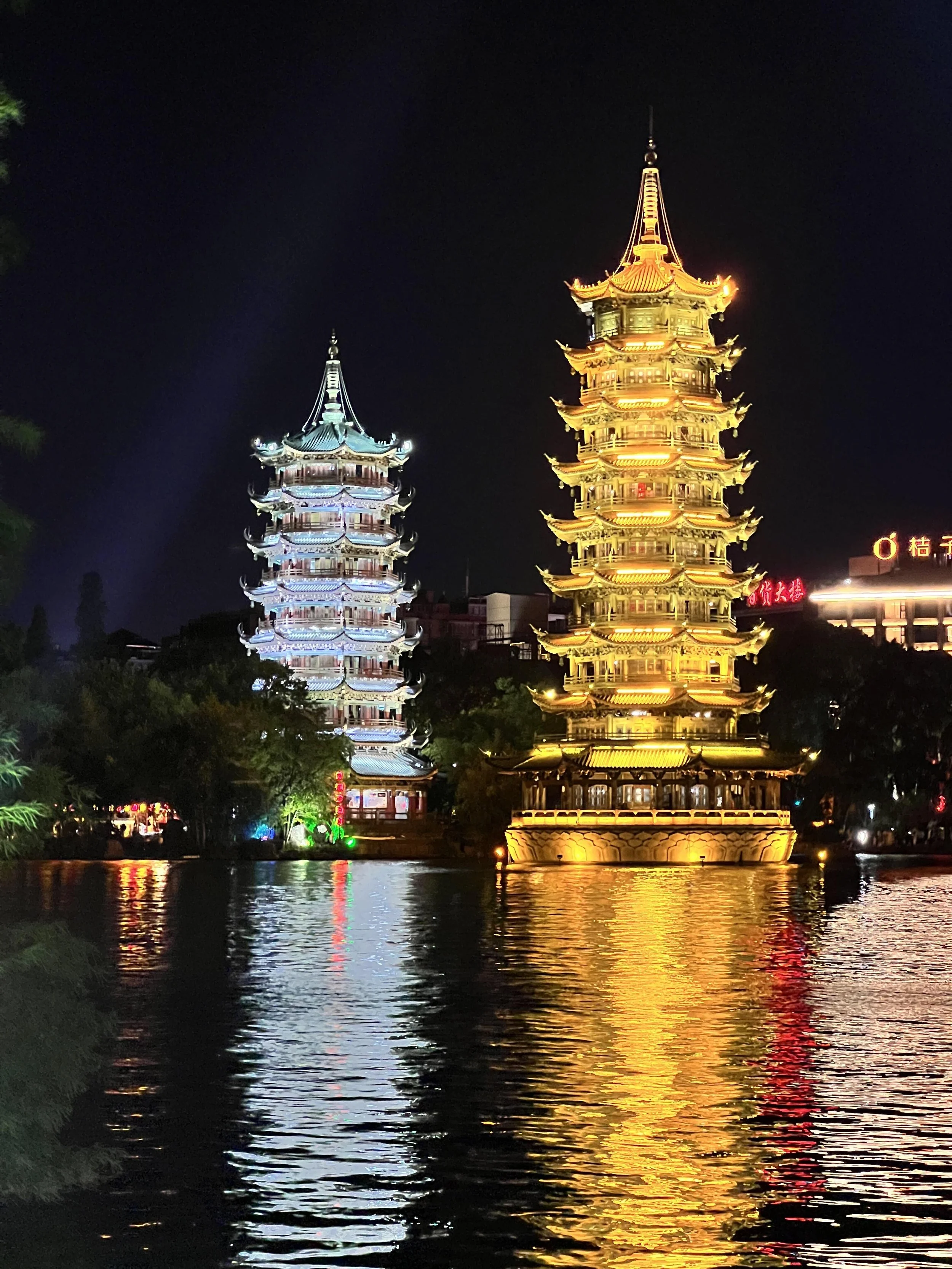
The Sun and Moon Pagodas sit right next door on Shanhu Lake. Don't pay to climb them — the inside is mostly shops. Walk the lake path at night. The pagodas light up, reflect on the water, and cost zero yuan.
Li River: The Cruise or the Raft — Here's How to Decide
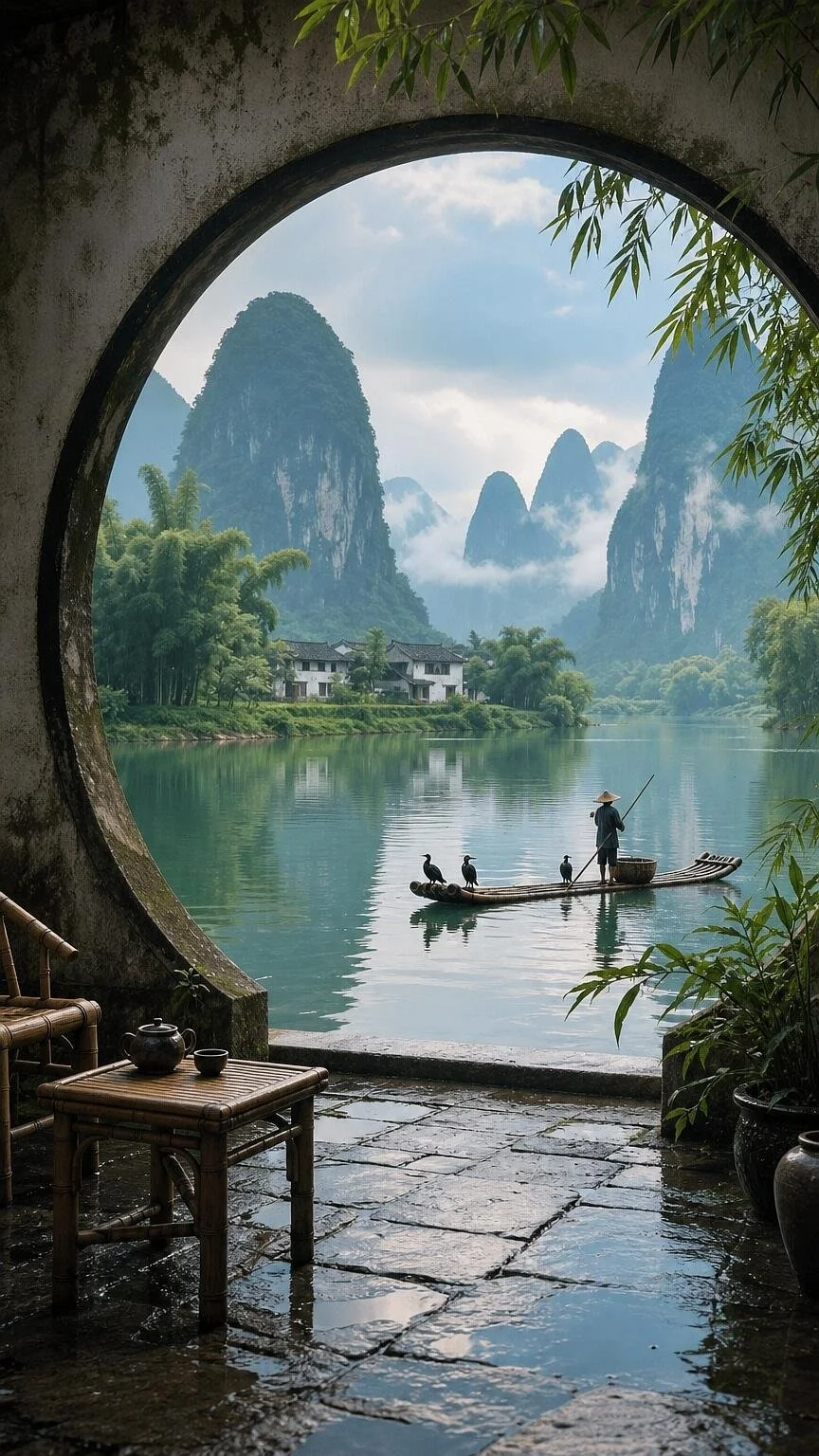
This is the question I get asked the most. The Li River cruise versus the bamboo raft on the Xingping section. I've done both dozens of times and I still hesitate when someone asks me to choose for them.
The cruise leaves from Guilin, four-plus hours downstream to Yangshuo. You sit back, the mountains scroll past, someone hands you tea. Three-star boats depart from Mopanshan Pier, 215 yuan, no meal included. Four-star boats leave from Zhujiang Pier, 360 yuan, buffet included, nicer seats. In peak season, book the four-star three to five days ahead — they sell out.
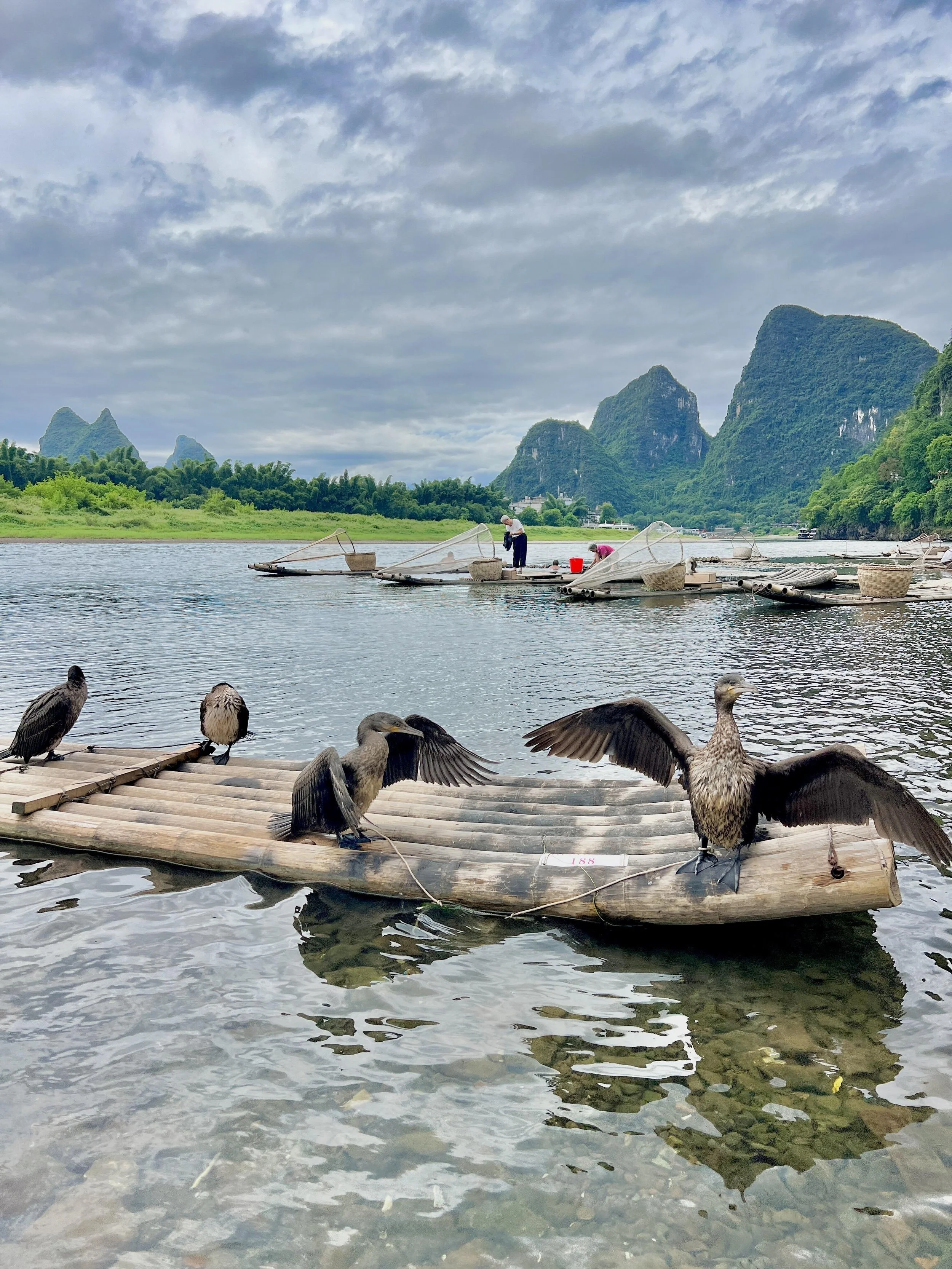
The bamboo raft runs on the best stretch of the river, around Xingping. You're lower to the water, closer to the karst walls, and you can actually touch the spray when the raft skims a rapid. Four people per raft: Yangdi to Xingping is the full route, 255 yuan per person, eighty to a hundred minutes. Yangdi to Nine-Horse Fresco Hill is the half route, 140 yuan per person, fifty to sixty minutes.
Here's the catch: if there are only two of you, you'll pay extra for the two empty seats — usually about fifty yuan per empty spot. You find out at the pier, not when you book, and yes, it's annoying.
Bottom line: family trip with elderly parents or small kids — take the cruise, no question. Couple or solo traveler who wants to feel the river — take the raft. Both are great. Neither is wrong.
And one more thing: at every scenic spot in Guilin, someone will offer to "take your photo for free." They're not free. Twenty to thirty yuan per shot. If someone points a phone at you and smiles too warmly, keep walking.
Yulong River: The Best Experience in Guilin (and the Most Frustrating to Book)
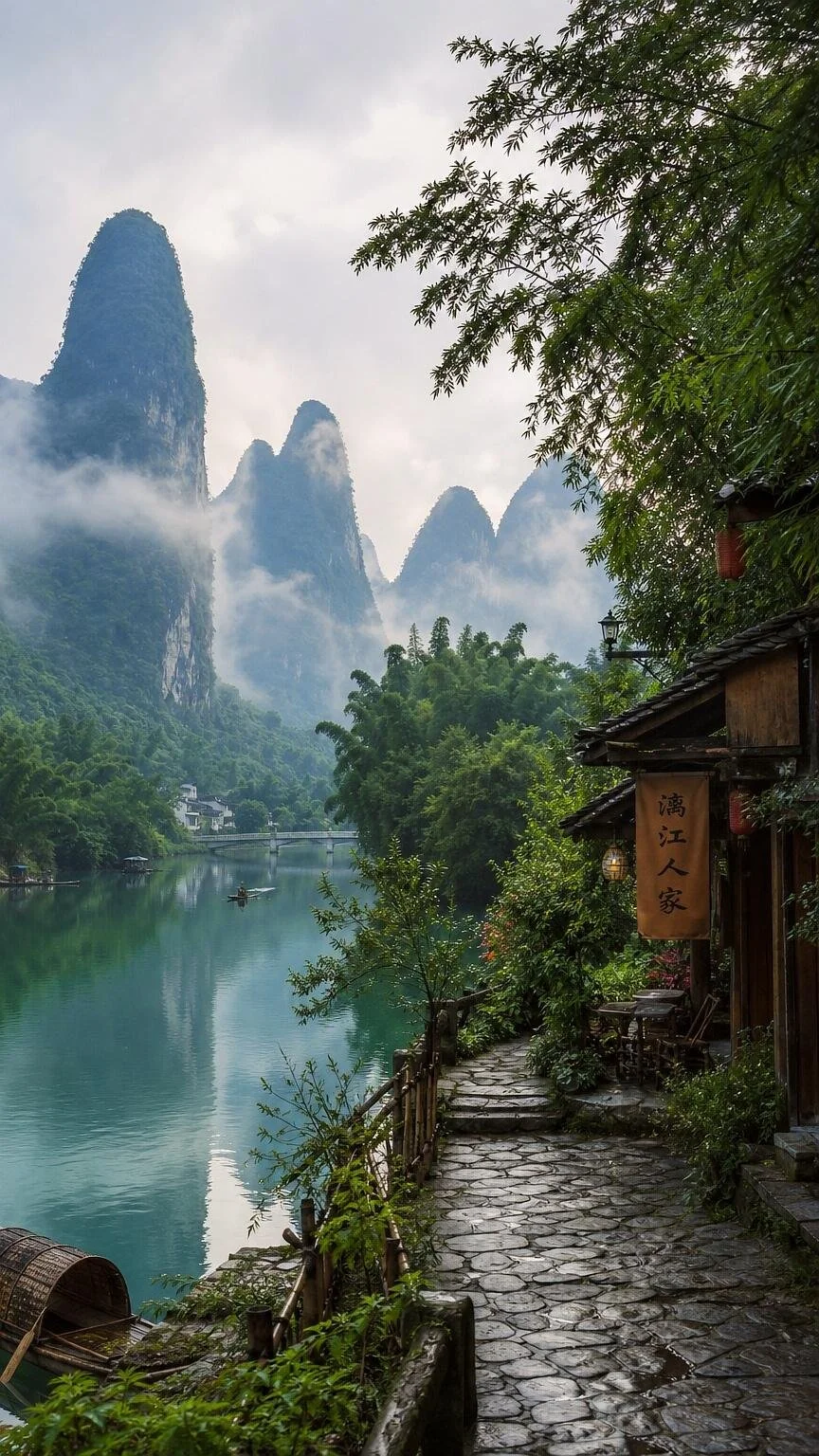
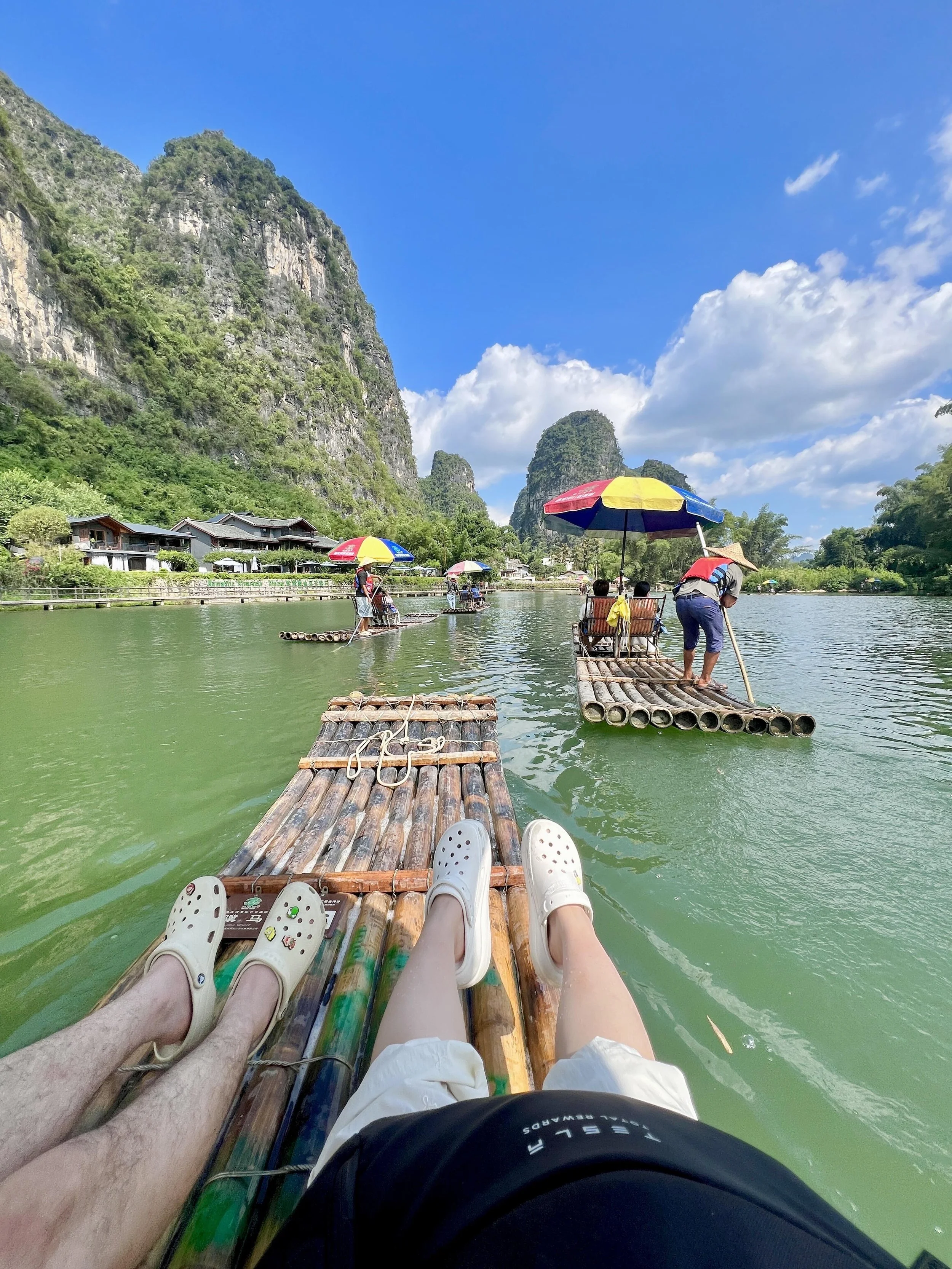
The Yulong River is what most people picture when they imagine Guilin — narrow water, bamboo rafts, no motor noise, just a boatman poling you past karst peaks reflected in glassy water. It's better than the Li River in almost every way. It's also a genuine pain in the ass to book.
Here's how it works: tickets go live at 8 PM the night before, on the official WeChat mini-program. In peak season — July, August, Chinese holidays — the popular piers sell out in under five minutes. Local Chinese travelers set alarms, pre-fill their ID numbers, and refresh like they're buying concert tickets. If you're visiting from abroad, you might not even have WeChat Pay set up yet by the time you arrive.
For foreign passport holders, it's trickier: the mini-program is primarily built for Chinese ID cards, and foreign passports often can't complete the online reservation. You'll need to show up at the pier ticket window in person with your passport. In peak season, same-day walk-up tickets are extremely limited. I've seen travelers arrive at 7 AM only to find every raft already booked. If you're visiting during summer or a Chinese holiday, contact a local travel agency a few days ahead to pre-book for you — this is genuinely the most reliable way.
Now the good part.
The raft moves slowly. The river is narrow enough that you can see the bamboo leaves trembling on both banks. The only sound is the pole dipping into the water, a soft thunk, then silence, then thunk again. Every fifteen minutes or so the raft slides over a small dam — a quick splash, a second of weightlessness, kids screaming, adults laughing despite themselves.
There are several route options, and they're not all equal:
Jinlong Bridge to Jiuxian County is the classic long route — eighty to ninety minutes, nine dams, you will get wet. Price floats between 255 and 379 yuan per raft depending on season. This is the one to book if you want the full experience.
Shui'edi to Gongnong Bridge is the sweet spot for most people — forty-some minutes, four dams, 160 to 200 yuan per raft. Best value-to-time ratio on the river. Also the first to sell out.
Fuli Bridge round-trip is the mellow option — flat water, no dams, good for elderly travelers or anyone who just wants to float in silence for an hour. About 290 yuan round-trip.
Jima to Zonghe is the quieter alternative — covers the scenic highlights but draws fewer crowds than Jinlong Bridge.
A few rules you need to know: no kids under one meter tall, no adults over seventy, no pregnant travelers on the double rafts with dams. Two people per raft (except Fuli Bridge, which seats four). If you weigh over 100 kilos solo, you need your own raft.
Here's something you won't read in official guides: some boatmen will offer to stop for photos, or suggest "extending the trip" for an extra fee. The official route already covers the best scenery. Politely decline. And never, ever take a raft from someone waving at you on the roadside — those are unlicensed and uninsured.
Xingping and the Twenty-Yuan View
Xingping is a 1,700-year-old town, small enough that the main street takes about half an hour to walk end to end. Old Ming-Qing buildings, cobblestone alleys, free entry, open all day. It's nice, but the real reason to come to Xingping is a few hundred meters past the last shop, down by the river.
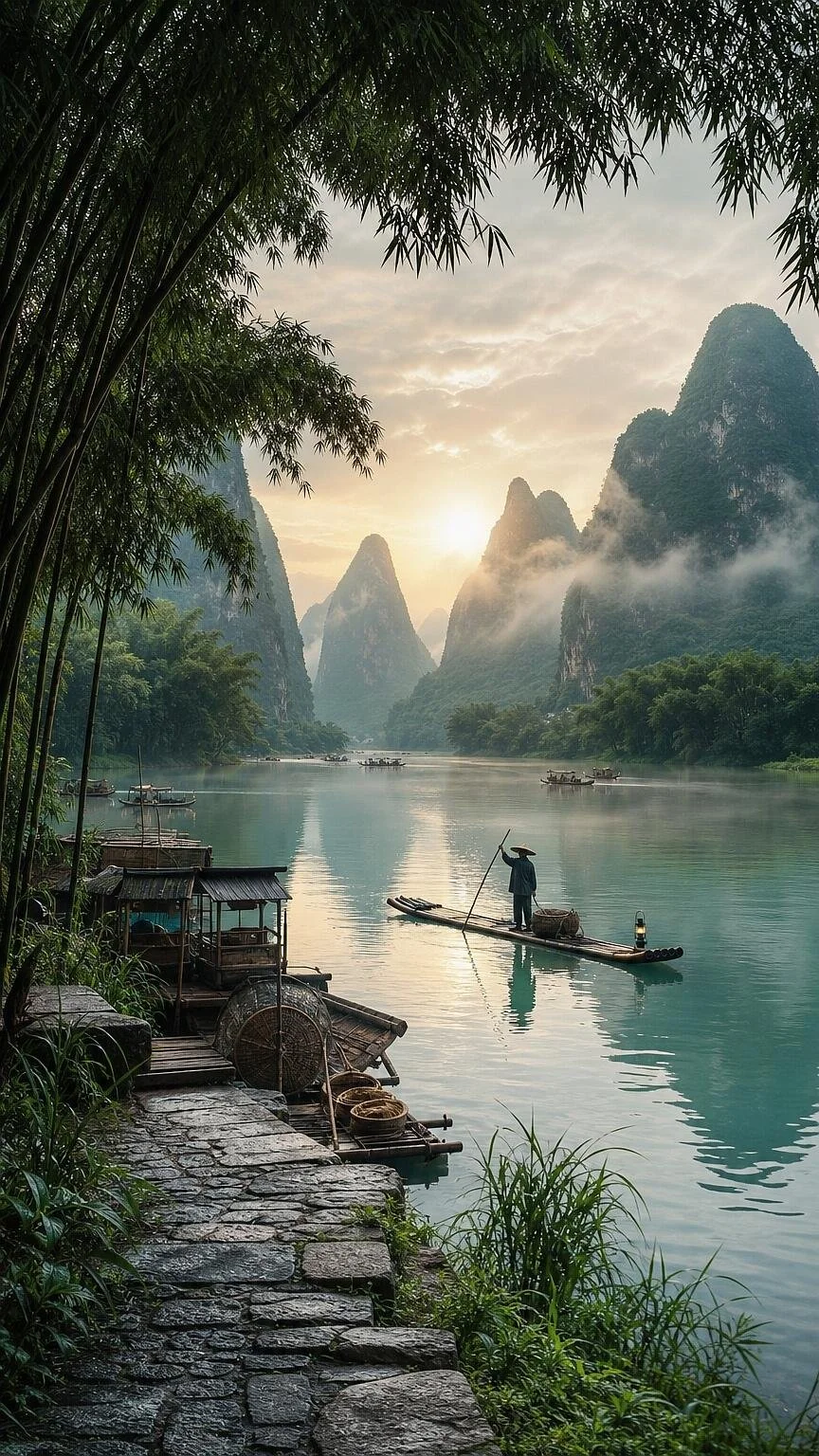
The twenty-yuan banknote view — the one printed on China's currency — is right here. The spot is called Yellow Cloth Shoal, on the Li River bank in Xingping. Navigate to "Wangwang Meishi Yuzhuang" — a fish restaurant, nothing fancy — and directly across the road you'll see a set of stone stairs leading down to the river. That's it. Bring a twenty-yuan note in your pocket and hold it up against the actual mountains. It's touristy. Do it anyway. Everyone does.
The best light is early morning, 6:30 to 9:00, or late afternoon, 5:00 to 7:00. Midday sun sits directly overhead and flattens the mountains — you'll wonder why your photo doesn't look like the postcards. At dawn, if there's no wind, the reflection on the water is a mirror image of the peaks. It's absurdly photogenic.
There's a wildcard near Xingping worth knowing about: Laozhai Mountain. It's a steep climb — 300 meters up, over a thousand stone steps, no guardrails on some sections. It takes about forty minutes and the payoff at the top is a twenty-kilometer panorama of the Li River's best stretch. Sunset from up there is stunning. But it's genuinely dangerous when wet, and I wouldn't take kids or anyone with a fear of heights. If that sounds like too much, Xianggong Mountain is the safe alternative — a car drops you near the top, 50 to 60 yuan entry, and the view of the Li River's first bend is almost as good.

Longji Rice Terraces: Worth Every Minute of That Drive
The drive up to Longji is not fun. From Guilin it's sixty-some kilometers but the last fifteen — from the ticket office at the mountain base to the Jinkeng Dazhai parking lot — is a single-lane mountain road with hairpin turns, no guardrails, and zero visibility around blind corners. It takes an hour.
I brought a family up here once in a rented van. Their five-year-old, halfway up, quietly said: "Can we not go up there anymore." The car went silent. Everyone was thinking it.
Then you get to the cable car. And you go up. And the rice terraces unfold beneath you — layer after layer, carved into the mountainside like a fingerprint pressed into the earth. The Zhuang and Yao people started building these terraces in the late Ming dynasty, over 400 years ago. Generations of farmers, one field at a time. From the top at Golden Buddha Peak, the scale of it hits you and suddenly the scary drive feels like a very small price to pay.
TripAdvisor rates it 4.6 out of 5 from nearly a thousand reviews. I'd go higher.
Tickets: 80 yuan, valid for three days across all three villages — Jinkeng Dazhai, Ping'an, and Ancient Zhuang. The cable car from Jinkeng to Golden Buddha Peak is 100 yuan round-trip, 55 yuan one-way. If you're traveling with older parents or young kids, take the cable car both ways. I've seen people try to save money by walking. They usually regret it by the third switchback.
Stay overnight inside the terraces, not at the base. Ping'an Village and Dazhai Village both have wooden stilt-house guesthouses, 150 to 300 yuan a night. The rooms are basic — hard beds, thin walls, no elevator. But you wake up, push open the window, and the terraces are right there, mist still hanging in the valleys. That's worth more than any five-star lobby.
Best time: September to October, when the rice turns gold. April to June is lush green and the mountains are wrapped in mist. Skip December to February — the terraces are bare dirt and some guesthouses close for the season. Also worth knowing: not every guesthouse up here has the permit to host foreigners. Check on Trip.com or Booking.com before you book.
Caves, Peaks, and Shows: What's Actually Worth It
Guilin has a lot of caves. You only need one, maybe two.
Reed Flute Cave is in Guilin city, Xiufeng District, reachable by bus 3 or 213. It's the one I recommend to almost everyone. The 1987 TV adaptation of Journey to the West filmed scenes inside, and the Crystal Palace chamber — a vast underground hall of stalactites lit in shifting colors — genuinely looks like a fantasy film set. It's been called "China's State-Guest Cave" because Nixon, Carter, and Deng Xiaoping all visited. Ticket is 90 yuan at the gate, around 77 yuan on Trip.com with an English-speaking guide. The cave stays at 18°C year-round — in summer it's like walking into air conditioning. Bring a light jacket. The floor is slippery. The tour takes a bit over an hour.
Silver Cave is in Lipu County, closer to Yangshuo. It's bigger, the lighting is flashier, 65 to 80 yuan. The tagline — "Visit Silver Cave, never worry about money again" — is pure marketing, but the cave itself is impressive. If you're short on time, Reed Flute is more convenient. If you're doing a deeper Yangshuo stay, Silver Cave works. Doing both is overkill — cave fatigue sets in fast.
Solitary Beauty Peak · Prince City is the most underrated thing in Guilin. It's right in the city center, an eight-minute walk from East-West Lane, and scores 4.8+ on Trip.com. This was the Ming Dynasty Prince of Jingjiang's palace, built in 1372 — "Beijing has the Forbidden City, Guilin has the Prince City," as the saying goes. During the Qing Dynasty it became Guangxi's provincial examination hall, producing 585 scholars and four top-ranked degree holders. Climb to the top of Solitary Beauty Peak for a 360-degree view over Guilin. Tickets are 100 yuan, including a traditional rubbing workshop and the climb. Student tickets at 50.
Ruyi Peak is Yangshuo's new attraction, opened a few years ago in Gaotian Town. Cable car up, walk across a suspension bridge and a glass walkway, 360-degree views over the Yangshuo karst forest. Trip.com rates it 4.7. Tickets at the gate are 220 yuan (round-trip cable + glass walkway + bridge + summit platform), about 208 yuan on Trip.com. The views are seriously impressive — but 220 yuan is a lot by Guilin standards. Worth it if you want that aerial Instagram shot. Skip it if you're watching your budget.
The evening shows: Impression Liu Sanjie is Zhang Yimou's outdoor production on the Li River, 200 to 260 yuan, completely open-air. If it rains, the experience tanks. Guilin Eternal Love is indoors, starting at 198 yuan, weather-proof. Pick one. You don't need both.
Two Rivers Four Lakes night cruise: 210 yuan to sit on a boat and circle the lakes. You can walk the exact same route along the shore for free. The pagodas reflect on the water either way. Save the money for dinner.
Food: The Beer Fish Scam, the Rice Noodle Hack, and One Unmarked Shop
Beer fish is the dish everyone tells you to eat in Yangshuo. Here's what nobody tells you: the menu says "88 yuan." It means 88 yuan per jin (half a kilo). A typical fish is three jin. Your bill is suddenly 264 yuan for a single dish.
This routine has been running in Yangshuo for at least a decade. The fix: before you order, look the server in the eye and ask — per dish or per jin? Go to restaurants with prices clearly marked. A fair price is sixty to eighty yuan per person. "Master Chef Beer Fish" on West Street always has the longest line. Local people eat somewhere else.
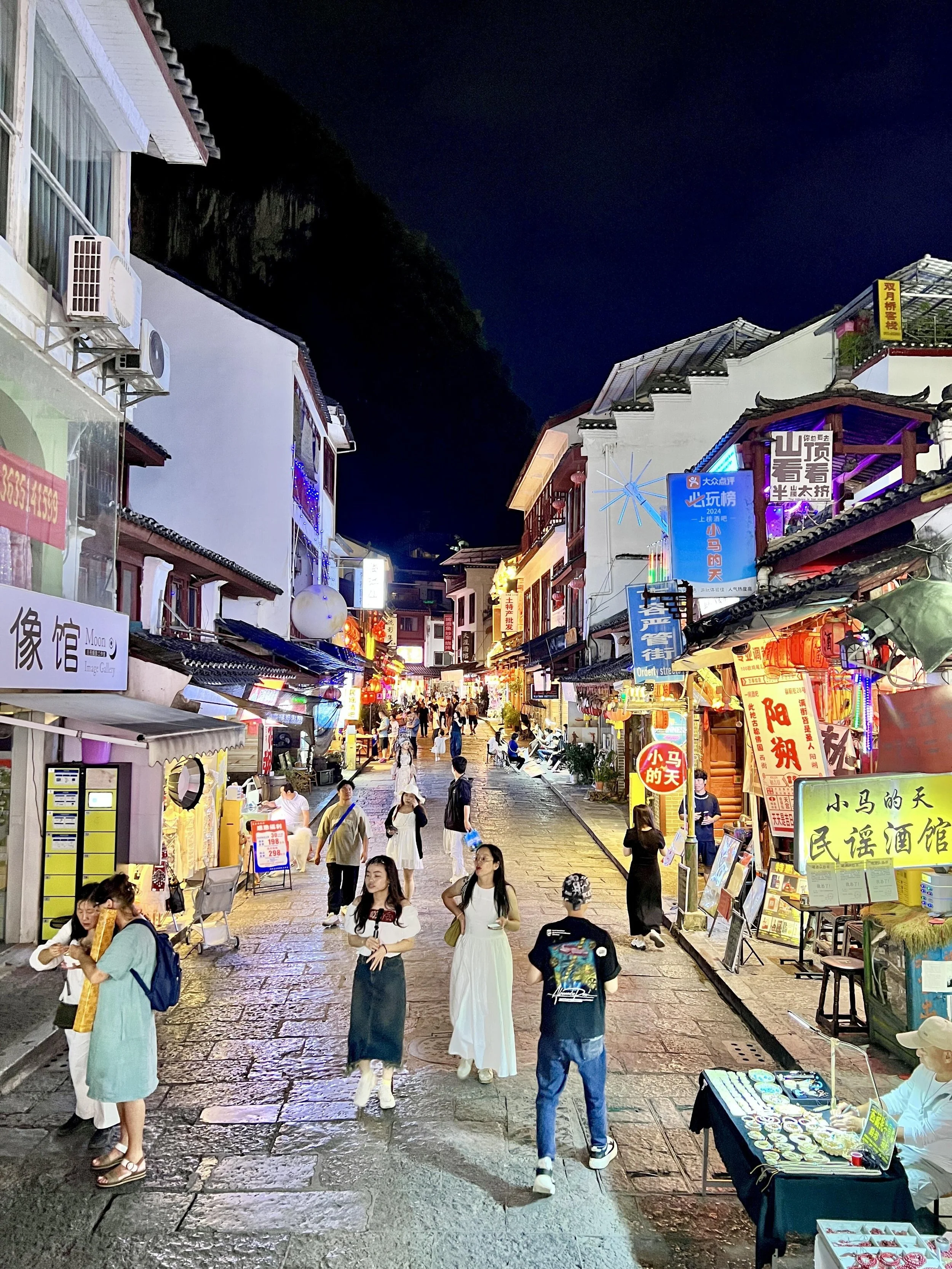
Rice noodles are Guilin's soul food. A bowl of lu cai fen — dry-tossed rice noodles with braised pork, pickled bamboo shoots, crushed peanuts, and a dark spiced brine — costs five to eight yuan at a neighborhood shop. Walk three blocks inland from any tourist street. Find a place with no English menu, no photos on the wall, just plastic stools and a pot of brine bubbling in the doorway. Sit down. Say "er liang lu cai" — two ounces, braised — and pay like a local. The bowl that costs eight yuan here costs twenty-eight inside a hotel restaurant and tastes half as good.
In Xingping, there's an unmarked noodle shop near the river. No sign. No menu board. The owner keeps a cauldron of brine going by the entrance. You grab your own bowl and add your own toppings. I've brought dozens of travelers here, pretending to "stumble upon it" each time. Every single one walked out saying it was the best bowl of noodles they had in Guangxi.
And a note on spice: Sichuan food is hot in a numbing, mouth-tingling way. Guangxi food uses fresh chili — cleaner burn, less complex. If you can't handle heat, say "bu yao la" (no spice). Most tourist restaurants can accommodate.

Where to Sleep: Location Beats Star Rating
The logic is simple: pick your neighborhood, then pick your bed.
In Guilin city, stay around Two Rivers Four Lakes, East-West Lane, or Zhengyang Pedestrian Street. The Lijiang Waterfall Hotel is the classic pick — right on Shanhu Lake, 9.1 on Trip.com from 3,000+ reviews, rooms from 350 to 500 yuan. It's older but the location is unbeatable: Elephant Trunk Hill is a three-minute walk, the pagodas are directly across the lake, and the hotel runs a nightly waterfall light show down its own facade. TripAdvisor gives it a solid 4.0 from nearly 1,200 reviews. Clean, dependable, not fancy. If you want newer, Atour and JI Hotel run 250 to 350 yuan with Trip.com scores above 4.7.
In Yangshuo, you have two choices — and they're opposites. Option one: stay 300 meters to a kilometer outside West Street. Not on West Street proper. The bars on the main strip pump bass until 2 AM and the old buildings have zero soundproofing. A short walk away, you get peace and still reach the action in minutes. Budget options around 150 yuan, chain hotels like Holiday Inn Yangshuo are reliable in the 300 to 400 range.
Option two: stay along the Yulong River. Design-forward guesthouses like "Poetry & Distance" and "Moshang Shanshui" rate 4.7 to 4.8 on Trip.com, rooms at 400 to 800 yuan, doubling in peak season. You pay for the view — open your curtains and it's karst peaks, not a parking lot. Worth it if you came to Yangshuo for the scenery, not the nightlife.
In Longji, sleep inside the terraces. Wooden stilt houses in Ping'an or Dazhai, 150 to 300 yuan. Rustic conditions, priceless morning view. Book on Trip.com and filter for properties that accept foreign guests.
One practical note for families: avoid the old buildings deep inside West Street that have no elevator. Someone in your group will end up hauling suitcases up four flights of stairs, and by the time they reach the top they won't want to come back down.
Itineraries: Two Routes, Infinite Variations
After fourteen years, I've noticed that about 80% of travelers end up on one of two paths.
Three days, two nights — the tight but complete version:
Day 1: Arrive Guilin in the afternoon. Elephant Trunk Hill, East-West Lane, Solitary Beauty Peak · Prince City. All walkable from each other. Evening walk around Two Rivers Four Lakes.
Day 2: Li River cruise to Yangshuo. Afternoon in Xingping Ancient Town, find the twenty-yuan viewpoint by the river. Evening on West Street.
Day 3: Early Yulong River bamboo raft. Afternoon electric scooter through Ten-Mile Gallery (rentals run 30 to 50 yuan per day — if someone quotes you 100, walk away). Ruyi Peak cable car fits here if you want it. Depart.
Five days, four nights — add Longji and slow down:
Add one full day for Longji Rice Terraces with an overnight stay inside the park. Add another day for Reed Flute Cave (or Silver Cave, not both) plus Xianggong Mountain for the Li River panorama. This leaves breathing room — you're not rushing from one checkpoint to the next.
Best months: September to November is ideal — clear skies, golden rice on Longji, comfortable temperatures. April to June brings mist and rain, but that's when Guilin looks most like a Chinese ink painting. July and August are peak season — hot, crowded, prices up, water murky after heavy rain. December through February is the low point — Li River bamboo rafts sometimes stop running, Longji is bare earth, and the city can feel gray and damp.
Before You Go: Stuff That Matters for Foreign Travelers
Let's get the boring-but-important things out of the way.
Visa. Guilin is part of China's 240-hour (10-day) visa-free transit policy for passport holders from 54 countries — you enter through Guilin Liangjiang Airport and stay within Guangxi. Separately, over 45 countries qualify for 30-day unilateral visa-free entry, a policy that continues through 2026. Check your country's Chinese embassy website before booking — policies update, and you don't want to discover a change at the check-in counter.
Money. China runs on mobile payment. Download Alipay before you leave home and link your Visa or Mastercard. It works at almost every shop, restaurant, scenic spot, and roadside fruit stand. WeChat Pay has a lower success rate with foreign cards — Alipay is the safer bet. Carry a few hundred yuan in cash as backup. ATMs at the airport and major bank branches accept foreign cards.
Internet. Google, WhatsApp, Instagram, Gmail, Google Maps — all blocked. Install a VPN on your phone before you fly. Once you're in China, searching for VPN apps in the App Store or Play Store often returns nothing. This is not something to figure out after you land.
Navigation. Google Maps has incomplete data in China and location pins drift. Download Amap (Gaode Maps) — it has an English interface and works inside Alipay. Apple Maps is also functional. Both beat Google here.
Getting around. DiDi is China's Uber. Open Alipay, search "DiDi," and the app switches to English. It's cheaper than street taxis and you'll never argue about the fare.
SIM card. Liangjiang Airport arrival hall has China Mobile and China Unicom counters. Bring your passport, buy a short-term travel SIM — 50 to 100 yuan gets you data and a local number. Some travel SIMs route through Hong Kong and bypass the firewall, which means Google works without a VPN. Worth asking at the counter.
Hotels. Not every hotel in China is licensed to accept foreign guests. On Trip.com and Booking.com, filter for properties with the "foreigner accepted" tag. Most hotels in Guilin city and Yangshuo are fine. Some guesthouses up in Longji are not — confirm before booking.
Police registration. Hotels register your passport at check-in, no extra step needed. If you're staying in an Airbnb or a private apartment, the host must take you to the local police station for temporary residence registration within 24 hours of arrival. Skipping this can cause problems at departure.
Yulong River bamboo raft booking. As covered above — this is the single most frustrating thing for foreign travelers to Guilin. The booking mini-program doesn't reliably accept foreign passports. Go to the pier ticket window with your passport in hand, ideally midweek and outside peak season. Or — and this is the honest advice — contact a travel agency before your trip to handle it.
Chinese holidays to avoid. Book around these dates or accept double prices and crushing crowds: Chinese New Year (late January to early February), Qingming Festival (early April), Labor Day (May 1, five-day window), National Day Golden Week (October 1 to 7), and the entire July-August summer holiday. September and October, outside of Golden Week, are perfect.
Language. English is not widely spoken outside hotel front desks. Download a translation app — Baidu Translate or Papago both work offline if you pre-download Chinese. Learn three phrases: "ni hao" (hello), "xie xie" (thank you), and "er liang lu cai" (one bowl of rice noodles). That last one will earn you a nod from the noodle shop owner.
Emergency numbers. 110 for police, 120 for ambulance, 119 for fire. These work even without a SIM card.

The Thing About Guilin
I brought a retired couple to the Yulong River once, Fuli Bridge route — no dams, just flat water and silence. The boatman poled slowly, almost lazy. About twenty minutes in, the old man said, completely unprompted: "I've been to a lot of places in my life. But these two hours — these are the most peaceful two hours I've ever had."
Nobody spoke after that. The river did all the talking.
That's Guilin. It's not the biggest, not the most expensive, not the most dramatic destination in China. What it is: a place that quiets something in you. The mountains don't compete for your attention. They just sit there, ancient and indifferent, and somehow that's enough.
Fourteen years and I still go back. Each time I find something I missed before — a noodle shop that wasn't there last year, a stretch of river that looks different in October light, a boatman who tells a joke I haven't heard.
You'll find your own things too. That's kind of the point.
About Lynx Travel China
We've been running trips in China since 2014 — Guilin, Zhangjiajie, Xi'an, Tibet, Xinjiang, Yunnan, Beijing, and everywhere in between. Private tours, small groups, no shopping stops, real local guides who know which noodle shop doesn't have a sign.
Need help with Guilin? We handle everything — hotel bookings, Li River cruise tickets, Yulong River bamboo raft reservations for foreign passport holders, airport transfers, and custom itineraries at any pace you want.
Message us on WhatsApp. Tell us how many days you have and what kind of trip you're after. We'll send you a plan within a few hours — no charge, no commitment, just a real route from people who've been doing this for fourteen years.
📱 WhatsApp: +86 172 6789 8631
Prices and policies checked: August 2026. Actual prices vary by season and booking channel. Confirm with each attraction before your visit.