 Image 1 of 6
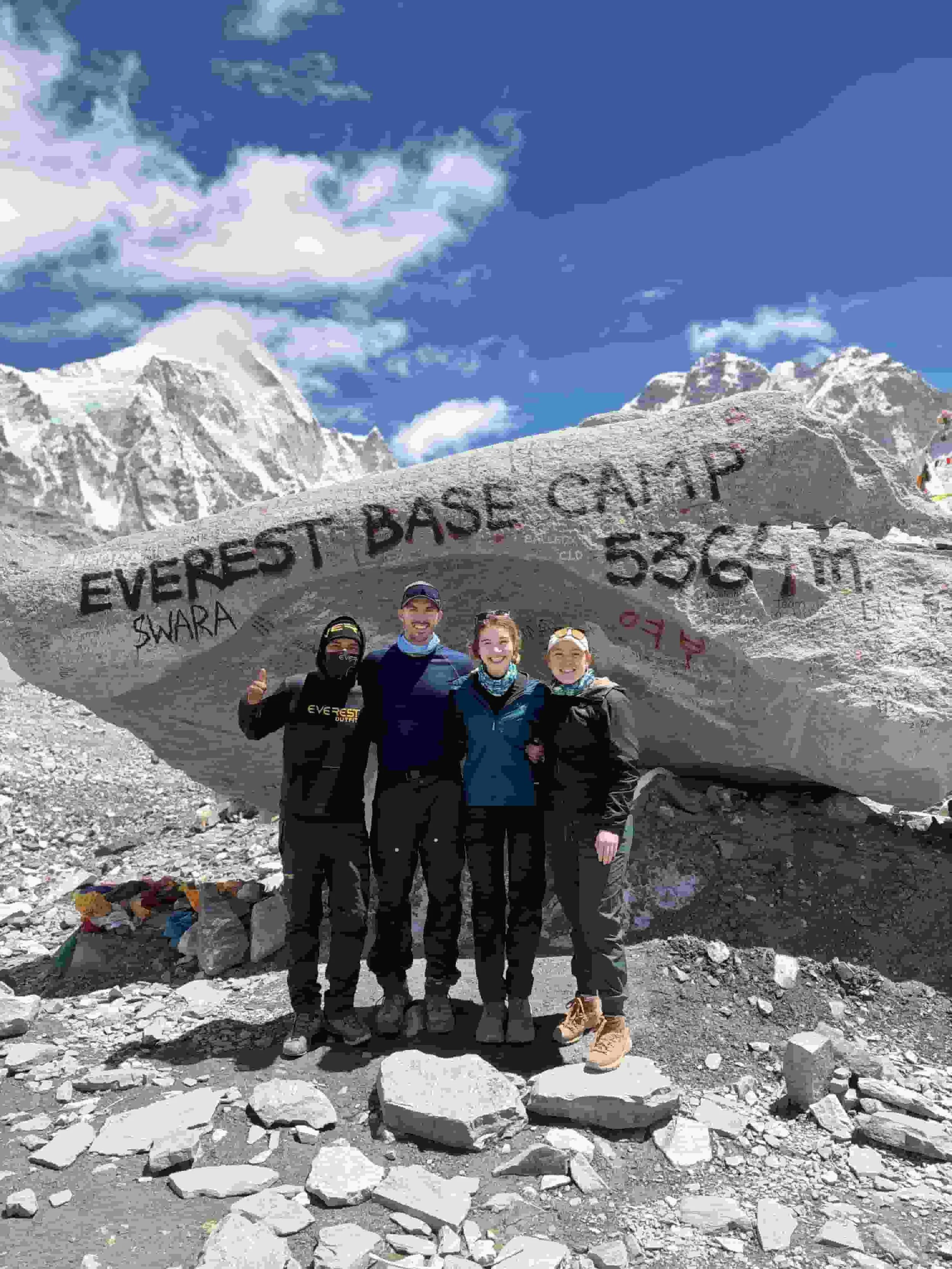 Image 2 of 6
 Image 3 of 6
 Image 4 of 6
 Image 5 of 6
 Image 6 of 6
8-Day Everest Base Camp Classic Circuit
The Classic Route to the Top of the World
This is the Everest tour that hits every milestone on the Buddhist and geological map of Tibet — and does it in comfort. In eight days, you'll stand inside the Potala Palace where the Dalai Lamas ruled for three centuries, walk the sacred Barkhor circuit alongside pilgrims who've traveled thousands of kilometers on foot, gaze into the impossible turquoise of Yamdrok Lake, spend a night beneath the north face of Chomolungma (Mount Everest) at 5,200 meters, and end at Namtso — the "Heavenly Lake" that Tibetan Buddhists believe is a living goddess.
The $1,988 price point puts this in our premium tier: better hotels (4-star standard in Lhasa and Shigatse, heated tent or Everest Town at base camp), a private vehicle for the entire journey (no shared buses), and a Tibetan-speaking English guide who's been to Everest at least fifty times and knows exactly when the light hits the north face for the best photographs.
Why This Tour: This is the most complete one-week Tibet itinerary available. The 8-day format gives you two full days in Lhasa for proper acclimatization (essential — you'll be sleeping at 5,200m on Day 4), plus the Everest experience and Namtso Lake, which many shorter tours skip. If you have exactly one week and Everest is non-negotiable, this is the tour.
Before You Go: Tibet Travel Permit
Foreign travelers cannot enter Tibet independently — you must have a Tibet Travel Permit (入藏函), arranged by a licensed travel agency. Here's what you need to know:
We handle the permit for you. Once you book this tour, send us a clear scan/photo of your passport and Chinese visa (or residence permit). We submit the application to the Tibet Tourism Bureau — the process takes 5–7 business days. We'll send the permit to your hotel in China before you depart for Tibet. You must carry the original permit — photos or copies are not accepted at the checkpoints between Lhasa and Everest.
Important: You cannot apply for the Tibet Travel Permit on your own. It must be arranged through a registered travel agency as part of a booked tour. If a guide is not with you at checkpoints, you will be turned back. Plan at least 3 weeks ahead — 1 week for permit processing + time to receive the document by mail within China.
Altitude preparation: This tour reaches 5,200m (Everest Base Camp) on Day 4. If you have a heart or lung condition, consult your physician before booking. The itinerary is designed for gradual acclimatization, but Everest altitude is not negotiable.
Day 1: Arrive in Lhasa (3,650m) — Welcome to the Roof of the World
✈️ Airport or Train Station Pickup
Your guide and driver will meet you at Lhasa Gonggar Airport (40 minutes from the city) or Lhasa Railway Station (20 minutes). The drive into Lhasa follows the Yarlung Tsangpo River valley — your first glimpse of the Tibetan landscape, with barren brown mountains rising on both sides and the deep blue sky that makes this place feel like a different planet.
After checking into your hotel, the most important thing is rest. Lhasa sits at 3,650 meters (11,975 feet) — the air has about 35% less oxygen than at sea level. Your body needs time to adapt. You may feel fine for the first few hours (the "honeymoon period") and then develop a headache, fatigue, or mild nausea. This is normal. Drink plenty of water, avoid alcohol, eat light meals, and don't push yourself.
Evening: If you're feeling well enough, take a gentle stroll around the Barkhor Street (八廓街) circuit near the Jokhang Temple. This is Lhasa's spiritual heart — you'll see pilgrims from across Tibet walking the kora (sacred circuit), spinning handheld prayer wheels and murmuring mantras. Some have traveled for weeks to get here, prostrating themselves every few steps along the way. It's a powerful introduction to the depth of Tibetan faith. Stop at a sweet tea house (the Barkhor area has dozens) — order a pot of Tibetan sweet tea (half milk, half tea, generously sweetened) and sit with locals who've been doing this every evening for decades.
Pro tip: Many travelers find that arriving by train from Xining (21–22 hours on the Qinghai-Tibet Railway) gives a gentler introduction to the altitude than flying in. The train crosses the Tanggula Pass at 5,072m — the world's highest railway point — and your body begins adjusting during the journey. If you have the time, it's one of the world's great train rides.
Day 2: Lhasa — Potala Palace & Jokhang Temple
🌅 Morning: The Potala Palace (布达拉宫)
After breakfast, your guide takes you to the Potala Palace — the iconic red-and-white fortress that dominates the Lhasa skyline from every angle. This is not just a building; it's an entire mountain reshaped into a palace-fortress-monastery complex over 1,300 years. Your visit starts with the climb — 360 stone steps from the base to the White Palace entrance. Take it slowly; at this altitude, even stairs are a workout. Your guide will set a comfortable pace.
The Potala was originally built in 637 AD by King Songtsen Gampo as a meditation retreat. It was expanded into the structure you see today by the 5th Dalai Lama in 1645, who moved his government here from Drepung Monastery. The complex has two main sections:
The White Palace (lower section) was the Dalai Lama's residential and administrative quarters. You'll see the Dalai Lama's private chambers, audience halls where he met foreign dignitaries, and a small throne room where state ceremonies were held. The walls are painted in vivid colors — the white exterior symbolizes peace and tranquility.
The Red Palace (upper section) is the spiritual core — a labyrinth of chapels, shrines, and the stupas (chörten) of past Dalai Lamas. The most spectacular is the stupa of the 5th Dalai Lama, which stands 14 meters tall and is covered in 3,721 kilograms of gold. Let that number sink in — nearly four tons of solid gold, encrusted with turquoise, coral, pearls, and diamonds. It's the most valuable single object in Tibet. Other chapels contain murals dating to the 7th century, ancient Buddhist scriptures written in gold ink on black paper, and statues of every major deity in the Tibetan Buddhist pantheon.
Potala Palace Rules: No photography inside. No sunglasses or hats. Dress modestly (shoulders and knees covered). The palace limits daily visitors (currently 2,300/day in peak season) to protect the ancient structure — your guide will arrange tickets in advance. Visiting time is limited to one hour inside.
🌇 Afternoon: Jokhang Temple (大昭寺) & Barkhor Street
After lunch, walk to the Jokhang Temple — the spiritual center of Tibetan Buddhism and, for Tibetan pilgrims, the most sacred place on Earth. While the Potala Palace impresses with scale and power, the Jokhang moves people to tears. Built in 647 AD by King Songtsen Gampo to house the Jowo Shakyamuni — a statue of the Buddha at age 12, believed to have been personally blessed by the Buddha himself — the Jokhang has been the heart of Tibetan faith for nearly 1,400 years.
The story of the statue is extraordinary. It was brought to Tibet by Princess Wencheng, a Chinese Tang Dynasty princess who married King Songtsen Gampo as part of a diplomatic alliance in 641 AD. She traveled from Chang'an (modern Xi'an) to Lhasa — a journey of over 2,000 kilometers that took two years. The statue was her dowry. When she arrived, she found that the site where the Jokhang now stands was originally a lake — the king's Nepalese wife, Princess Bhrikuti, had tried to build a temple there but it kept collapsing. Princess Wencheng used Chinese geomancy (feng shui) to determine that the lake was the heart of a demoness who needed to be pinned down. The lake was filled, the temple was built, and it has stood ever since.
Inside, the Jowo Shakyamuni statue sits in the innermost chapel, barely visible through the clouds of incense and butter lamp smoke. Pilgrims press their foreheads against the base of the statue, some weeping openly. The devotion is overwhelming. Your guide will lead you through the chapels surrounding the statue, each dedicated to different deities and historical figures.
After the Jokhang, follow the pilgrims around the Barkhor kora — the 800-meter sacred circuit that encircles the temple. This is Lhasa at its most alive: pilgrims spinning prayer wheels, vendors selling turquoise and coral jewelry, the smell of incense and butter lamps, and the constant murmur of "Om mani padme hum." Walk clockwise — always clockwise. Going counter-clockwise around a sacred site is considered disrespectful.
Dinner suggestion: Try Tashi I (& II) near the Barkhor — one of Lhasa's most famous Tibetan restaurants. Order the yak meat stew, the momos (Tibetan dumplings), and the butter tea (it's an acquired taste — salty, not sweet). The decor is traditional, the service is warm, and the altitude makes the hot food taste better than it has any right to.
Day 3: Lhasa → Yamdrok Lake → Karola Glacier → Shigatse (3,900m)
🌅 Morning: The Kamba La Pass & Yamdrok Lake (羊卓雍措)
Leave Lhasa early (8:00 AM) and drive south toward Yamdrok Lake, crossing the Kamba La Pass (4,790m). As you crest the pass, one of the most famous views in all of Tibet unfolds below you: Yamdrok Lake — a vast, fan-shaped lake of impossible turquoise, set against a backdrop of snow-capped mountains. The color changes constantly with the light — sometimes cobalt blue, sometimes emerald green, sometimes a shade of teal that doesn't seem to exist in nature.
Yamdrok is one of Tibet's three sacred lakes (along with Namtso and Manasarovar). Tibetan Buddhists believe it is the transformation of a goddess, and that its waters are the life-force of the Tibetan people. The lake is 72 kilometers long, covers 638 square kilometers, and is fed by glacial streams from the surrounding mountains. Locals say if the lake ever dries up, Tibet will become uninhabitable. Your guide will drive you down to the lakeshore — the perspective from water level is very different from the panoramic view at Kamba La, and equally stunning.
Photography: The view from Kamba La Pass is THE classic Tibet postcard shot. Morning light is best — another reason to leave Lhasa early. At the lakeshore, the yaks decorated with colorful blankets make great photo subjects (small tip to the yak owner, about 10 RMB).
🌇 Afternoon: Karola Glacier & Drive to Shigatse
After lunch by the lakeshore, continue west toward Shigatse. Along the way, you'll stop at the Karola Glacier (5,045m) — one of the most accessible glaciers in Tibet, visible right from the roadside. The glacier cascades down from the summit of Mount Nojin Kangtsang (7,191m) like a frozen waterfall of blue-white ice. Climate change has retreated the glacier significantly in recent years — your guide will explain what this means for Tibet's water supply (the glacier feeds the Yamdrok Lake basin and several major rivers).
You'll arrive in Shigatse (日喀则) in the early evening. At 3,900m, Shigatse is slightly higher than Lhasa — another reason the itinerary places it after your first two days of acclimatization. Shigatse is Tibet's second-largest city and the seat of the Panchen Lama, the second-highest ranking figure in Tibetan Buddhism after the Dalai Lama. The city has a different feel from Lhasa — less touristy, more working-class Tibetan, with excellent local restaurants.
Dinner in Shigatse: Try the Tibetan noodle soup (thukpa) at a local teahouse near the Tashilhunpo Monastery. The noodles are hand-pulled, the broth is yak-bone based, and the portions are enormous. If you're feeling adventurous, order the yak butter tea — it's salty, thick, and surprisingly high in calories (useful at altitude).
Overnight: 3–4 star hotel in Shigatse with heating and oxygen supply (premium tier).
Day 4: Shigatse → Tingri → Everest Base Camp (5,200m)
🌅 Morning: The Gyatsola Pass (5,248m)
After breakfast, drive south from Shigatse toward Tingri (定日) and eventually Everest Base Camp. The road climbs steadily, and you'll cross the Gyatsola Pass (5,248m) — the highest point on the entire journey and the highest point of the China National Highway 318, which runs from Shanghai to the Nepal border. At the summit, there's a viewing platform where, on a clear day, you can see four of the world's fourteen 8,000-meter peaks: Everest (8,848m), Lhotse (8,516m), Makalu (8,463m), and Cho Oyu (8,201m). It's a view that very few places on Earth can offer — and you're only at the halfway point of the day.
The landscape changes dramatically after Gyatsola. The green valleys and farmland around Shigatse give way to a barren, wind-swept plateau of grey-brown earth and scattered nomad tents. This is the Tibetan Changtang (northern plateau) — an ecosystem of extreme altitude, thin air, and haunting beauty. Yaks graze on the sparse grass; nomad children wave as your vehicle passes; and the air gets noticeably thinner with every kilometer.
🌇 Afternoon: Arrival at Everest Base Camp
Arrive at the Everest Scenic Area entrance (Rongbuk area) in the late afternoon. From here, private vehicles are not allowed further — you'll transfer to the park's eco-buses (operating hours 6:30–20:00) for the final 8 kilometers to Everest Base Camp at 5,200 meters.
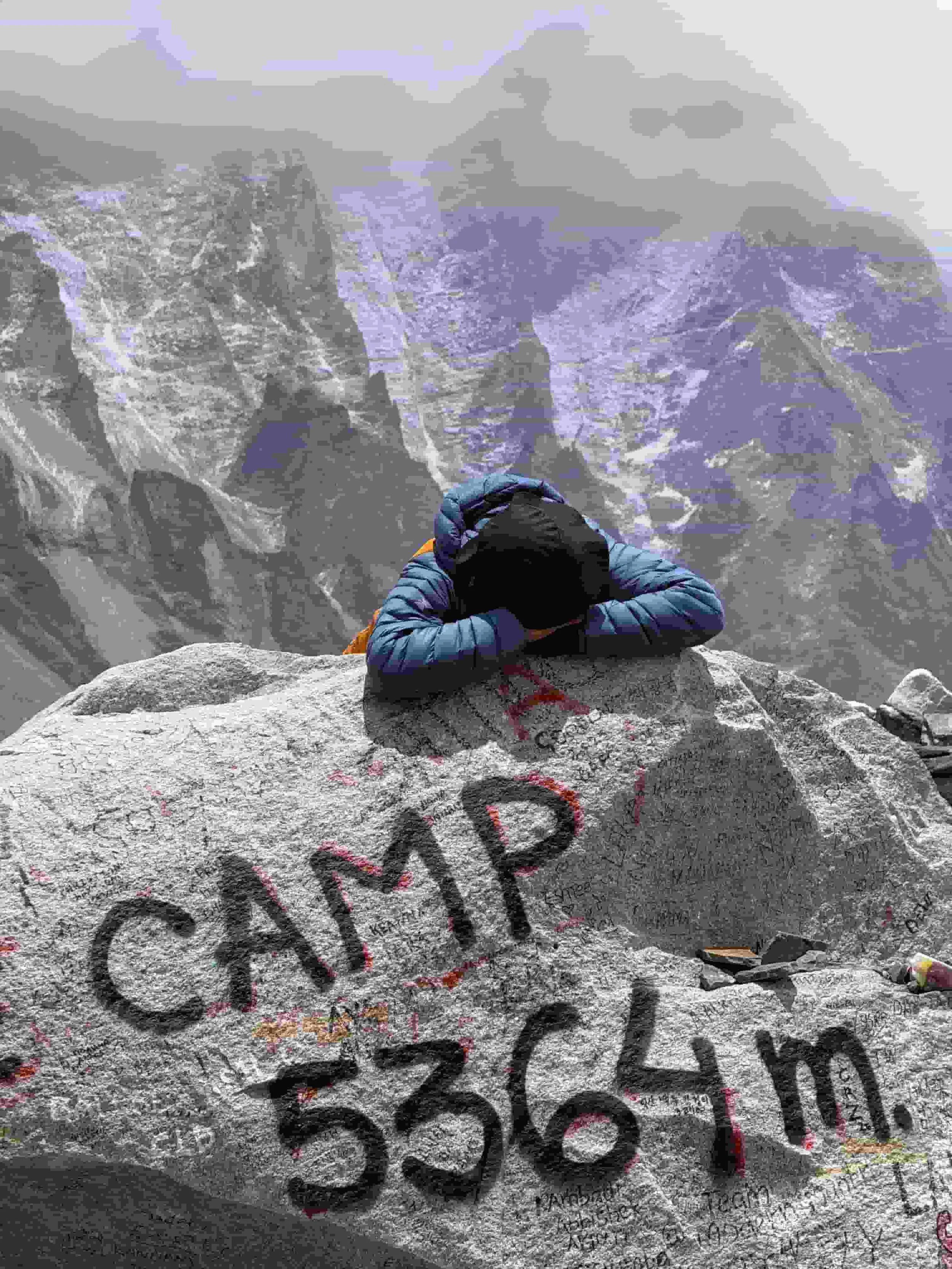
The bus ride is slow and bumpy, but the anticipation builds with every turn. And then — there it is. The north face of Mount Everest (Chomolungma), rising 3,500 vertical meters from the base camp plateau to the summit pyramid at 8,848 meters. It is the highest point on Earth. The north face is stark, triangular, and unforgiving — not the "snowy dome" view that most people recognize from the Nepal side, but a sheer wall of rock and ice that has killed some of the world's greatest climbers.
Check into your accommodation. You have two options at this altitude:
Option A: Everest Base Camp Tent Camp — A collection of heated tents with basic facilities (shared toilets, no showers). The tents are insulated and have electric blankets. This is the authentic base camp experience — you're sleeping exactly where climbers sleep before their summit attempt. At night, the wind howls and the temperature drops to -10°C or lower.
Option B: Everest Town (Rongbuk area, 4,200m) — A small settlement about 20 minutes' drive below base camp. The hotels here are basic but have proper beds, heating, and (usually) hot water. The trade-off: you won't experience the high-altitude tent camp, but you'll sleep at 1,000m lower, which means a much better night's rest and far less risk of severe altitude sickness.
Evening: Dinner is served at the tent camp or Everest Town (simple noodle soups, fried rice, instant coffee — the menu is limited at 5,000m). Then, if the weather is clear, step outside. The starry sky at Everest is one of the most extraordinary sights you will ever see. At 5,200m with zero light pollution, the Milky Way is so bright it casts shadows. You can see satellites moving across the sky. It is quiet in a way that most people have never experienced. Many travelers say this single moment — standing under the stars at the foot of the highest mountain on Earth — is the reason they came to Tibet.
You may also encounter the spontaneous "plateau disco" — a phenomenon where young travelers and climbers at base camp gather in one of the larger tents, plug in a speaker, and dance to thaw out from the cold. It's absurd, joyous, and deeply memorable.
Day 5: Everest Base Camp → Gyawu La Pass → Shigatse
🌅 Morning: Everest at Sunrise
Wake early (6:00 AM) for sunrise on Everest. The summit pyramid catches the first light of day — a gradient from deep purple at the bottom to brilliant gold at the summit. If there's wind at the summit (visible as a plume of snow blowing off the top), it means the jet stream is sitting right on the summit — climbers watch this plume carefully before attempting their summit push.
After sunrise, you have time to explore the Rongbuk Monastery (绒布寺) — the highest monastery in the world at 5,154m, founded in 1902. It's a small, modest place with a big view: the north face of Everest framed perfectly in the monastery's courtyard. The monks here live at an altitude that would incapacitate most people, and their devotion is quietly extraordinary.
Travel tip: The eco-bus from base camp back to the parking area can have long queues in the morning. Your guide will time your departure to avoid the worst of the crowds.
🌇 Mid-Morning: The Gyawu La Pass (5,198m) — The Five-Peak Viewpoint
On the drive back toward Shigatse, you'll stop at the Gyawu La Pass (5,198m) — a viewpoint that is, quite literally, one of the most spectacular in the world. From this single vantage point, you can see five of the world's fourteen 8,000-meter peaks in a single panorama:
Makalu (8,463m) — the sharp, isolated pyramid to the east
Lhotse (8,516m) — Everest's "sibling" peak, connected by the South Col
Everest / Chomolungma (8,848m) — the highest point on Earth
Cho Oyu (8,201m) — the "Turquoise Goddess," the most climbed of the 8,000ers
Shishapangma (8,027m) — the only 8,000er entirely within Tibet
No other viewpoint on Earth offers this. Not in Nepal, not in Pakistan, not anywhere. Your guide will give you time to take photographs, spin the prayer flags at the summit, and simply stand in awe of what 50 million years of tectonic collision have produced.
The drive back to Shigatse takes about 6–7 hours (including stops). You'll descend from the high plateau to the warmer, greener valley of the Yarlung Tsangpo River. Your lungs will thank you.
Overnight: Shigatse, 3–4 star hotel with heating and oxygen.
Day 6: Shigatse — Tashilhunpo Monastery → Lhasa
🌅 Morning: Tashilhunpo Monastery (扎什伦布寺)
After breakfast, visit Tashilhunpo Monastery — founded in 1447 by the First Dalai Lama and the seat of the Panchen Lama, the second-highest ranking figure in Tibetan Buddhism. It's one of the largest functioning monasteries in Tibet, with nearly 800 monks today.
The monastery's greatest treasure is the Maitreya Chapel, housing a 26-meter (86-foot) tall gilded bronze statue of the Maitreya Buddha (the future Buddha who will descend to Earth when the dharma is lost). The statue contains 279 kilograms of gold and was built over a period of four years by 900 craftsmen. Standing at the base and looking up is humbling — the sheer scale of devotion and resources required is difficult to comprehend.
Also visit the stupa of the 10th Panchen Lama, who died in 1989 and whose stupa contains over 600 kilograms of gold, encrusted with amber, coral, and turquoise. The 10th Panchen Lama was a pivotal figure in 20th-century Tibetan history — his life story, which your guide will recount, is a window into the political and spiritual struggles of modern Tibet.
The kora path around the monastery walls offers panoramic views of Shigatse and the surrounding valley. The walk takes about 45 minutes and passes several small chapels and meditation caves carved into the hillside.
🌇 Afternoon: Return to Lhasa by Train (Scenic Option)
In the afternoon, you have a choice:
Option A: Return by Vehicle (4–5 hour drive) — Your private car will take you back to Lhasa along the Yarlung Tsangpo valley. The drive is scenically spectacular, with the river on one side and the Himalayas on the other. Your guide will make stops at viewpoints along the way.
Option B: Return by Lhasa–Shigatse Railway (1.5 hours) — For a uniquely Tibetan experience, take the high-speed train back to Lhasa. The railway line follows the Yarlung Tsangpo River and crosses several high bridges with spectacular views. The train itself is pressurised (like an aircraft) to reduce altitude sickness symptoms. Your guide will arrange tickets and meet you at Lhasa Railway Station. This is a memorable way to complete the Shigatse leg of the journey.
Overnight: Lhasa, 4-star hotel with oxygen supply (premium tier).
Day 7: Lhasa → Namtso Lake (4,718m) → Lhasa
🌅 Morning: Cross the Nagela Pass (5,190m)
Leave Lhasa early (7:30 AM) and drive north toward Namtso Lake, crossing the Nagela Pass (5,190m). As you crest the pass, the view is — once again — Stop-in-your-tracks spectacular: Namtso Lake stretching to the horizon in a vast expanse of deep cobalt blue, ringed by the snow-capped Nyenchen Tanglha Mountains (7,117m). The word "Namtso" means "Heavenly Lake" in Tibetan, and the name is not an exaggeration. At 4,718m, it's one of the highest saltwater lakes on Earth and the largest lake in Tibet (1,920 square kilometers).
Namtso is the third of Tibet's three sacred lakes (along with Yamdrok and Manasarovar). According to Tibetan Buddhist belief, Namtso is the meditation site of Guru Rinpoche (Padmasambhava), the 8th-century tantric master who established Buddhism in Tibet. Pilgrims circumambulate the lake — a journey of about 280 kilometers that takes 7–10 days on foot.
🌇 Afternoon: Tashidor Peninsula & Lakeshore Exploration
Descend from the pass to the lake's southern shore and explore the Tashidor Peninsula — a limestone promontory that juts into the lake, dotted with meditation caves where hermit monks have retreated for centuries. The walk along the peninsula takes about 2 hours round-trip and is scenically spectacular: turquoise water on both sides, prayer flags snapping in the wind, and the Nyenchen Tanglha range reflecting perfectly in the still water.
The meditation caves at Tashidor are still in use — you may see a hermit monk in maroon robes sitting silently by a small butter lamp. Photography is not appropriate inside the caves (ask your guide first), but the exterior views are among the most beautiful in Tibet.
Wildlife: Namtso is a critical habitat for bar-headed geese (the highest-flying birds in the world, which migrate over the Himalayas), black-necked cranes, and wild yaks along the shore. Bring binoculars if you have them.
Evening: Return to Lhasa (about a 4-hour drive). The contrast is striking — after a day at the edge of the sacred lake, return to the bustle of Lhasa's old town, the smell of incense, the sound of chanting. It's a good night for a farewell dinner at a rooftop restaurant overlooking the illuminated Potala Palace.
Overnight: Lhasa, 4-star hotel.
Day 8: Departure from Lhasa — End of Tour
✈️ Airport or Train Transfer
Your guide and driver will transfer you to Lhasa Gonggar Airport or Lhasa Railway Station according to your departure schedule. Most flights depart in the morning or early afternoon. The drive to the airport takes about 40 minutes.
If you have a late departure, your guide can arrange a final morning visit to the Norbulingka (the Dalai Lama's Summer Palace, a UNESCO World Heritage Site with beautiful gardens) or a last walk around the Barkhor — one last circuit, one last spin of the prayer wheels, one last cup of sweet tea. Tibet has a way of making people want to come back.
✅ What's Included
IncludedNot Included✅ Tibet Travel Permit arrangement (processed by our agency)❌ International or domestic flights/trains to/from Lhasa✅ Airport or train station pickup & drop-off (private vehicle)❌ Chinese visa (arrange before travel)✅ Licensed English-speaking Tibetan guide (all 8 days)❌ Travel insurance (mandatory — please arrange your own before arrival)✅ Private air-conditioned vehicle (all days, no shared buses)❌ Entrance fees: Potala Palace ¥200, Jokhang Temple ¥85, Yamdrok viewing platform ¥40, Everest Scenic Area ¥160 + eco-bus ¥120, Tashilhunpo Monastery ¥80, Namtso Lake ¥110 + Nagela Pass ¥60✅ 7-night hotel accommodation (4-star standard in Lhasa & Shigatse; heated tent or Everest Town at EBC)❌ Meals (budget ¥80–150/day; your guide will recommend authentic Tibetan, Sichuan, and Nepali restaurants)✅ Bottled water and supplemental oxygen in the vehicle❌ Personal expenses (souvenirs, extra drinks, laundry)✅ Everest Base Camp eco-bus tickets (round-trip)❌ Gratuities for guide and driver (optional, typically ¥50–100/day per person, appreciated but not required)✅ Namtso Lake day trip (private vehicle, all entrance fees)❌ Sleeping bag liner for EBC tent stay (available to rent, ¥50, or bring your own)✅ Train ticket (Shigatse → Lhasa) if Option B is chosen on Day 6❌ Any costs arising from altitude sickness requiring early departure or medical care
Practical Information
🌡️ Weather & Best Time to Visit:
April–October is the best window. May, September, and October offer the clearest skies for Everest and Namtso visibility. June–August is monsoon season — lush landscapes but frequent cloud cover (Everest may be hidden). November–March is very cold (down to -15°C at night) but clear; the Potala Palace removes its daily visitor cap in winter.
🚶 Walking Level: Moderate to high. Day 2 (Potala + Jokhang) involves the most walking and stairs. Day 4 reaches 5,200m — walking is slow and breathless. Day 7 at Namtso involves a 2-hour lakeshore walk. All activities can be done at your own pace; your guide will adjust the speed to your group's comfort.
🎒 What to Pack:
Sunscreen (SPF 50+ — the UV at altitude is brutal, and the thin air provides almost no protection)
Sunglasses (glacier glasses preferred — snow reflection doubles UV exposure)
Down jacket (essential for Everest Base Camp and Namtso; temperatures can drop to -10°C at night even in summer)
Thermal underwear (base layers)
Hiking boots with good ankle support
Wide-brimmed hat and lip balm (the air is extremely dry; lips crack within hours)
Power bank (electricity is limited at Everest Base Camp and Namtso; bring at least 10,000mAh)
Personal medications (acetazolamide/Diamox for altitude prevention — consult your physician before travel)
Wet wipes (showers are not available at Everest Base Camp tent camp)
Headlamp (for early morning Everest sunrise and nighttime bathroom trips at the tent camp)
📱 Internet & Phone: Wi-Fi is available in Lhasa and Shigatse hotels. No Wi-Fi or cell signal at Everest Base Camp or Namtso Lake. Download offline maps, a offline translator, and any entertainment before departing Lhasa on Day 3. A VPN is needed to access Google, WhatsApp, and social media in China/Tibet.
💰 Money: ATMs are available in Lhasa and Shigatse. WeChat Pay and Alipay are accepted in cities. Bring cash (RMB) for small purchases at monasteries (incense, prayer flags), Everest Base Camp (instant noodles are ¥15–20), and tips.
📸 Photography: Photography is allowed at Yamdrok Lake, Namtso, Everest Base Camp, the Tashidor Peninsula, and Barkhor Street. No photography inside the Potala Palace or inside the Jokhang Temple's inner chapels. Always ask before photographing monks or pilgrims (most will say yes; a small tip is appreciated). For Everest sunrise/sunset, a tripod is useful but not essential — the eco-bus drivers won't wait for tripod setup, so plan accordingly.
🏨 Accommodation Details:
Lhasa: 4-star hotel with oxygen supply, heated rooms, Wi-Fi, and hot water (2 nights)
Shigatse: 4-star hotel with heating and oxygen (2 nights)
Everest Base Camp: Heated tent with electric blanket and shared facilities, OR Everest Town hotel at 4,200m with proper beds (1 night)
Lhasa (return): 4-star hotel (2 nights)
Upgrade to 5-star available in Lhasa and Shigatse for an additional fee.
The Classic Route to the Top of the World
This is the Everest tour that hits every milestone on the Buddhist and geological map of Tibet — and does it in comfort. In eight days, you'll stand inside the Potala Palace where the Dalai Lamas ruled for three centuries, walk the sacred Barkhor circuit alongside pilgrims who've traveled thousands of kilometers on foot, gaze into the impossible turquoise of Yamdrok Lake, spend a night beneath the north face of Chomolungma (Mount Everest) at 5,200 meters, and end at Namtso — the "Heavenly Lake" that Tibetan Buddhists believe is a living goddess.
The $1,988 price point puts this in our premium tier: better hotels (4-star standard in Lhasa and Shigatse, heated tent or Everest Town at base camp), a private vehicle for the entire journey (no shared buses), and a Tibetan-speaking English guide who's been to Everest at least fifty times and knows exactly when the light hits the north face for the best photographs.
Why This Tour: This is the most complete one-week Tibet itinerary available. The 8-day format gives you two full days in Lhasa for proper acclimatization (essential — you'll be sleeping at 5,200m on Day 4), plus the Everest experience and Namtso Lake, which many shorter tours skip. If you have exactly one week and Everest is non-negotiable, this is the tour.
Before You Go: Tibet Travel Permit
Foreign travelers cannot enter Tibet independently — you must have a Tibet Travel Permit (入藏函), arranged by a licensed travel agency. Here's what you need to know:
We handle the permit for you. Once you book this tour, send us a clear scan/photo of your passport and Chinese visa (or residence permit). We submit the application to the Tibet Tourism Bureau — the process takes 5–7 business days. We'll send the permit to your hotel in China before you depart for Tibet. You must carry the original permit — photos or copies are not accepted at the checkpoints between Lhasa and Everest.
Important: You cannot apply for the Tibet Travel Permit on your own. It must be arranged through a registered travel agency as part of a booked tour. If a guide is not with you at checkpoints, you will be turned back. Plan at least 3 weeks ahead — 1 week for permit processing + time to receive the document by mail within China.
Altitude preparation: This tour reaches 5,200m (Everest Base Camp) on Day 4. If you have a heart or lung condition, consult your physician before booking. The itinerary is designed for gradual acclimatization, but Everest altitude is not negotiable.
Day 1: Arrive in Lhasa (3,650m) — Welcome to the Roof of the World
✈️ Airport or Train Station Pickup
Your guide and driver will meet you at Lhasa Gonggar Airport (40 minutes from the city) or Lhasa Railway Station (20 minutes). The drive into Lhasa follows the Yarlung Tsangpo River valley — your first glimpse of the Tibetan landscape, with barren brown mountains rising on both sides and the deep blue sky that makes this place feel like a different planet.
After checking into your hotel, the most important thing is rest. Lhasa sits at 3,650 meters (11,975 feet) — the air has about 35% less oxygen than at sea level. Your body needs time to adapt. You may feel fine for the first few hours (the "honeymoon period") and then develop a headache, fatigue, or mild nausea. This is normal. Drink plenty of water, avoid alcohol, eat light meals, and don't push yourself.
Evening: If you're feeling well enough, take a gentle stroll around the Barkhor Street (八廓街) circuit near the Jokhang Temple. This is Lhasa's spiritual heart — you'll see pilgrims from across Tibet walking the kora (sacred circuit), spinning handheld prayer wheels and murmuring mantras. Some have traveled for weeks to get here, prostrating themselves every few steps along the way. It's a powerful introduction to the depth of Tibetan faith. Stop at a sweet tea house (the Barkhor area has dozens) — order a pot of Tibetan sweet tea (half milk, half tea, generously sweetened) and sit with locals who've been doing this every evening for decades.
Pro tip: Many travelers find that arriving by train from Xining (21–22 hours on the Qinghai-Tibet Railway) gives a gentler introduction to the altitude than flying in. The train crosses the Tanggula Pass at 5,072m — the world's highest railway point — and your body begins adjusting during the journey. If you have the time, it's one of the world's great train rides.
Day 2: Lhasa — Potala Palace & Jokhang Temple
🌅 Morning: The Potala Palace (布达拉宫)
After breakfast, your guide takes you to the Potala Palace — the iconic red-and-white fortress that dominates the Lhasa skyline from every angle. This is not just a building; it's an entire mountain reshaped into a palace-fortress-monastery complex over 1,300 years. Your visit starts with the climb — 360 stone steps from the base to the White Palace entrance. Take it slowly; at this altitude, even stairs are a workout. Your guide will set a comfortable pace.
The Potala was originally built in 637 AD by King Songtsen Gampo as a meditation retreat. It was expanded into the structure you see today by the 5th Dalai Lama in 1645, who moved his government here from Drepung Monastery. The complex has two main sections:
The White Palace (lower section) was the Dalai Lama's residential and administrative quarters. You'll see the Dalai Lama's private chambers, audience halls where he met foreign dignitaries, and a small throne room where state ceremonies were held. The walls are painted in vivid colors — the white exterior symbolizes peace and tranquility.
The Red Palace (upper section) is the spiritual core — a labyrinth of chapels, shrines, and the stupas (chörten) of past Dalai Lamas. The most spectacular is the stupa of the 5th Dalai Lama, which stands 14 meters tall and is covered in 3,721 kilograms of gold. Let that number sink in — nearly four tons of solid gold, encrusted with turquoise, coral, pearls, and diamonds. It's the most valuable single object in Tibet. Other chapels contain murals dating to the 7th century, ancient Buddhist scriptures written in gold ink on black paper, and statues of every major deity in the Tibetan Buddhist pantheon.
Potala Palace Rules: No photography inside. No sunglasses or hats. Dress modestly (shoulders and knees covered). The palace limits daily visitors (currently 2,300/day in peak season) to protect the ancient structure — your guide will arrange tickets in advance. Visiting time is limited to one hour inside.
🌇 Afternoon: Jokhang Temple (大昭寺) & Barkhor Street
After lunch, walk to the Jokhang Temple — the spiritual center of Tibetan Buddhism and, for Tibetan pilgrims, the most sacred place on Earth. While the Potala Palace impresses with scale and power, the Jokhang moves people to tears. Built in 647 AD by King Songtsen Gampo to house the Jowo Shakyamuni — a statue of the Buddha at age 12, believed to have been personally blessed by the Buddha himself — the Jokhang has been the heart of Tibetan faith for nearly 1,400 years.
The story of the statue is extraordinary. It was brought to Tibet by Princess Wencheng, a Chinese Tang Dynasty princess who married King Songtsen Gampo as part of a diplomatic alliance in 641 AD. She traveled from Chang'an (modern Xi'an) to Lhasa — a journey of over 2,000 kilometers that took two years. The statue was her dowry. When she arrived, she found that the site where the Jokhang now stands was originally a lake — the king's Nepalese wife, Princess Bhrikuti, had tried to build a temple there but it kept collapsing. Princess Wencheng used Chinese geomancy (feng shui) to determine that the lake was the heart of a demoness who needed to be pinned down. The lake was filled, the temple was built, and it has stood ever since.
Inside, the Jowo Shakyamuni statue sits in the innermost chapel, barely visible through the clouds of incense and butter lamp smoke. Pilgrims press their foreheads against the base of the statue, some weeping openly. The devotion is overwhelming. Your guide will lead you through the chapels surrounding the statue, each dedicated to different deities and historical figures.
After the Jokhang, follow the pilgrims around the Barkhor kora — the 800-meter sacred circuit that encircles the temple. This is Lhasa at its most alive: pilgrims spinning prayer wheels, vendors selling turquoise and coral jewelry, the smell of incense and butter lamps, and the constant murmur of "Om mani padme hum." Walk clockwise — always clockwise. Going counter-clockwise around a sacred site is considered disrespectful.
Dinner suggestion: Try Tashi I (& II) near the Barkhor — one of Lhasa's most famous Tibetan restaurants. Order the yak meat stew, the momos (Tibetan dumplings), and the butter tea (it's an acquired taste — salty, not sweet). The decor is traditional, the service is warm, and the altitude makes the hot food taste better than it has any right to.
Day 3: Lhasa → Yamdrok Lake → Karola Glacier → Shigatse (3,900m)
🌅 Morning: The Kamba La Pass & Yamdrok Lake (羊卓雍措)
Leave Lhasa early (8:00 AM) and drive south toward Yamdrok Lake, crossing the Kamba La Pass (4,790m). As you crest the pass, one of the most famous views in all of Tibet unfolds below you: Yamdrok Lake — a vast, fan-shaped lake of impossible turquoise, set against a backdrop of snow-capped mountains. The color changes constantly with the light — sometimes cobalt blue, sometimes emerald green, sometimes a shade of teal that doesn't seem to exist in nature.
Yamdrok is one of Tibet's three sacred lakes (along with Namtso and Manasarovar). Tibetan Buddhists believe it is the transformation of a goddess, and that its waters are the life-force of the Tibetan people. The lake is 72 kilometers long, covers 638 square kilometers, and is fed by glacial streams from the surrounding mountains. Locals say if the lake ever dries up, Tibet will become uninhabitable. Your guide will drive you down to the lakeshore — the perspective from water level is very different from the panoramic view at Kamba La, and equally stunning.
Photography: The view from Kamba La Pass is THE classic Tibet postcard shot. Morning light is best — another reason to leave Lhasa early. At the lakeshore, the yaks decorated with colorful blankets make great photo subjects (small tip to the yak owner, about 10 RMB).
🌇 Afternoon: Karola Glacier & Drive to Shigatse
After lunch by the lakeshore, continue west toward Shigatse. Along the way, you'll stop at the Karola Glacier (5,045m) — one of the most accessible glaciers in Tibet, visible right from the roadside. The glacier cascades down from the summit of Mount Nojin Kangtsang (7,191m) like a frozen waterfall of blue-white ice. Climate change has retreated the glacier significantly in recent years — your guide will explain what this means for Tibet's water supply (the glacier feeds the Yamdrok Lake basin and several major rivers).
You'll arrive in Shigatse (日喀则) in the early evening. At 3,900m, Shigatse is slightly higher than Lhasa — another reason the itinerary places it after your first two days of acclimatization. Shigatse is Tibet's second-largest city and the seat of the Panchen Lama, the second-highest ranking figure in Tibetan Buddhism after the Dalai Lama. The city has a different feel from Lhasa — less touristy, more working-class Tibetan, with excellent local restaurants.
Dinner in Shigatse: Try the Tibetan noodle soup (thukpa) at a local teahouse near the Tashilhunpo Monastery. The noodles are hand-pulled, the broth is yak-bone based, and the portions are enormous. If you're feeling adventurous, order the yak butter tea — it's salty, thick, and surprisingly high in calories (useful at altitude).
Overnight: 3–4 star hotel in Shigatse with heating and oxygen supply (premium tier).
Day 4: Shigatse → Tingri → Everest Base Camp (5,200m)
🌅 Morning: The Gyatsola Pass (5,248m)
After breakfast, drive south from Shigatse toward Tingri (定日) and eventually Everest Base Camp. The road climbs steadily, and you'll cross the Gyatsola Pass (5,248m) — the highest point on the entire journey and the highest point of the China National Highway 318, which runs from Shanghai to the Nepal border. At the summit, there's a viewing platform where, on a clear day, you can see four of the world's fourteen 8,000-meter peaks: Everest (8,848m), Lhotse (8,516m), Makalu (8,463m), and Cho Oyu (8,201m). It's a view that very few places on Earth can offer — and you're only at the halfway point of the day.
The landscape changes dramatically after Gyatsola. The green valleys and farmland around Shigatse give way to a barren, wind-swept plateau of grey-brown earth and scattered nomad tents. This is the Tibetan Changtang (northern plateau) — an ecosystem of extreme altitude, thin air, and haunting beauty. Yaks graze on the sparse grass; nomad children wave as your vehicle passes; and the air gets noticeably thinner with every kilometer.
🌇 Afternoon: Arrival at Everest Base Camp
Arrive at the Everest Scenic Area entrance (Rongbuk area) in the late afternoon. From here, private vehicles are not allowed further — you'll transfer to the park's eco-buses (operating hours 6:30–20:00) for the final 8 kilometers to Everest Base Camp at 5,200 meters.
The bus ride is slow and bumpy, but the anticipation builds with every turn. And then — there it is. The north face of Mount Everest (Chomolungma), rising 3,500 vertical meters from the base camp plateau to the summit pyramid at 8,848 meters. It is the highest point on Earth. The north face is stark, triangular, and unforgiving — not the "snowy dome" view that most people recognize from the Nepal side, but a sheer wall of rock and ice that has killed some of the world's greatest climbers.
Check into your accommodation. You have two options at this altitude:
Option A: Everest Base Camp Tent Camp — A collection of heated tents with basic facilities (shared toilets, no showers). The tents are insulated and have electric blankets. This is the authentic base camp experience — you're sleeping exactly where climbers sleep before their summit attempt. At night, the wind howls and the temperature drops to -10°C or lower.
Option B: Everest Town (Rongbuk area, 4,200m) — A small settlement about 20 minutes' drive below base camp. The hotels here are basic but have proper beds, heating, and (usually) hot water. The trade-off: you won't experience the high-altitude tent camp, but you'll sleep at 1,000m lower, which means a much better night's rest and far less risk of severe altitude sickness.
Evening: Dinner is served at the tent camp or Everest Town (simple noodle soups, fried rice, instant coffee — the menu is limited at 5,000m). Then, if the weather is clear, step outside. The starry sky at Everest is one of the most extraordinary sights you will ever see. At 5,200m with zero light pollution, the Milky Way is so bright it casts shadows. You can see satellites moving across the sky. It is quiet in a way that most people have never experienced. Many travelers say this single moment — standing under the stars at the foot of the highest mountain on Earth — is the reason they came to Tibet.
You may also encounter the spontaneous "plateau disco" — a phenomenon where young travelers and climbers at base camp gather in one of the larger tents, plug in a speaker, and dance to thaw out from the cold. It's absurd, joyous, and deeply memorable.
Day 5: Everest Base Camp → Gyawu La Pass → Shigatse
🌅 Morning: Everest at Sunrise
Wake early (6:00 AM) for sunrise on Everest. The summit pyramid catches the first light of day — a gradient from deep purple at the bottom to brilliant gold at the summit. If there's wind at the summit (visible as a plume of snow blowing off the top), it means the jet stream is sitting right on the summit — climbers watch this plume carefully before attempting their summit push.
After sunrise, you have time to explore the Rongbuk Monastery (绒布寺) — the highest monastery in the world at 5,154m, founded in 1902. It's a small, modest place with a big view: the north face of Everest framed perfectly in the monastery's courtyard. The monks here live at an altitude that would incapacitate most people, and their devotion is quietly extraordinary.
Travel tip: The eco-bus from base camp back to the parking area can have long queues in the morning. Your guide will time your departure to avoid the worst of the crowds.
🌇 Mid-Morning: The Gyawu La Pass (5,198m) — The Five-Peak Viewpoint
On the drive back toward Shigatse, you'll stop at the Gyawu La Pass (5,198m) — a viewpoint that is, quite literally, one of the most spectacular in the world. From this single vantage point, you can see five of the world's fourteen 8,000-meter peaks in a single panorama:
Makalu (8,463m) — the sharp, isolated pyramid to the east
Lhotse (8,516m) — Everest's "sibling" peak, connected by the South Col
Everest / Chomolungma (8,848m) — the highest point on Earth
Cho Oyu (8,201m) — the "Turquoise Goddess," the most climbed of the 8,000ers
Shishapangma (8,027m) — the only 8,000er entirely within Tibet
No other viewpoint on Earth offers this. Not in Nepal, not in Pakistan, not anywhere. Your guide will give you time to take photographs, spin the prayer flags at the summit, and simply stand in awe of what 50 million years of tectonic collision have produced.
The drive back to Shigatse takes about 6–7 hours (including stops). You'll descend from the high plateau to the warmer, greener valley of the Yarlung Tsangpo River. Your lungs will thank you.
Overnight: Shigatse, 3–4 star hotel with heating and oxygen.
Day 6: Shigatse — Tashilhunpo Monastery → Lhasa
🌅 Morning: Tashilhunpo Monastery (扎什伦布寺)
After breakfast, visit Tashilhunpo Monastery — founded in 1447 by the First Dalai Lama and the seat of the Panchen Lama, the second-highest ranking figure in Tibetan Buddhism. It's one of the largest functioning monasteries in Tibet, with nearly 800 monks today.
The monastery's greatest treasure is the Maitreya Chapel, housing a 26-meter (86-foot) tall gilded bronze statue of the Maitreya Buddha (the future Buddha who will descend to Earth when the dharma is lost). The statue contains 279 kilograms of gold and was built over a period of four years by 900 craftsmen. Standing at the base and looking up is humbling — the sheer scale of devotion and resources required is difficult to comprehend.
Also visit the stupa of the 10th Panchen Lama, who died in 1989 and whose stupa contains over 600 kilograms of gold, encrusted with amber, coral, and turquoise. The 10th Panchen Lama was a pivotal figure in 20th-century Tibetan history — his life story, which your guide will recount, is a window into the political and spiritual struggles of modern Tibet.
The kora path around the monastery walls offers panoramic views of Shigatse and the surrounding valley. The walk takes about 45 minutes and passes several small chapels and meditation caves carved into the hillside.
🌇 Afternoon: Return to Lhasa by Train (Scenic Option)
In the afternoon, you have a choice:
Option A: Return by Vehicle (4–5 hour drive) — Your private car will take you back to Lhasa along the Yarlung Tsangpo valley. The drive is scenically spectacular, with the river on one side and the Himalayas on the other. Your guide will make stops at viewpoints along the way.
Option B: Return by Lhasa–Shigatse Railway (1.5 hours) — For a uniquely Tibetan experience, take the high-speed train back to Lhasa. The railway line follows the Yarlung Tsangpo River and crosses several high bridges with spectacular views. The train itself is pressurised (like an aircraft) to reduce altitude sickness symptoms. Your guide will arrange tickets and meet you at Lhasa Railway Station. This is a memorable way to complete the Shigatse leg of the journey.
Overnight: Lhasa, 4-star hotel with oxygen supply (premium tier).
Day 7: Lhasa → Namtso Lake (4,718m) → Lhasa
🌅 Morning: Cross the Nagela Pass (5,190m)
Leave Lhasa early (7:30 AM) and drive north toward Namtso Lake, crossing the Nagela Pass (5,190m). As you crest the pass, the view is — once again — Stop-in-your-tracks spectacular: Namtso Lake stretching to the horizon in a vast expanse of deep cobalt blue, ringed by the snow-capped Nyenchen Tanglha Mountains (7,117m). The word "Namtso" means "Heavenly Lake" in Tibetan, and the name is not an exaggeration. At 4,718m, it's one of the highest saltwater lakes on Earth and the largest lake in Tibet (1,920 square kilometers).
Namtso is the third of Tibet's three sacred lakes (along with Yamdrok and Manasarovar). According to Tibetan Buddhist belief, Namtso is the meditation site of Guru Rinpoche (Padmasambhava), the 8th-century tantric master who established Buddhism in Tibet. Pilgrims circumambulate the lake — a journey of about 280 kilometers that takes 7–10 days on foot.
🌇 Afternoon: Tashidor Peninsula & Lakeshore Exploration
Descend from the pass to the lake's southern shore and explore the Tashidor Peninsula — a limestone promontory that juts into the lake, dotted with meditation caves where hermit monks have retreated for centuries. The walk along the peninsula takes about 2 hours round-trip and is scenically spectacular: turquoise water on both sides, prayer flags snapping in the wind, and the Nyenchen Tanglha range reflecting perfectly in the still water.
The meditation caves at Tashidor are still in use — you may see a hermit monk in maroon robes sitting silently by a small butter lamp. Photography is not appropriate inside the caves (ask your guide first), but the exterior views are among the most beautiful in Tibet.
Wildlife: Namtso is a critical habitat for bar-headed geese (the highest-flying birds in the world, which migrate over the Himalayas), black-necked cranes, and wild yaks along the shore. Bring binoculars if you have them.
Evening: Return to Lhasa (about a 4-hour drive). The contrast is striking — after a day at the edge of the sacred lake, return to the bustle of Lhasa's old town, the smell of incense, the sound of chanting. It's a good night for a farewell dinner at a rooftop restaurant overlooking the illuminated Potala Palace.
Overnight: Lhasa, 4-star hotel.
Day 8: Departure from Lhasa — End of Tour
✈️ Airport or Train Transfer
Your guide and driver will transfer you to Lhasa Gonggar Airport or Lhasa Railway Station according to your departure schedule. Most flights depart in the morning or early afternoon. The drive to the airport takes about 40 minutes.
If you have a late departure, your guide can arrange a final morning visit to the Norbulingka (the Dalai Lama's Summer Palace, a UNESCO World Heritage Site with beautiful gardens) or a last walk around the Barkhor — one last circuit, one last spin of the prayer wheels, one last cup of sweet tea. Tibet has a way of making people want to come back.
✅ What's Included
IncludedNot Included✅ Tibet Travel Permit arrangement (processed by our agency)❌ International or domestic flights/trains to/from Lhasa✅ Airport or train station pickup & drop-off (private vehicle)❌ Chinese visa (arrange before travel)✅ Licensed English-speaking Tibetan guide (all 8 days)❌ Travel insurance (mandatory — please arrange your own before arrival)✅ Private air-conditioned vehicle (all days, no shared buses)❌ Entrance fees: Potala Palace ¥200, Jokhang Temple ¥85, Yamdrok viewing platform ¥40, Everest Scenic Area ¥160 + eco-bus ¥120, Tashilhunpo Monastery ¥80, Namtso Lake ¥110 + Nagela Pass ¥60✅ 7-night hotel accommodation (4-star standard in Lhasa & Shigatse; heated tent or Everest Town at EBC)❌ Meals (budget ¥80–150/day; your guide will recommend authentic Tibetan, Sichuan, and Nepali restaurants)✅ Bottled water and supplemental oxygen in the vehicle❌ Personal expenses (souvenirs, extra drinks, laundry)✅ Everest Base Camp eco-bus tickets (round-trip)❌ Gratuities for guide and driver (optional, typically ¥50–100/day per person, appreciated but not required)✅ Namtso Lake day trip (private vehicle, all entrance fees)❌ Sleeping bag liner for EBC tent stay (available to rent, ¥50, or bring your own)✅ Train ticket (Shigatse → Lhasa) if Option B is chosen on Day 6❌ Any costs arising from altitude sickness requiring early departure or medical care
Practical Information
🌡️ Weather & Best Time to Visit:
April–October is the best window. May, September, and October offer the clearest skies for Everest and Namtso visibility. June–August is monsoon season — lush landscapes but frequent cloud cover (Everest may be hidden). November–March is very cold (down to -15°C at night) but clear; the Potala Palace removes its daily visitor cap in winter.
🚶 Walking Level: Moderate to high. Day 2 (Potala + Jokhang) involves the most walking and stairs. Day 4 reaches 5,200m — walking is slow and breathless. Day 7 at Namtso involves a 2-hour lakeshore walk. All activities can be done at your own pace; your guide will adjust the speed to your group's comfort.
🎒 What to Pack:
Sunscreen (SPF 50+ — the UV at altitude is brutal, and the thin air provides almost no protection)
Sunglasses (glacier glasses preferred — snow reflection doubles UV exposure)
Down jacket (essential for Everest Base Camp and Namtso; temperatures can drop to -10°C at night even in summer)
Thermal underwear (base layers)
Hiking boots with good ankle support
Wide-brimmed hat and lip balm (the air is extremely dry; lips crack within hours)
Power bank (electricity is limited at Everest Base Camp and Namtso; bring at least 10,000mAh)
Personal medications (acetazolamide/Diamox for altitude prevention — consult your physician before travel)
Wet wipes (showers are not available at Everest Base Camp tent camp)
Headlamp (for early morning Everest sunrise and nighttime bathroom trips at the tent camp)
📱 Internet & Phone: Wi-Fi is available in Lhasa and Shigatse hotels. No Wi-Fi or cell signal at Everest Base Camp or Namtso Lake. Download offline maps, a offline translator, and any entertainment before departing Lhasa on Day 3. A VPN is needed to access Google, WhatsApp, and social media in China/Tibet.
💰 Money: ATMs are available in Lhasa and Shigatse. WeChat Pay and Alipay are accepted in cities. Bring cash (RMB) for small purchases at monasteries (incense, prayer flags), Everest Base Camp (instant noodles are ¥15–20), and tips.
📸 Photography: Photography is allowed at Yamdrok Lake, Namtso, Everest Base Camp, the Tashidor Peninsula, and Barkhor Street. No photography inside the Potala Palace or inside the Jokhang Temple's inner chapels. Always ask before photographing monks or pilgrims (most will say yes; a small tip is appreciated). For Everest sunrise/sunset, a tripod is useful but not essential — the eco-bus drivers won't wait for tripod setup, so plan accordingly.
🏨 Accommodation Details:
Lhasa: 4-star hotel with oxygen supply, heated rooms, Wi-Fi, and hot water (2 nights)
Shigatse: 4-star hotel with heating and oxygen (2 nights)
Everest Base Camp: Heated tent with electric blanket and shared facilities, OR Everest Town hotel at 4,200m with proper beds (1 night)
Lhasa (return): 4-star hotel (2 nights)
Upgrade to 5-star available in Lhasa and Shigatse for an additional fee.