

The Rain-After Window: When Zhangjiajie Actually Looks Like Pandora
Zhangjiajie Travel China · Hunan · Travel Guide · October 2026
Most guidebooks tell you to come to Zhangjiajie in clear weather. For the one thing you actually came to see, that advice is backwards. The floating-mountain look — the reason Avatar exists — depends on cloud sitting in the valleys at exactly the height of the pillars. Here is when that happens, where to stand, and how to time a trip around it.
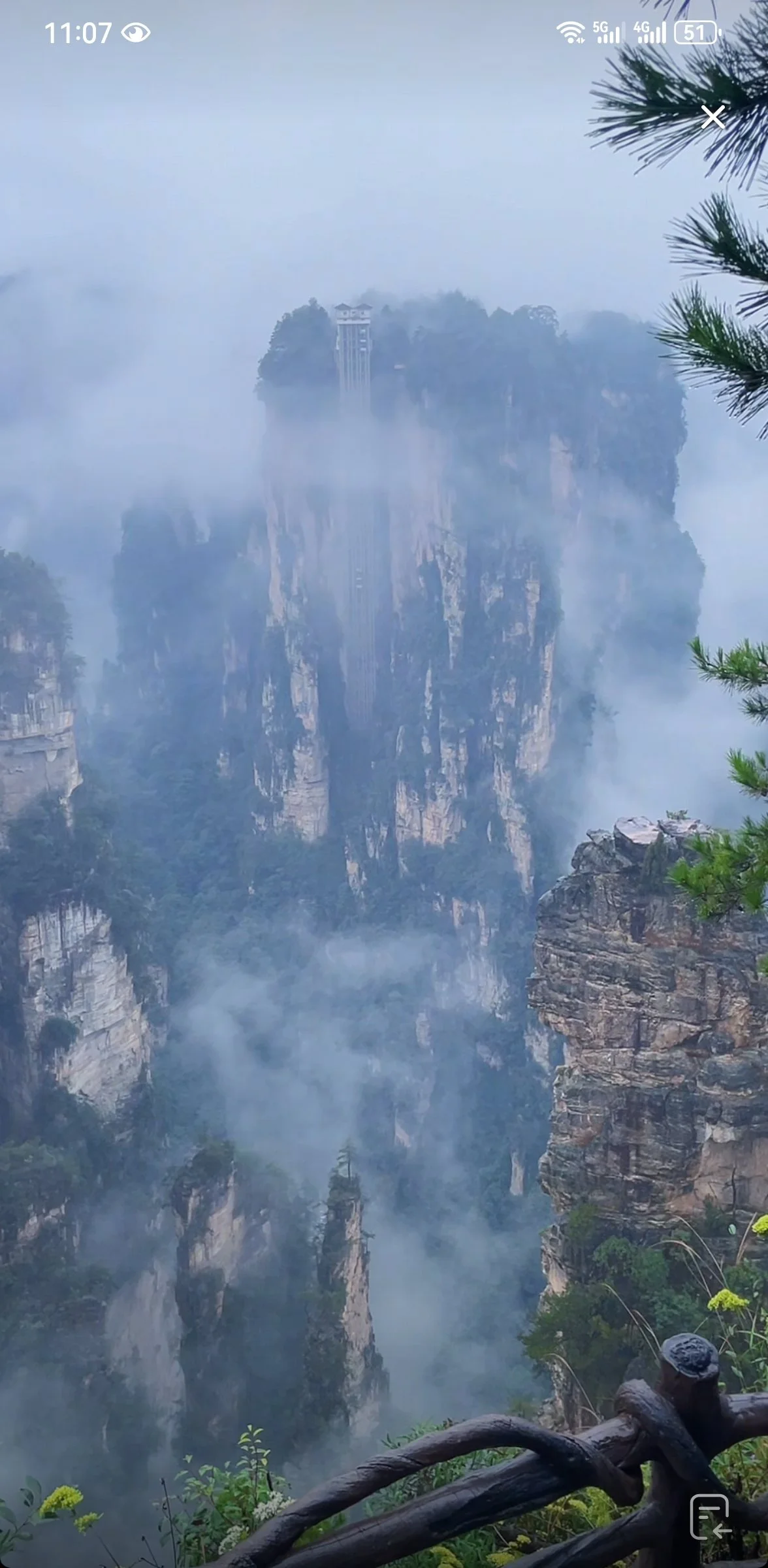
Zhangjiajie's quartzite-sandstone pillars are genuinely unusual, and the resemblance to Pandora's Hallelujah Mountains is not imaginary. But the version most visitors photograph — a stone pillar against a clean blue sky — is the one that looks least like the film. The pillars never actually float. What makes them look like it is a sea of cloud filling the valleys so the bases disappear, while the summits break through into clear sky.
That effect is not a marketing invention. It is weather, and it is forecastable to within about half a day. This guide covers when it appears, where to stand, and how to plan a trip that times it correctly.
What was actually filmed, and what was not
Start with the facts, because the mythology has grown quite thick.
Avatar was not shot in Zhangjiajie. The 2009 film was made on sound stages in Wellington, New Zealand and Los Angeles, with the floating mountains rendered digitally. Zhangjiajie was a real-world visual reference — the landscape designers drew on China's karst and sandstone formations, and Zhangjiajie's quartzite pillars are the most commonly cited source. James Cameron himself has publicly named Huangshan, describing his goal as recreating Huangshan in outer space.
What connects Zhangjiajie to the film is a documented visit. In December 2008, Hollywood CG art designer Eric Hansen — a visiting professor at Hunan University's digital media institute — spent four days in the region with a university researcher accompanying him. He visited Yuanjiajie, Tianzi Mountain, Shui Rao Si Men, Golden Whip Stream, Huangshizhai, Yellow Dragon Cave and Baofeng Lake, photographing extensively. He later confirmed by email that the Hallelujah Mountains in the film were modelled on the Southern Sky Column — the pillar in Yuanjiajie officially renamed Avatar Hallelujah Mountain on 25 January 2010.
The pillar itself stands at 1,074 metres above sea level, with roughly 150 metres of vertical relief. It sits at the southern end of Yuanjiajie, inside the Wulingyuan World Natural Heritage property.
So the honest version of the story: a four-day scouting trip in December 2008 produced the reference photographs, and a local community renamed a pillar the following January. The film itself was made in New Zealand and California. Both halves are worth telling, and neither one needs exaggeration.
Why rain creates the cloud sea
The cloud sea is a deterministic function of three weather variables that tend to align within 24 to 72 hours after substantial rain. The details matter, because they tell you when to go.
The temperature inversion holds the fog at pillar height
After sustained rain, cold air settles into the valleys while warmer air sits above them. That is an inversion, and it acts as a lid. Fog cannot rise through it, so it stays low and horizontal, hugging the cliff faces at roughly 800 to 1,200 metres — which is exactly the mid-height range of the Wulingyuan pillars. The cloud wraps the rock at mid-shaft, the tops break into clear sky, and the bases vanish. On an ordinary day the same moisture would burn off by mid-morning.
Porous sandstone releases moisture for about two days
The pillars are fractured quartzite sandstone full of vertical cracks shaped by water over roughly 300 million years. After heavy rain, those cracks act as slow-release moisture sources. The cliffs continue to feed water vapour into the air for roughly 48 hours. This is why the cloud sea is usually densest on the morning after the rain, thinner on day two, and mostly gone by day three.
Morning sun on wet dark rock lifts the cloud
Around 7 to 8 AM, sunlight hits the dark wet stone and heats it faster than the surrounding air. The air above the rock warms, rises, and lifts the cloud layer partway up the cliff face. The cloud sea appears to climb the pillars because it is being pushed upward. By mid-morning the lift is strongest and the cloud sits at its highest; once the sun is high and the air is uniformly warm, the layer collapses.
The usable window is therefore roughly three hours a day, for two to three days after a rain — the morning is the reliable part.
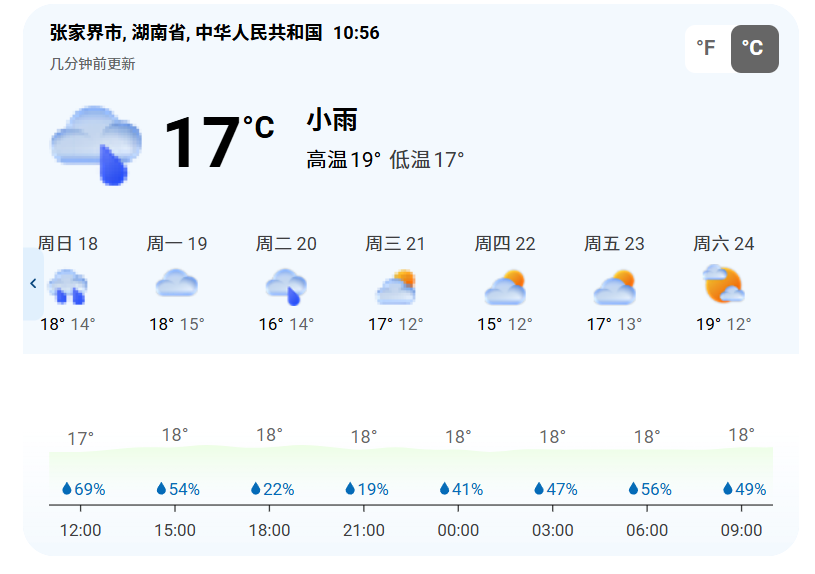
Timing the rain
This is the section that saves most visitors from getting it wrong. The cloud sea is not a daily event during the wet season. It is a short window after a specific kind of rain.
If you arrive during the rain you will see nothing useful — visibility is poor, trails are slick, and the cloud is on the ground rather than lifted above it. The move is to arrive the day after the rain stops.
On Day 0, the rain day itself, treat it as a rest day. Sleep in, prepare gear, let the mountains do their work. On Day 1, the first clearing morning often produces the best result — be at a viewpoint by 6:00 AM. On Day 2 you get stable, cool, low-humidity air, usually the classic conditions; this is the day to build around. By Day 3 haze starts returning and the cloud becomes patchy. Day 4 onward you are back to ordinary clear-sky weather, which suits Tianmen Mountain or Golden Whip Stream.
The underlying pattern is a cold front or typhoon-fed rain band crossing the province, dropping meaningful rain over 24 to 48 hours, then moving east. Behind it: clear, cool, stable air over saturated valleys. That is the standard post-frontal signature of subtropical China, and it is why the effect is predictable rather than magical.
The mistake most visitors make: they see rain in the forecast and cancel or postpone. That is exactly the wrong response. The rain is the setup; the clearing is the show. If your dates are fixed, build the itinerary around the standard sights and treat the cloud sea as a bonus. If your dates are flexible, watch the 14-day forecast for a two or three day rain event followed by clearing, and book into the clearing days.
Five viewpoints, ranked
Not all viewpoints are equal, and the official Avatar platform is the most accessible rather than the best.
Yuanjiajie Back Garden sits on the Yuanjiajie plateau at about 1,080 metres and gives the direct line to Hallelujah Mountain, with cloud forming at pillar mid-height. It is the classic shot and the most reliable on a post-rain morning. Expect moderate crowds, and expect the mist to persist a little longer here than elsewhere.
Tianzi Mountain West Sea at about 1,250 metres gives the opposite angle — you look down into a sea of cloud rather than up at pillars from outside it. Crowds are lower, and the cable car means no hiking. If you want one viewpoint that works in most post-rain conditions, take this one.
Yangjiajie Tianbofu, at roughly 1,050 metres, wraps the cliffs around you for a near-360 degree cloud sea at peak. It is quieter and worth the drive.
Qixing Mountain Sky Eye, at 1,520 metres, is the only spot here that sees the cloud from above — like looking down on a white lake with stone islands. The mountain sits about an hour from Wulingyuan and, critically, is a separate park with its own ticket. Budget a full day for it and skip it if you are short on time.
Laowuchang at roughly 950 metres is a local-favourite off-route spot with no shuttle bus, known for a deeper cloud layer and almost no crowds. It requires a hike in and out, and conditions vary. Ask a local guide rather than following a pin.
On the official Avatar Hallelujah Mountain viewpoint: it is well-signed, paved and crowded — perfectly fine for a wide-angle group shot. Walk a little further along the trail and the angle improves, with the cloud line catching the pillar at mid-shaft rather than sitting flat.
Costs and access
Tickets change, so confirm before travelling. As of 2026 the published rates are as follows.
The Zhangjiajie National Forest Park combined entry and eco-bus pass is CNY 236, valid four days with multiple entries, covering Tianzi Mountain, Yangjiajie and the Ten Mile Gallery. Admission without the shuttle bus is CNY 165. The Bailong Elevator, the world's tallest outdoor lift at 326 metres, is a separate one-way ride listed at CNY 65. Cable cars are additional: Tianzi Mountain CNY 72, Yangjiajie CNY 76, Huangshizhai CNY 65, and the Ten Mile Gallery small train CNY 38. Rates are published by the Wulingyuan tourism authority and are subject to change — check at the gate or with your guide.
Qixing Mountain is ticketed separately and is not part of the Forest Park pass. It is sold as a package including admission, round-trip cable car, shuttle bus, the 1520 Sky Eye glass platform and the glass walkway, priced at roughly CNY 109 to 268 depending on season and channel, with the peak-season figure around CNY 239.
Private guides run roughly CNY 800 to 1,500 for two days. For a cloud-sea trip that is worth it: the difference between a guide who knows which morning will work and one who does not is often the difference between the photograph and a wasted day.
Three itineraries
The standard first-timer loop assumes you cannot afford a spare morning. For a cloud-sea trip, build in a buffer. Weather windows shift by 12 to 24 hours, and one extra morning at the park is the whole difference between the shot and an ordinary postcard.
Itinerary A — 3 days 2 nights, minimum viable
You get two sunrise attempts and accept the risk. Day 1: arrive in the afternoon; if it is raining, do Golden Whip Stream, which holds up better than anywhere else in fog; if clear, rest and reset your sleep cycle. Day 2: depart at 5:30 AM for Yuanjiajie Back Garden via the Bailong Elevator, stay until 9:00 AM, then Tianzi Mountain in the afternoon. Day 3: one final attempt at sunrise, either Yangjiajie Tianbofu or Qixing Mountain, then depart.
Build in a spare morning on either side if your schedule allows — it materially improves the odds.
Itinerary B — 4 days 3 nights, recommended
This is the balance most visitors should take, giving you three sunrise windows and room to wait out a front. Day 1: arrive, stay flexible; if it is clear, do a sunset at Tianmen Mountain. Day 2: rain day, or first attempt if it is already clearing; stay near the East Gate cluster so you can pivot fast. Day 3: the best day — sunrise at Tianzi Mountain West Sea, late morning at Yangjiajie Tianbofu, afternoon in Golden Whip Stream. Day 4: last attempt at Yuanjiajie, or Qixing Mountain for the above-the-clouds view, then depart.
Itinerary C — 5 days 4 nights, for photographers
Built around four sunrise windows. Day 1: arrive, sunset at Tianmen Mountain to acclimatise. Day 2: sunrise Yuanjiajie, day in Yangjiajie, sunset Tianzi Mountain. Day 3: sunrise Tianzi West Sea, day Golden Whip Stream and rest. Day 4: sunrise Yangjiajie Tianbofu, then transfer to Qixing Mountain for the afternoon. Day 5: sunrise at Qixing, then depart. Bring a tripod — the light between 7 and 8 AM is the best of the run.
Ten questions foreign visitors actually ask
When is the rainy season?
Hunan's main wet period runs from roughly late April through June, with a secondary band from mid-September to mid-October fed by autumn rain systems. Both can produce cloud seas. June is the least useful because the rain is persistent and windows between fronts are short. October events are more intense but less predictable, which is the trade-off.
Does the park close when it rains?
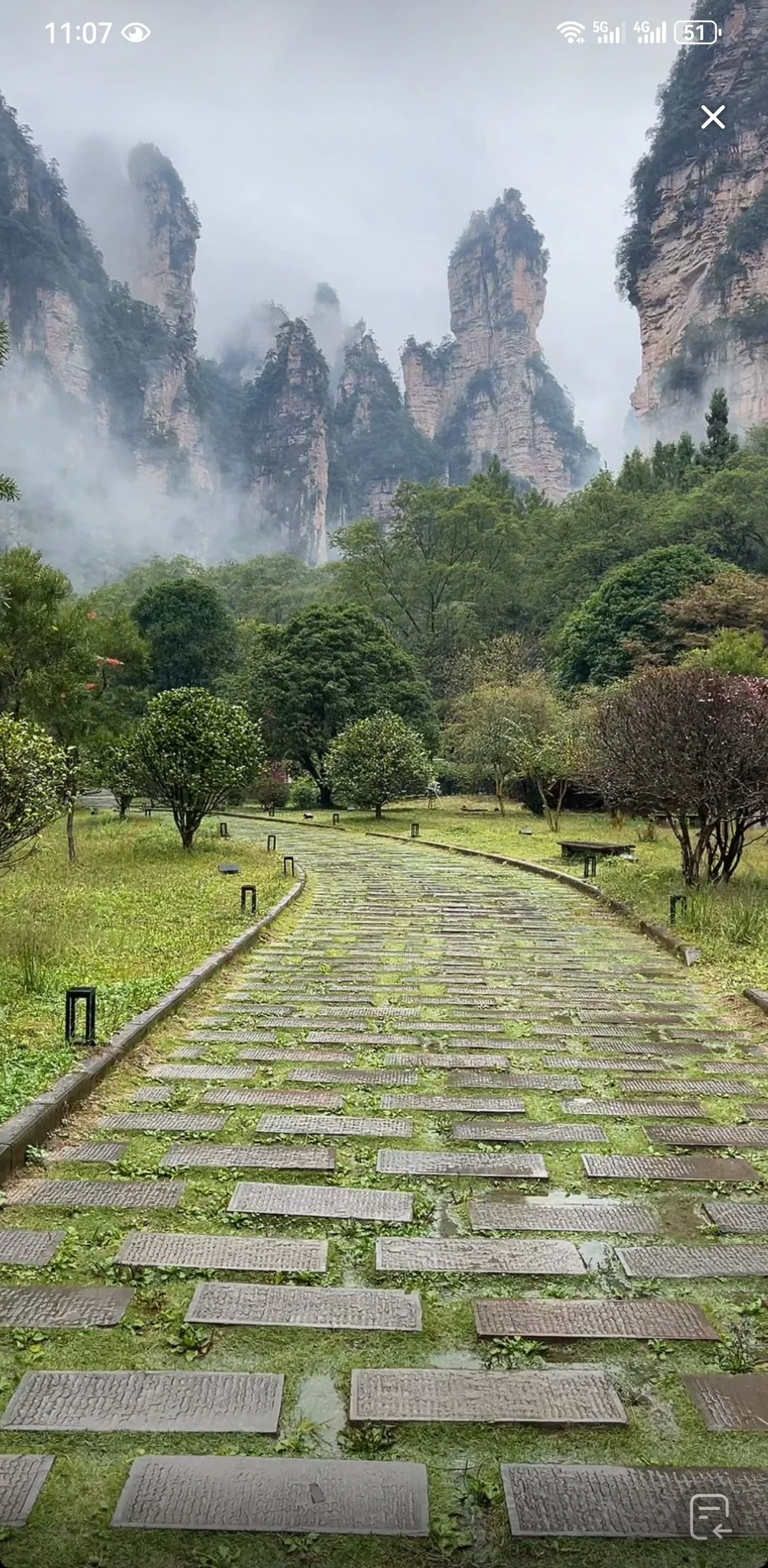
No. The park operates in rain. Individual trails can close for electrical storms, and the Bailong Elevator can pause for wind. Golden Whip Stream is genuinely better in light rain because the canopy keeps you dry. What you cannot do is photograph the cloud sea during the rain itself.
Do I need a guide?
For the standard viewpoints, no — signs are in English, trails are paved, and the viewpoints are reachable by eco-bus. For timing the post-storm window, and for anything off-route like Laowuchang, yes. A local guide who knows which morning will work is the difference between the photograph and a missed day. Budget CNY 800 to 1,500 for two days.
What if it doesn't rain during my stay?
Then you see the postcard version, and Zhangjiajie is still worth the trip — the pillars are dramatic, the trails are easier, and Tianmen Mountain is unaffected. Treat the cloud sea as a possible extra rather than the plan.
Can I see the cloud sea without hiking?
Mostly. The Tianzi Mountain cable car reaches 1,250 metres with no hiking, and West Sea viewpoint is a short flat walk from the upper station — that covers the look-down-into-the-clouds angle. For the pillar-in-cloud shot at Yuanjiajie, the Bailong Elevator takes you most of the way, followed by a short level walk. A non-hiking version of both is possible.
What time of day is best?
Two windows. The reliable one is 6:30 to 8:30 AM, with soft light rising behind the pillars and fog sitting around the upper third of the rock. The second is the hour before sunset on a partially cloudy day, which needs broken cloud to let low-angle light through — rarer, and harder to plan for. Stick with the morning.
Spring or autumn?
Both work. Temperature inversions tend to be more stable in spring, and spring offers more cloud-sea days per month. Autumn rain events are more intense but less predictable. For a single trip in a fixed window, an October post-rain clearing has good single-day odds — but watch the forecast rather than assuming.
Can I fly a drone?
Treat it as uncertain. Wulingyuan is a national park, and drone rules for national parks in China have tightened considerably in recent years. Regulations, permit processes and fees have changed repeatedly and differ by area. Do not assume a permit process exists until you have confirmed it directly with the park administration, and never fly without authorisation. For most visitors a tripod and a mirrorless camera is the practical choice.
What is the difference between cloud sea and valley fog?
Valley fog sits on the valley floor and obscures everything below pillar height — you get it on still, humid mornings without recent rain. Cloud sea sits at pillar mid-line with clear sky above and the summits breaking through, and it forms in the window after heavy rain. The first is what you accept when conditions are wrong; the second is what you came for.
Is the official Avatar platform the best spot?
It is the most accessible and the most crowded, which is not the same as best. It works well for a group wide-angle. Walk a few minutes further along the trail and the cloud line catches the pillar better at mid-shaft.
Final word
A four-day scouting trip in December 2008 produced the reference photographs behind the floating mountains of Pandora. The film was made in sound stages; the landscape that inspired it is here, and on the right morning it genuinely does look like the screen.
Everything else is a postcard.
Read the full Zhangjiajie travel guide · See our 4-day Zhangjiajie private tour · Custom itinerary planning · Send us your travel dates
Official reference: Wulingyuan District tourism authority ticket page, http://www.hnzjj.com/ (rates as published, checked October 2026). Zhangjiajie municipal government portal, https://www.zjj.gov.cn/ . Zhangjiajie municipal government coverage of the Avatar location history, https://www.zjj.gov.cn/c32/20160420/i9215.html . China News Service coverage of the 25 January 2010 renaming ceremony, https://www.chinanews.com/sh/news/2010/01-25/2089946.shtml .
The Eric Hansen scouting trip of December 2008 and the Southern Sky Column's elevation are documented in Zhangjiajie municipal government reporting and in China News Service coverage of the renaming ceremony. Ticket rates and operating hours change — confirm current prices with the park or your guide before travelling. Weather-dependent phenomena described here have no published probability; any percentage figures for cloud-sea occurrence found elsewhere are not statistically supported.