

Why Flying in China Gets Expensive Around Golden Week — And Why You Probably Don't Need the Plane
September 14, 2026 | LynxTravel Editorial | 10 min read
You search for a flight from Shanghai to Zhangjiajie for early October, and the fare is double what it was two weeks ago. Nobody doubled the distance. Nobody added a stop. So what exactly is going on?
Every year, travelers planning a China trip around May Day (May 1), National Day (Oct 1–8), Mid-Autumn Festival, or Chinese New Year run into the same wall: prices on flights, trains, and hotels all jump at once. It feels arbitrary. It's not. Once you understand the machine behind it, you can plan around it — and in most cases, you can skip the plane entirely.
Part 1: Why airfares in China are rising right now
Three forces are pushing fares up this year, and only one of them is seasonal.
1. Jet fuel got expensive — and airlines pass it on
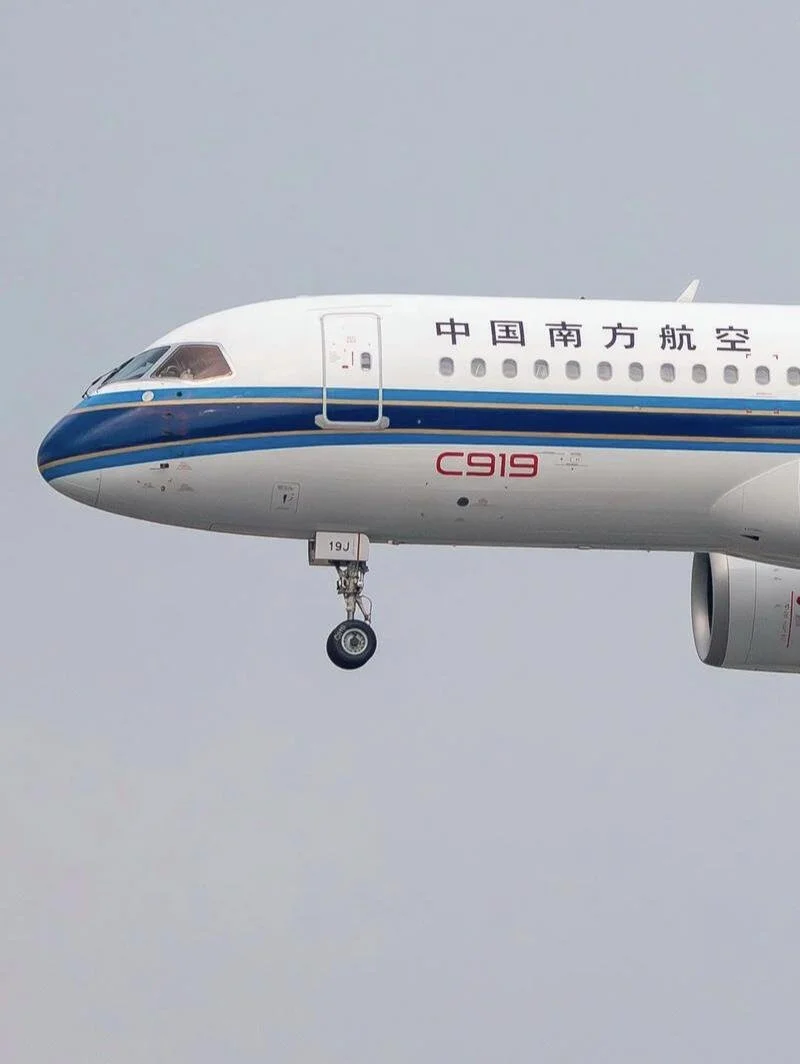
Fuel is the single biggest cost in running an airline, typically 30% to 40% of total operating costs. In the first half of 2026, geopolitical conflict in the Middle East pushed jet fuel prices up sharply — China's three state-owned giants (Air China, China Southern, China Eastern) reported fuel costs of nearly 97 billion RMB (about $13.5 billion USD) in six months, over 25 billion RMB more than the year before (source: China Tourism News). Together they lost 8.16 billion RMB in the first half of this year alone.
Airlines don't absorb that quietly. China raised its domestic fuel surcharge twice in a single quarter — at its peak, the surcharge reached 170 RMB (about $24) one-way on routes over 800 km. That surcharge is added on top of the base fare, which is why the price you see today can be genuinely higher than the same route last year, even on an empty flight.
2. Dynamic pricing: the same seat is a different product every day
Chinese airlines, like airlines everywhere, use dynamic pricing — but China's market makes it feel more extreme. Here's the part most travelers don't realize: China's aviation market is highly concentrated on business-travel corridors (Beijing–Shanghai, Shanghai–Shenzhen, Chengdu–Hangzhou), and those routes fly nearly full every day of the year. When leisure demand piles on top during holidays, there is no spare capacity left to sell cheap.
Meanwhile, the industry has moved past its post-pandemic "recovery growth" phase into normal operation — passenger volume grew only about 1% in the first half of 2026. Airlines can no longer grow revenue by adding flights, so they grow it by pricing seats smarter. That's industry language for: the cheaper fare buckets sell out earlier.
3. And then there's Golden Week
Which brings us to the real question foreign visitors always ask.
Part 2: Why do Chinese holidays send prices through the roof?
Every country has peak seasons. China's are just in a different league, and the reason is structural: 1.4 billion people share very few long holidays.
In most Western countries, workers spread out vacation days across the year — you can take a week off in June, your neighbor takes theirs in September. In China, the pattern is the opposite. The main long breaks are Chinese New Year (Jan/Feb), May Day (early May), Mid-Autumn + National Day (late Sep/early Oct). That's roughly it. When hundreds of millions of workers, students, and families all move in the same two windows, you don't get a "busy season" — you get the largest coordinated human migration on Earth, twice a year, every year.
The supply side can't respond. Airlines can't magically add planes for eight days; new aircraft take years to deliver. Hotels can't add rooms. Train operators actually do add thousands of extra trains — but even that hits physical limits on popular corridors. So with demand exploding and supply fixed, prices do what prices do.
The industry data says it plainly: during this summer's peak, China's domestic routes carried over 117 million passengers, and bookings for the upcoming Mid-Autumn and National Day holidays are climbing weeks earlier than usual. If your trip overlaps with Golden Week, you're not competing with other tourists for the good views — you're competing with 1.4 billion people for the same seats.
One more thing worth knowing: during Golden Week, it's not just planes. Train tickets enter a waitlist system (they can genuinely sell out — this surprises European visitors), highway tolls get waived and the expressways turn into parking lots, and hotel prices in tourist cities routinely double. The surcharge on your flight is just the most visible tip of it.
Part 3: Is flying actually a must for foreign travelers? Mostly, no
This is where we push back on an assumption we hear constantly from first-time visitors: "China is huge, so I have to fly between cities."
That was true fifteen years ago. It is not true now — and this is the single biggest planning mistake we see international travelers make. They default to the same mental model they use at home: long distance = flight. Then they pay a fuel surcharge, arrive two hours early for security, wait for luggage, and take a 90-minute train from a remote airport into the city — while the high-speed rail passenger who left at the same time is already checking into their hotel.
Consider the math on the routes our Zhangjiajie private tours travelers actually use:
Beijing → Zhangjiajie: ~2h45m flight plus airport time ≈ 6h door to door — vs. ~7h by direct high-speed train (or an overnight sleeper).
Changsha → Zhangjiajie: 50min flight plus airport time ≈ 4h total — vs. ~2.5–3h by train. Rail wins clearly.
Beijing → Xi'an: ~2h20m flight plus airport time ≈ 5h total — vs. ~4.5h by train, city center to city center.
Shanghai → Beijing: ~2h15m flight plus airport time ≈ 5h total — vs. ~4.5h by train at 350 km/h. Rail wins clearly.
Chengdu → Lhasa (Tibet): ~2h15m flight — here the plane genuinely wins — vs. ~36h by train, though that ride is one of the world's great railway journeys.
Notice the pattern: once you count the full journey — airport transfers, check-in, security, baggage claim — rail wins on almost every route under roughly 1,200 km. And it wins on more than time:
No fuel surcharges, no dynamic pricing games of the same magnitude. High-speed rail fares are regulated and stable; a Beijing–Shanghai second-class ticket costs about the same in October as it does in March. (Some flexible "discounted" fares exist, but the ceiling is capped.)
Stations sit in the city center. You arrive where you actually want to be.
Punctuality. Chinese HSR runs on a scale of minutes late, not hours. Cancellations are rare.
Security and boarding take minutes, not hours. Arrive 20–30 minutes before departure and you're fine.
The view. Rice terraces, river gorges, mountains — a flight gives you clouds; the train to Zhangjiajie gives you China.
The honest downsides of rail — because there are some
We'd be doing you a disservice to pretend rail is free of problems. Four things to know before you commit:
Tickets sell out — especially during Golden Week. Sales open about 15 days before departure, and popular segments on holiday dates can be gone in hours. The official booking app (12306) has a waitlist, but navigating it with a foreign passport requires setup — our China Train Guide for foreign travelers walks through the whole process. Our advice: decide your long train segments early, and let a local operator secure them the moment sales open.
Passport verification adds friction. Foreign passports work on the rail system, but the app registration, real-name verification, and station ticket-gate process are all built around Chinese ID cards. There are workarounds (manual gates at every station), but expect a few extra minutes each time until you learn the rhythm.
Luggage is on you. No baggage check. The overhead racks are generous, but a month of luggage and a toddler is a different experience from a two-hour flight with the same load.
Very long distances still favor flying. Beijing or Shanghai to Lhasa, Urumqi, or Kashgar — a 30+ hour train ride is an adventure, not a shortcut. Take the plane, budget the surcharge, and spend your energy on the destination.
Part 4: How does China's rail network compare to the rest of the world?
If you've ridden trains in Europe or Japan, adjust your expectations upward.
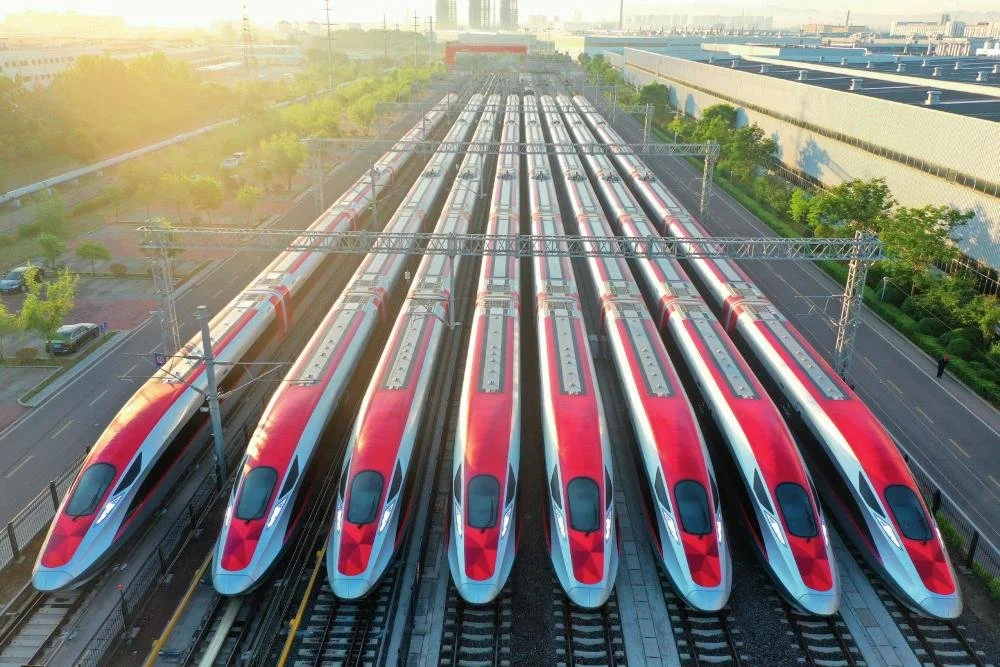
China's high-speed rail network now exceeds 48,000 kilometers — longer than every other high-speed rail network on Earth combined. Trains run at up to 350 km/h, the world's fastest commercial operating speed, and the network is still expanding every year. For scale: Europe's high-speed network, built over decades across dozens of countries, is roughly a third of China's total.
China HSR — 48,000+ km network, the lowest per-km ticket price in the developed world, 350 km/h operating speed, dense schedules, and exceptional punctuality.
Japan Shinkansen — ~3,000 km network, roughly twice China's per-km price, with impeccable service — but fewer lines and higher fares.
Europe (TGV, ICE, etc.) — ~12,000 km combined across many countries, beautiful routes, but ticket prices are high, dynamic pricing is aggressive, and cross-border trips are often slow and fragmented.
United States — effectively no high-speed rail (one ~350 km corridor in development), which is why flying is the only real option between cities.
This is the part American visitors find hardest to believe: in China, the train is not the budget backup for people who can't afford a flight. It's the default choice for everyone — business travelers in suits, families, students. On the Beijing–Shanghai corridor, trains carry more passengers per day than every airline combined.
So what should you actually do this autumn?
Here's our plain-spoken advice, the same we give every traveler who writes to us:
If your dates must overlap Golden Week (Oct 1–8): book every inter-city segment now — flights AND trains. Assume popular options are already gone. Shift your focus to securing whatever remains.
If you can flex by even one week: travel in late September or from mid-October. Prices drop sharply, the weather in Zhangjiajie, Xi'an, and Beijing is at its autumn best, and the crowds thin out dramatically.
Routinely: default to rail under ~1,200 km, fly above it. It saves money most of the time, and it always saves time door-to-door.
Don't build your trip around guessing. This is genuinely what local operators are for — we know which segments sell out first, whether your date needs a waitlist or a reroute, and when the train beats the plane for your specific itinerary.
Planning a China trip around this year's holidays? Our team has been arranging private tours across China since 2014 — 14 years of operating experience — with local crews in Xi'an, Beijing, Tibet, Xinjiang, Chongqing, Guilin and more, and over 500,000 travelers served at a 5.0 rating. Our Zhangjiajie private tours start from $237 (3 days), $339 (4 days), and $439 (5 days with Fenghuang) — all ground transport, tickets, hotels, and a private English-speaking guide included, so holiday pricing is a problem we absorb and solve, not one you navigate.
WhatsApp: +86 172 6789 8631 | Email: rosewuqjzh@gmail.com
Prefer to write? Send us your dates through our trip planner — we'll tell you honestly where to fly, where to ride, and where to wait.
Industry figures referenced from China Tourism News (Sept 10, 2026), covering the H1 2026 reports of China's listed airlines. Rail comparisons reflect published network data as of 2026.