Why Is Sichuan's Cultural Influence So Insanely Strong?
By Lynx Travel China · August 2026
A while ago, a post went massively viral on a Chinese Q&A platform. The question was simple: "Why does the Sichuan Basin have such strong cultural influence?"
What followed was a long-form answer that racked up tens of thousands of upvotes and nearly 2,500 comments — readers from all over the world chiming in, swapping stories, and basically having a collective love letter to Sichuan.
We've beenfor over 14 years We thought we knew Sichuan pretty well. But that post? It had details and angles even we hadn't noticed. So we decided to translate the best parts, weave in the most interesting reader reactions, and share it here.
If you're even vaguely considering a trip to China, this article will probably do more for you than any guidebook. It'll make you want to go before you even book the flight.
The Global Sichuan Takeover Is Real
Search "Szechuan," "Chengdu," or "Sichuan" on YouTube and you'll immediately find foreigners who've fallen hard for this place.
There's a food vlogger named Trevor James — 4.8 million subscribers, the kind of guy who's eaten his way across dozens of countries. He once announced he'd spend a year eating through all of China. Four years later? He still hadn't left Sichuan.
In November 2014 he was in a Chengdu hole-in-the-wall eating pig brain. By June 2018 he was poking around a roast duck shop in Pengzhou, a small county town. In between, he picked up the Sichuan dialect. The man literally embodied an ancient Chinese proverb: "The young should never enter Sichuan" — because once you do, you'll never want to leave.
One reader pointed out in the comments: "So the four-years-in-Sichuan thing isn't a meme. It's actually true."
His international audience went wild too. The ones who'd already eaten Chinese food started bragging about it. The impatient ones? Booked flights on the spot.
What's fascinating is how many Sichuan cultural exports you encounter without even realizing they're Sichuan.
A reader living in Europe (username Yookiyuan) dropped some serious knowledge in the comments. She explained that Europeans discover Sichuan through three things: Sichuan pepper, Sichuan cuisine, and Li Ziqi.
Sichuan pepper — huājiāo — is sold abroad as "Sichuan Pepper." And it's having a moment. Bars in Europe are infusing gin with it. Every time she flies home, her coworkers ask her to bring back more, because the stuff sold locally is expensive and, crucially, "not numbing." That mouth-numbing sensation — the málà — is something you just can't fake with imported powder.
As for the food, she says many Europeans now consider Sichuan cuisine to be the real Chinese food. Everything else served at most overseas Chinese restaurants? They call it "Euro-Chinese."
Another commenter shared an even wilder story: their university in China had a French exchange student whose first question upon arrival was "Where's Hanyuan?" Hanyuan is a county under Ya'an — not even a city, a county. A French person knew about it. Why? He'd researched online and discovered that Hanyuan produces the most authentic Sichuan pepper in the world.
And then, of course, there are pandas.
The Chengdu Research Base of Giant Panda Breeding has more than 30 million followers watching panda videos on its official channels. The comment sections are pure gold: "I wish pandas were as common as dogs so I could keep one as a pet." "If free pandas existed everywhere, the world would be a much better place."
The more practical fans just book a flight to Chengdu and sign up for the panda keeper program. You shovel poop. You pay for the privilege. People love it.
Some things aren't even originally from Sichuan, but they've borrowed the name and blown up anyway. "Szechuan Chicken" barely exists in actual Sichuan cooking. McDonald's "Szechuan Sauce" caused such a frenzy in the US that people literally took to the streets demanding its return.
The original post had a line that stuck with us: people used to wonder why the US-China tensions led to the Chengdu consulate being closed first, until they saw an American commenter write — "No more pandas AND no more Sichuan food? This is too serious."
Foreigners look at Sichuan the way the rest of us looked at Hogwarts as kids. Magical animals? Check. Incredible food? Check. Mysterious spices that make your mouth tingle like a spell? Check. Closing the Chengdu consulate was like shutting down Platform 9¾.
Japan Has Taken Sichuan Studies to PhD Level
If Westerners are enjoying Sichuan at surface level, the Japanese have gone deep. Really deep.
Sichuan is 1.3 times the size of Japan, which prompted the very Japanese reaction: "Wow, so big! Amazing!" (Tibet, Qinghai, and Xinjiang silently raised their hands, but that's not the point.)
In an episode of the anime Crayon Shin-chan, the character's first-ever trip to China lands him at Chengdu Shuangliu Airport. His assessment, delivered with the absolute certainty of a five-year-old cartoon character: "Real pandas really are different!"
Saito Asuka, a national-level Japanese idol, lists her signature talent as Sichuan opera face-changing.
Japanese people genuinely love Romance of the Three Kingdoms, a classic novel whose main storyline takes place in Sichuan. They've been known to ask, with complete sincerity: "Do Chinese people love Romance of the Three Kingdoms as much as we do? Because we love it passionately."
Sichuan's reputation for spicy food? The Japanese did half the marketing. They've dubbed Chengdu "The World's Most Fiery Spice City" and ran a street experiment: invite Sichuan locals to eat Japan's spiciest ramen.
The first guy they found sniffed the bowl and delivered a look of pure contempt: "Is this actually spicy? I can only smell potato chips." He finished it in two minutes without breaking a sweat. His review: "Compared to Sichuan hot pot, this is maybe medium-spicy at best."
A lot of this obsession traces back to childhood. The anime Chūka Ichiban! (known in English as Cooking Master Boy) stars a Sichuan-born chef whose signature dish is Grand Magic Panda Tofu — which is literally just mapo tofu with extra drama.
And it's not a recent thing. A Japanese traveler named Nakano Koyama visited Sichuan during the late Qing Dynasty and wrote a travelogue called Across Mainland China — A Miscellany of Shu Travels. His verdict: "Chengdu is the cleanest place in China!"
A Yahoo Japan poll once asked where Japanese people would most want to immigrate within China. Sichuan came first. Taiwan was second. Shanghai, third.
One Chinese commenter had a bittersweet take on this: "I see this and feel regret. I hope China keeps promoting its culture. I don't want Japanese people to learn about Sichuan through a Japanese cartoon — that's kind of ridiculous when you think about it."
Fair point. But the flip side is also true: Sichuan's cultural gravity is so strong that people seek it out themselves, without waiting for an invitation.
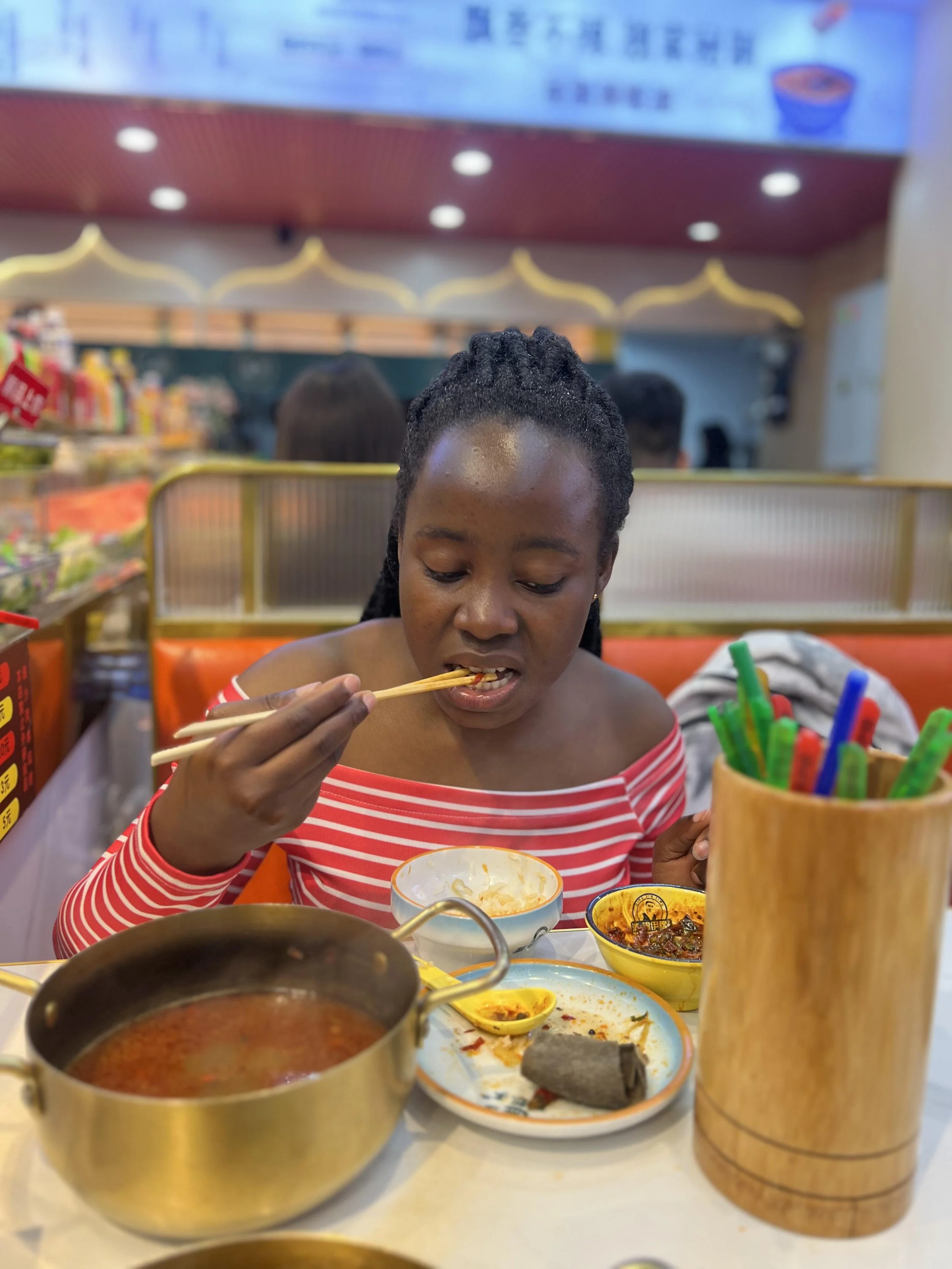
So What's Actually IN Sichuan?
Lonely Planet named Sichuan one of Asia's best travel destinations, and it's not hard to see why.
The province has 202 national 4A-rated scenic spots — the most of any Chinese province. Within a single province you get: ancient ruins at Sanxingdui, poetry at Du Fu's Thatched Cottage, mountains at Emei and Qingcheng, waterscapes at Jiuzhaigou, the world's largest Buddha at Leshan, Tibetan culture in Sêrtar and Daocheng Yading.
A user on that viral thread did the math: driving to all of Sichuan's major attractions would take at least 571 hours — about 48 full days. With the average annual leave, you'd need roughly two years to cover it all.
Here's a cheat sheet for the shortlist:
Jiuzhaigou Valley — The turquoise lakes and multi-tiered waterfalls that look Photoshopped but aren't. Best visited in autumn (October) when the foliage turns gold and red against the unreal blue water. TripAdvisor rating: 4.5/5 across thousands of reviews. One day minimum, two is better.
Mount Emei — One of China's four sacred Buddhist mountains. You can hike it (takes two days) or take the cable car. The Golden Summit at sunrise, above a sea of clouds, is the payoff. Monkeys will try to steal your snacks — they're notorious, keep your bags zipped.
Leshan Giant Buddha — A 71-meter Buddha carved into a cliff face in the 8th century. You can view it from the top (walk down the cliffside path) or take a boat for the full front-on view. The boat is honestly better for photos.
Chengdu itself — The Research Base (pandas in the morning, they're most active before 10 AM), Jinli Ancient Street, Wuhou Shrine, the Sichuan Opera (face-changing!), and more hot pot restaurants than you could visit in a lifetime.
Daocheng Yading — Often called "the last Shangri-La." High-altitude Tibetan scenery — snow peaks, glacial lakes, vast grasslands. This one requires at least 3-4 days from Chengdu and you'll want to acclimatize. Not for the faint of heart, but absolutely worth it if you're after that jaw-on-the-floor landscape.
A reader named "Xue Man Fu Sheng" left one of the most heartfelt comments in the thread: "I studied in Sichuan for university. My hometown on the Shandong coast has beautiful sea views and I used to think it was pretty special. Then in my second week, I visited a random Taoist temple in Chengdu. I never bragged about Shandong's scenery again. By the time I'd been to Qingcheng, Dujiangyan, Mount Siguniang, Emei, Leshan, Jiuzhaigou, Daocheng… when I moved back to Shandong, I couldn't get excited about any local trips anymore."
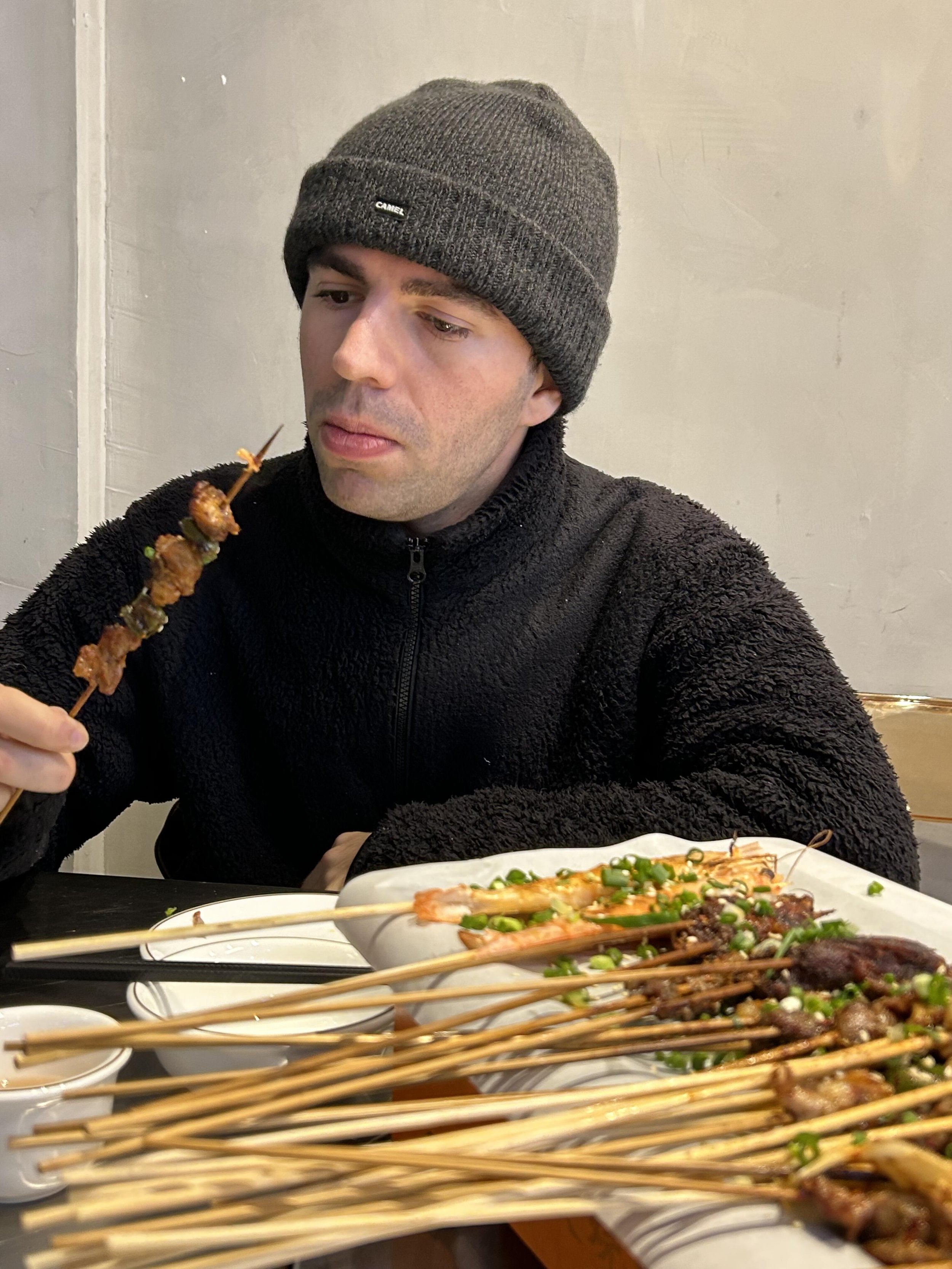
The Real Secret: It's the People
The post's most popular section wasn't about pandas or food. It was about the people.
Sichuan people have a kind of relentless vitality — an endless enthusiasm for making life good. A 2020 survey of spending habits in major Chinese cities found that in ten out of twelve cities, the biggest expense was rent or mortgage. In the other two — Chengdu and Chongqing — the number one spending category was food.
The Sichuan philosophy of life can be summed up in one word: shuǎ. It translates roughly to "playing," "chilling," "having a good time." Life should be enjoyable first. Money? That's secondary.
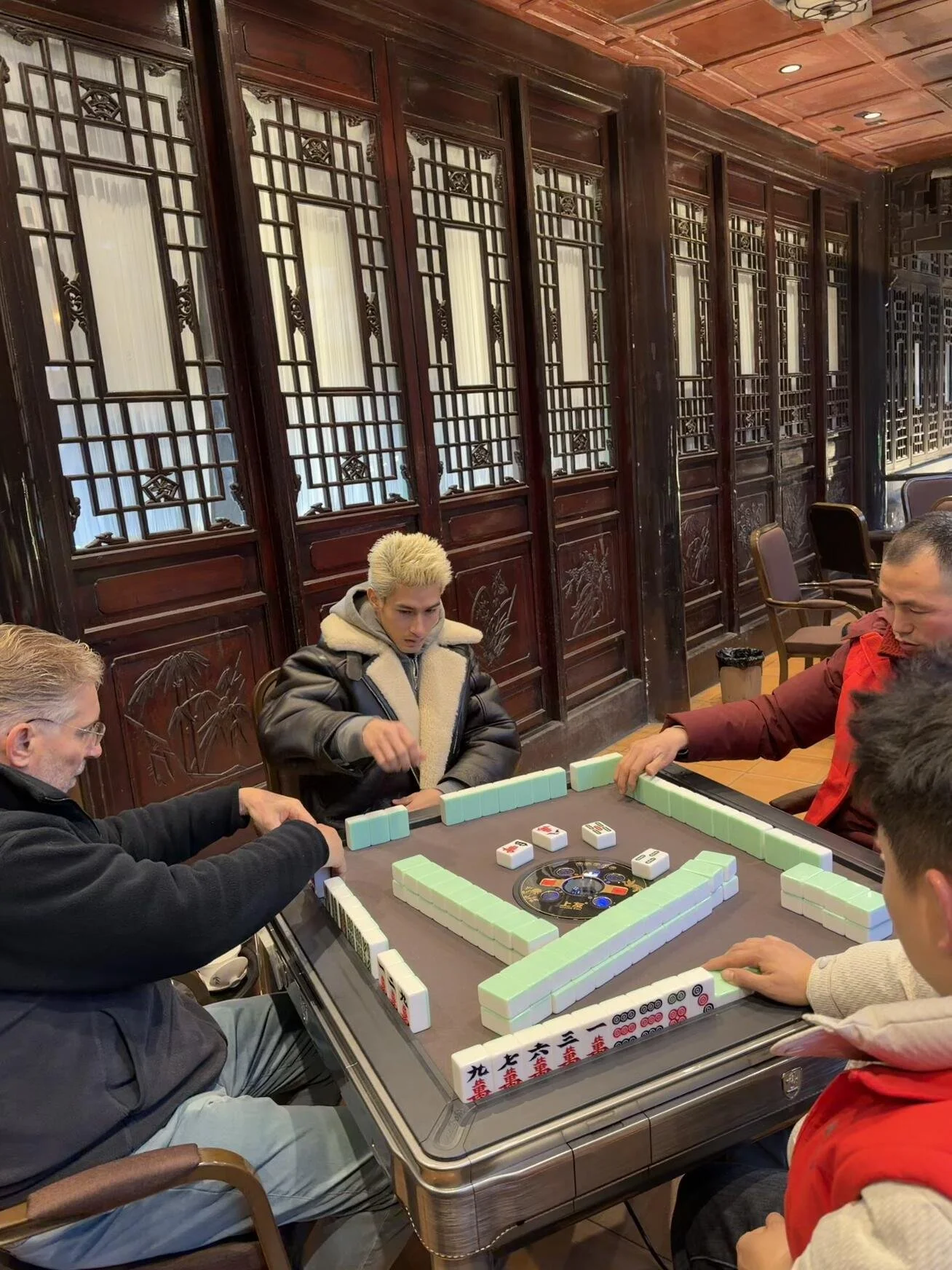
The original post listed examples that made readers smile: A restaurant owner puts up a sign: "Closed — the boss lady wants to go play at Fairy Mountain." Flood warnings are issued, and the locals shrug and play another round of mahjong. A Chengdu taxi driver rear-ends a BMW, settles it with rock-paper-scissors for 700 yuan, and ends up eating hot pot with the other driver as friends. A 96-year-old vegetable vendor named Grandpa Song dances while he works, a portable speaker in his pocket. His advice to young people? "Sing, dance, have fun. Be optimistic."
One commenter shared her own story: her retired-teacher uncle would drag her out for walks through bamboo groves, hunting for spring bamboo shoots, composing poems by streams. He turned ordinary days into something beautiful. She admitted that by online standards her family was poor — but her dad passed his optimism down to her, and somehow she's never short of friends.
And then there's Li Ziqi.
The most internationally influential Chinese content creator is Sichuan-born. She has 13.7 million YouTube subscribers, and her videos are essentially about one thing: living well. Planting, harvesting, cooking, crafting. Slow. Beautiful. A viewer from one country after another writes the same thing in the comments: "It's like watching life on another planet — no hate, no jealousy, only love."
Sichuan became a global phenomenon because it holds up a mirror to the best possible version of ordinary life. The climate is mild, the land is generous, and you can choose your own way of being alive here. Hermit, wanderer, romantic — all valid.
Not everyone was buying the hype, though.
Several Sichuan locals in the comments admitted the praise made them uncomfortable. "I'm Sichuanese and this feels like it's exaggerating a bit" got nearly a thousand upvotes. Another wrote: "As a Sichuan local, this level of flattery is so awkward I can't handle it."
Which, honestly, tells you as much about the culture as the original article. Capable but not showy. Gets complimented and immediately asks "Wait, is this too much?" One commenter nailed it: "The way Sichuan people are exclusive is by treating you so well — feeding you amazing food, showing you such a good time — that you start wanting to become Sichuanese yourself. Then they'll tell you 'Oh, Sichuan isn't that great, don't come, you'll regret it.' And that's when you realize they're flexing on you."
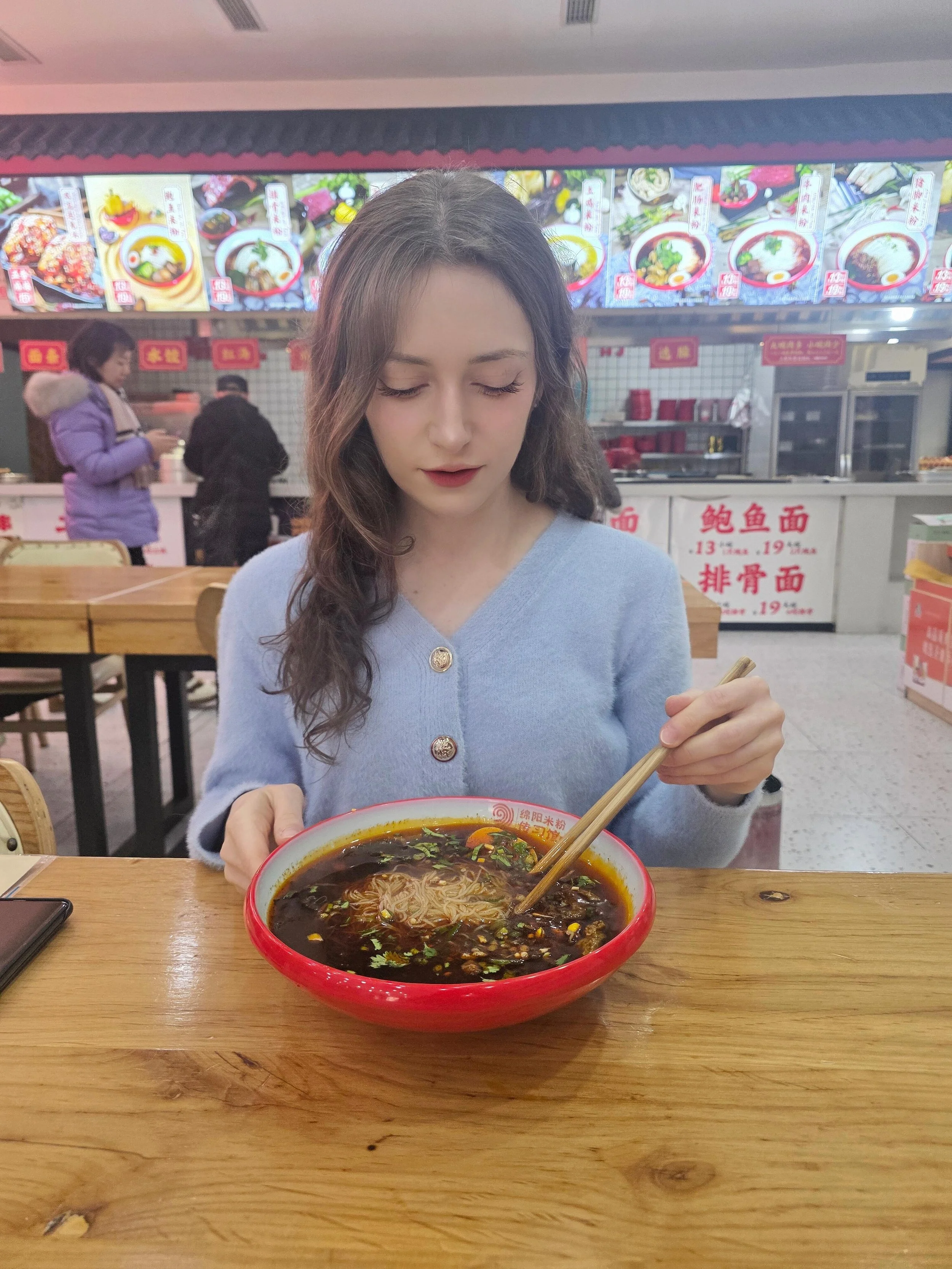
What You Need to Know Before Visiting Sichuan as a Foreign Traveler
If this article has done its job, you might be looking at flights. Here are the practical things that matter:
Visa-free transit. Chengdu is one of the cities offering 144-hour (6-day) visa-free transit. If you're transiting through Chengdu to a third country, you can explore the city and surrounding areas without a visa. Check the latest policy before booking — rules have been expanding.
Getting there. Chengdu Shuangliu International Airport (CTU) is well-connected internationally. The newer Tianfu International Airport (TFU) handles most long-haul flights. High-speed trains connect Chengdu to Xi'an (3.5 hours), Chongqing (1.5 hours), and Kunming (6 hours).
Payment. Download Alipay and link your foreign credit card before arriving. It's accepted virtually everywhere in Chengdu — street vendors, taxis, restaurants, attractions. WeChat Pay works similarly. Cash is increasingly rare in cities, so set up mobile payment in advance.
VPN and internet. You'll want a VPN installed and tested before you land. Google, WhatsApp, Instagram, Google Maps — all blocked in China without one. Alternatively, pick up a local SIM with a data plan at the airport; some travel SIMs route through Hong Kong and bypass the firewall.
Getting around. Didi is China's Uber and works in English within the Alipay app (just switch the app language). Chengdu's metro is clean, efficient, and covers most tourist areas. English signage exists but isn't universal — having destination names in Chinese characters on your phone helps.
Accommodation. Not every hotel in China is licensed to accept foreign guests. When booking on Trip.com or Booking.com, filter for "accepts foreign guests" or look for hotels rated 4 stars and above — they almost always have the required registration license. For Chengdu specifically, the Jinjiang District and Wuhou District areas have the highest concentration of foreigner-friendly hotels. On Trip.com, the Niccolo Chengdu (4.7/5, 2,000+ reviews) and The Temple House (4.8/5, 800+ reviews) are consistently top-rated by international travelers.
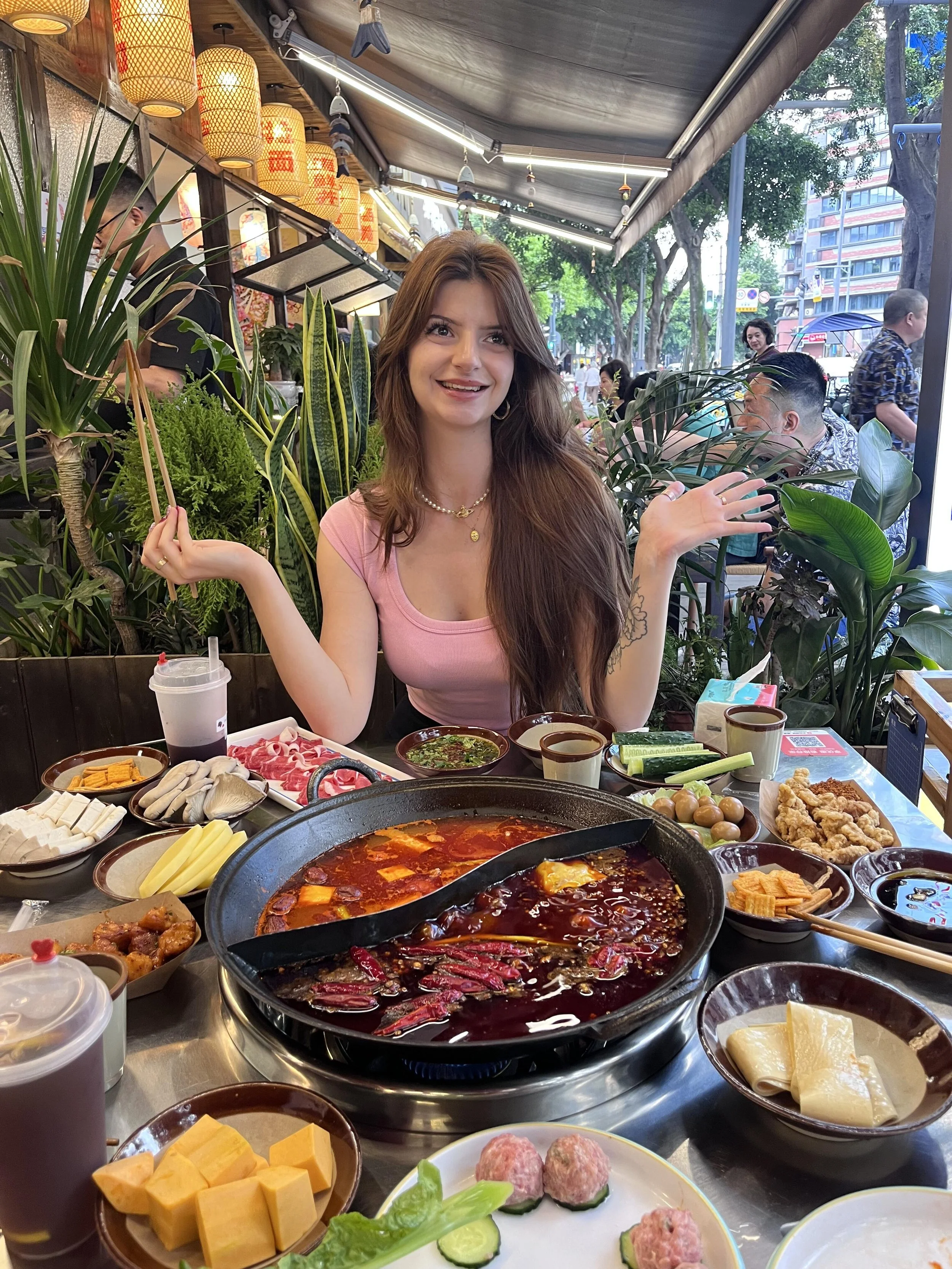
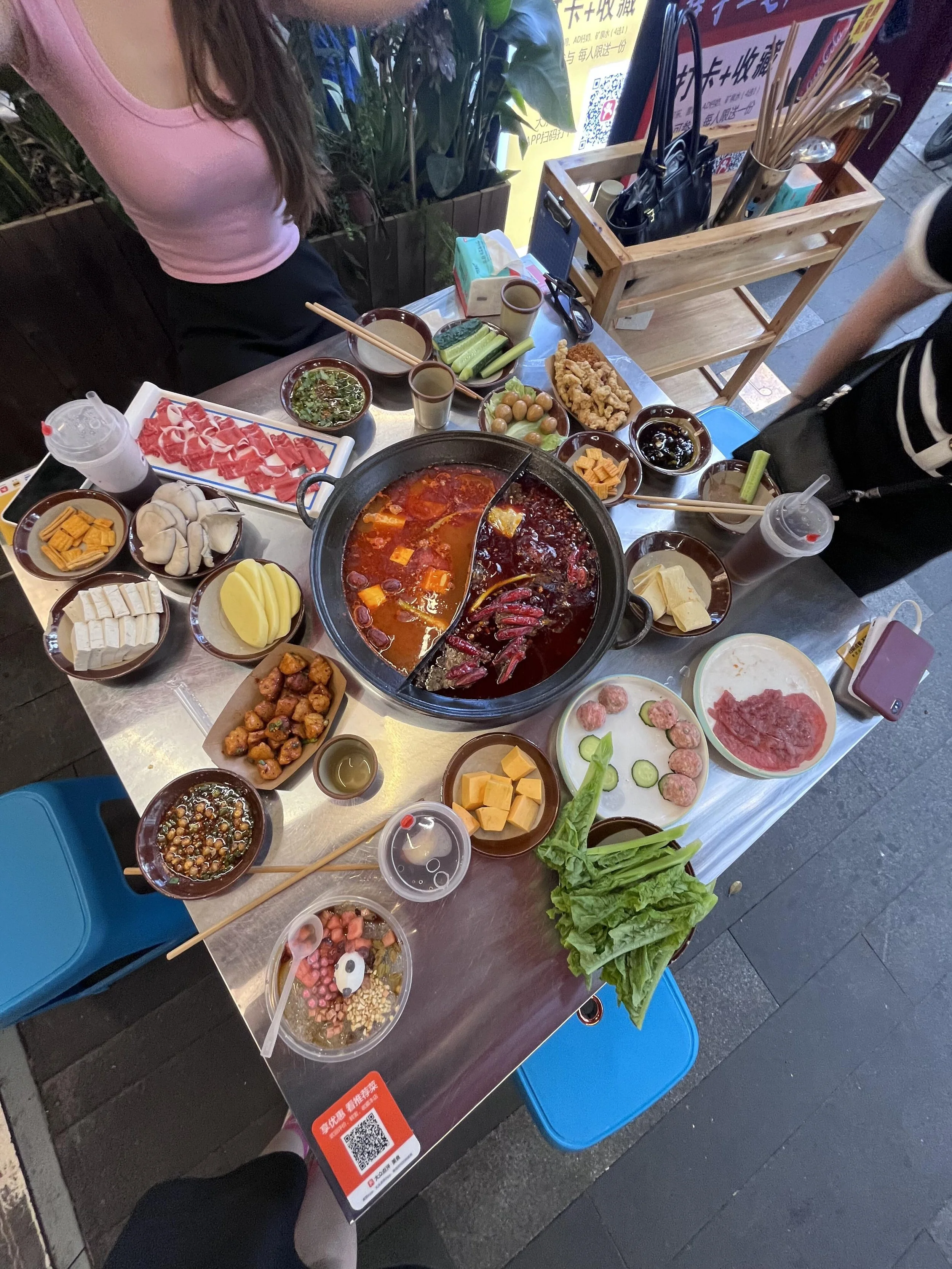
Sichuan spice survival guide. "Wēilà" means mild spicy — but Sichuan mild is still spicier than most countries' "extra hot." When ordering hot pot, ask for "yuānyāng guō" — the half-spicy-half-mild split pot. It'll save you. Every restaurant also has non-spicy dishes; boiled dumplings, dan dan noodles (ask for "bù là" — not spicy), and twice-cooked pork are good places to start.
Best time to visit. Spring (March-May) and autumn (September-November) are ideal. Summers in Chengdu are humid and the Sichuan basin traps heat. Jiuzhaigou in October is peak season for a reason — the autumn colors are absurd. Winter in Chengdu is grey and damp but the hot pot tastes better when it's cold outside.
Language. English is less common in Sichuan than in Beijing or Shanghai. Download a translation app (Google Translate's offline Chinese pack, or Pleco for character recognition). Learning three phrases goes a long way: "Xièxiè" (thank you), "Zhège" (this one — point at the menu), and "Hǎochī" (delicious).
Lynx Travel China × Sichuan — We'll Handle the Hard Parts
Lynx Travel China has been running tours across this country since 2014. We've taken hundreds of travelers through Sichuan, and we've learned that the difference between a good trip and a great one usually comes down to one thing: having someone local who actually knows what they're doing.
Our Sichuan trips cover:
Classic routes: Chengdu → Leshan Giant Buddha → Mount Emei → Jiuzhaigou
Culture deep dives: Sanxingdui Museum + Jinsha Site + Du Fu's Thatched Cottage + Sichuan opera
Tibetan Sichuan: Daocheng Yading + Sêrtar + Tagong Grasslands
We run small groups (6–12 people) and private tours (2–4 people, fully customized). Every trip comes with a local driver who knows the mountain roads and a licensed English-speaking guide. For Jiuzhaigou and Daocheng, we handle all the logistics — permits, high-altitude planning, where to stay — so you can focus on actually enjoying the place.
Want a custom Sichuan itinerary? Tell us your dates, group size, and budget. One of our trip designers will get back to you with a full plan — usually within 2 hours.
DM us on WhatsApp or fill out the contact form on our site. Send the word "Sichuan" and we'll also send you our internal Sichuan route guide — the real one we use for our tours, not the one written for search engines.
Traveling since 2014. Rated 5.0 from 50+ reviews. Not rushing through checklists — experiencing the place. Especially in Sichuan.
This article was adapted from a viral post on a Chinese Q&A platform, with permission. Reader comments referenced are from the original thread.