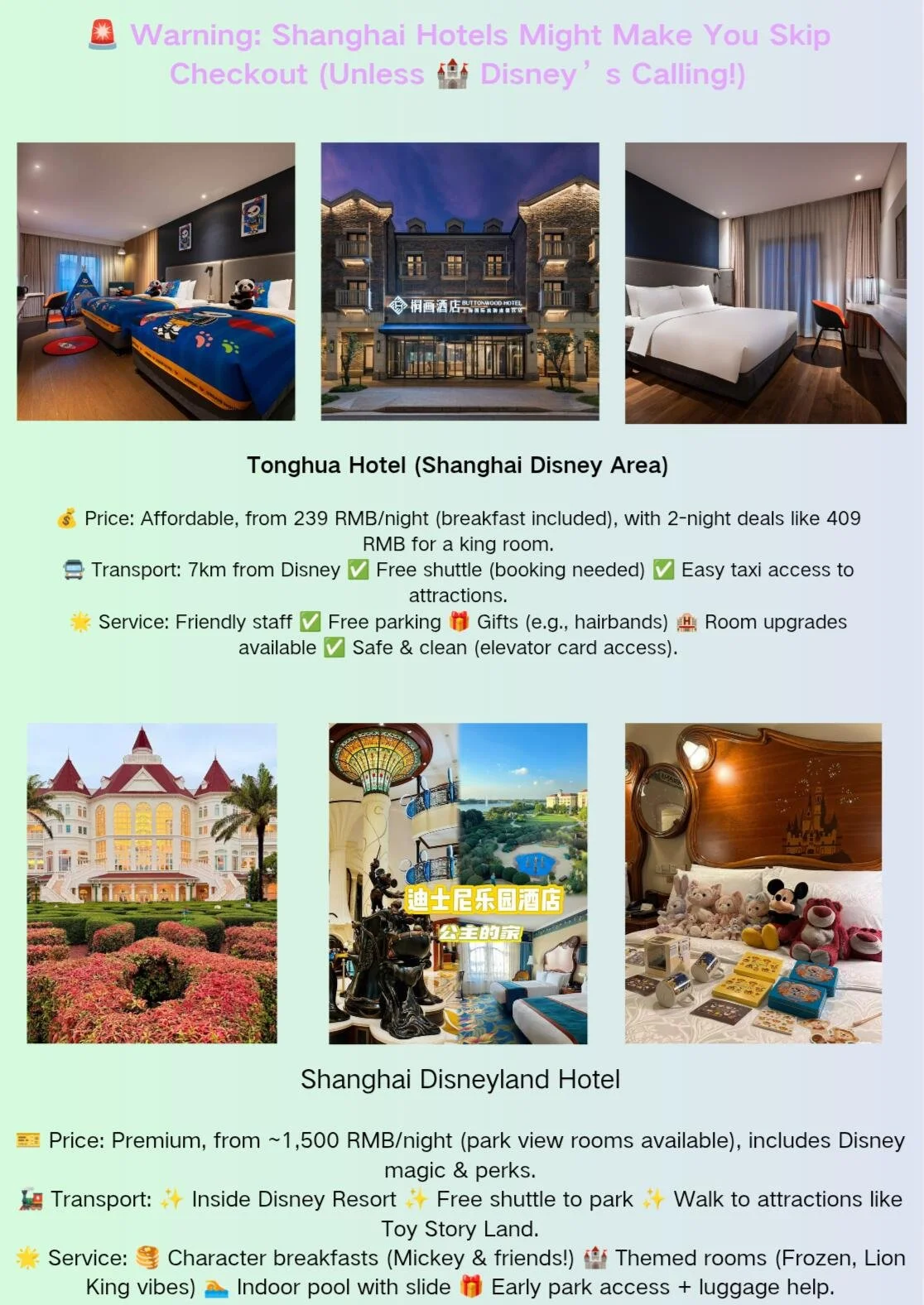
3-Day Quick Tour Guide of Shanghai (Copy)
Shanghai is where China's past and future collide — within 72 hours you can walk through 1920s lane houses, stare up at 600-meter skyscrapers, and ride the fastest magnetically levitated train on earth. This guide is built for foreign visitors who want the essentials without the fluff.
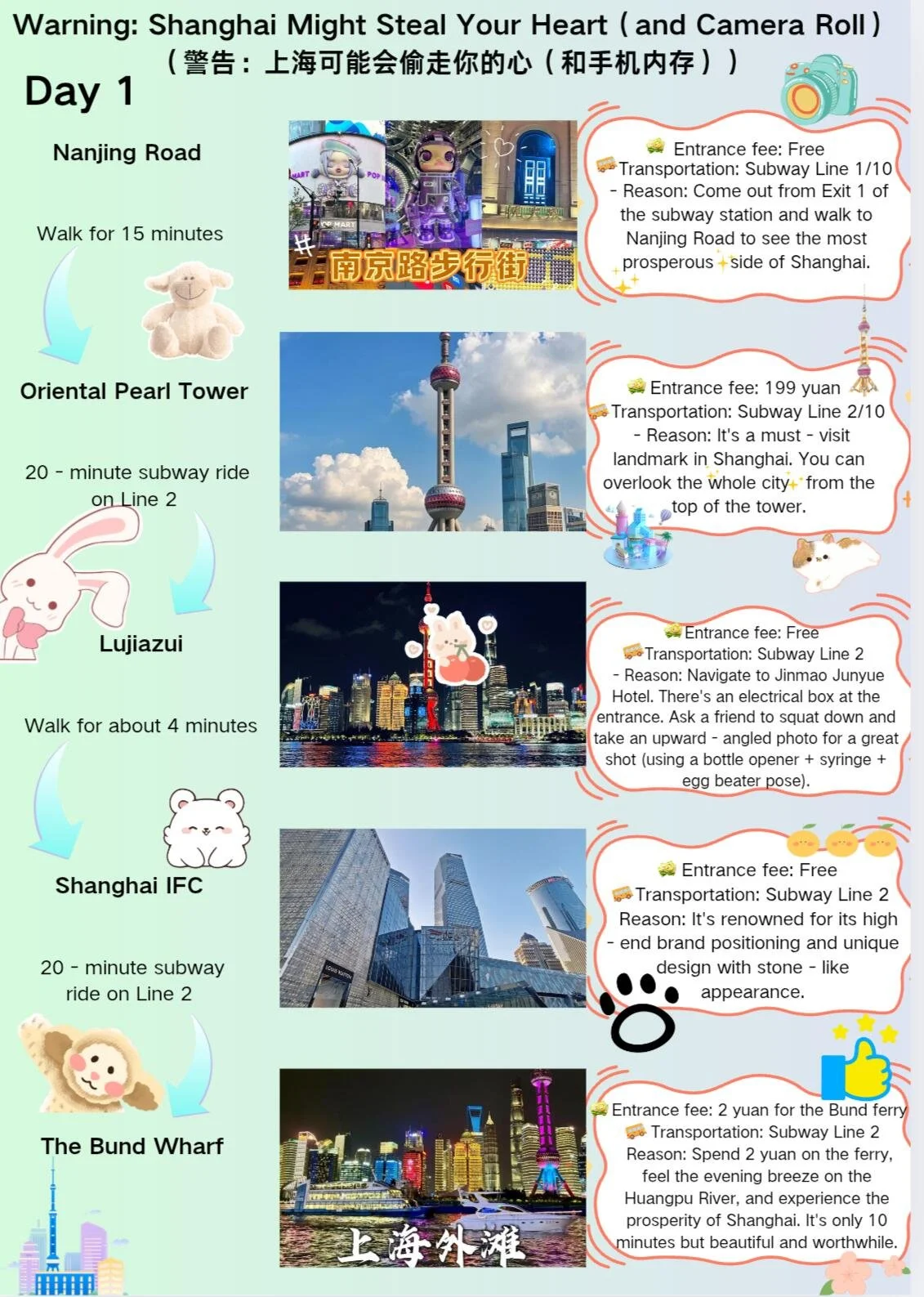
🗓️ Day 1: Classic Landmarks & Urban Vitality
Route: Nanjing Road Pedestrian Street → Oriental Pearl Tower → Lujiazui → The Bund
🏙️ Nanjing Road Pedestrian Street — Where Shanghai's Heart Beats
Nanjing Road (East) is one of the world's busiest shopping streets, stretching 1,200 meters from the Bund to People's Square. For foreign visitors, it's less about shopping and more about feeling the scale of Shanghai's crowds — on weekends, foot traffic exceeds 1 million people per day.
What to do here:
Walk the full pedestrian stretch (allow 45–60 minutes)
Soak in the neon signage — it's older and grittier than Tokyo's, with a distinct 1990s Chinese commercial energy
Look for the Shanghai No. 1 Food Store — a time-capsule of old Shanghai retail
Street food: try the candied hawthorn (tanghulu) or sesame flatcakes from pavement vendors
Practical note: Nanjing Road is completely pedestrianised. The nearest metro stops are East Nanjing Road (Line 2 / 10) and People's Square (Lines 1 / 2 / 8). If you're coming from your hotel, take the metro — taxis here are slow and drivers dislike the congestion.
🗼 Oriental Pearl Tower — The Icon You Either Love or Hate
Love it or hate it, the Oriental Pearl Tower (468m) has defined Shanghai's skyline since 1994. It's not the tallest anymore (that's Shanghai Tower next door), but it remains the most recognised silhouette of the city.
What's up there:
The lower sphere (90m): Shanghai History Museum — surprisingly well-curated, tracing the city from fishing village to colonial concession to global metropolis
The upper sphere (350m): Indoor observation deck with floor-to-ceiling glass
The sightseeing level (259m): Transparent glass floor — not for the faint-hearted
The 267m rotating restaurant: Buffet lunch (~¥288) if you want a slow meal with a view
Ticket tip: Book via the official WeChat mini-program or Trip.com. Comb tickets (tower + cruise + museum) are better value than single entry. Avoid the "premium fast-track" upsell — queues move reasonably fast outside Chinese holidays.
Time needed: 1.5–2 hours
🏢 Lujiazui — Three Skyscrapers, One Insane View
After the tower, cross the park to Lujiazui Central Green Space — this is the best ground-level viewpoint for photographing all three super-talls together:
Shanghai Tower (632m) — China's tallest, twisted like a screw to reduce wind loads
Shanghai World Financial Center (492m) — the "bottle opener" with a trapezoidal hole at the top
Jin Mao Tower (421m) — the step-back pagoda-inspired design
Want to go up one of them? Shanghai Tower has the highest observation deck in China (Level 118, 546m). Tickets are ~¥220. Go 30 minutes before sunset — you'll see day, golden hour, and night in one visit.
Lunch in Lujiazui: The IFC Mall has high-end options (Din Tai Fung, Crystal Jade), but for a more local feel, try Lujiazui Food Court in the basement of the Shanghai Tower retail podium — cheaper, authentic, chaotic.
🌉 The Bund — The Most Famous Riverside in China
The Bund (Waitan) is a 1.5km promenade along the west bank of the Huangpu River, lined with 52 buildings in Gothic, Baroque, Romanesque, and Art Deco styles — built when Shanghai was split into foreign concessions (1840s–1940s).
Why it matters: This is where you see two Shanghais at once — the colonial architecture behind you, and the futuristic Lujiazui skyline across the river in front of you. It's the most photographed view in the city, and for good reason.
Best time to visit:
Golden hour (17:30–18:30 in summer, 16:30–17:30 in winter): Soft light on the colonial buildings
After sunset (19:00–21:00): The Lujiazui skyline lights up in full LED glory; the Pearl Tower does a colour cycle every few minutes
Avoid: Midday — the light is flat and the river smells
Photography tip: Use portrait mode on your phone — it blurs the foreground crowds and makes the skyline pop. For a classic shot, stand near the Bund No. 1 (formerly HSBC Building) and frame the Pearl Tower dead centre.
River cruise option: If you have energy left, a 45-minute Huangpu River cruise (~¥100) departs from the Bund Tourism Terminal. It's touristy but gives you the skyline from water level — worthwhile if you haven't done a river cruise elsewhere in China.
Time needed: 1–1.5 hours (longer if you linger for photos)
🗓️ Day 2: Cultural Charms & Alley Moments
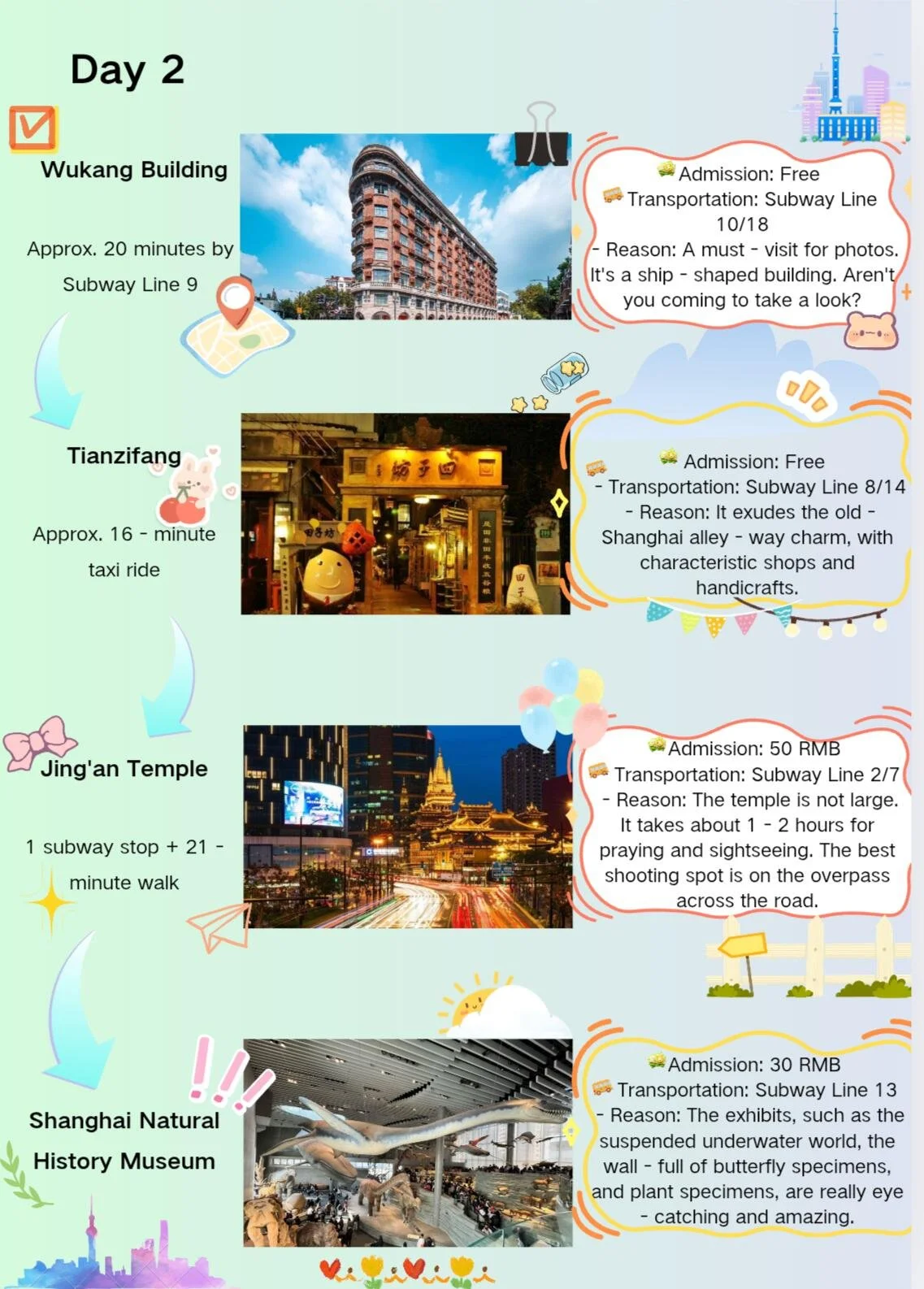
Route: Wukang Building → Tianzifang → Jing'an Temple → Shanghai Natural History Museum
🏛️ Wukang Building — The Most Photographed Corner in Shanghai
The Wukang Building (formerly Normandie Apartments) is a 1924 French-Renaissance wedge-shaped building at the intersection of Wukang Road and Middle Huaihai Road. It's not a museum and you can't go inside — the draw is entirely architectural and photographic.
Why it's worth the trip out:
It's the most intact piece of Shanghai's French Concession architecture
The surrounding Wukang Road is a shaded, quiet street lined with plane trees, boutique cafes, and small independent design stores
This is where young Shanghainese come for weekend photos — the vibe is effortlessly stylish without trying too hard
What to do:
Coffee at % Arabica or Manner Coffee on Wukang Road (both have English-speaking staff)
Walk south along Wukang Road toward Anyuan Road — you'll pass the former residence of Sun Yat-sen's son (Sun Fo) and several discreet galleries
If you're interested in modern Chinese art, Long Museum (West Bund) is a 15-minute walk east — one of China's best private contemporary art spaces
Getting there: Metro Line 10 or 11 to Shanghai Library Station, Exit 3, then walk 10 minutes south. Alternatively, taxi/DiDi to "Wukang Building" — show the driver 武康大楼.
Time needed: 1–1.5 hours
🏘️ Tianzifang — Lane Culture, But Make It Commercial
Tianzifang is a network of narrow laneways (lilong) in the former French Concession, converted into a warren of small shops, cafes, and art studios. It's often compared to Beijing's Nanluoguxiang — similar vibe, slightly less crowded.
The reality check: Tianzifang is touristy. But it's touristy in a way that still feels local — you'll see Shanghainese grandmas live on the upper floors, hanging laundry above the boutique candle shops.
What's worth your time:
Boutique stores: Custom seal-carving (¥50–100), hand-painted fans, small-batch oolong tea
Cafes: Dr. Beer (craft beer), Faces & Places (specialty coffee in a restored lane house)
Street food: Baozi (steamed buns), stinky tofu (if you dare), candied fruit
What to skip: The "authentic Chinese massage" places — they're overpriced and not where locals go. Also skip the "Traditional Chinese Medicine" consultation booths — they're sales pitches in disguise.
Navigation tip: Tianzifang's lanes are a maze. Open Baidu Maps (or Apple Maps, which works reasonably in Shanghai) and pin your entry point. Getting lost is part of the fun, but you don't want to waste 20 minutes finding the exit.
Time needed: 1.5–2 hours
🛕 Jing'an Temple — An Ancient Temple in the Middle of Skyscrapers
Jing'an Temple sits on West Nanjing Road, surrounded by luxury malls and office towers — a surreal contrast between 247 AD and 2026 AD. The current temple was rebuilt in 2009 on the original site, funded by a结构中 donation from a local businessman.
What to see:
The main hall: Houses a 3.8-meter solid jade Buddha (reportedly worth ¥500 million)
The gold-plated roof: Visible from blocks away — it gleams in sunlight
Incense burning: Visitors buy bundles of incense (¥10–30) and pray at the various halls. You're welcome to observe, and if you want to participate, follow the locals: light three sticks, bow three times, place them upright in the burner
Etiquette: Dress modestly (cover shoulders and knees). Remove hats. Speak quietly. Photography is allowed in the courtyard but not inside the main halls (look for the "No Photo" signs).
Entrance fee: ¥50 (cash or Alipay). Includes three sticks of incense.
Time needed: 45 minutes–1 hour
🦴 Shanghai Natural History Museum — World-Class Science, Beautiful Building
The Shanghai Natural History Museum (part of the China Science and Technology Museum system) moved to its current location in Jing'an Sculpture Park in 2015. The building itself is an architectural highlight — designed to look like a spiral shell, with a green roof that blends into the park.
Why go:
The dinosaur gallery: A near-complete Mamenchisaurus skeleton (24 meters long)
The mammal halls: Excellent dioramas of African and Asian wildlife
The ocean life section: Massive suspended whale model
Interactive exhibits: Many are bilingual (Chinese/English), making this one of the few museums in Shanghai where non-Chinese speakers can navigate independently
Good for kids? Absolutely. The museum is designed with families in mind — there are hands-on fossil digs, touch tanks, and a dedicated children's discovery zone.
Ticket: ¥30, book in advance via the official WeChat account. Closed on Mondays.
Time needed: 2–3 hours
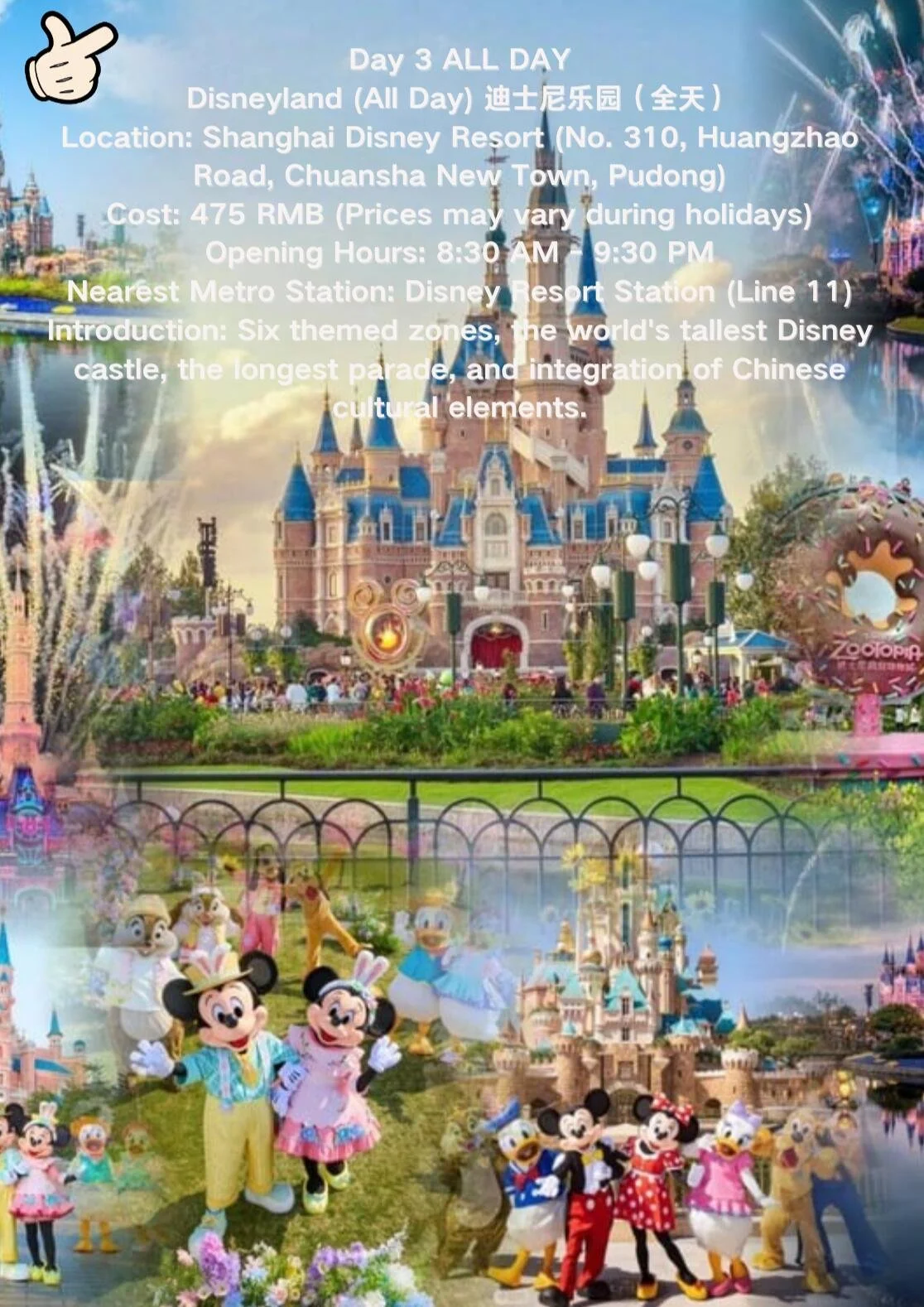
🗓️ Day 3: A Magical Day at Disneyland
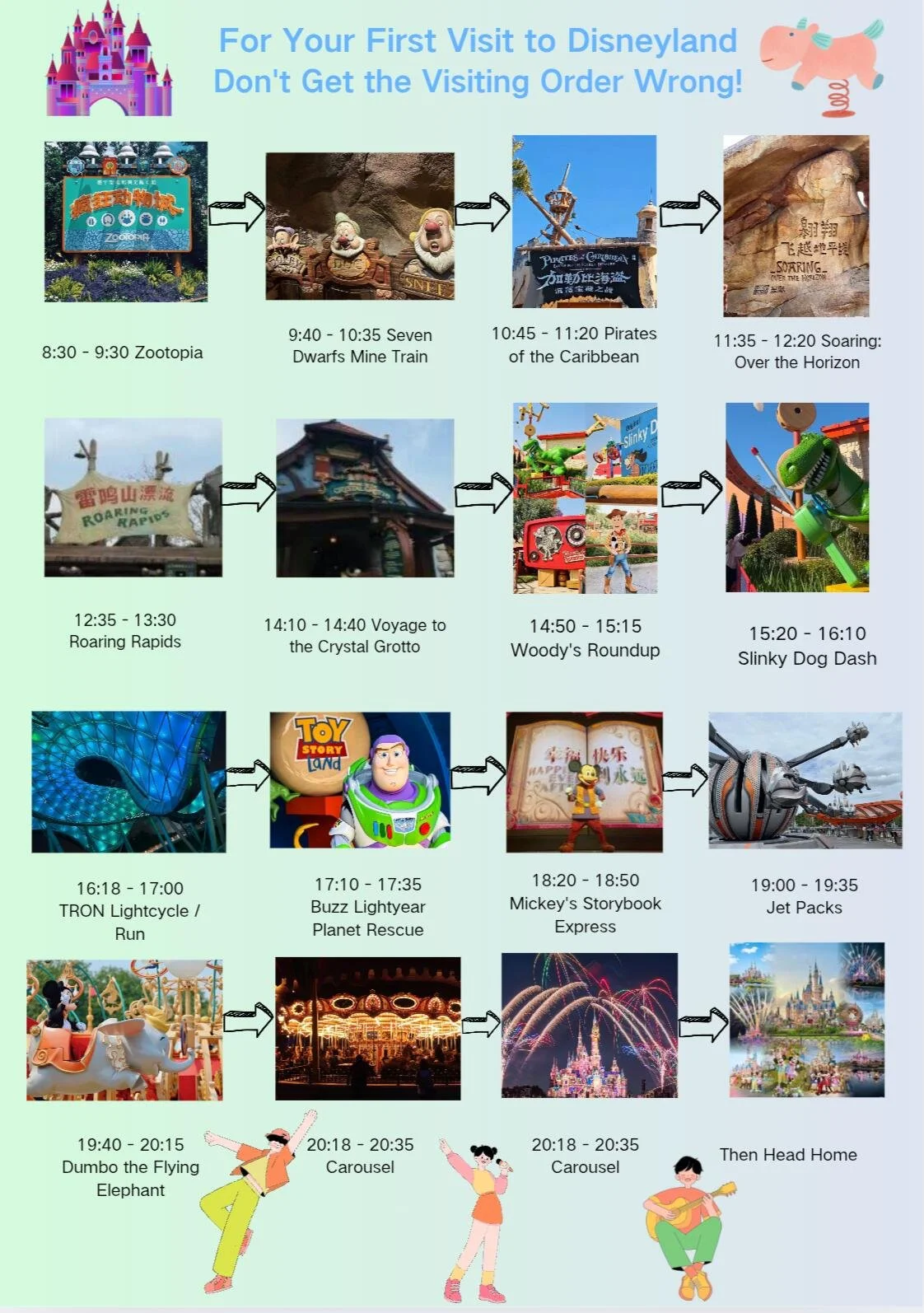
Shanghai Disneyland is the newest Disney park globally (opened 2016) and the only one with a Zootopia land — exclusive to Shanghai. If you only do one theme park in China, this is the one.
⏰ Start Your Day Early — This Cannot Be Overstated
Gates open at 8:30 AM. Be at the security check by 7:30 AM. The difference between arriving early and arriving at 10:00 AM is 2–3 hours of queue time per popular ride.
What to bring:
Passport (required for ticket pick-up if you bought online)
Power bank (you'll be on your phone all day for the Disney app)
Refillable water bottle (there are water fountains throughout)
Portable fan in summer (it gets brutally humid)
🎢 Ride Priorities — The "Big Six"
If you have one day, these are non-negotiable:
1. Zootopia: Hot Pursuit — The flagship new ride (opened 2023). Motion-simulator chase sequence with Judy Hopps and Nick Wilde. Feels like you're inside the movie. Queue: 60–90 minutes midday. Ride it first thing in the morning or during the parade (everyone else is watching).
2. Seven Dwarfs Mine Train — A smooth, family-friendly roller coaster that weaves through a glowing gem cavern. Night ride = extra magical. Queue: 45–70 minutes.
3. Pirates of the Caribbean: Battle for the Sunken Treasure — Widely considered the best Disney ride in the world, not just Shanghai. Fully immersive, no 3D glasses needed, stunning animatronics. Queue: 30–50 minutes (moves fast).
4. Soaring Over the Horizon — Aerial simulation flight over global landmarks (Great Wall, Polar ice, the Himalayas). Gets you right in the feels. Queue: 90–120 minutes. Use the Disney Premier Access (fast-pass, ~¥150) for this one if you hate queuing.
5. TRON Lightcycle Run — High-speed outdoor coaster where you ride in a motorcycle position. Visually spectacular, especially at night when the canopy lights up. Queue: 60–90 minutes. Single rider line moves faster if you don't mind being separated from your group.
6. Camp Discovery — Rapids-style water ride through a lush jungle setting. You will get wet. Bring a rain poncho or buy one at the park (¥15).
🎆 End the Day with the Fireworks
The "Ignite the Dream" nighttime spectacular starts at 20:30 (21:00 in summer). It's a castle projection show + fireworks + water fountains synced to Disney music. Find a spot 15–20 minutes early — the bridge near the castle is the best view, but also the most crowded.
Alternative: If fireworks aren't your thing, the Marvel Universe of Super Heroes live show (afternoon, indoor, air-conditioned) is a solid plan B.
🍔 Food in the Park
Disney food is expensive and mediocre — this is true globally. What's actually good:
Barbossa's Bounty (Treasure Cove): Roasted chicken platter with actual flavour
Tribal Table (Adventure Isle): Stir-fried noodles, better than it sounds
Mickey-shaped ice cream bar: ¥40, worth it for the photo
Bring your own snacks? Security allows sealed packaged snacks. They will confiscate fresh fruit and open containers.
⚠️ Practical Reminders
🚇 Subway — The Best Way to Get Around
Shanghai's metro is massive (20+ lines, 400+ stations) and immaculately clean. For visitors, the key lines are:
LineCoversLine 2The Bund, Nanjing Road, People's Square, Lujiazui, Hongqiao AirportLine 10Tianzifang, Wukang Building, East Nanjing RoadLine 1Jing'an Temple, People's Square, South Railway StationLine 11Disneyland Resort (terminal station)
Apps to use:
"Metro Shanghai" (official app) — English interface, route planning, real-time arrivals
Alipay → Transport — QR code that works on all metro and bus lines (no need to buy a physical card)
Apple Pay / bank card: Tap your card/phone directly at the gate (supports Visa/Mastercard as of 2026)
Cost-effective tip: Buy a 3-day unlimited ride pass (¥85) at any metro station customer service counter. It pays for itself in 4–5 trips.
🚗 Traffic Avoidance — When Not to Take a Taxi
Shanghai traffic is manageable except during rush hours:
Morning rush: 7:00–9:00 AM
Evening rush: 17:00–19:00 PM
During these windows, a 5km taxi ride can take 45 minutes. The same trip on the metro takes 15 minutes and costs ¥4. Use the subway during rush hours. Period.
DiDi (China's Uber) works in Shanghai and has a basic English interface. For airport transfers or trips with luggage, it's still the best option — just avoid the rush hour windows.
💳 Payment — Mobile is King, But Cash Still Works
Shanghai is one of the easiest Chinese cities for foreign visitors to pay in:
WeChat Pay: Bind your Visa/Mastercard in the app. Works at 90%+ of merchants.
Alipay: Same — bind international card. The "TourPass" mini-program is designed specifically for foreign visitors.
Cash: Keep ¥200–300 in small bills for street vendors, temple donations, and tiny shops that don't take cards.
Note: Mobile payment has a 3% foreign card fee per transaction. For small purchases (¥10–50), it's negligible. For larger amounts, cash or a Chinese bank card is cheaper.
🌤️ Weather — Four Seasons, All Extreme
SeasonWhat to expectWhat to packSpring (Mar–May)Pleasant, 12–22°C, occasional rainLight jacket, umbrellaSummer (Jun–Aug)Hot, humid, 28–38°C, sudden thunderstormsBreathable clothes, sunscreen, umbrella, portable fanAutumn (Sep–Nov)Best time to visit, 15–25°C, clear skiesLayers, light jacketWinter (Dec–Feb)Cold, damp, 0–8°C, no central heating in some buildingsWarm coat, thermal layers
The umbrella rule: In Shanghai, always carry an umbrella from June through September. Afternoon thunderstorms appear out of nowhere and soak you in 30 seconds.
📸 Photography — Get the Shots That Actually Look Good
The Bund at night: Use portrait mode — it blurs the crowd in the foreground and makes the skyline sharp. A tripod is technically not allowed on the promenade, but a small tabletop tripod is usually tolerated.
Disneyland castle photos: The front lawn (near the wishing well) is the classic spot. For a less crowded shot, go to the side pathway between the castle and the Pirates ride — you'll get the castle at an angle with fewer people.
Wukang Building: The classic corner shot works best in morning light (before 10 AM) when the sun hits the building's west face. Afternoon shots are backlit and flat.
Tianzifang: The best photos are candid — narrow lanes, laundry hanging overhead, an elderly local sweeping the pavement. Ask before photographing people.
📋 Sample 3-Day Itinerary Timeline
TimeDay 1Day 2Day 308:00Hotel breakfastWukang Building + coffeeArrive at Disney security10:00Nanjing Road walkTianzifang lanesZootopia: Hot Pursuit12:00Lunch (East Nanjing Road)Jing'an Temple visitPirates of the Caribbean14:00Oriental Pearl TowerNatural History MuseumSoaring Over the Horizon16:00Lujiazui skyline viewlate lunch / coffeeTRON Lightcycle Run18:00The Bund (golden hour)Hotel rest / freshen upDinner in park19:30Dinner near the BundNight walk / bar in Jing'anFireworks show21:30——Hotel
💡 One More Thing: The Shanghai Pass (City Card)
If you're staying 3 days and covering all the major sites, consider the Shanghai City Pass — it bundles:
Oriental Pearl Tower entry
Huangpu River cruise
Shanghai Natural History Museum
Hop-on hop-off bus (24-hour pass)
Discounts at select restaurants
Cost: ¥368 (adult), available at the airport tourist info centre or via the "Shanghai Pass" WeChat mini-program. Do the math — if you're doing 3+ of these, it pays for itself.
Shanghai in 72 hours is fast, loud, and exhausting — and that's exactly why it works. You won't see everything. You're not supposed to. What you will get is a feel for China's most international city: its ambition, its contradictions, and its strange, addictive energy.
Save this guide, pack good walking shoes, and brace yourself — Shanghai doesn't do slow.

📡 Staying Connected — SIM, eSIM, VPN
Buying a local SIM: At Pudong or Hongqiao Airport, look for the China Mobile or China Telecom counters in the arrivals hall. A 7-day tourist SIM with 10GB data costs about ¥80. Bring your passport — it's required by law.
eSIM option: If your phone supports eSIM, Airalo and Nomad both have China plans. Buy before you fly. Note: these route through Hong Kong and may not give you access to mainland-only apps (WeChat, Alipay work fine; some local apps won't).
VPN reality check: Google, WhatsApp, Instagram, and Gmail are blocked in China. If these matter to you, install a VPN before you arrive — none of the major VPN websites are accessible from within China. (Astril, ExpressVPN, and NordVPN all work in Shanghai if set up in advance.)
Wi-Fi: Hotels, cafes, and malls have free Wi-Fi, but most require a Chinese phone number to log in. Your hotel front desk can usualy help you get online for the first day.
🎫 Do You Need a Visa for Shanghai?
As of 2026, citiziens of 55 countries (including the US, UK, Canada, Australia, New Zealand, and most EU states) can enter China visa-free for 15–30 days, depending on nationality. Shanghai also offers 144-hour visa-free transit — if you have an onward ticket to a third country, you can stay in Shanghai (and nearby provinces) for up to 6 days without any visa at al.
Check the latest list at China's Ministry of Foreign Affairs website before you travel — the list has been expanding rapidly and more countries are being added quarterly.
© 2026 Zhangjiajie Travel China.