 Image 1 of 8
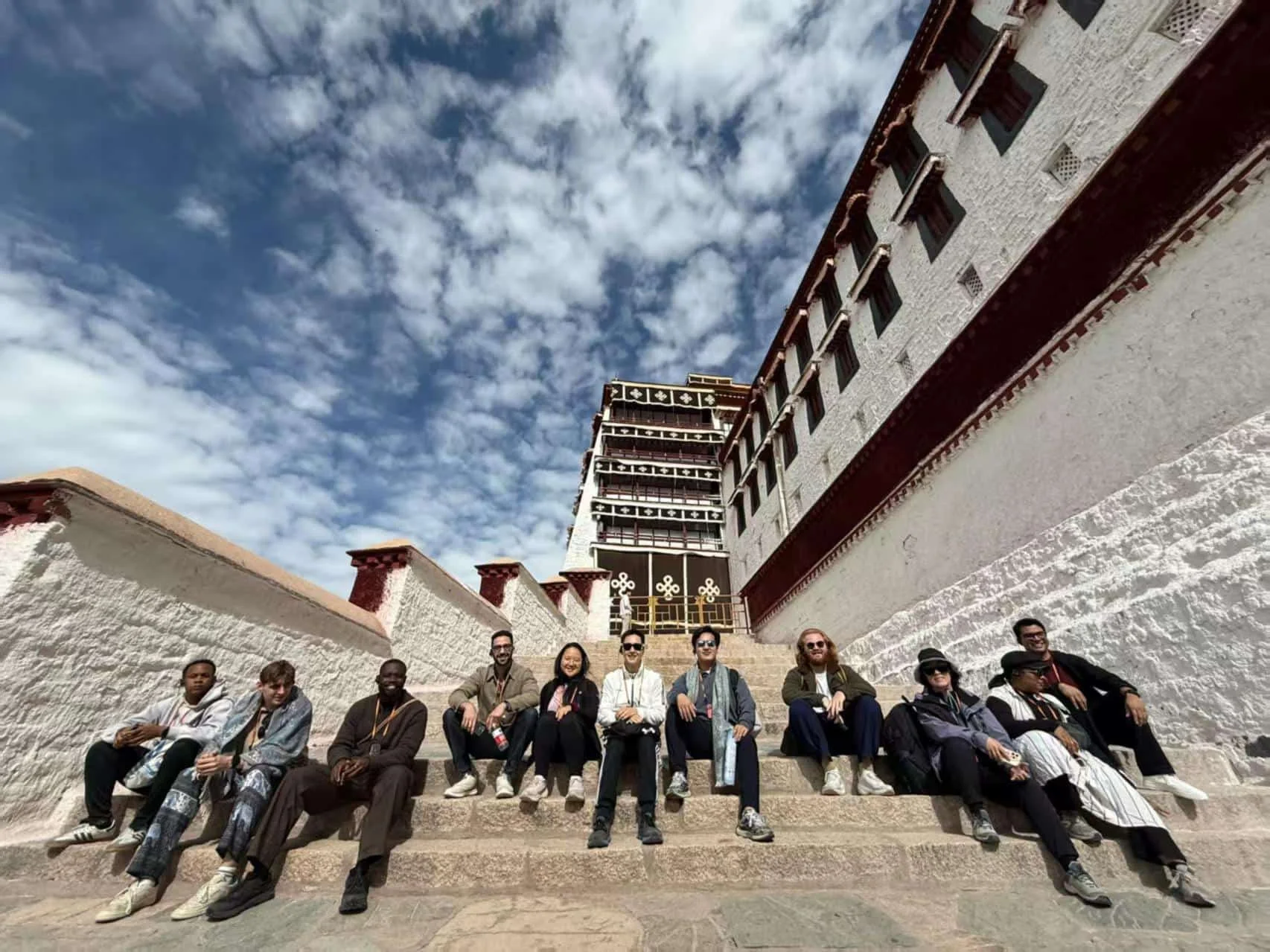 Image 2 of 8
 Image 3 of 8
 Image 4 of 8
 Image 5 of 8
 Image 6 of 8
 Image 7 of 8
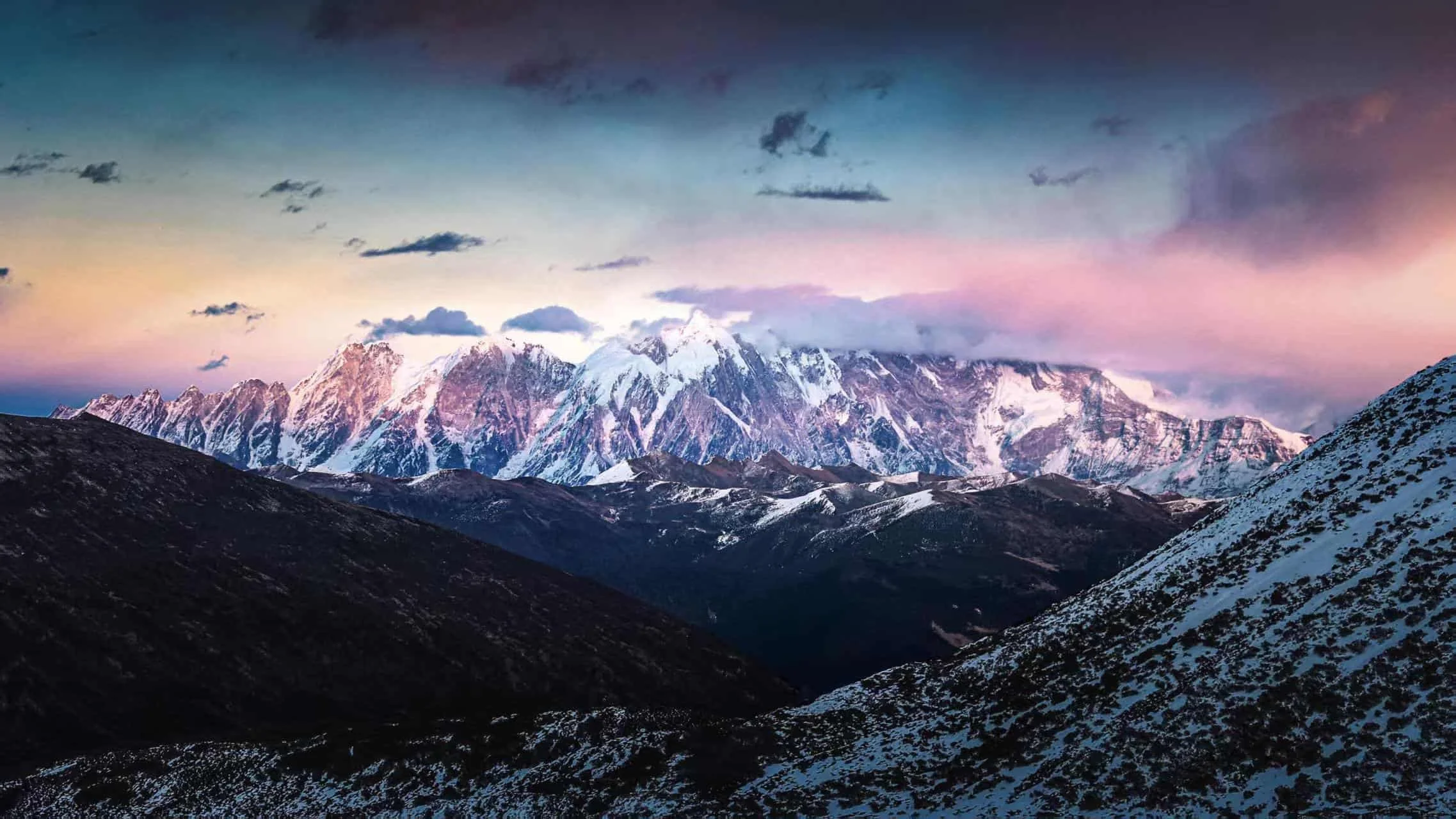 Image 8 of 8
8-Day Tibet Tour
Eight Days to the Roof of the World — Lhasa to Everest Base Camp
This is the Tibet trip most people dream about. In eight days, you'll travel from the spiritual heart of Tibetan Buddhism in Lhasa to the foot of the highest mountain on Earth — and back. You'll stand inside the Potala Palace, where the Dalai Lamas ruled for three centuries. You'll join pilgrims walking the sacred circuit around the Jokhang Temple, spinning prayer wheels that have been turning for a thousand years. You'll cross mountain passes above 5,000 meters, see a turquoise lake so vivid it doesn't look real, walk on a glacier, and then — on Day 5 — you'll arrive at Everest Base Camp (5,200m), where the north face of Chomolungma rises 3,500 vertical meters above you like a wall of rock and ice. No photograph prepares you for this. It is, without exaggeration, one of the most extraordinary sights on the planet.
Why This Tour: This is the classic "Friendship Highway" route — the most popular Tibet itinerary for good reason. It gives you two full days in Lhasa to acclimatize (critical for altitude), then drives you along one of the world's great road trips to Everest and back, with every day offering something extraordinary: sacred lakes, glaciers, ancient monasteries, and views that will reorder your sense of scale. Our guides are Tibetan locals who know every pass, every monastery, and every spot where the light hits just right.
Before You Go: Tibet Travel Permit
Foreign travelers cannot enter Tibet independently — you must have a Tibet Travel Permit (入藏函), which is arranged by a licensed travel agency. Here's what you need to know:
We handle the permit for you. Once you book this tour, send us a clear scan/photo of your passport and Chinese visa (or residence permit). We submit the application to the Tibet Tourism Bureau — the process takes 5–7 business days. We'll send the permit to your hotel in China before you depart for Tibet. You must carry the original permit — photos or copies are not accepted at checkpoints.
Important: You cannot apply for the Tibet Travel Permit on your own. It must be arranged through a registered travel agency as part of a booked tour. If a guide is not with you at checkpoints, you will be turned back. Plan at least 3 weeks ahead — 1 week for permit processing + time to receive the document by mail within China.
Day 1: Arrival in Lhasa (3,650m) — Welcome to the Roof of the World
✈️ Airport or Train Station Pickup
Your guide and driver will meet you at Lhasa Gonggar Airport (40 minutes from the city) or Lhasa Railway Station (20 minutes). The drive into Lhasa follows the Yarlung Tsangpo River valley — your first glimpse of the Tibetan landscape, with barren brown mountains rising on both sides and the deep blue sky that makes Tibet feel like a different planet.
After checking into your hotel, the most important thing is rest. Lhasa sits at 3,650 meters (11,975 feet) — the air has about 35% less oxygen than at sea level. Your body needs time to adapt. You may feel fine for the first few hours (the "honeymoon period") and then develop a headache, fatigue, or mild nausea. This is normal. Drink plenty of water, avoid alcohol, eat light meals, and don't push yourself. Your guide will check in on you throughout the evening.
Pro tip: Many travelers find that arriving by train from Xining (21–22 hours) gives a gentler introduction to the altitude than flying in — the train reaches 5,072m at the Tanggula Pass, and your body begins adjusting during the journey. If you have the time, it's worth considering. The Qinghai-Tibet Railway is an engineering marvel and one of the world's great train rides.
Day 2: Lhasa — Potala Palace & Jokhang Temple
🌅 9:00 AM — The Potala Palace (布达拉宫)
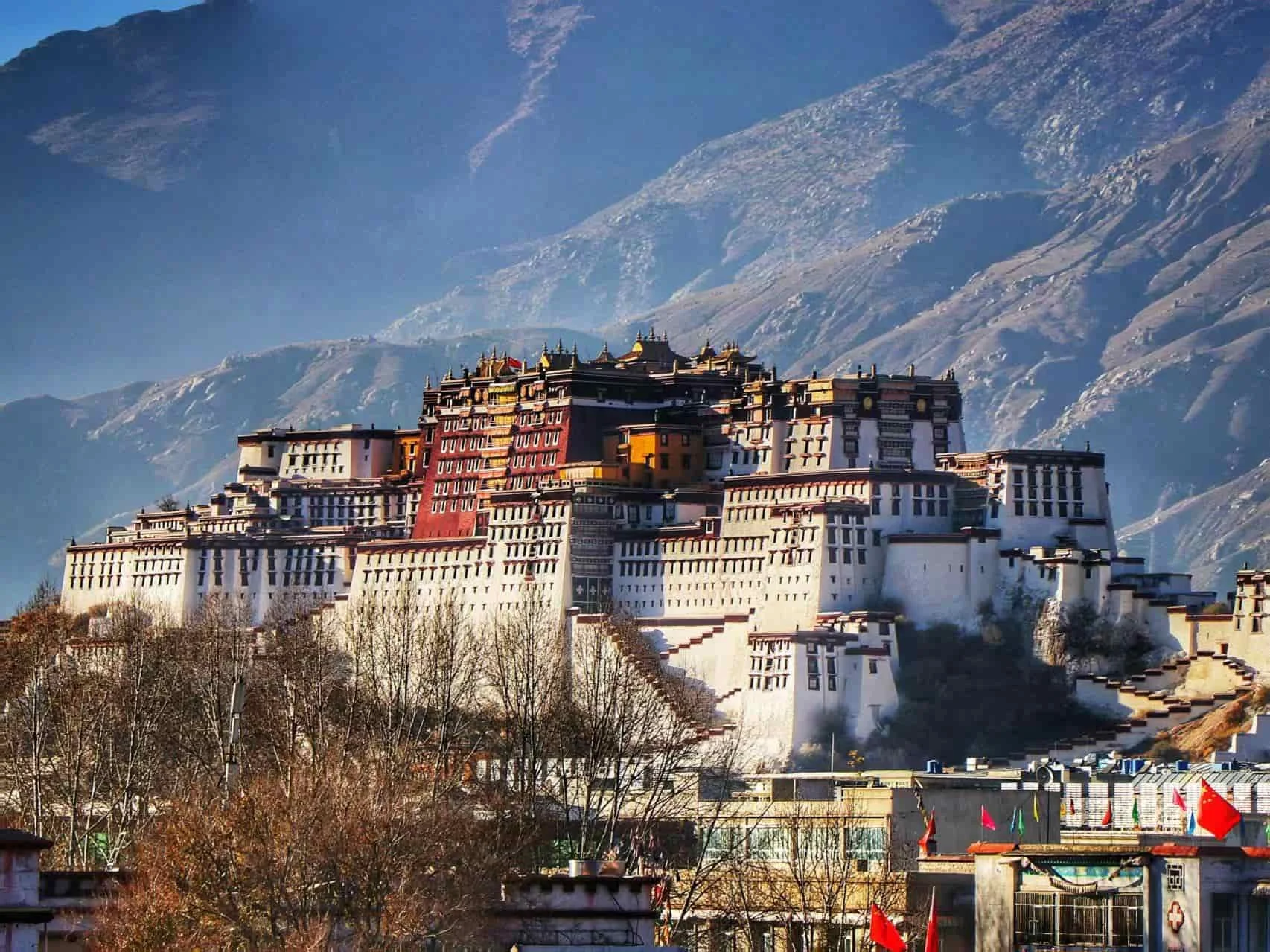
Start your first full day at the architectural symbol of Tibet — a 13-story fortress-palace that rises 117 meters above the city, its white and red walls glowing against the mountain backdrop. The Potala was the winter residence of the Dalai Lamas from the 5th to the 14th, and it dominates Lhasa like no other building dominates any city on Earth.
Your guide will lead you through the White Palace (the administrative wing, with the Dalai Lama's private quarters, reception halls, and a school for government officials' children) and the Red Palace (the religious center, with chapels, shrines, and the stupas of past Dalai Lamas). The stupa of the 5th Dalai Lama is the most spectacular — 14.85 meters tall, wrapped in 3,721 kilograms of gold, encrusted with over 10,000 precious stones including diamonds, pearls, turquoise, and coral. It's the most valuable single object in Tibet, and arguably one of the most valuable religious artifacts in the world.
Other highlights: the Audience Hall, where the Dalai Lama received foreign envoys; the Western Great Hall, whose murals depict the entire history of Tibetan Buddhism; and the cave chapel of King Songtsen Gampo, believed to be the oldest structure on the site, dating to the 7th century. Allow 2–3 hours. The climb to the entrance involves over 300 steps — take it slowly. Your guide will pace the visit to match your acclimatization level.
Potala Palace Rules: Photography is prohibited inside the palace. You must carry your passport (it's checked at the entrance). Visit times are limited to 1 hour inside the palace building to protect the ancient structure — your guide will manage the time. The palace is closed on Mondays.
🕐 1:00 PM — Lunch at a Local Tibetan Restaurant
Your guide will take you to a restaurant serving authentic Tibetan food. Try thukpa (土巴, a hearty noodle soup with yak meat and vegetables), momos (藏式饺子, Tibetan dumplings steamed or fried, usually filled with yak meat and onions), and butter tea (酥油茶, po cha — an acquired taste but essential at altitude: the salt and butter help with hydration and energy). For the less adventurous, there are also Sichuan and Nepali options in Lhasa.
2:30 PM — Jokhang Temple (大昭寺) & Barkhor Circuit
The Potala is the symbol of Tibet, but the Jokhang Temple is its spiritual heart. Built in 647 AD by King Songtsen Gampo to house the Jowo Shakyamuni — a life-sized statue of the Buddha at age 12, brought to Tibet by the Chinese princess Wencheng as part of a diplomatic marriage alliance. This statue is the most sacred object in Tibetan Buddhism. Pilgrims travel for months across the Tibetan plateau, prostrating every few steps, just to see it. You'll see them in the inner courtyard — Tibetans performing full-body prostrations on wooden boards worn smooth by decades of foreheads and hands.
Inside, the chapel of the Jowo is thick with the smell of yak butter lamps (hundreds are lit daily by pilgrims) and the sound of low, resonant chanting. The statue itself sits behind a glass case, adorned with silk scarves and gold jewelry. It's an intensely atmospheric space — not a museum, but a living place of worship.
After the temple, your guide will lead you around the Barkhor Circuit (八廓街) — the sacred kora (circumambulation path) around the Jokhang. This 800-meter loop is one of the most fascinating walks in Asia: Tibetan pilgrims spinning prayer wheels, monks in maroon robes, vendors selling turquoise jewelry and prayer flags, the smell of incense and yak butter, and the sound of mantras from every direction. Walk clockwise — always clockwise. It takes about 45 minutes at a leisurely pace. This is also the best place in Lhasa to shop for genuine Tibetan handicrafts.
Day 3: Lhasa — Drepung & Sera Monasteries
🌅 9:00 AM — Drepung Monastery (哲蚌寺)
Drive 20 minutes west of Lhasa to Drepung Monastery, once the largest monastery in the world. At its peak in the early 20th century, Drepung housed over 10,000 monks — a small city perched on the slopes of Mount Gephel. It was the primary residence of the Dalai Lamas until the 5th Dalai Lama moved to the Potala Palace, and it remains one of the "Great Three" Gelugpa monasteries.
Your guide will take you through the Main Assembly Hall (Tsogchen), a vast hall supported by 183 pillars where thousands of monks once gathered for daily prayers. The hall contains a throne used by the Dalai Lama during visits, and murals depicting the life of Tsongkhapa, the founder of the Gelugpa school. You'll also visit the Ganden Podrang — the original residence of the Dalai Lamas before the Potala was built, and effectively the seat of Tibetan government for nearly a century.
Walk up through the white-washed alleyways between monk quarters to the chanting hall of the Namgyal Dratsang, where you may hear monks reciting sutras in the deep, rumbling overtone chanting unique to Tibetan Buddhism. The view from the top of the complex over the Lhasa valley is extraordinary.
🕐 1:00 PM — Lunch
Lunch at a restaurant near the monastery or back in Lhasa.
2:30 PM — Sera Monastery & Monk Debate (色拉寺)
The afternoon brings you to Sera Monastery, famous across Tibet for its daily monk debates (辩经). Every afternoon at around 3:00 PM (except Sundays), hundreds of monks gather in the debate courtyard. The debate format is unique to Tibetan Buddhism: one monk sits on the ground (the defender) while another stands over him (the challenger), clapping his hands loudly with each question and stamping his foot. The gestures are dramatic — arms windmilling, beads swinging — but the content is rigorous philosophical analysis of Buddhist doctrine. It's loud, physical, and mesmerizing. Your guide will explain what's being debated and the significance of the gestures.
After the debate, visit the Sera Me Dratsang — the largest of Sera's three colleges, with a stunning assembly hall featuring a portrait of the 14th Dalai Lama (one of the few publicly displayed in Tibet). Also see the Hayagriva Chapel, where pilgrims come to receive blessings for protection.
Day 4: Lhasa → Yamdrok Lake → Karola Glacier → Gyantse (3,950m)
🌅 8:00 AM — Depart Lhasa via the Friendship Highway
Leave Lhasa and head west on the Friendship Highway (G318), the road that connects Lhasa to Kathmandu. The drive climbs steadily through the Yarlung Tsangpo River valley, then switchbacks up to the Kamba La Pass (4,794m). From the top, the view stops people in their tracks: Yamdrok Lake (羊卓雍措) stretches below you — a vast body of water in an impossible shade of turquoise, framed by snow-capped mountains. The color comes from glacial minerals and the extreme clarity of the water. At 4,441 meters, it's one of Tibet's three sacred lakes, and according to local belief, it's the transformation of a Tibetan goddess. Pilgrims circumambulate the lake (a 7-day walk) to earn merit.
Stop for photos at the pass, then descend to the lake shore. On a still day, the reflection of the mountains in the turquoise water is one of the most photographed scenes in Tibet.
🕐 12:00 PM — Karola Glacier (卡若拉冰川)
Continue driving west, climbing again to the Karo La Pass (5,045m), where the Karola Glacier flows down from Mount Nojin Kangsang (7,191m) right to the side of the road. This is one of the few glaciers in the world you can see — and nearly touch — from a highway. The ice field glows blue-white in the sunlight, and on clear days you can see meltwater streams cascading down the rock face. At roughly 5,000 meters elevation, the air is thin and cold — spend 20–30 minutes for photos, but don't overexert yourself at this altitude.
3:00 PM — Arrive in Gyantse (江孜)
Arrive in the small town of Gyantse, once the third-largest city in Tibet and an important stop on the old trade route between Tibet and India. Visit the Gyantse Kumbum (白居塔, the "Stupa of 100,000 Buddhas") — a nine-story chorten containing 77 chapels stacked on top of each other, each filled with murals, statues, and mandalas. It's the best-preserved example of 15th-century Tibetan art in existence. The adjacent Pelkor Chode Monastery is one of the few monasteries that houses multiple Buddhist sects under one roof — a rare symbol of inter-sect harmony.
Also visit the Gyantse Dzong (江孜宗堡) — a hilltop fortress that was the site of a heroic last stand in 1904, when Tibetan militia armed with swords and matchlock muskets fought the British Younghusband Expedition's Maxim guns. The Tibetans held the fort for days before it fell. A monument at the base commemorates the defenders. Your guide will tell you the full story.
Day 5: Gyantse → Shigatse → Everest Base Camp (5,200m)
🌅 8:00 AM — Drive to Shigatse & Tashilhunpo Monastery
Drive 90 minutes to Shigatse (日喀则), Tibet's second-largest city and the seat of the Panchen Lama, the second-highest ranking figure in Tibetan Buddhism after the Dalai Lama. Visit Tashilhunpo Monastery (扎什伦布寺), founded in 1447 by the First Dalai Lama. It's one of the largest functioning monasteries in Tibet, with nearly 800 monks today.
The highlights: the Maitreya Chapel, housing a 26-meter (86-foot) tall gilded bronze statue of the future Buddha Maitreya — the largest such statue in the world. It contains 279 kilograms of gold and was built by the 9th Panchen Lama in 1914. Also visit the stupa of the 10th Panchen Lama, who died in 1989 — wrapped in over 600 kilograms of gold and encrusted with amber, coral, and turquoise. The kora path around the monastery offers panoramic views of Shigatse and the surrounding valley.
12:00 PM — Lunch in Shigatse & Drive to Everest
After lunch, begin the long drive south toward Everest. The road crosses the Tso La Pass (4,500m) and the Gyatsola Pass (5,248m) — the highest point of the entire trip. The landscape transforms: the green valleys of Shigatse give way to barren, wind-swept plains, and the Himalayan range begins to appear on the southern horizon, a wall of snow and ice stretching endlessly east to west.
4:00 PM — The First Glimpse: Gawu La Pass (5,198m)
At Gawu La Pass, you get your first clear view of Mount Everest (Chomolungma, 珠穆朗玛峰) — and it's a showstopper. On a clear day, you can see five peaks over 8,000 meters in a single panorama: Makalu (8,463m), Lhotse (8,516m), Everest (8,848m), Cho Oyu (8,201m), and Shishapangma (8,027m). No other viewpoint on Earth offers this. Stop for photos — this is the classic "Himalayan panorama" shot.
6:00 PM — Arrive at Everest Base Camp (EBC, 5,200m)
Descend from the pass through a dramatic valley and arrive at Everest Base Camp. The north face of Everest rises directly before you — 3,500 vertical meters of granite, snow, and glacial ice, culminating in the summit pyramid at 8,848 meters. At sunset, the mountain turns gold, then pink, then deep purple as the shadow of the Earth climbs up its flanks. This is the moment. You're standing at 5,200 meters, looking at the highest point on the planet. It's deeply, wordlessly moving.
Accommodation at EBC: You'll stay in a tent guesthouse (帐篷旅馆) run by local Tibetans near the base camp. Conditions are basic — a bed with heavy blankets, a yak-dung stove for heating, and shared squat toilets. It's not a hotel, and that's the point. You're sleeping at the foot of Everest. The tent hosts will serve simple Tibetan food (noodle soup, tea, rice with vegetables). Bring a sleeping bag liner and warm layers — nighttime temperatures can drop to -10°C even in summer.
Altitude Alert: At 5,200m, the air has roughly half the oxygen of sea level. You will feel short of breath walking even short distances. Move slowly, stay hydrated, and inform your guide immediately if you experience severe headache, vomiting, or confusion. Your guide carries a portable oxygen canister. If symptoms are severe, you'll drive down to lower altitude — there's no shame in this. Safety always comes first.
Day 6: Everest Sunrise → Return to Shigatse
🌅 Before Dawn — Everest Sunrise
Wake before dawn (your guide will advise the exact time based on season). Walk 10 minutes from the tent camp to the Everest Base Camp monument (a stone marker at 5,200m with the altitude carved into it) and watch the sun rise over the Himalayas. The first rays hit the summit of Everest, turning it from grey to gold to blazing white — a sight that has moved mountaineers to tears for over a century. This is why you came.
After sunrise, you'll have time to walk around the base camp area, visit the Rongbuk Monastery (绒布寺, the highest monastery in the world at 5,154m), and take more photos before departing. Rongbuk is a small Nyingmapa-sect monastery with a stunning location — the north face of Everest fills the entire southern sky. The resident nuns are some of the hardiest people on Earth, living at 5,100m year-round.
10:00 AM — Drive Back to Shigatse
Retrace the road over Gawu La Pass and Gyatsola Pass back to Shigatse. The drive takes about 6–7 hours including stops. It's a long day on the road, but the return journey offers different angles of the Himalayan range — and you'll be descending, which your lungs will appreciate. Arrive in Shigatse by late afternoon.
Day 7: Shigatse — Free Day & Return to Lhasa
🌅 Morning — Explore Shigatse or Sleep In
After the intensity of Everest, Day 7 is deliberately relaxed. Sleep in if you need it — you've earned it. If you're feeling energetic, your guide can take you to the Shigatse Market, where you'll find Tibetan handicrafts, dried yak meat, and prayer flags. You can also revisit Tashilhunpo Monastery's kora path for morning views, or visit a local Tibetan medical clinic to learn about traditional Tibetan medicine — one of the world's oldest medical systems, still practiced here with remarkable sophistication.
🕐 1:00 PM — Drive Back to Lhasa
After lunch, drive back to Lhasa via the northern route along the Yarlung Tsangpo River (about 4–5 hours). This is a different road from Day 4 — flatter, faster, and at lower altitude. Your guide will point out Tsurphu Monastery (in the distance), the traditional seat of the Karmapa Lama and one of the most important Karma Kagyu monasteries. Arrive in Lhasa by late afternoon. Your final night in Lhasa — consider a farewell dinner at a restaurant with views of the Potala Palace lit up at night.
Day 8: Departure from Lhasa
✈️ Airport or Train Transfer
Your guide and driver will take you to Lhasa Gonggar Airport or Lhasa Railway Station according to your departure schedule. Most flights depart in the morning or early afternoon. If you have a late flight, your guide can arrange a short morning visit to a site you may have missed — the Norbulingka (the Dalai Lama's Summer Palace, a UNESCO World Heritage Site with beautiful gardens), or the Tibet Museum (free admission, excellent overview of Tibetan history and culture).
✅ What's Included
IncludedNot Included✅ Tibet Travel Permit arrangement❌ Flights/train to and from Lhasa✅ Licensed English-speaking Tibetan guide (all 8 days)❌ Chinese visa fee✅ Private air-conditioned vehicle with experienced driver❌ Meals (budget ¥80–150/person/day)✅ 6 nights hotel accommodation (3–4 star in Lhasa & Shigatse)❌ Personal travel insurance (strongly recommended)✅ 1 night tent guesthouse at Everest Base Camp❌ Potala Palace reservation fee: ¥200 (peak season)✅ All entrance tickets (Potala, Jokhang, Drepung, Sera, Yamdrok viewing platform, Karola, Gyantse Kumbum, Tashilhunpo, Rongbuk Monastery, EBC)❌ Gratuities for guide and driver (optional, typically ¥50–100/day per person)✅ Bottled water in the vehicle❌ Sleeping bag liner for EBC (available to rent, ¥50)✅ Oxygen canister in the vehicle❌ Any costs arising from altitude sickness requiring early departure✅ Airport/train station pickup & drop-off❌ Beverages and alcoholic drinks
Altitude & Health Information
Understanding Altitude Sickness (Acute Mountain Sickness, AMS):
Tibet's average elevation exceeds 4,000m. Most travelers experience mild AMS symptoms (headache, fatigue, mild nausea, shortness of breath) during the first 2–3 days. This is normal and usually passes as your body acclimatizes. Severe symptoms (vomiting that won't stop, extreme confusion, inability to walk straight, fluid in the lungs) require immediate descent to lower altitude. Your guide is trained to recognize the signs.
How to Minimize Risk:
• Arrive well-rested — don't fly in straight from a red-eye
• Drink 3–4 liters of water daily
• Avoid alcohol for the first 3 days
• Eat light, carb-heavy meals
• Walk slowly — even on flat ground, don't rush
• Consider asking your doctor about acetazolamide (Diamox) — a prescription medication that helps prevent AMS. Start 24 hours before ascent
• Your guide carries emergency oxygen and knows the nearest medical facilities at every stop
Best Time to Visit
SeasonMonthsConditionsRecommendation🟢 Peak SeasonApril – OctoberClear skies, warm days (10–22°C in Lhasa), Everest visibleBest time — book early, Potala permits sell out🟡 ShoulderMarch, NovemberCooler (-5 to 12°C), occasional snow at passesFewer tourists, good value, Everest still visible🔴 WinterDecember – FebruaryVery cold (-15 to 5°C), EBC tent guesthouses closedOnly for the hardy — Lhasa still accessible, dramatic scenery
Everest Visibility: The best months for seeing Everest clearly are May, September, and October. The summer monsoon (July–August) brings clouds and rain — you might reach EBC and see nothing but fog. June can be hit or miss. Check weather forecasts with your guide the night before the EBC drive.
Practical Information
🎒 Packing Essentials: Warm layers (temperatures swing 20°C between day and night), down jacket (essential for EBC), thermal underwear, hiking boots, sunglasses (UV is extreme at altitude), sunscreen SPF 50+, lip balm, water bottle, power bank (electricity at EBC is limited), wet wipes, personal medications, sleeping bag liner.
📱 Connectivity: Wi-Fi is available in Lhasa and Shigatse hotels. There is no Wi-Fi or cell signal at EBC. China Mobile and China Telecom have coverage in most towns along the route but not at passes or base camp. Download offline maps before departure.
💰 Currency: Cash (RMB) is essential — ATMs are only in Lhasa and Shigatse. Small bills (¥10, ¥20) for restroom fees and small purchases. WeChat Pay works in Lhasa.
📸 Photography: Photography is prohibited inside the Potala Palace and some monastery chapels — your guide will advise. At EBC, a camera with a telephoto lens (200mm+) gives the best results. The light changes fast — shoot in the golden hours (sunrise/sunset).
🏨 Accommodation: Lhasa has comfortable 3–4 star hotels with hot water, heating, and oxygen available. Shigatse hotels are similar but simpler. EBC tent guesthouses are basic — shared beds, yak-dung heating, squat toilets. This is part of the experience.
🕐 Driving Times: Day 4 (Lhasa–Gyantse): ~6 hours. Day 5 (Gyantse–Shigatse–EBC): ~8 hours. Day 6 (EBC–Shigatse): ~7 hours. Day 7 (Shigatse–Lhasa): ~5 hours. The roads are paved and generally in good condition, but mountain roads are winding — motion sickness medication is recommended.
Frequently Asked Questions
Do I need to be physically fit for this tour?
No special fitness is required — the tour is primarily vehicle-based with short walks at each stop. However, you should be comfortable walking slowly at high altitude (3,650–5,200m). If you can walk 2–3km on flat ground at home without difficulty, you can do this tour. The key is to move slowly and listen to your body.
Can I visit Everest Base Camp independently?
No. Foreign travelers must be part of an organized tour with a licensed guide and driver. There are multiple checkpoints on the road to EBC, and you must present your Tibet Travel Permit and tour confirmation at each one. Independent travel is not permitted in the Everest region of Tibet.
What if I get severe altitude sickness?
Your guide monitors all travelers for AMS symptoms. If you develop severe symptoms (HACE or HAPE), the treatment is immediate descent. Your vehicle can drive you to lower altitude within 2–3 hours from any point on the route. Shigatse has a hospital with oxygen chambers. Your guide will make the decision — do not argue with them on this. Safety is non-negotiable.
Is the road to Everest Base Camp safe?
Yes. The Friendship Highway is a well-maintained paved road. The final 90km from the highway turnoff to EBC is a rougher mountain road, but it was significantly improved in recent years. Our drivers are experienced locals who have driven this route hundreds of times. Drive times are long but the roads are safe.
Can I extend this tour?
Yes. Popular extensions include: the 4–5 Day Lhasa Cultural Tour (add at the beginning for extra acclimatization), or the 12–15 Day Panoramic Tibet Tour (adds Namtso Lake, Nyingchi, and Mount Kailash). Ask us about custom itineraries.
Q: What is your cancellation policy?
We offer one of the most flexible cancellation policies for private China tours. Cancellations made 30 or more days before departure are free (only the deposit is retained, which you can use as travel credit for up to 24 months). Within 30 days, refunds follow a graduated scale based on how close you are to departure.
For the full breakdown including Tibet-specific terms, partial cancellations, and force majeure, please see our Cancellation Policy page.
Every booking also comes with a Deposit Credit option — if you need to cancel but plan to visit China in the future, you can convert your deposit into credit valid for 24 months instead of losing it.
Eight days. The Potala Palace. Yamdrok Lake. A glacier at 5,000 meters. And the north face of Everest filling the sky above you. Book your 8-day Tibet Everest tour today.
Eight Days to the Roof of the World — Lhasa to Everest Base Camp
This is the Tibet trip most people dream about. In eight days, you'll travel from the spiritual heart of Tibetan Buddhism in Lhasa to the foot of the highest mountain on Earth — and back. You'll stand inside the Potala Palace, where the Dalai Lamas ruled for three centuries. You'll join pilgrims walking the sacred circuit around the Jokhang Temple, spinning prayer wheels that have been turning for a thousand years. You'll cross mountain passes above 5,000 meters, see a turquoise lake so vivid it doesn't look real, walk on a glacier, and then — on Day 5 — you'll arrive at Everest Base Camp (5,200m), where the north face of Chomolungma rises 3,500 vertical meters above you like a wall of rock and ice. No photograph prepares you for this. It is, without exaggeration, one of the most extraordinary sights on the planet.
Why This Tour: This is the classic "Friendship Highway" route — the most popular Tibet itinerary for good reason. It gives you two full days in Lhasa to acclimatize (critical for altitude), then drives you along one of the world's great road trips to Everest and back, with every day offering something extraordinary: sacred lakes, glaciers, ancient monasteries, and views that will reorder your sense of scale. Our guides are Tibetan locals who know every pass, every monastery, and every spot where the light hits just right.
Before You Go: Tibet Travel Permit
Foreign travelers cannot enter Tibet independently — you must have a Tibet Travel Permit (入藏函), which is arranged by a licensed travel agency. Here's what you need to know:
We handle the permit for you. Once you book this tour, send us a clear scan/photo of your passport and Chinese visa (or residence permit). We submit the application to the Tibet Tourism Bureau — the process takes 5–7 business days. We'll send the permit to your hotel in China before you depart for Tibet. You must carry the original permit — photos or copies are not accepted at checkpoints.
Important: You cannot apply for the Tibet Travel Permit on your own. It must be arranged through a registered travel agency as part of a booked tour. If a guide is not with you at checkpoints, you will be turned back. Plan at least 3 weeks ahead — 1 week for permit processing + time to receive the document by mail within China.
Day 1: Arrival in Lhasa (3,650m) — Welcome to the Roof of the World
✈️ Airport or Train Station Pickup
Your guide and driver will meet you at Lhasa Gonggar Airport (40 minutes from the city) or Lhasa Railway Station (20 minutes). The drive into Lhasa follows the Yarlung Tsangpo River valley — your first glimpse of the Tibetan landscape, with barren brown mountains rising on both sides and the deep blue sky that makes Tibet feel like a different planet.
After checking into your hotel, the most important thing is rest. Lhasa sits at 3,650 meters (11,975 feet) — the air has about 35% less oxygen than at sea level. Your body needs time to adapt. You may feel fine for the first few hours (the "honeymoon period") and then develop a headache, fatigue, or mild nausea. This is normal. Drink plenty of water, avoid alcohol, eat light meals, and don't push yourself. Your guide will check in on you throughout the evening.
Pro tip: Many travelers find that arriving by train from Xining (21–22 hours) gives a gentler introduction to the altitude than flying in — the train reaches 5,072m at the Tanggula Pass, and your body begins adjusting during the journey. If you have the time, it's worth considering. The Qinghai-Tibet Railway is an engineering marvel and one of the world's great train rides.
Day 2: Lhasa — Potala Palace & Jokhang Temple
🌅 9:00 AM — The Potala Palace (布达拉宫)
Start your first full day at the architectural symbol of Tibet — a 13-story fortress-palace that rises 117 meters above the city, its white and red walls glowing against the mountain backdrop. The Potala was the winter residence of the Dalai Lamas from the 5th to the 14th, and it dominates Lhasa like no other building dominates any city on Earth.
Your guide will lead you through the White Palace (the administrative wing, with the Dalai Lama's private quarters, reception halls, and a school for government officials' children) and the Red Palace (the religious center, with chapels, shrines, and the stupas of past Dalai Lamas). The stupa of the 5th Dalai Lama is the most spectacular — 14.85 meters tall, wrapped in 3,721 kilograms of gold, encrusted with over 10,000 precious stones including diamonds, pearls, turquoise, and coral. It's the most valuable single object in Tibet, and arguably one of the most valuable religious artifacts in the world.
Other highlights: the Audience Hall, where the Dalai Lama received foreign envoys; the Western Great Hall, whose murals depict the entire history of Tibetan Buddhism; and the cave chapel of King Songtsen Gampo, believed to be the oldest structure on the site, dating to the 7th century. Allow 2–3 hours. The climb to the entrance involves over 300 steps — take it slowly. Your guide will pace the visit to match your acclimatization level.
Potala Palace Rules: Photography is prohibited inside the palace. You must carry your passport (it's checked at the entrance). Visit times are limited to 1 hour inside the palace building to protect the ancient structure — your guide will manage the time. The palace is closed on Mondays.
🕐 1:00 PM — Lunch at a Local Tibetan Restaurant
Your guide will take you to a restaurant serving authentic Tibetan food. Try thukpa (土巴, a hearty noodle soup with yak meat and vegetables), momos (藏式饺子, Tibetan dumplings steamed or fried, usually filled with yak meat and onions), and butter tea (酥油茶, po cha — an acquired taste but essential at altitude: the salt and butter help with hydration and energy). For the less adventurous, there are also Sichuan and Nepali options in Lhasa.
2:30 PM — Jokhang Temple (大昭寺) & Barkhor Circuit
The Potala is the symbol of Tibet, but the Jokhang Temple is its spiritual heart. Built in 647 AD by King Songtsen Gampo to house the Jowo Shakyamuni — a life-sized statue of the Buddha at age 12, brought to Tibet by the Chinese princess Wencheng as part of a diplomatic marriage alliance. This statue is the most sacred object in Tibetan Buddhism. Pilgrims travel for months across the Tibetan plateau, prostrating every few steps, just to see it. You'll see them in the inner courtyard — Tibetans performing full-body prostrations on wooden boards worn smooth by decades of foreheads and hands.
Inside, the chapel of the Jowo is thick with the smell of yak butter lamps (hundreds are lit daily by pilgrims) and the sound of low, resonant chanting. The statue itself sits behind a glass case, adorned with silk scarves and gold jewelry. It's an intensely atmospheric space — not a museum, but a living place of worship.
After the temple, your guide will lead you around the Barkhor Circuit (八廓街) — the sacred kora (circumambulation path) around the Jokhang. This 800-meter loop is one of the most fascinating walks in Asia: Tibetan pilgrims spinning prayer wheels, monks in maroon robes, vendors selling turquoise jewelry and prayer flags, the smell of incense and yak butter, and the sound of mantras from every direction. Walk clockwise — always clockwise. It takes about 45 minutes at a leisurely pace. This is also the best place in Lhasa to shop for genuine Tibetan handicrafts.
Day 3: Lhasa — Drepung & Sera Monasteries
🌅 9:00 AM — Drepung Monastery (哲蚌寺)
Drive 20 minutes west of Lhasa to Drepung Monastery, once the largest monastery in the world. At its peak in the early 20th century, Drepung housed over 10,000 monks — a small city perched on the slopes of Mount Gephel. It was the primary residence of the Dalai Lamas until the 5th Dalai Lama moved to the Potala Palace, and it remains one of the "Great Three" Gelugpa monasteries.
Your guide will take you through the Main Assembly Hall (Tsogchen), a vast hall supported by 183 pillars where thousands of monks once gathered for daily prayers. The hall contains a throne used by the Dalai Lama during visits, and murals depicting the life of Tsongkhapa, the founder of the Gelugpa school. You'll also visit the Ganden Podrang — the original residence of the Dalai Lamas before the Potala was built, and effectively the seat of Tibetan government for nearly a century.
Walk up through the white-washed alleyways between monk quarters to the chanting hall of the Namgyal Dratsang, where you may hear monks reciting sutras in the deep, rumbling overtone chanting unique to Tibetan Buddhism. The view from the top of the complex over the Lhasa valley is extraordinary.
🕐 1:00 PM — Lunch
Lunch at a restaurant near the monastery or back in Lhasa.
2:30 PM — Sera Monastery & Monk Debate (色拉寺)
The afternoon brings you to Sera Monastery, famous across Tibet for its daily monk debates (辩经). Every afternoon at around 3:00 PM (except Sundays), hundreds of monks gather in the debate courtyard. The debate format is unique to Tibetan Buddhism: one monk sits on the ground (the defender) while another stands over him (the challenger), clapping his hands loudly with each question and stamping his foot. The gestures are dramatic — arms windmilling, beads swinging — but the content is rigorous philosophical analysis of Buddhist doctrine. It's loud, physical, and mesmerizing. Your guide will explain what's being debated and the significance of the gestures.
After the debate, visit the Sera Me Dratsang — the largest of Sera's three colleges, with a stunning assembly hall featuring a portrait of the 14th Dalai Lama (one of the few publicly displayed in Tibet). Also see the Hayagriva Chapel, where pilgrims come to receive blessings for protection.
Day 4: Lhasa → Yamdrok Lake → Karola Glacier → Gyantse (3,950m)
🌅 8:00 AM — Depart Lhasa via the Friendship Highway
Leave Lhasa and head west on the Friendship Highway (G318), the road that connects Lhasa to Kathmandu. The drive climbs steadily through the Yarlung Tsangpo River valley, then switchbacks up to the Kamba La Pass (4,794m). From the top, the view stops people in their tracks: Yamdrok Lake (羊卓雍措) stretches below you — a vast body of water in an impossible shade of turquoise, framed by snow-capped mountains. The color comes from glacial minerals and the extreme clarity of the water. At 4,441 meters, it's one of Tibet's three sacred lakes, and according to local belief, it's the transformation of a Tibetan goddess. Pilgrims circumambulate the lake (a 7-day walk) to earn merit.
Stop for photos at the pass, then descend to the lake shore. On a still day, the reflection of the mountains in the turquoise water is one of the most photographed scenes in Tibet.
🕐 12:00 PM — Karola Glacier (卡若拉冰川)
Continue driving west, climbing again to the Karo La Pass (5,045m), where the Karola Glacier flows down from Mount Nojin Kangsang (7,191m) right to the side of the road. This is one of the few glaciers in the world you can see — and nearly touch — from a highway. The ice field glows blue-white in the sunlight, and on clear days you can see meltwater streams cascading down the rock face. At roughly 5,000 meters elevation, the air is thin and cold — spend 20–30 minutes for photos, but don't overexert yourself at this altitude.
3:00 PM — Arrive in Gyantse (江孜)
Arrive in the small town of Gyantse, once the third-largest city in Tibet and an important stop on the old trade route between Tibet and India. Visit the Gyantse Kumbum (白居塔, the "Stupa of 100,000 Buddhas") — a nine-story chorten containing 77 chapels stacked on top of each other, each filled with murals, statues, and mandalas. It's the best-preserved example of 15th-century Tibetan art in existence. The adjacent Pelkor Chode Monastery is one of the few monasteries that houses multiple Buddhist sects under one roof — a rare symbol of inter-sect harmony.
Also visit the Gyantse Dzong (江孜宗堡) — a hilltop fortress that was the site of a heroic last stand in 1904, when Tibetan militia armed with swords and matchlock muskets fought the British Younghusband Expedition's Maxim guns. The Tibetans held the fort for days before it fell. A monument at the base commemorates the defenders. Your guide will tell you the full story.
Day 5: Gyantse → Shigatse → Everest Base Camp (5,200m)
🌅 8:00 AM — Drive to Shigatse & Tashilhunpo Monastery
Drive 90 minutes to Shigatse (日喀则), Tibet's second-largest city and the seat of the Panchen Lama, the second-highest ranking figure in Tibetan Buddhism after the Dalai Lama. Visit Tashilhunpo Monastery (扎什伦布寺), founded in 1447 by the First Dalai Lama. It's one of the largest functioning monasteries in Tibet, with nearly 800 monks today.
The highlights: the Maitreya Chapel, housing a 26-meter (86-foot) tall gilded bronze statue of the future Buddha Maitreya — the largest such statue in the world. It contains 279 kilograms of gold and was built by the 9th Panchen Lama in 1914. Also visit the stupa of the 10th Panchen Lama, who died in 1989 — wrapped in over 600 kilograms of gold and encrusted with amber, coral, and turquoise. The kora path around the monastery offers panoramic views of Shigatse and the surrounding valley.
12:00 PM — Lunch in Shigatse & Drive to Everest
After lunch, begin the long drive south toward Everest. The road crosses the Tso La Pass (4,500m) and the Gyatsola Pass (5,248m) — the highest point of the entire trip. The landscape transforms: the green valleys of Shigatse give way to barren, wind-swept plains, and the Himalayan range begins to appear on the southern horizon, a wall of snow and ice stretching endlessly east to west.
4:00 PM — The First Glimpse: Gawu La Pass (5,198m)
At Gawu La Pass, you get your first clear view of Mount Everest (Chomolungma, 珠穆朗玛峰) — and it's a showstopper. On a clear day, you can see five peaks over 8,000 meters in a single panorama: Makalu (8,463m), Lhotse (8,516m), Everest (8,848m), Cho Oyu (8,201m), and Shishapangma (8,027m). No other viewpoint on Earth offers this. Stop for photos — this is the classic "Himalayan panorama" shot.
6:00 PM — Arrive at Everest Base Camp (EBC, 5,200m)
Descend from the pass through a dramatic valley and arrive at Everest Base Camp. The north face of Everest rises directly before you — 3,500 vertical meters of granite, snow, and glacial ice, culminating in the summit pyramid at 8,848 meters. At sunset, the mountain turns gold, then pink, then deep purple as the shadow of the Earth climbs up its flanks. This is the moment. You're standing at 5,200 meters, looking at the highest point on the planet. It's deeply, wordlessly moving.
Accommodation at EBC: You'll stay in a tent guesthouse (帐篷旅馆) run by local Tibetans near the base camp. Conditions are basic — a bed with heavy blankets, a yak-dung stove for heating, and shared squat toilets. It's not a hotel, and that's the point. You're sleeping at the foot of Everest. The tent hosts will serve simple Tibetan food (noodle soup, tea, rice with vegetables). Bring a sleeping bag liner and warm layers — nighttime temperatures can drop to -10°C even in summer.
Altitude Alert: At 5,200m, the air has roughly half the oxygen of sea level. You will feel short of breath walking even short distances. Move slowly, stay hydrated, and inform your guide immediately if you experience severe headache, vomiting, or confusion. Your guide carries a portable oxygen canister. If symptoms are severe, you'll drive down to lower altitude — there's no shame in this. Safety always comes first.
Day 6: Everest Sunrise → Return to Shigatse
🌅 Before Dawn — Everest Sunrise
Wake before dawn (your guide will advise the exact time based on season). Walk 10 minutes from the tent camp to the Everest Base Camp monument (a stone marker at 5,200m with the altitude carved into it) and watch the sun rise over the Himalayas. The first rays hit the summit of Everest, turning it from grey to gold to blazing white — a sight that has moved mountaineers to tears for over a century. This is why you came.
After sunrise, you'll have time to walk around the base camp area, visit the Rongbuk Monastery (绒布寺, the highest monastery in the world at 5,154m), and take more photos before departing. Rongbuk is a small Nyingmapa-sect monastery with a stunning location — the north face of Everest fills the entire southern sky. The resident nuns are some of the hardiest people on Earth, living at 5,100m year-round.
10:00 AM — Drive Back to Shigatse
Retrace the road over Gawu La Pass and Gyatsola Pass back to Shigatse. The drive takes about 6–7 hours including stops. It's a long day on the road, but the return journey offers different angles of the Himalayan range — and you'll be descending, which your lungs will appreciate. Arrive in Shigatse by late afternoon.
Day 7: Shigatse — Free Day & Return to Lhasa
🌅 Morning — Explore Shigatse or Sleep In
After the intensity of Everest, Day 7 is deliberately relaxed. Sleep in if you need it — you've earned it. If you're feeling energetic, your guide can take you to the Shigatse Market, where you'll find Tibetan handicrafts, dried yak meat, and prayer flags. You can also revisit Tashilhunpo Monastery's kora path for morning views, or visit a local Tibetan medical clinic to learn about traditional Tibetan medicine — one of the world's oldest medical systems, still practiced here with remarkable sophistication.
🕐 1:00 PM — Drive Back to Lhasa
After lunch, drive back to Lhasa via the northern route along the Yarlung Tsangpo River (about 4–5 hours). This is a different road from Day 4 — flatter, faster, and at lower altitude. Your guide will point out Tsurphu Monastery (in the distance), the traditional seat of the Karmapa Lama and one of the most important Karma Kagyu monasteries. Arrive in Lhasa by late afternoon. Your final night in Lhasa — consider a farewell dinner at a restaurant with views of the Potala Palace lit up at night.
Day 8: Departure from Lhasa
✈️ Airport or Train Transfer
Your guide and driver will take you to Lhasa Gonggar Airport or Lhasa Railway Station according to your departure schedule. Most flights depart in the morning or early afternoon. If you have a late flight, your guide can arrange a short morning visit to a site you may have missed — the Norbulingka (the Dalai Lama's Summer Palace, a UNESCO World Heritage Site with beautiful gardens), or the Tibet Museum (free admission, excellent overview of Tibetan history and culture).
✅ What's Included
IncludedNot Included✅ Tibet Travel Permit arrangement❌ Flights/train to and from Lhasa✅ Licensed English-speaking Tibetan guide (all 8 days)❌ Chinese visa fee✅ Private air-conditioned vehicle with experienced driver❌ Meals (budget ¥80–150/person/day)✅ 6 nights hotel accommodation (3–4 star in Lhasa & Shigatse)❌ Personal travel insurance (strongly recommended)✅ 1 night tent guesthouse at Everest Base Camp❌ Potala Palace reservation fee: ¥200 (peak season)✅ All entrance tickets (Potala, Jokhang, Drepung, Sera, Yamdrok viewing platform, Karola, Gyantse Kumbum, Tashilhunpo, Rongbuk Monastery, EBC)❌ Gratuities for guide and driver (optional, typically ¥50–100/day per person)✅ Bottled water in the vehicle❌ Sleeping bag liner for EBC (available to rent, ¥50)✅ Oxygen canister in the vehicle❌ Any costs arising from altitude sickness requiring early departure✅ Airport/train station pickup & drop-off❌ Beverages and alcoholic drinks
Altitude & Health Information
Understanding Altitude Sickness (Acute Mountain Sickness, AMS):
Tibet's average elevation exceeds 4,000m. Most travelers experience mild AMS symptoms (headache, fatigue, mild nausea, shortness of breath) during the first 2–3 days. This is normal and usually passes as your body acclimatizes. Severe symptoms (vomiting that won't stop, extreme confusion, inability to walk straight, fluid in the lungs) require immediate descent to lower altitude. Your guide is trained to recognize the signs.
How to Minimize Risk:
• Arrive well-rested — don't fly in straight from a red-eye
• Drink 3–4 liters of water daily
• Avoid alcohol for the first 3 days
• Eat light, carb-heavy meals
• Walk slowly — even on flat ground, don't rush
• Consider asking your doctor about acetazolamide (Diamox) — a prescription medication that helps prevent AMS. Start 24 hours before ascent
• Your guide carries emergency oxygen and knows the nearest medical facilities at every stop
Best Time to Visit
SeasonMonthsConditionsRecommendation🟢 Peak SeasonApril – OctoberClear skies, warm days (10–22°C in Lhasa), Everest visibleBest time — book early, Potala permits sell out🟡 ShoulderMarch, NovemberCooler (-5 to 12°C), occasional snow at passesFewer tourists, good value, Everest still visible🔴 WinterDecember – FebruaryVery cold (-15 to 5°C), EBC tent guesthouses closedOnly for the hardy — Lhasa still accessible, dramatic scenery
Everest Visibility: The best months for seeing Everest clearly are May, September, and October. The summer monsoon (July–August) brings clouds and rain — you might reach EBC and see nothing but fog. June can be hit or miss. Check weather forecasts with your guide the night before the EBC drive.
Practical Information
🎒 Packing Essentials: Warm layers (temperatures swing 20°C between day and night), down jacket (essential for EBC), thermal underwear, hiking boots, sunglasses (UV is extreme at altitude), sunscreen SPF 50+, lip balm, water bottle, power bank (electricity at EBC is limited), wet wipes, personal medications, sleeping bag liner.
📱 Connectivity: Wi-Fi is available in Lhasa and Shigatse hotels. There is no Wi-Fi or cell signal at EBC. China Mobile and China Telecom have coverage in most towns along the route but not at passes or base camp. Download offline maps before departure.
💰 Currency: Cash (RMB) is essential — ATMs are only in Lhasa and Shigatse. Small bills (¥10, ¥20) for restroom fees and small purchases. WeChat Pay works in Lhasa.
📸 Photography: Photography is prohibited inside the Potala Palace and some monastery chapels — your guide will advise. At EBC, a camera with a telephoto lens (200mm+) gives the best results. The light changes fast — shoot in the golden hours (sunrise/sunset).
🏨 Accommodation: Lhasa has comfortable 3–4 star hotels with hot water, heating, and oxygen available. Shigatse hotels are similar but simpler. EBC tent guesthouses are basic — shared beds, yak-dung heating, squat toilets. This is part of the experience.
🕐 Driving Times: Day 4 (Lhasa–Gyantse): ~6 hours. Day 5 (Gyantse–Shigatse–EBC): ~8 hours. Day 6 (EBC–Shigatse): ~7 hours. Day 7 (Shigatse–Lhasa): ~5 hours. The roads are paved and generally in good condition, but mountain roads are winding — motion sickness medication is recommended.
Frequently Asked Questions
Do I need to be physically fit for this tour?
No special fitness is required — the tour is primarily vehicle-based with short walks at each stop. However, you should be comfortable walking slowly at high altitude (3,650–5,200m). If you can walk 2–3km on flat ground at home without difficulty, you can do this tour. The key is to move slowly and listen to your body.
Can I visit Everest Base Camp independently?
No. Foreign travelers must be part of an organized tour with a licensed guide and driver. There are multiple checkpoints on the road to EBC, and you must present your Tibet Travel Permit and tour confirmation at each one. Independent travel is not permitted in the Everest region of Tibet.
What if I get severe altitude sickness?
Your guide monitors all travelers for AMS symptoms. If you develop severe symptoms (HACE or HAPE), the treatment is immediate descent. Your vehicle can drive you to lower altitude within 2–3 hours from any point on the route. Shigatse has a hospital with oxygen chambers. Your guide will make the decision — do not argue with them on this. Safety is non-negotiable.
Is the road to Everest Base Camp safe?
Yes. The Friendship Highway is a well-maintained paved road. The final 90km from the highway turnoff to EBC is a rougher mountain road, but it was significantly improved in recent years. Our drivers are experienced locals who have driven this route hundreds of times. Drive times are long but the roads are safe.
Can I extend this tour?
Yes. Popular extensions include: the 4–5 Day Lhasa Cultural Tour (add at the beginning for extra acclimatization), or the 12–15 Day Panoramic Tibet Tour (adds Namtso Lake, Nyingchi, and Mount Kailash). Ask us about custom itineraries.
Q: What is your cancellation policy?
We offer one of the most flexible cancellation policies for private China tours. Cancellations made 30 or more days before departure are free (only the deposit is retained, which you can use as travel credit for up to 24 months). Within 30 days, refunds follow a graduated scale based on how close you are to departure.
For the full breakdown including Tibet-specific terms, partial cancellations, and force majeure, please see our Cancellation Policy page.
Every booking also comes with a Deposit Credit option — if you need to cancel but plan to visit China in the future, you can convert your deposit into credit valid for 24 months instead of losing it.
Eight days. The Potala Palace. Yamdrok Lake. A glacier at 5,000 meters. And the north face of Everest filling the sky above you. Book your 8-day Tibet Everest tour today.