 Image 1 of 8
 Image 2 of 8
 Image 3 of 8
 Image 4 of 8
 Image 5 of 8
 Image 6 of 8
 Image 7 of 8
 Image 8 of 8
Lhasa Cultural Entry Tour (4-5 Days)
Lhasa Cultural Entry Tour (4–5 Days) — The Perfect Introduction to Tibet
Not everyone has two weeks for Tibet — and you don't need them. This 4-to-5-day itinerary gives you the essential Lhasa experience plus one extraordinary day trip to a sacred lake and Tibet's first monastery. You'll stand inside the Potala Palace, where the Dalai Lamas ruled for three centuries. You'll walk the sacred kora circuit around the Jokhang Temple alongside pilgrims who've traveled thousands of kilometers to be here. You'll watch monks debate at Sera Monastery in a tradition unchanged for 600 years. And on Day 4, you'll drive to Yamdrok Lake — a body of water so impossibly turquoise that your photographs will look fake — and visit Samye Monastery, the birthplace of Tibetan Buddhism, built in the shape of the Buddhist universe. This is Tibet in concentrated form: deep, vivid, and unforgettable.
Why This Tour: This is the best short Tibet itinerary for first-time visitors. Two full days in Lhasa give you time to acclimatize properly (essential at 3,650m) while seeing the city's greatest hits. The Day 4 trip to Yamdrok and Samye adds the "wow" factor — sacred landscapes and 1,200-year-old history — without the long drives required for Everest or Mount Kailash. If you have a 5th day, you can add Norbulingka Palace, the Tibet Museum, or simply enjoy Lhasa at a slower pace. Perfect as a standalone trip or as the first leg of a longer China journey.
Before You Go: Tibet Travel Permit
Foreign travelers cannot enter Tibet independently — you must have a Tibet Travel Permit (入藏函), arranged by a licensed travel agency. Here's what you need to know:
We handle the permit for you. Once you book this tour, send us a clear scan/photo of your passport and Chinese visa (or residence permit). We submit the application to the Tibet Tourism Bureau — the process takes 5–7 business days. We'll send the permit to your hotel in China before you depart for Tibet. You must carry the original permit — photos or copies are not accepted at checkpoints.
Important: You cannot apply for the Tibet Travel Permit on your own. It must be arranged through a registered travel agency as part of a booked tour. If a guide is not with you at checkpoints, you will be turned back. Plan at least 3 weeks ahead — 1 week for permit processing + time to receive the document by mail within China.
Day 1: Arrival in Lhasa (3,650m) — Welcome to the Roof of the World
✈️ Airport or Train Station Pickup
Your guide and driver will meet you at Lhasa Gonggar Airport (40 minutes from the city) or Lhasa Railway Station (20 minutes). The drive into Lhasa follows the Yarlung Tsangpo River valley — your first glimpse of the Tibetan landscape, with barren brown mountains rising on both sides and the deep blue sky that makes this place feel like a different planet.
After checking into your hotel, the most important thing is rest. Lhasa sits at 3,650 meters (11,975 feet) — the air has about 35% less oxygen than at sea level. Your body needs time to adapt. You may feel fine for the first few hours (the "honeymoon period") and then develop a headache, fatigue, or mild nausea. This is normal. Drink plenty of water, avoid alcohol, eat light meals, and don't push yourself. Your guide will check in on you throughout the evening.
Evening: If you're feeling well enough, take a gentle stroll around the Barkhor Street (八廓街) circuit near the Jokhang Temple. This is Lhasa's spiritual heart — you'll see pilgrims from across Tibet walking the kora (sacred circuit), spinning handheld prayer wheels and murmuring mantras. Some have traveled for weeks to get here, prostrating themselves every few steps along the way. It's a powerful introduction to the depth of Tibetan faith. Stop at a sweet tea house (the Barkhor area has dozens) — order a pot of Tibetan sweet tea (half milk, half tea, generously sweetened) and sit with locals who've been doing this every evening for decades.
Pro tip: Many travelers find that arriving by train from Xining (21–22 hours on the Qinghai-Tibet Railway) gives a gentler introduction to the altitude than flying in. The train crosses the Tanggula Pass at 5,072m — the world's highest railway point — and your body begins adjusting during the journey. If you have the time, it's one of the world's great train rides.
Day 2: Lhasa — Potala Palace & Jokhang Temple
🌅 Morning: The Potala Palace (布达拉宫)
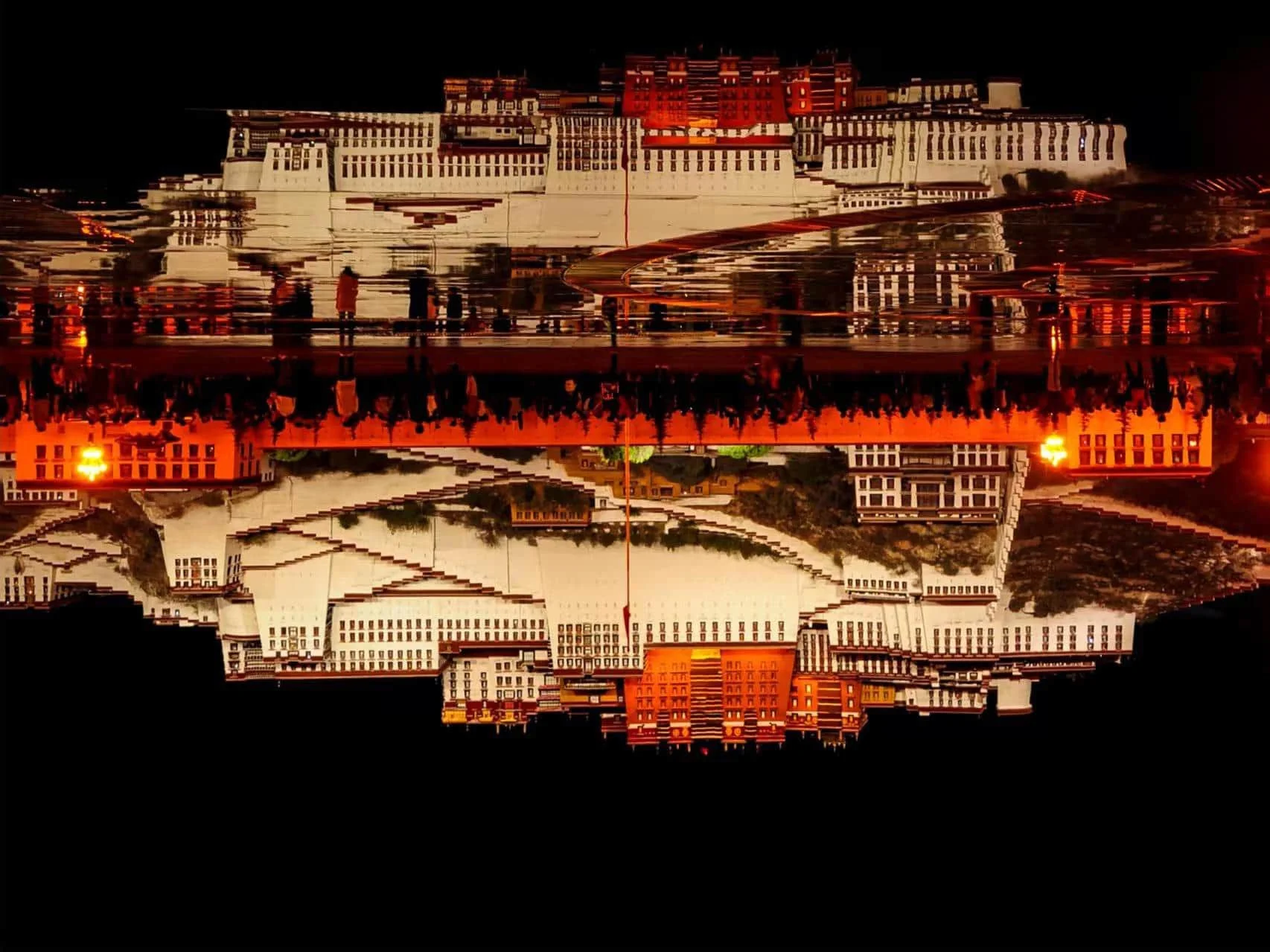
After breakfast, your guide takes you to the Potala Palace — the iconic red-and-white fortress that dominates the Lhasa skyline from every angle. This is not just a building; it's an entire mountain reshaped into a palace-fortress-monastery complex over 1,300 years. Your visit starts with the climb — 360 stone steps from the base to the White Palace entrance. Take it slowly; at this altitude, even stairs are a workout. Your guide will set a comfortable pace.
The Potala was originally built in 637 AD by King Songtsen Gampo as a meditation retreat. It was expanded into the structure you see today by the 5th Dalai Lama in 1645, who moved his government here from Drepung Monastery. The complex has two main sections:
The White Palace (lower section) was the Dalai Lama's residential and administrative quarters. You'll see the Dalai Lama's private chambers, audience halls where he met foreign dignitaries, and a small throne room where state ceremonies were held. The walls are painted in vivid colors — the white exterior symbolizes peace and tranquility.
The Red Palace (upper section) is the spiritual core — a labyrinth of chapels, shrines, and the stupas (chörten) of past Dalai Lamas. The most spectacular is the stupa of the 5th Dalai Lama, which stands 14 meters tall and is covered in 3,721 kilograms of gold. Let that number sink in — nearly four tons of solid gold, encrusted with turquoise, coral, pearls, and diamonds. It's the most valuable single object in Tibet. Other chapels contain murals dating to the 7th century, ancient Buddhist scriptures written in gold ink on black paper, and statues of every major deity in the Tibetan Buddhist pantheon.
Potala Palace Rules: No photography inside. No sunglasses or hats. Dress modestly (shoulders and knees covered). The palace limits daily visitors (currently 2,300/day in peak season) to protect the ancient structure — your guide will arrange tickets in advance. Visiting time is limited to one hour inside.
🌇 Afternoon: Jokhang Temple (大昭寺) & Barkhor Street
After lunch, walk to the Jokhang Temple — the spiritual center of Tibetan Buddhism and, for Tibetan pilgrims, the most sacred place on Earth. While the Potala Palace impresses with scale and power, the Jokhang moves people to tears. Built in 647 AD by King Songtsen Gampo to house the Jowo Shakyamuni — a statue of the Buddha at age 12, believed to have been personally blessed by the Buddha himself — the Jokhang has been the heart of Tibetan faith for nearly 1,400 years.
The story of the statue is extraordinary. It was brought to Tibet by Princess Wencheng, a Chinese Tang Dynasty princess who married King Songtsen Gampo as part of a diplomatic alliance in 641 AD. She traveled from Chang'an (modern Xi'an) to Lhasa — a journey of over 2,000 kilometers that took two years. The statue was her dowry. When she arrived, she found that the site where the Jokhang now stands was originally a lake — the king's Nepalese wife, Princess Bhrikuti, had tried to build a temple there but it kept collapsing. Princess Wencheng used Chinese geomancy (feng shui) to determine that the lake was the heart of a demoness who needed to be pinned down. The lake was filled, the temple was built, and it has stood ever since.
Inside, the Jowo Shakyamuni statue sits in the innermost chapel, barely visible through the clouds of incense and butter lamp smoke. Pilgrims press their foreheads against the base of the statue, some weeping openly. The devotion is overwhelming. Your guide will lead you through the chapels surrounding the statue, each dedicated to different deities and historical figures.
After the Jokhang, follow the pilgrims around the Barkhor kora — the 800-meter sacred circuit that encircles the temple. This is Lhasa at its most alive: pilgrims spinning prayer wheels, vendors selling turquoise and coral jewelry, the smell of incense and butter lamps, and the constant murmur of "Om mani padme hum." Walk clockwise — always clockwise. Going counter-clockwise around a sacred site is considered disrespectful.
Day 3: Lhasa — Drepung Monastery & Sera Monk Debates
🌅 Morning: Drepung Monastery (哲蚌寺)
Drive 20 minutes west of Lhasa to Drepung Monastery, once the largest monastery in the world. At its peak in the early 20th century, Drepung housed over 10,000 monks — a self-contained town of prayer halls, dormitories, kitchens, and colleges sprawling across the Gambo Utse mountain slope. Today, about 600 monks live here, but the scale of the complex still astounds.
Drepung was founded in 1416 by Jamyang Chöje, a disciple of Tsongkhapa (the founder of the Gelugpa "Yellow Hat" sect). The monastery is organized into four colleges (dratsang), each specializing in different aspects of Buddhist philosophy. Your guide will take you through the Main Assembly Hall (Tsogchen) — a vast hall supported by 183 pillars where the entire monastic community once gathered for prayer. The hall can hold 8,000 seated monks. Even empty, the space is staggering.
The highlight is the Ganden Podrang — the palace within Drepung that served as the residence of the Dalai Lamas before the Potala Palace was rebuilt. The 5th Dalai Lama lived here from 1642 until the Potala was completed. You can see his private chapel and the throne from which he ruled Tibet.
Don't miss the Nechung Monastery, a small temple just below Drepung that was the seat of the State Oracle of Tibet — the medium through whom the protector deity Pehar communicated with the Dalai Lama's government. Every major state decision, from wars to the selection of new Dalai Lamas, was made after consulting the Nechung Oracle. The current oracle still resides here, though his role is now purely spiritual.
🌇 Afternoon: Sera Monastery (色拉寺) — The Famous Monk Debates
After lunch, drive 15 minutes north of Lhasa to Sera Monastery, founded in 1419 by another of Tsongkhapa's disciples. Sera is famous across Tibet for one thing: the monk debates that take place every afternoon at 3:00 PM in the monastery courtyard.
The debates are a core part of Gelugpa monastic education — monks test each other on Buddhist philosophy through a highly stylized question-and-answer format. The questioner stands, raises his right arm, and claps his hands together loudly with each question — the clap represents the "thunderbolt" of wisdom cutting through ignorance. The respondent sits and must answer clearly and correctly. If the answer is wrong or evasive, the questioner may dramatically wave his rosary, stomp his feet, or mock the respondent's logic. It's loud, physical, and surprisingly entertaining — nothing like the quiet meditation most people associate with monasteries.
The debates happen in an open courtyard shaded by trees. You can sit on the sidelines and watch — photography is allowed (unlike inside the chapels). Your guide will explain the philosophy behind the gestures and the topics being debated. Even if you can't follow the Tibetan, the energy is infectious.
Before the debates, visit the Sera Me College, known for its exquisite murals of the Medicine Buddha, and the Hayagriva Chapel, where pilgrims come to receive blessings for protection from evil spirits. The chapel contains a famous self-arisen image of Hayagriva (a wrathful deity with a horse's head emerging from his crown) that supposedly appeared on the rock face miraculously.
Day 4: Sacred Lake & the Birthplace of Tibetan Buddhism
🌅 Morning: Drive to Yamdrok Lake (羊卓雍措)
Leave Lhasa early (8:00 AM) and drive south over the Kamba La Pass (4,790m). As you crest the pass, one of the most famous views in all of Tibet unfolds below you: Yamdrok Lake — a vast, fan-shaped lake of impossible turquoise, set against a backdrop of snow-capped mountains. The color changes constantly with the light — sometimes cobalt blue, sometimes emerald green, sometimes a shade of teal that doesn't seem to exist in nature.
Yamdrok is one of Tibet's three sacred lakes (along with Namtso and Manasarovar). Tibetan Buddhists believe it is the transformation of a goddess, and that its waters are the life-force of the Tibetan people. The lake is 72 kilometers long, covers 638 square kilometers, and is fed by glacial streams from the surrounding mountains. Locals say if the lake ever dries up, Tibet will become uninhabitable. Your guide will drive you down to the lakeshore — the perspective from water level is very different from the panoramic view at Kamba La, and equally stunning.
Photography: The view from Kamba La Pass is THE classic Tibet postcard shot. Morning light is best — another reason to leave Lhasa early. At the lakeshore, the yaks decorated with colorful blankets make great photo subjects (small tip to the yak owner, about 10 RMB).
🌇 Afternoon: Samye Monastery (桑耶寺) — The First Monastery in Tibet
From Yamdrok, drive west into the Yarlung Valley — the cradle of Tibetan civilization. This is where the first Tibetan kings ruled, where Buddhism first took root in Tibet, and where the first Tibetan script was created. Your destination is Samye Monastery, built in 779 AD by King Trisong Detsen with the help of the Indian tantric master Padmasambhava (Guru Rinpoche).
Samye is unlike any other monastery in Tibet — it was designed as a three-dimensional mandala (sacred diagram) of the Buddhist universe. The central temple (Utse) represents Mount Meru, the axis of the cosmos. Twelve smaller temples arranged around it represent the continents and subcontinents of Buddhist cosmology. A circular wall encircles the complex, representing the iron mountains that ring the universe. It's the only monastery in the world built as a complete cosmological map.
The story of Samye's founding is one of the great legends of Tibetan Buddhism. In the 8th century, King Trisong Detsen invited the Indian scholar Shantarakshita to teach Buddhism in Tibet. But every time they tried to build a monastery, local spirits destroyed it — earthquakes, fires, storms. The king then invited Padmasambhava, a tantric master reputed to have supernatural powers. Padmasambhava subdued the local spirits through ritual and meditation, converting them into protectors of the dharma. Only then could Samye be built. The monastery's name means "Inconceivable" — the king reportedly said, when he first saw the completed structure, that it was beyond anything he could have imagined.
Samye was also the site of a pivotal event in Tibetan history: the Great Debate (792–794 AD) between the Chinese Chan (Zen) Buddhist school and the Indian gradualist school. The Indian side, led by Kamalashila, won — and Tibetan Buddhism has been fundamentally Indian in character ever since. Your guide will show you the murals inside the Utse that depict this debate, along with scenes from the life of Padmasambhava and the founding of the monastery.
The central Utse temple is architecturally unique — the ground floor is Tibetan style, the second floor is Chinese style, and the third floor is Indian style, representing the three influences that shaped Tibetan Buddhism. Climb to the top for a panoramic view of the entire mandala layout — you can see the circular wall and the satellite temples radiating outward like a cosmic diagram on the valley floor.
Return to Lhasa in the late afternoon (about 2.5-hour drive). Evening at leisure.
Day 5 (Optional): Departure or Extra Lhasa Day
🌟 Option A: Extended Lhasa Exploration
If you have a 5th day before your flight or train, these are the best ways to spend it:
Norbulingka Palace (罗布林卡) — The Dalai Lama's summer palace, a UNESCO World Heritage Site. While the Potala is a fortress, Norbulingka is a garden — a complex of palaces, pavilions, and lush gardens covering 36 hectares. The 14th Dalai Lama lived here until 1959. The palace contains his private quarters, a throne room, and a remarkable collection of Tibetan murals. The gardens are especially beautiful in summer (June–August), when flowers bloom and the air is thick with the scent of jasmine and honeysuckle. Allow 2–3 hours.
Tibet Museum — A modern museum near the Potala Palace with excellent exhibits on Tibetan history, art, and culture. The collection includes ancient thangka paintings, ritual objects, musical instruments, and a detailed section on the history of Tibetan medicine. Free admission. Allow 1.5–2 hours.
Ramoche Temple (小昭寺) — The "little sister" of the Jokhang Temple, built to house the Jowo Mikyö Dorje — a statue of the Buddha at age 8, brought to Tibet by Princess Bhrikuti of Nepal. When Princess Wencheng arrived with the older Jowo statue, the two statues swapped temples. Ramoche is smaller and less crowded than the Jokhang, but deeply atmospheric.
Ani Tsankhung Nunnery — The only nunnery in Lhasa's old town, home to about 100 nuns. It's a peaceful, intimate space where you can hear nuns chanting and see a 7th-century meditation cave used by King Songtsen Gampo. Rarely visited by tourists.
✈️ Option B: Departure
Your guide and driver will transfer you to Lhasa Gonggar Airport or Lhasa Railway Station according to your departure schedule. Most flights depart in the morning or early afternoon. The drive to the airport takes about 40 minutes.
Altitude Sickness — What You Need to Know
Altitude sickness (acute mountain sickness, or AMS) is the single biggest concern for Tibet travelers. Here's a realistic guide:
Symptoms: Headache (most common), fatigue, dizziness, shortness of breath, loss of appetite, nausea, difficulty sleeping. Most people experience mild symptoms in the first 24–48 hours.
Prevention:
• Acclimatize gradually. This itinerary builds in a full rest day on Day 1 and keeps Day 2 activities at a gentle pace. Don't skip the rest day.
• Hydrate aggressively. Drink 3–4 liters of water per day. The dry air at altitude dehydrates you faster than you realize.
• No alcohol for the first 48 hours. Alcohol worsens altitude symptoms significantly.
• Consider Diamox (acetazolamide). Many travel doctors recommend starting 24 hours before arrival in Lhasa. Consult your physician before the trip.
• Don't overexert. Walk slowly. Take breaks. There is no shame in being the slowest person on the Potala Palace stairs.
When it's serious: If you experience severe headache that doesn't respond to painkillers, vomiting, confusion, or fluid in the lungs (coughing pink frothy sputum), descend immediately. Our guides carry supplemental oxygen and are trained to recognize AMS symptoms. In extreme cases, we will arrange evacuation to lower altitude.
✅ What's Included
IncludedNot Included✅ Tibet Travel Permit arrangement❌ International/domestic flights or trains to/from Lhasa✅ Airport or train station pickup & drop-off❌ Chinese visa (arrange before travel)✅ Licensed English-speaking Tibetan guide (all days)❌ Travel insurance (mandatory — please arrange your own)✅ Private air-conditioned vehicle (all days)❌ Entrance fees: Potala Palace ¥200, Jokhang Temple ¥85, Drepung ¥60, Sera ¥55, Samye ¥45, Yamdrok ¥40✅ 3- or 4-night hotel accommodation (3-star standard, upgrade available)❌ Meals (budget ¥80–150/day; your guide will recommend restaurants)✅ Bottled water in the vehicle❌ Personal expenses (souvenirs, extra drinks, laundry)✅ Supplemental oxygen in the vehicle❌ Gratuities for guide and driver (optional, appreciated)
Practical Information
🌡️ Best Time to Visit: April–October. Peak season is June–September (warmest, clearest skies). November–March is cold but possible — fewer tourists, and the Potala Palace has no visitor limits in winter.
🚶 Walking Level: Moderate. Day 2 involves the most walking (Potala Palace stairs + Jokhang + Barkhor). Day 4 involves some walking at Yamdrok lakeshore and Samye. All activities can be done at your own pace.
🎒 What to Pack: Sunscreen (SPF 50+ — the UV at altitude is brutal), sunglasses, warm layers (even in summer, evenings are cool), comfortable walking shoes, a hat, lip balm, and any personal medications. The air is very dry — bring moisturizer.
📱 Internet & Phone: Wi-Fi is available in most Lhasa hotels. VPNs are needed to access Google, WhatsApp, and social media. Your Chinese SIM card will work in Lhasa (China Mobile has the best coverage).
💰 Money: ATMs are available in Lhasa. WeChat Pay and Alipay are accepted everywhere. Bring some cash (RMB) for small purchases at monasteries and markets.
📸 Photography: Photography is allowed at Yamdrok Lake, Samye, Sera debates, and Barkhor Street. No photography inside the Potala Palace or inside the Jokhang Temple's inner chapels. Always ask before photographing monks or pilgrims.
🏨 Hotels: Standard package includes 3-star hotel with oxygen supply. 4-star and 5-star upgrades are available for an additional fee. All hotels have heating, hot water, and Wi-Fi.
Frequently Asked Questions
Is 4 days enough for Tibet?
Four days is enough to see Lhasa's highlights and take one day trip. You won't have time for Everest Base Camp or Namtso Lake, but you'll experience the essential culture, religion, and landscape of Tibet. If you can spare 5 days, the extra day in Lhasa makes the pace much more comfortable. For a deeper experience, consider our 8-Day Everest Classic Challenge Tour.
Do I really need a guide?
Yes — foreign travelers must be accompanied by a licensed guide at all times in Tibet. This is a government requirement tied to the Tibet Travel Permit. Our guides are Tibetan locals who add enormous value — they navigate the permit checkpoints, arrange tickets, explain the history and symbolism you'd otherwise miss, and handle any language barriers.
Can I extend this to include Everest Base Camp?
Absolutely. The Lhasa portion of this tour (Days 1–3) is identical to the start of our 8-Day Everest Tour. If you decide you want to continue to Everest after arriving, we can often arrange the extension on short notice (additional permit arrangements may be needed).
What about the altitude? I'm worried about altitude sickness.
Most travelers handle 3,650m (Lhasa) well with proper acclimatization. This itinerary gives you a full rest day on arrival and keeps Day 2 at a gentle pace. The Day 4 trip crosses Kamba La Pass (4,790m) but you'll only be at that altitude briefly. Our vehicles carry supplemental oxygen, and our guides are trained to recognize and respond to altitude symptoms. If you have heart or lung conditions, consult your doctor before booking.
Can I visit Tibet in winter?
Yes — and there are advantages. The Potala Palace removes its daily visitor cap in winter, so you can stay longer inside. Hotels are cheaper. There are far fewer tourists. The downside: it's cold (down to -10°C at night) and some high-altitude roads may be closed by snow. But Lhasa itself is accessible year-round.
Lhasa is not just a city — it's a living shrine, a place where 1,400 years of faith are visible in every prayer wheel, every butter lamp, every pilgrim's footsteps. Book your Lhasa Cultural Entry Tour today.
Lhasa Cultural Entry Tour (4–5 Days) — The Perfect Introduction to Tibet
Not everyone has two weeks for Tibet — and you don't need them. This 4-to-5-day itinerary gives you the essential Lhasa experience plus one extraordinary day trip to a sacred lake and Tibet's first monastery. You'll stand inside the Potala Palace, where the Dalai Lamas ruled for three centuries. You'll walk the sacred kora circuit around the Jokhang Temple alongside pilgrims who've traveled thousands of kilometers to be here. You'll watch monks debate at Sera Monastery in a tradition unchanged for 600 years. And on Day 4, you'll drive to Yamdrok Lake — a body of water so impossibly turquoise that your photographs will look fake — and visit Samye Monastery, the birthplace of Tibetan Buddhism, built in the shape of the Buddhist universe. This is Tibet in concentrated form: deep, vivid, and unforgettable.
Why This Tour: This is the best short Tibet itinerary for first-time visitors. Two full days in Lhasa give you time to acclimatize properly (essential at 3,650m) while seeing the city's greatest hits. The Day 4 trip to Yamdrok and Samye adds the "wow" factor — sacred landscapes and 1,200-year-old history — without the long drives required for Everest or Mount Kailash. If you have a 5th day, you can add Norbulingka Palace, the Tibet Museum, or simply enjoy Lhasa at a slower pace. Perfect as a standalone trip or as the first leg of a longer China journey.
Before You Go: Tibet Travel Permit
Foreign travelers cannot enter Tibet independently — you must have a Tibet Travel Permit (入藏函), arranged by a licensed travel agency. Here's what you need to know:
We handle the permit for you. Once you book this tour, send us a clear scan/photo of your passport and Chinese visa (or residence permit). We submit the application to the Tibet Tourism Bureau — the process takes 5–7 business days. We'll send the permit to your hotel in China before you depart for Tibet. You must carry the original permit — photos or copies are not accepted at checkpoints.
Important: You cannot apply for the Tibet Travel Permit on your own. It must be arranged through a registered travel agency as part of a booked tour. If a guide is not with you at checkpoints, you will be turned back. Plan at least 3 weeks ahead — 1 week for permit processing + time to receive the document by mail within China.
Day 1: Arrival in Lhasa (3,650m) — Welcome to the Roof of the World
✈️ Airport or Train Station Pickup
Your guide and driver will meet you at Lhasa Gonggar Airport (40 minutes from the city) or Lhasa Railway Station (20 minutes). The drive into Lhasa follows the Yarlung Tsangpo River valley — your first glimpse of the Tibetan landscape, with barren brown mountains rising on both sides and the deep blue sky that makes this place feel like a different planet.
After checking into your hotel, the most important thing is rest. Lhasa sits at 3,650 meters (11,975 feet) — the air has about 35% less oxygen than at sea level. Your body needs time to adapt. You may feel fine for the first few hours (the "honeymoon period") and then develop a headache, fatigue, or mild nausea. This is normal. Drink plenty of water, avoid alcohol, eat light meals, and don't push yourself. Your guide will check in on you throughout the evening.
Evening: If you're feeling well enough, take a gentle stroll around the Barkhor Street (八廓街) circuit near the Jokhang Temple. This is Lhasa's spiritual heart — you'll see pilgrims from across Tibet walking the kora (sacred circuit), spinning handheld prayer wheels and murmuring mantras. Some have traveled for weeks to get here, prostrating themselves every few steps along the way. It's a powerful introduction to the depth of Tibetan faith. Stop at a sweet tea house (the Barkhor area has dozens) — order a pot of Tibetan sweet tea (half milk, half tea, generously sweetened) and sit with locals who've been doing this every evening for decades.
Pro tip: Many travelers find that arriving by train from Xining (21–22 hours on the Qinghai-Tibet Railway) gives a gentler introduction to the altitude than flying in. The train crosses the Tanggula Pass at 5,072m — the world's highest railway point — and your body begins adjusting during the journey. If you have the time, it's one of the world's great train rides.
Day 2: Lhasa — Potala Palace & Jokhang Temple
🌅 Morning: The Potala Palace (布达拉宫)
After breakfast, your guide takes you to the Potala Palace — the iconic red-and-white fortress that dominates the Lhasa skyline from every angle. This is not just a building; it's an entire mountain reshaped into a palace-fortress-monastery complex over 1,300 years. Your visit starts with the climb — 360 stone steps from the base to the White Palace entrance. Take it slowly; at this altitude, even stairs are a workout. Your guide will set a comfortable pace.
The Potala was originally built in 637 AD by King Songtsen Gampo as a meditation retreat. It was expanded into the structure you see today by the 5th Dalai Lama in 1645, who moved his government here from Drepung Monastery. The complex has two main sections:
The White Palace (lower section) was the Dalai Lama's residential and administrative quarters. You'll see the Dalai Lama's private chambers, audience halls where he met foreign dignitaries, and a small throne room where state ceremonies were held. The walls are painted in vivid colors — the white exterior symbolizes peace and tranquility.
The Red Palace (upper section) is the spiritual core — a labyrinth of chapels, shrines, and the stupas (chörten) of past Dalai Lamas. The most spectacular is the stupa of the 5th Dalai Lama, which stands 14 meters tall and is covered in 3,721 kilograms of gold. Let that number sink in — nearly four tons of solid gold, encrusted with turquoise, coral, pearls, and diamonds. It's the most valuable single object in Tibet. Other chapels contain murals dating to the 7th century, ancient Buddhist scriptures written in gold ink on black paper, and statues of every major deity in the Tibetan Buddhist pantheon.
Potala Palace Rules: No photography inside. No sunglasses or hats. Dress modestly (shoulders and knees covered). The palace limits daily visitors (currently 2,300/day in peak season) to protect the ancient structure — your guide will arrange tickets in advance. Visiting time is limited to one hour inside.
🌇 Afternoon: Jokhang Temple (大昭寺) & Barkhor Street
After lunch, walk to the Jokhang Temple — the spiritual center of Tibetan Buddhism and, for Tibetan pilgrims, the most sacred place on Earth. While the Potala Palace impresses with scale and power, the Jokhang moves people to tears. Built in 647 AD by King Songtsen Gampo to house the Jowo Shakyamuni — a statue of the Buddha at age 12, believed to have been personally blessed by the Buddha himself — the Jokhang has been the heart of Tibetan faith for nearly 1,400 years.
The story of the statue is extraordinary. It was brought to Tibet by Princess Wencheng, a Chinese Tang Dynasty princess who married King Songtsen Gampo as part of a diplomatic alliance in 641 AD. She traveled from Chang'an (modern Xi'an) to Lhasa — a journey of over 2,000 kilometers that took two years. The statue was her dowry. When she arrived, she found that the site where the Jokhang now stands was originally a lake — the king's Nepalese wife, Princess Bhrikuti, had tried to build a temple there but it kept collapsing. Princess Wencheng used Chinese geomancy (feng shui) to determine that the lake was the heart of a demoness who needed to be pinned down. The lake was filled, the temple was built, and it has stood ever since.
Inside, the Jowo Shakyamuni statue sits in the innermost chapel, barely visible through the clouds of incense and butter lamp smoke. Pilgrims press their foreheads against the base of the statue, some weeping openly. The devotion is overwhelming. Your guide will lead you through the chapels surrounding the statue, each dedicated to different deities and historical figures.
After the Jokhang, follow the pilgrims around the Barkhor kora — the 800-meter sacred circuit that encircles the temple. This is Lhasa at its most alive: pilgrims spinning prayer wheels, vendors selling turquoise and coral jewelry, the smell of incense and butter lamps, and the constant murmur of "Om mani padme hum." Walk clockwise — always clockwise. Going counter-clockwise around a sacred site is considered disrespectful.
Day 3: Lhasa — Drepung Monastery & Sera Monk Debates
🌅 Morning: Drepung Monastery (哲蚌寺)
Drive 20 minutes west of Lhasa to Drepung Monastery, once the largest monastery in the world. At its peak in the early 20th century, Drepung housed over 10,000 monks — a self-contained town of prayer halls, dormitories, kitchens, and colleges sprawling across the Gambo Utse mountain slope. Today, about 600 monks live here, but the scale of the complex still astounds.
Drepung was founded in 1416 by Jamyang Chöje, a disciple of Tsongkhapa (the founder of the Gelugpa "Yellow Hat" sect). The monastery is organized into four colleges (dratsang), each specializing in different aspects of Buddhist philosophy. Your guide will take you through the Main Assembly Hall (Tsogchen) — a vast hall supported by 183 pillars where the entire monastic community once gathered for prayer. The hall can hold 8,000 seated monks. Even empty, the space is staggering.
The highlight is the Ganden Podrang — the palace within Drepung that served as the residence of the Dalai Lamas before the Potala Palace was rebuilt. The 5th Dalai Lama lived here from 1642 until the Potala was completed. You can see his private chapel and the throne from which he ruled Tibet.
Don't miss the Nechung Monastery, a small temple just below Drepung that was the seat of the State Oracle of Tibet — the medium through whom the protector deity Pehar communicated with the Dalai Lama's government. Every major state decision, from wars to the selection of new Dalai Lamas, was made after consulting the Nechung Oracle. The current oracle still resides here, though his role is now purely spiritual.
🌇 Afternoon: Sera Monastery (色拉寺) — The Famous Monk Debates
After lunch, drive 15 minutes north of Lhasa to Sera Monastery, founded in 1419 by another of Tsongkhapa's disciples. Sera is famous across Tibet for one thing: the monk debates that take place every afternoon at 3:00 PM in the monastery courtyard.
The debates are a core part of Gelugpa monastic education — monks test each other on Buddhist philosophy through a highly stylized question-and-answer format. The questioner stands, raises his right arm, and claps his hands together loudly with each question — the clap represents the "thunderbolt" of wisdom cutting through ignorance. The respondent sits and must answer clearly and correctly. If the answer is wrong or evasive, the questioner may dramatically wave his rosary, stomp his feet, or mock the respondent's logic. It's loud, physical, and surprisingly entertaining — nothing like the quiet meditation most people associate with monasteries.
The debates happen in an open courtyard shaded by trees. You can sit on the sidelines and watch — photography is allowed (unlike inside the chapels). Your guide will explain the philosophy behind the gestures and the topics being debated. Even if you can't follow the Tibetan, the energy is infectious.
Before the debates, visit the Sera Me College, known for its exquisite murals of the Medicine Buddha, and the Hayagriva Chapel, where pilgrims come to receive blessings for protection from evil spirits. The chapel contains a famous self-arisen image of Hayagriva (a wrathful deity with a horse's head emerging from his crown) that supposedly appeared on the rock face miraculously.
Day 4: Sacred Lake & the Birthplace of Tibetan Buddhism
🌅 Morning: Drive to Yamdrok Lake (羊卓雍措)
Leave Lhasa early (8:00 AM) and drive south over the Kamba La Pass (4,790m). As you crest the pass, one of the most famous views in all of Tibet unfolds below you: Yamdrok Lake — a vast, fan-shaped lake of impossible turquoise, set against a backdrop of snow-capped mountains. The color changes constantly with the light — sometimes cobalt blue, sometimes emerald green, sometimes a shade of teal that doesn't seem to exist in nature.
Yamdrok is one of Tibet's three sacred lakes (along with Namtso and Manasarovar). Tibetan Buddhists believe it is the transformation of a goddess, and that its waters are the life-force of the Tibetan people. The lake is 72 kilometers long, covers 638 square kilometers, and is fed by glacial streams from the surrounding mountains. Locals say if the lake ever dries up, Tibet will become uninhabitable. Your guide will drive you down to the lakeshore — the perspective from water level is very different from the panoramic view at Kamba La, and equally stunning.
Photography: The view from Kamba La Pass is THE classic Tibet postcard shot. Morning light is best — another reason to leave Lhasa early. At the lakeshore, the yaks decorated with colorful blankets make great photo subjects (small tip to the yak owner, about 10 RMB).
🌇 Afternoon: Samye Monastery (桑耶寺) — The First Monastery in Tibet
From Yamdrok, drive west into the Yarlung Valley — the cradle of Tibetan civilization. This is where the first Tibetan kings ruled, where Buddhism first took root in Tibet, and where the first Tibetan script was created. Your destination is Samye Monastery, built in 779 AD by King Trisong Detsen with the help of the Indian tantric master Padmasambhava (Guru Rinpoche).
Samye is unlike any other monastery in Tibet — it was designed as a three-dimensional mandala (sacred diagram) of the Buddhist universe. The central temple (Utse) represents Mount Meru, the axis of the cosmos. Twelve smaller temples arranged around it represent the continents and subcontinents of Buddhist cosmology. A circular wall encircles the complex, representing the iron mountains that ring the universe. It's the only monastery in the world built as a complete cosmological map.
The story of Samye's founding is one of the great legends of Tibetan Buddhism. In the 8th century, King Trisong Detsen invited the Indian scholar Shantarakshita to teach Buddhism in Tibet. But every time they tried to build a monastery, local spirits destroyed it — earthquakes, fires, storms. The king then invited Padmasambhava, a tantric master reputed to have supernatural powers. Padmasambhava subdued the local spirits through ritual and meditation, converting them into protectors of the dharma. Only then could Samye be built. The monastery's name means "Inconceivable" — the king reportedly said, when he first saw the completed structure, that it was beyond anything he could have imagined.
Samye was also the site of a pivotal event in Tibetan history: the Great Debate (792–794 AD) between the Chinese Chan (Zen) Buddhist school and the Indian gradualist school. The Indian side, led by Kamalashila, won — and Tibetan Buddhism has been fundamentally Indian in character ever since. Your guide will show you the murals inside the Utse that depict this debate, along with scenes from the life of Padmasambhava and the founding of the monastery.
The central Utse temple is architecturally unique — the ground floor is Tibetan style, the second floor is Chinese style, and the third floor is Indian style, representing the three influences that shaped Tibetan Buddhism. Climb to the top for a panoramic view of the entire mandala layout — you can see the circular wall and the satellite temples radiating outward like a cosmic diagram on the valley floor.
Return to Lhasa in the late afternoon (about 2.5-hour drive). Evening at leisure.
Day 5 (Optional): Departure or Extra Lhasa Day
🌟 Option A: Extended Lhasa Exploration
If you have a 5th day before your flight or train, these are the best ways to spend it:
Norbulingka Palace (罗布林卡) — The Dalai Lama's summer palace, a UNESCO World Heritage Site. While the Potala is a fortress, Norbulingka is a garden — a complex of palaces, pavilions, and lush gardens covering 36 hectares. The 14th Dalai Lama lived here until 1959. The palace contains his private quarters, a throne room, and a remarkable collection of Tibetan murals. The gardens are especially beautiful in summer (June–August), when flowers bloom and the air is thick with the scent of jasmine and honeysuckle. Allow 2–3 hours.
Tibet Museum — A modern museum near the Potala Palace with excellent exhibits on Tibetan history, art, and culture. The collection includes ancient thangka paintings, ritual objects, musical instruments, and a detailed section on the history of Tibetan medicine. Free admission. Allow 1.5–2 hours.
Ramoche Temple (小昭寺) — The "little sister" of the Jokhang Temple, built to house the Jowo Mikyö Dorje — a statue of the Buddha at age 8, brought to Tibet by Princess Bhrikuti of Nepal. When Princess Wencheng arrived with the older Jowo statue, the two statues swapped temples. Ramoche is smaller and less crowded than the Jokhang, but deeply atmospheric.
Ani Tsankhung Nunnery — The only nunnery in Lhasa's old town, home to about 100 nuns. It's a peaceful, intimate space where you can hear nuns chanting and see a 7th-century meditation cave used by King Songtsen Gampo. Rarely visited by tourists.
✈️ Option B: Departure
Your guide and driver will transfer you to Lhasa Gonggar Airport or Lhasa Railway Station according to your departure schedule. Most flights depart in the morning or early afternoon. The drive to the airport takes about 40 minutes.
Altitude Sickness — What You Need to Know
Altitude sickness (acute mountain sickness, or AMS) is the single biggest concern for Tibet travelers. Here's a realistic guide:
Symptoms: Headache (most common), fatigue, dizziness, shortness of breath, loss of appetite, nausea, difficulty sleeping. Most people experience mild symptoms in the first 24–48 hours.
Prevention:
• Acclimatize gradually. This itinerary builds in a full rest day on Day 1 and keeps Day 2 activities at a gentle pace. Don't skip the rest day.
• Hydrate aggressively. Drink 3–4 liters of water per day. The dry air at altitude dehydrates you faster than you realize.
• No alcohol for the first 48 hours. Alcohol worsens altitude symptoms significantly.
• Consider Diamox (acetazolamide). Many travel doctors recommend starting 24 hours before arrival in Lhasa. Consult your physician before the trip.
• Don't overexert. Walk slowly. Take breaks. There is no shame in being the slowest person on the Potala Palace stairs.
When it's serious: If you experience severe headache that doesn't respond to painkillers, vomiting, confusion, or fluid in the lungs (coughing pink frothy sputum), descend immediately. Our guides carry supplemental oxygen and are trained to recognize AMS symptoms. In extreme cases, we will arrange evacuation to lower altitude.
✅ What's Included
IncludedNot Included✅ Tibet Travel Permit arrangement❌ International/domestic flights or trains to/from Lhasa✅ Airport or train station pickup & drop-off❌ Chinese visa (arrange before travel)✅ Licensed English-speaking Tibetan guide (all days)❌ Travel insurance (mandatory — please arrange your own)✅ Private air-conditioned vehicle (all days)❌ Entrance fees: Potala Palace ¥200, Jokhang Temple ¥85, Drepung ¥60, Sera ¥55, Samye ¥45, Yamdrok ¥40✅ 3- or 4-night hotel accommodation (3-star standard, upgrade available)❌ Meals (budget ¥80–150/day; your guide will recommend restaurants)✅ Bottled water in the vehicle❌ Personal expenses (souvenirs, extra drinks, laundry)✅ Supplemental oxygen in the vehicle❌ Gratuities for guide and driver (optional, appreciated)
Practical Information
🌡️ Best Time to Visit: April–October. Peak season is June–September (warmest, clearest skies). November–March is cold but possible — fewer tourists, and the Potala Palace has no visitor limits in winter.
🚶 Walking Level: Moderate. Day 2 involves the most walking (Potala Palace stairs + Jokhang + Barkhor). Day 4 involves some walking at Yamdrok lakeshore and Samye. All activities can be done at your own pace.
🎒 What to Pack: Sunscreen (SPF 50+ — the UV at altitude is brutal), sunglasses, warm layers (even in summer, evenings are cool), comfortable walking shoes, a hat, lip balm, and any personal medications. The air is very dry — bring moisturizer.
📱 Internet & Phone: Wi-Fi is available in most Lhasa hotels. VPNs are needed to access Google, WhatsApp, and social media. Your Chinese SIM card will work in Lhasa (China Mobile has the best coverage).
💰 Money: ATMs are available in Lhasa. WeChat Pay and Alipay are accepted everywhere. Bring some cash (RMB) for small purchases at monasteries and markets.
📸 Photography: Photography is allowed at Yamdrok Lake, Samye, Sera debates, and Barkhor Street. No photography inside the Potala Palace or inside the Jokhang Temple's inner chapels. Always ask before photographing monks or pilgrims.
🏨 Hotels: Standard package includes 3-star hotel with oxygen supply. 4-star and 5-star upgrades are available for an additional fee. All hotels have heating, hot water, and Wi-Fi.
Frequently Asked Questions
Is 4 days enough for Tibet?
Four days is enough to see Lhasa's highlights and take one day trip. You won't have time for Everest Base Camp or Namtso Lake, but you'll experience the essential culture, religion, and landscape of Tibet. If you can spare 5 days, the extra day in Lhasa makes the pace much more comfortable. For a deeper experience, consider our 8-Day Everest Classic Challenge Tour.
Do I really need a guide?
Yes — foreign travelers must be accompanied by a licensed guide at all times in Tibet. This is a government requirement tied to the Tibet Travel Permit. Our guides are Tibetan locals who add enormous value — they navigate the permit checkpoints, arrange tickets, explain the history and symbolism you'd otherwise miss, and handle any language barriers.
Can I extend this to include Everest Base Camp?
Absolutely. The Lhasa portion of this tour (Days 1–3) is identical to the start of our 8-Day Everest Tour. If you decide you want to continue to Everest after arriving, we can often arrange the extension on short notice (additional permit arrangements may be needed).
What about the altitude? I'm worried about altitude sickness.
Most travelers handle 3,650m (Lhasa) well with proper acclimatization. This itinerary gives you a full rest day on arrival and keeps Day 2 at a gentle pace. The Day 4 trip crosses Kamba La Pass (4,790m) but you'll only be at that altitude briefly. Our vehicles carry supplemental oxygen, and our guides are trained to recognize and respond to altitude symptoms. If you have heart or lung conditions, consult your doctor before booking.
Can I visit Tibet in winter?
Yes — and there are advantages. The Potala Palace removes its daily visitor cap in winter, so you can stay longer inside. Hotels are cheaper. There are far fewer tourists. The downside: it's cold (down to -10°C at night) and some high-altitude roads may be closed by snow. But Lhasa itself is accessible year-round.
Lhasa is not just a city — it's a living shrine, a place where 1,400 years of faith are visible in every prayer wheel, every butter lamp, every pilgrim's footsteps. Book your Lhasa Cultural Entry Tour today.